I’ve found that privacy starts to matter once a yard gets real use. From inside the house, everything can look fine. Outside, though, the space suddenly feels wide open. That’s usually when backyard privacy ideas stop sounding decorative and start sounding helpful. I don’t want a fortress or a cold barrier. Instead, I want separation without tension and style without overspending. Relaxing outside should never come with self-conscious commentary.
What stands out to me is how fast people jump to fences. Sure, fences work sometimes. Still, they’re rarely the most interesting option. Cost also becomes an issue once installation and upkeep enter the picture. Creativity matters more than size here. Privacy doesn’t need to arrive in one big purchase. It can build slowly, layer by layer, with choices that stay flexible.
Living in Orlando makes this topic hard to ignore. Outdoor spaces get used most of the year. Because of that, privacy issues don’t fade with the seasons. I’ve noticed that the best backyard privacy ideas create small pockets of separation instead of a total shutoff. Blocking everything out isn’t the goal. A little coverage goes a long way.
I also think privacy should look relaxed, not forced. When a yard feels too stiff, people stop using it. Comfort matters more than perfection. Small changes often carry the most impact. Even subtle adjustments can shift how a space works. When privacy blends in naturally, the yard stays inviting. That’s when outdoor spaces become places you actually want to spend time, not just look at from inside.
Some of the links on this page are affiliate links, which means that if you click on them and buy something, I might get a small commission. But don’t worry; it never costs you more. You can peek at my full disclosure if you’re curious about the fine print.
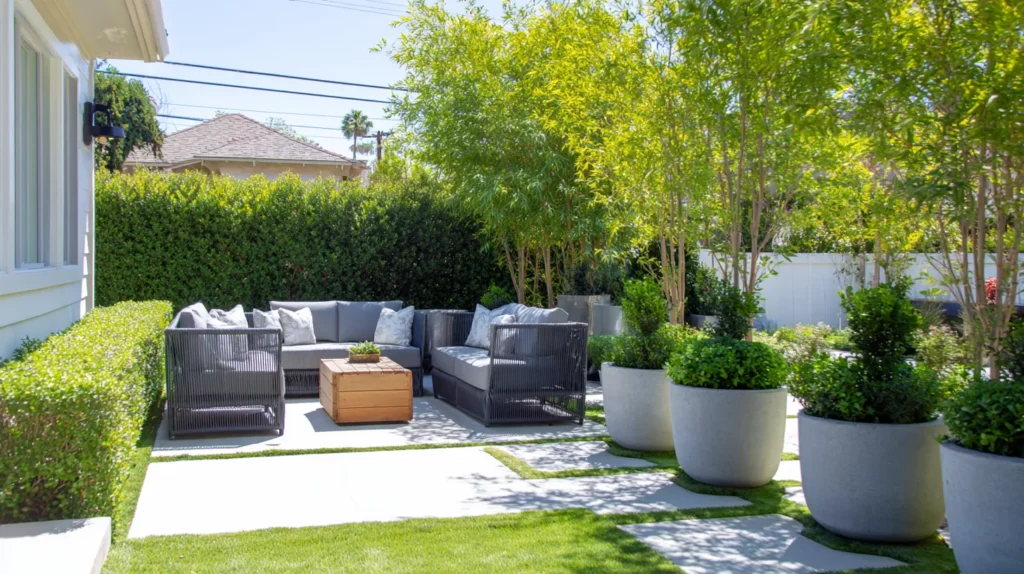
Backyard Privacy Ideas That Start With Plants Instead Of Projects
I’ve found that plants quietly do the heavy lifting when it comes to backyard privacy ideas. They soften sightlines, absorb noise, and make everything look intentional, even when the budget is tight. Unlike permanent structures, plants give you privacy without locking you into one look forever. That flexibility matters, especially when tastes change.
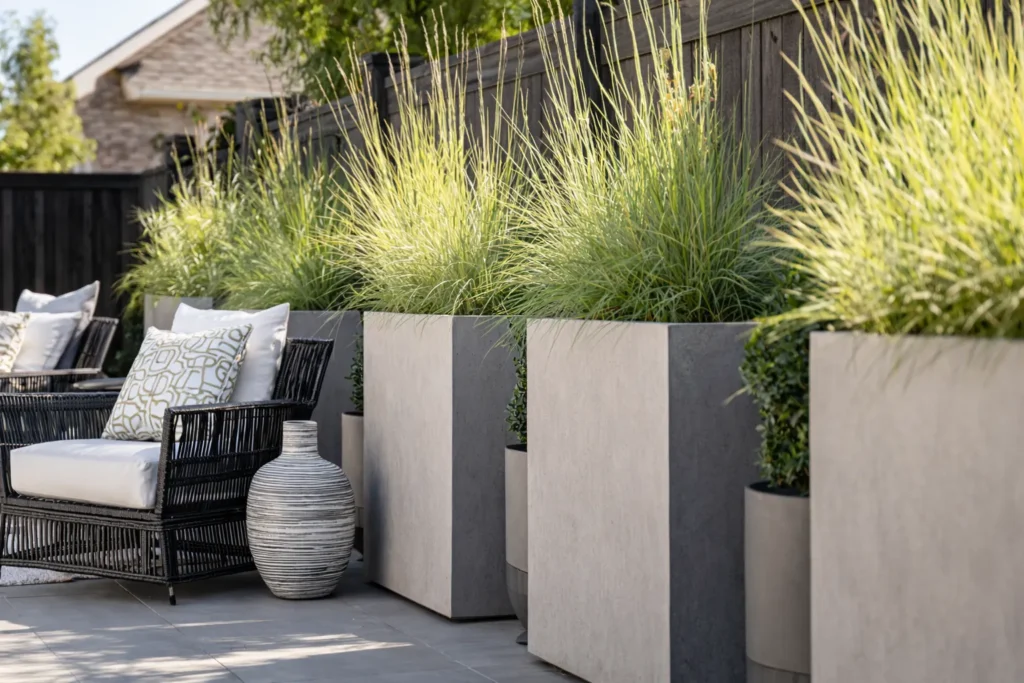
I tend to notice that tall planters work especially well because they create height quickly. You don’t need rare plants or expensive landscaping plans either. Instead, it helps to focus on volume. Full planters placed strategically can block views better than sparse greenery spread everywhere. As a bonus, plants rarely upset neighbors the way fences sometimes do.
Some budget-friendly plant-based options worth considering include:
- Tall ornamental grasses that grow fast and move with the breeze.
- Bamboo varieties designed for containers, which reduce spreading concerns.
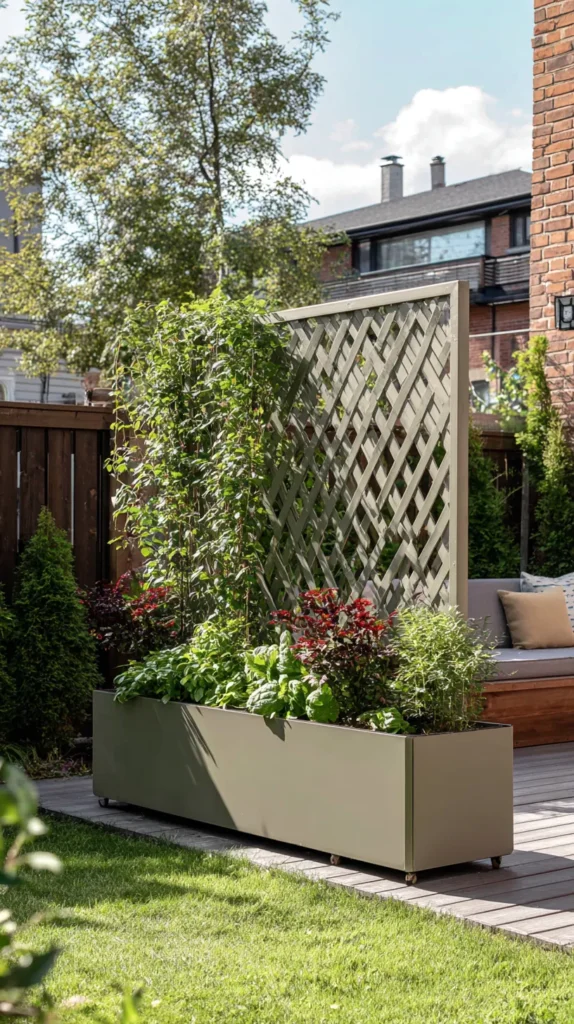
- Climbing vines paired with simple trellises or wire grids.
- Dense shrubs bought young and allowed to grow naturally.
However, plants don’t need to be perfect to work. I’ve found that slightly mismatched planters actually look more relaxed. That casual look reads intentional when repeated. Meanwhile, mixing heights creates visual interest and prevents the space from feeling boxed in.
Because plants grow, privacy improves over time. That’s one of the few upgrades that actually gets better instead of wearing out. With backyard privacy ideas like this, patience replaces overspending, and that trade-off feels worth it.
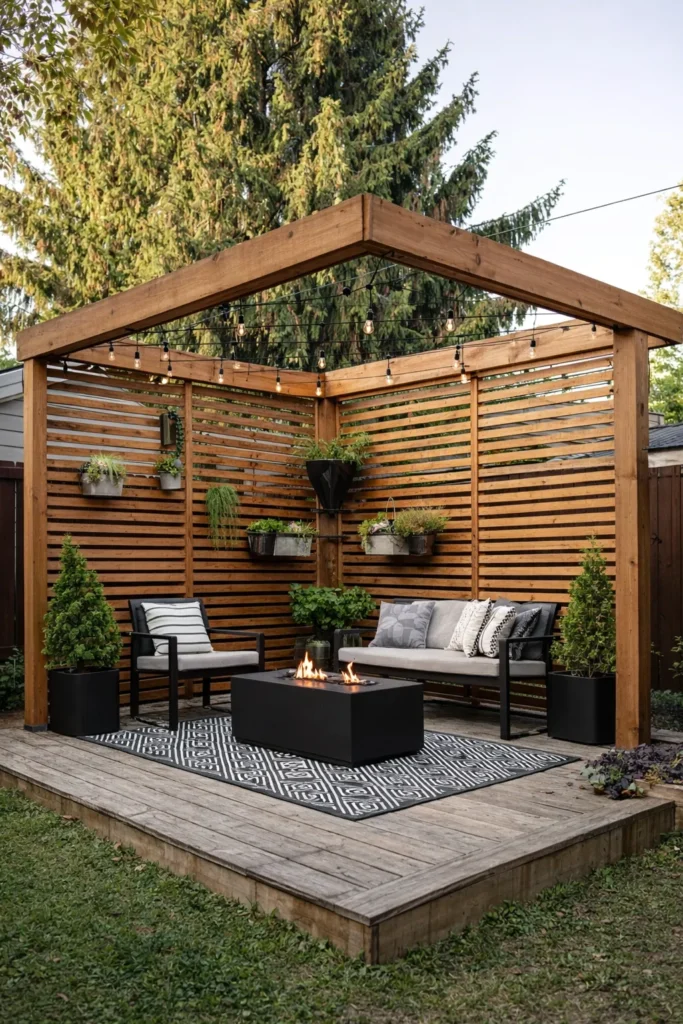
Curtains And Fabric Panels That Don’t Feel Temporary
I’ve found that fabric gets dismissed too fast in backyard spaces. People assume it looks flimsy or short-term. However, fabric often creates the most inviting kind of privacy. It softens edges instead of closing them off. That matters when a yard should stay relaxed.
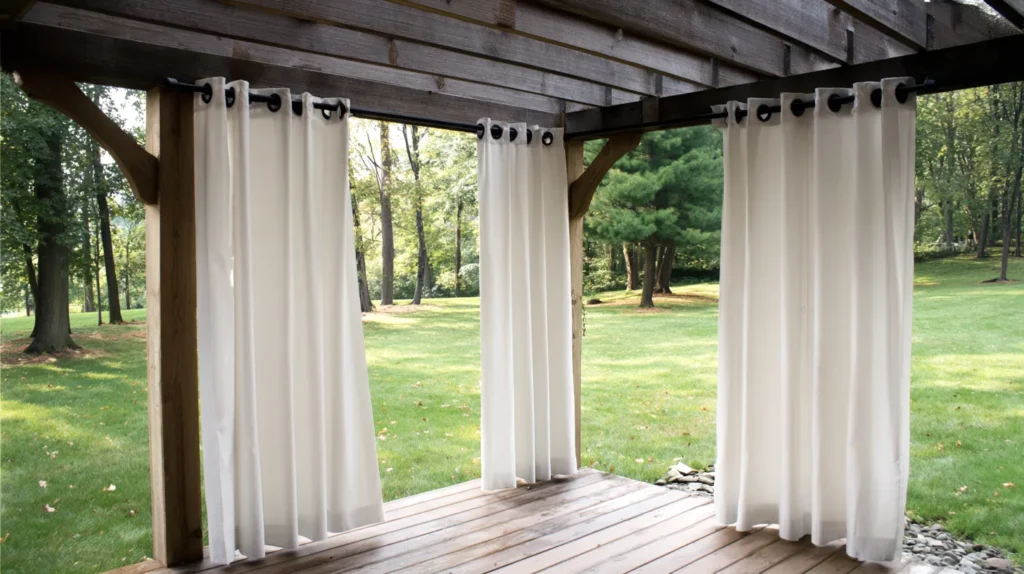
I tend to notice that fabric works best when it has support. Curtains look finished when they hang from something solid. Pergolas, rods, and tension wires all help. Even low-cost panels look planned when framed well. The structure does the visual work, not the fabric.
Fabric also shifts how a space gets used. You can open panels for airflow. You can close them for quiet. That control changes how the yard functions during the day. Instead of one fixed setup, the space adapts. That flexibility adds value without adding cost.
Some fabric-based backyard privacy ideas that balance style and budget include:
- Outdoor curtains with grommets that slide easily.
- Shade sails layered at angles for coverage and movement.
- Canvas panels secured with hooks for quick changes.
- Drop cloths dyed soft tones for a custom look.
Meanwhile, fabric absorbs sound in small ways. That detail matters more than people expect. Softer spaces stay calmer. Voices carry less. The yard feels less exposed.
While fabric won’t block every view, it doesn’t need to. Partial coverage often works better than solid walls. Movement keeps the space alive. Light still passes through. When panels sway, the yard feels relaxed instead of stiff.
Because fabric solutions stay flexible, they age well. You can swap colors. You can change layouts. Over time, backyard privacy ideas like these grow with the space. That freedom keeps outdoor areas useful and welcoming.
Fencing Alternatives That Look Thoughtful, Not Defensive
I’ve found that traditional fencing often looks harsher than people expect. Solid barriers can feel abrupt, especially in smaller yards. That’s why alternative fencing styles work so well for privacy without visual tension.
I tend to notice that horizontal elements soften a space instantly. Slatted panels allow airflow while limiting visibility. That balance keeps things comfortable without creating a boxed-in feeling. You also gain texture instead of a flat wall.
Some fencing-style backyard privacy ideas worth exploring include:
- Horizontal wood slats are spaced intentionally.
- Lattice panels layered with climbing plants.
- Reclaimed wood screens with mixed tones.
- Metal panels with cutout designs.
Another benefit of these options is scale. You don’t always need a full fence line. Sometimes a partial screen placed near seating areas works better. That approach saves money and avoids overbuilding.
Additionally, these designs age better than solid fencing. Imperfections blend in. Weathering adds character. When privacy solutions don’t scream “new,” they tend to feel more natural in the space. That understated look usually costs less and looks better longer.
Furniture Placement That Creates Privacy Without Buying Anything
I’ve found that furniture placement gets overlooked in most backyard privacy ideas, even though it’s free. The way seating faces can change how exposed a space feels. Small shifts make big differences.
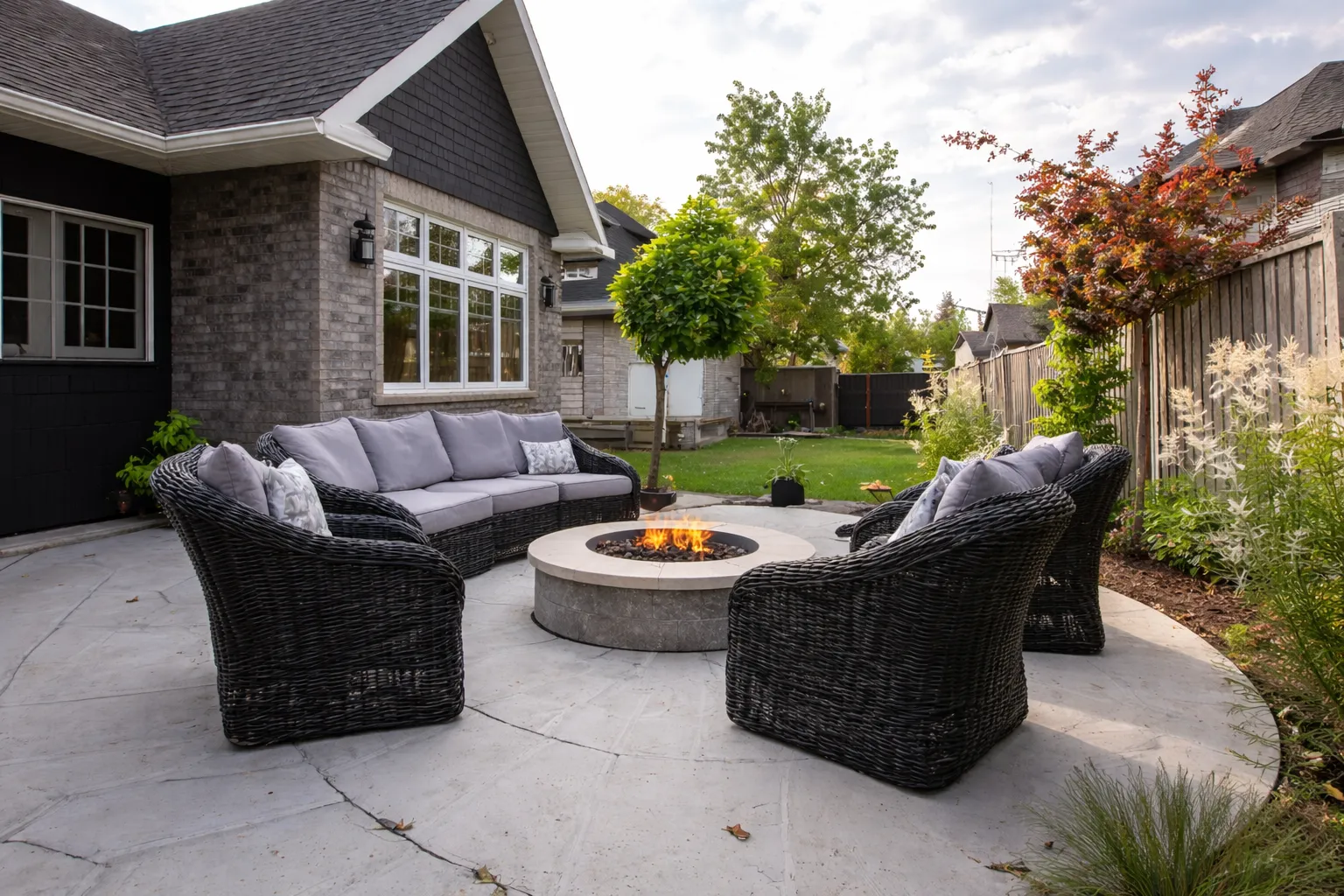
I tend to notice that seating placed against edges creates vulnerability. When chairs face open areas, people feel watched. Turning seating inward creates instant intimacy. It signals that the space belongs to whoever sits there.
Some placement strategies that work well include:
- Angling chairs toward each other instead of outward.
- Using benches along edges to block sightlines.
- Positioning tables perpendicular to fences.
- Creating conversation zones instead of open layouts.
Furniture backs can act like low walls. Even modest-height pieces block views when placed correctly. Adding cushions or throws increases that effect visually. Suddenly, the space feels layered rather than exposed.
Because this approach costs nothing, it’s often the best starting point. Rearranging before purchasing prevents unnecessary spending. Sometimes the privacy problem isn’t the yard. It’s the layout. Backyard privacy ideas don’t always require new items. Sometimes they require perspective.
Vertical Privacy Solutions That Use Height Wisely
I’ve found that height solves privacy problems faster than almost anything else. When space runs tight, going up makes more sense than spreading out. Vertical backyard privacy ideas block sightlines efficiently while keeping the yard usable. That balance matters when square footage feels limited.
Over time, I tend to notice that vertical elements also trick the eye upward. That upward pull makes smaller yards seem more open. Instead of crowding the ground, privacy rises quietly. The space stays breathable, not boxed in. (Which nobody wants.)
Another perk involves flexibility. Vertical pieces rarely need full construction. Many attach to things already in place. Because of that, costs stay manageable. You’re adding layers, not starting over. That approach feels smarter.
Some vertical options that work especially well include:
- Trellises paired with fast-growing vines for natural coverage.
- Tall planters grouped in corners to block angled views.
- Hanging planters staggered at different heights for texture.
- Wall-mounted panels that add pattern and separation.
Meanwhile, vertical privacy helps create zones without walls. Dining areas stay defined. Lounging spots feel intentional. Each area gains purpose without losing flow. That subtle separation often works better than solid barriers.
Because these elements rely on height instead of bulk, they age gracefully. Growth fills gaps. Materials weather naturally. Over time, backyard privacy ideas like these blend into the landscape instead of standing apart from it.
I also appreciate how vertical solutions invite creativity. You can layer plants, textures, and light without overwhelming the space. When privacy builds upward, the yard gains character. Plus, character totally beats overbuilding!
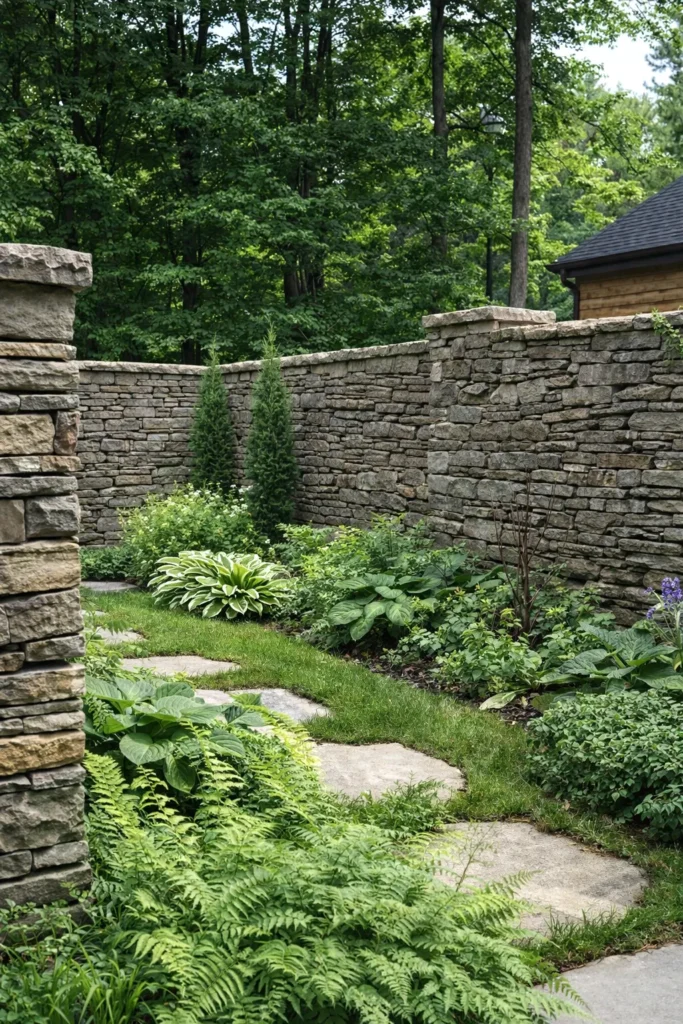
Backyard Privacy Ideas That Rely On Repetition Instead Of Height
I’ve found that repeating the same item can give a yard privacy without adding walls. When your eye sees the same thing again and again, it settles. That calm focus pulls attention inward. Because of that, the edge of the yard fades away. Backyard privacy ideas often work better when they guide the eye instead of blocking it.
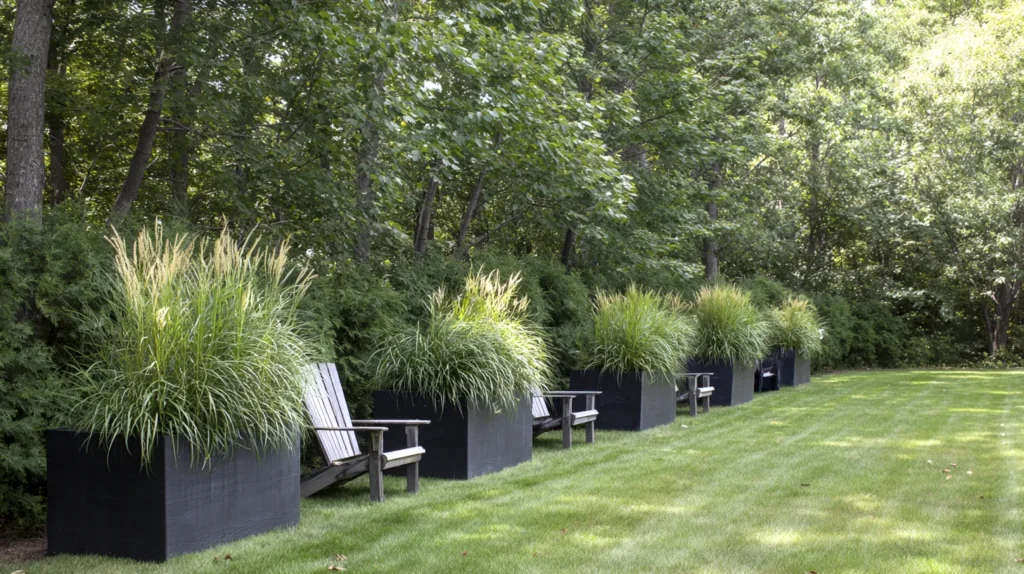
Over time, I tend to notice that smaller items repeated across a space work better than one large fix. A row of matching planters does more than a tall screen. A few similar chairs can form a soft boundary. Since the shapes repeat, the yard reads as one clear space. That simple pattern creates privacy without pressure.
Repetition also helps when things aren’t perfect. One planter might look off. Several matching planters look planned. Your eye follows the pattern instead of the flaw. That shift saves money and stress. (Both matter.)
Spacing matters here as well. Even spacing looks neat and calm. Slightly uneven spacing looks relaxed. Either option works. Repetition keeps the space steady. It doesn’t rush or shout. It simply works.
Because this idea doesn’t rely on height, it fits smaller yards well. Chairs, lanterns, planters, or panels can repeat with ease. When the same shape shows up across the space, the yard feels held. It stays open, not closed.
Meanwhile, repetition keeps spending under control. You can add pieces slowly. You can reuse items you already own. That pace removes pressure to finish everything at once. Over time, the yard comes together naturally.
Backyard privacy ideas built on repetition age well. Each added piece strengthens the effect. The space stays useful as it changes. That steady growth makes the yard easier to enjoy.
Lighting That Creates Privacy Through Distraction
I’ve found that lighting quietly does more for privacy than people expect. Backyard privacy ideas often focus on blocking views, but distraction works just as well. When lighting draws the eye inward, boundaries matter less. Suddenly, attention goes to the ambiance instead of the fences. That shift feels intentional, not defensive.
I tend to notice that darker edges paired with warmer lighting near seating areas work especially well. When the brightest spots stay close, everything beyond them softens. As a result, the yard feels more contained without adding physical barriers. It’s subtle, but it works. And yes, subtle counts.
Lighting also helps define zones, which creates privacy through structure. When areas have purpose, wandering eyes lose interest. That sense of order matters more than height sometimes. Plus, lighting upgrades rarely wreck a budget.
Some lighting-based backyard privacy ideas that balance impact and cost include:
- String lights hung inward, rather than along the fence line.
- Lanterns grouped near chairs or tables for visual weight.
- Solar uplights aimed at plants, textures, or vertical elements.
- Pathway lights used sparingly to outline space, not spotlight it.
Meanwhile, warm light encourages people to linger, which changes how the space gets used. When an area feels inviting, privacy becomes emotional instead of physical. You relax. You stop scanning the perimeter. All you do is stay present. (That’s the real goal.)
Because lighting options vary widely in price, this approach scales easily. You can start small and layer later. Even inexpensive lights look thoughtful when placed with intention. Backyard privacy ideas don’t always need walls or screens. Sometimes they just need the right glow in the right place.
Layering Multiple Backyard Privacy Ideas For A Finished Look
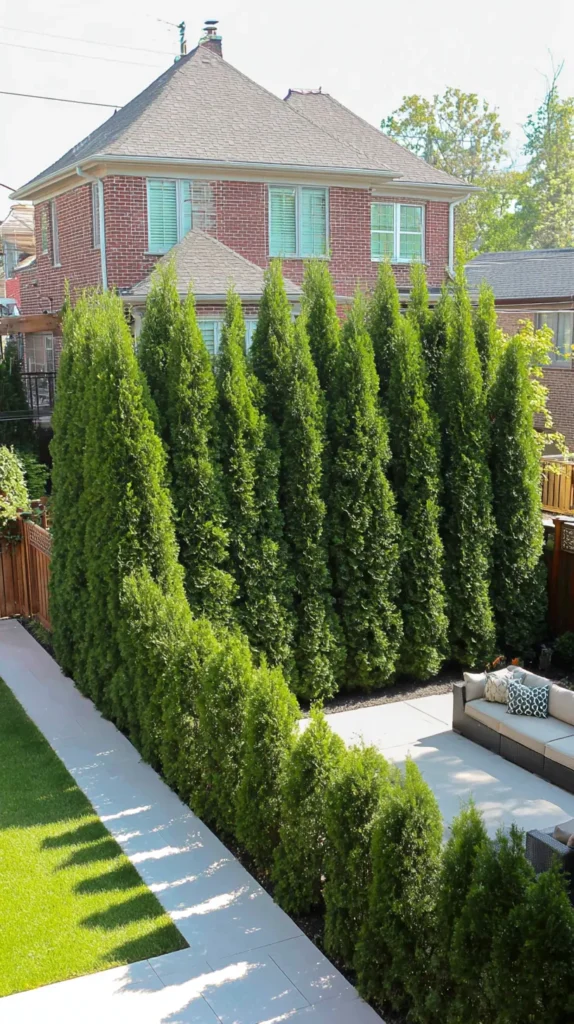
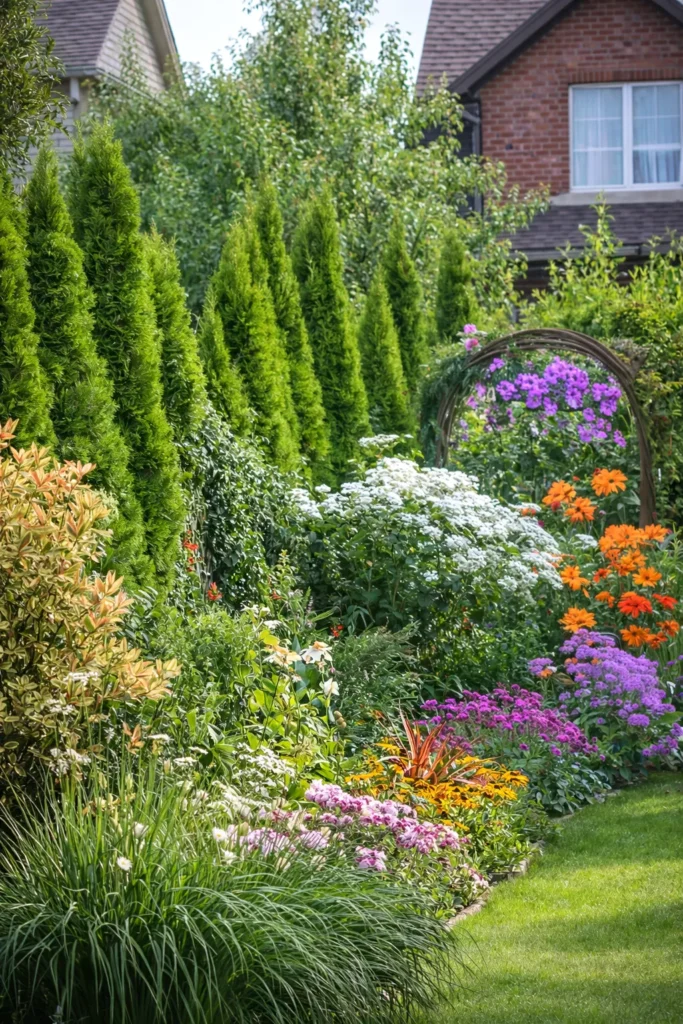
I’ve found that the most effective privacy solutions never rely on one element alone. Layering creates depth and flexibility. That’s where backyard privacy ideas really shine.
I tend to notice that combining two or three low-cost elements works better than one expensive fix. For example, plants plus lighting plus furniture placement create privacy from multiple angles. Each layer supports the others.
Some effective combinations include:
- Tall planters with fabric panels behind seating.
- Slatted screens paired with climbing greenery.
- Furniture rearrangement supported by lighting.
- Vertical trellises softened with curtains.
Layering also allows gradual improvement. You don’t need to do everything at once. Adding one element at a time spreads costs and lets the space evolve naturally.
When privacy builds over time, the yard feels lived-in instead of staged. That relaxed finish is hard to fake. With thoughtful layering, backyard privacy ideas become part of the atmosphere instead of obvious solutions.
Final Thoughts
I’ve found that privacy matters most once I actually spend time in the yard. Quiet moments work better when there’s a little separation. When that separation exists, being outside feels easier. Privacy doesn’t mean hiding. It simply gives me room to relax.
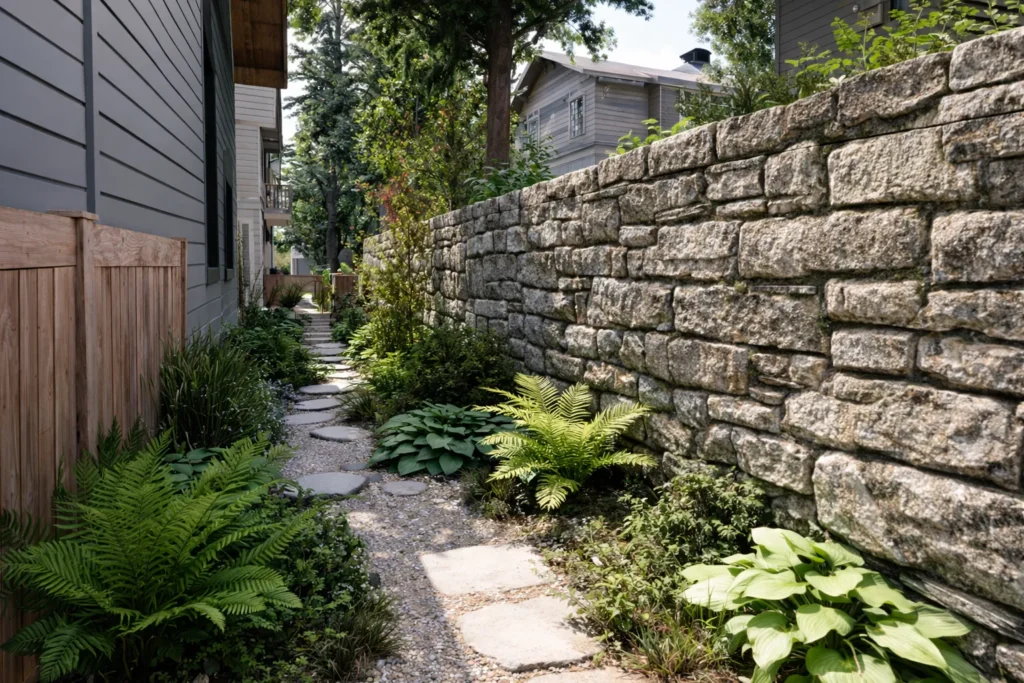
Over time, I tend to notice that the best changes don’t call attention to themselves. They sit there quietly. Edges look softer. Walking paths make more sense. There’s enough distance to relax without cutting the space off. That balance keeps the yard comfortable rather than closed in.
Living in Orlando has shaped how I think about outdoor spaces. Backyards get used here most of the year. Because of that, small changes matter more than big ones. I’ve learned to focus on updates that work now and still work later. That mindset keeps things flexible.
I’ve also found that keeping the budget in mind helps me choose more carefully. Limits slow me down in a good way. Instead of chasing trends, I focus on what fits the space. Those choices tend to last longer. The yard improves without feeling rushed. (Which helps.)
I notice this same pattern when I scroll Pinterest late at night. Layered outdoor spaces always catch my eye. Simple setups look more realistic. Practical ideas feel doable. That kind of inspiration feels useful, not overwhelming.
Backyard privacy ideas don’t need to take over the space. They just need to support how time gets spent outside. When comfort comes first, style usually falls into place. That approach holds up far better than trying too hard.