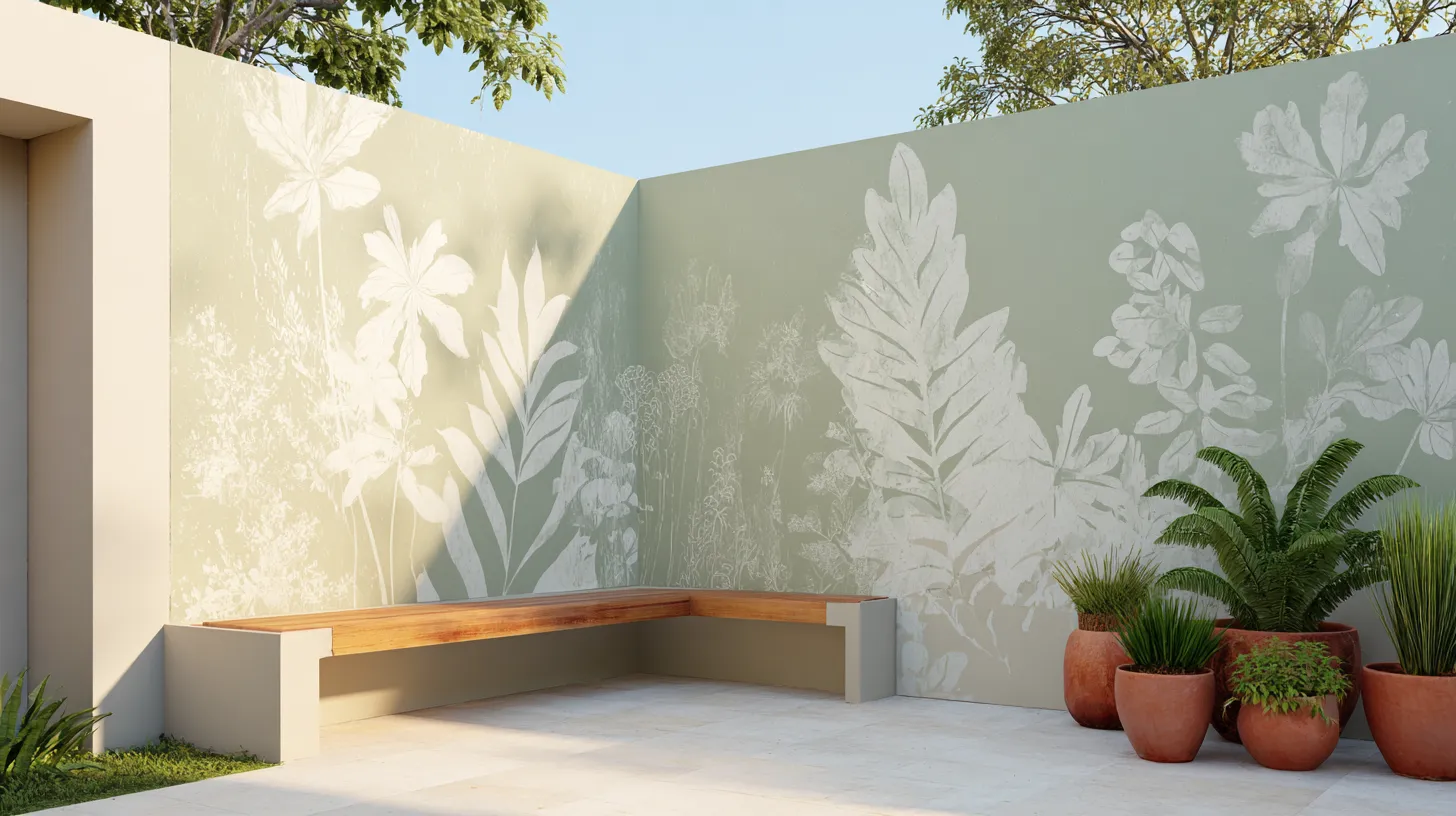
I have a soft spot for garden projects that promise order without demanding perfection. That is exactly why a cucumber trellis always grabs my attention. Structure matters, but pressure does not. Abundance works best when chaos stays out of the picture. Somehow, this one simple build manages to look charming while doing real work, which feels like a win.
This post exists because I like things that earn their spot. Backyard setups should help, not hover or nag. Cucumbers sprawl like they missed every meeting about personal space. A trellis gives them direction without turning the garden into a rulebook. Better still, it protects the budget while keeping things intentional. That mix deserves more credit than it gets.
I am not here to teach with a clipboard. Instead, I want to chat, nudge, and share what I have noticed over time. Simple builds age well. Expensive kits usually do not. Style does not need specialty tools or a designer price tag. It needs a clear point of view and a solid plan.
Living in Orlando means gardens never really take a break. Growth happens fast and often with enthusiasm. Because of that, smart structures matter more than pretty chaos. A trellis handles heat, heavy growth, and sudden afternoon storms without complaint.
So yes, this is about cucumbers. Still, it is really about choices. It is about where to spend and where to save. It is also about making useful things look intentional enough to enjoy daily.
Let’s talk about how a cucumber trellis earns its keep without draining your wallet.
Some of the links on this page are affiliate links, which means that if you click on them and buy something, I might get a small commission. But don’t worry; it never costs you more. You can peek at my full disclosure if you’re curious about the fine print.
Why A Cucumber Trellis Changes Everything
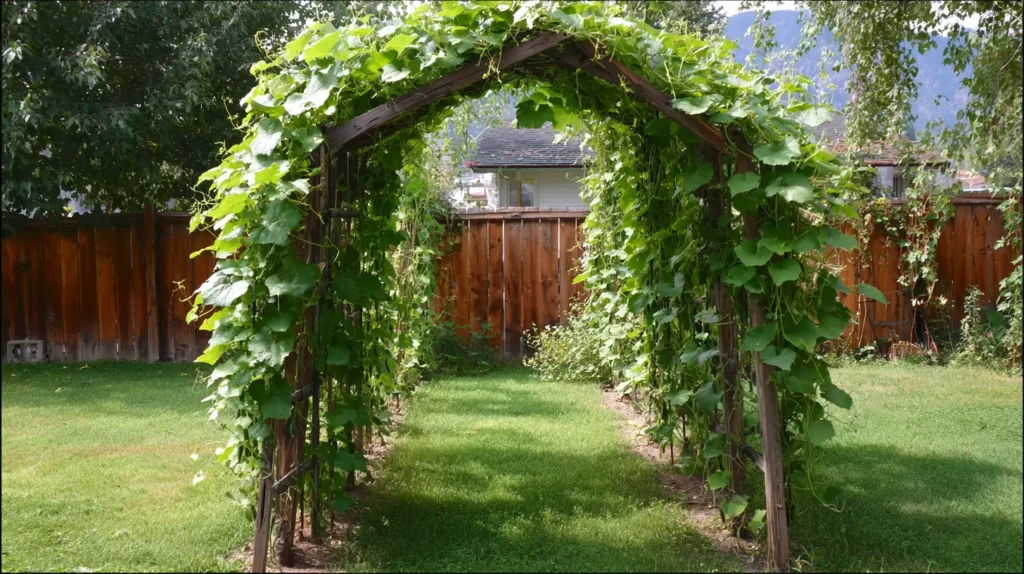
I used to underestimate vertical space. That was a mistake. Cucumbers climb with determination and zero concern for boundaries. A trellis gives them purpose. It also gives you breathing room.
First, let’s talk about space. When vines grow upward, the ground opens up. Suddenly, your garden looks organized. Meanwhile, harvesting becomes easier and cleaner. Muddy cucumbers stop being a thing. That alone feels like progress.
Then there is airflow. Vertical growth improves circulation naturally. Therefore, leaves dry faster after rain. That reduces common issues without extra products. Simpler systems usually win.
Aesthetics matter too. A cucumber trellis adds rhythm to a garden bed. Lines create calm. Repetition creates style. Even basic materials look thoughtful once they stand upright.
I have found that vertical structures also invite creativity. You start thinking in layers. Herbs go below. Flowers weave nearby. Everything shares space politely.
Here is what a trellis quietly solves:
- Keeps cucumbers off damp soil
- Makes picking faster and less messy
- Helps plants grow straighter
- Reduces overcrowding
- Adds visual height without clutter
However, the real magic lies in longevity. A well-built trellis lasts seasons. Meanwhile, cucumber plants come and go. That is a good trade.
Because budgets matter, this approach avoids constant replacements. You build once. You adjust later. Over time, it becomes part of the garden’s identity.
That is why the cucumber trellis stops being optional. It becomes the backbone.
Budget-Friendly Materials That Still Look Good
Cheap does not need to scream cheap. That idea deserves retirement. Materials behave better when chosen with intention. A cucumber trellis benefits from that mindset.
Start with wood. Untreated cedar resists rot naturally. However, pine works fine with sealing. Both look warm and honest. Neither needs perfection to charm.
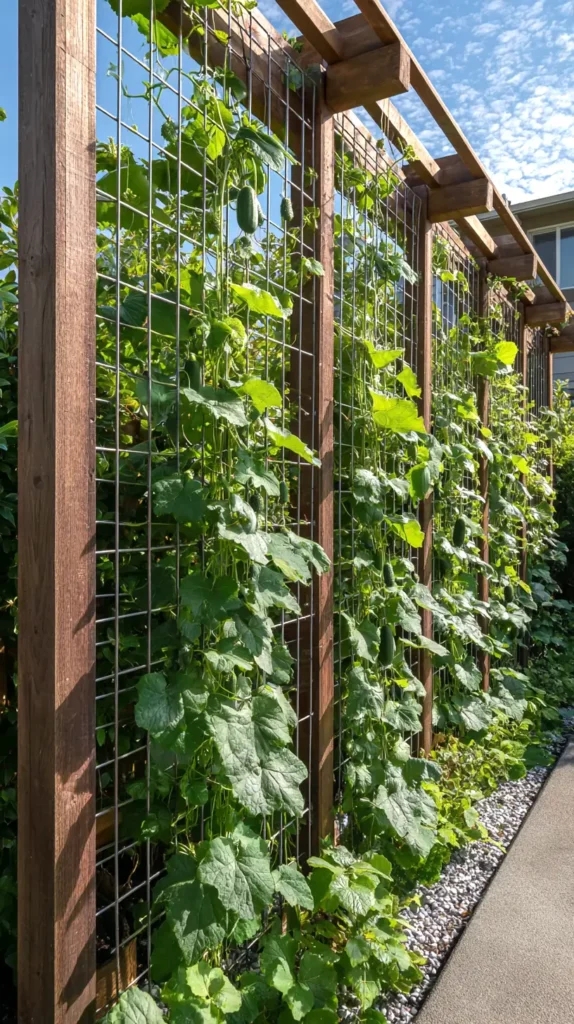
Metal panels also shine here. Cattle panels sound agricultural, yet they photograph beautifully. Curves soften their presence. Straight lines keep things modern. You choose the vibe.
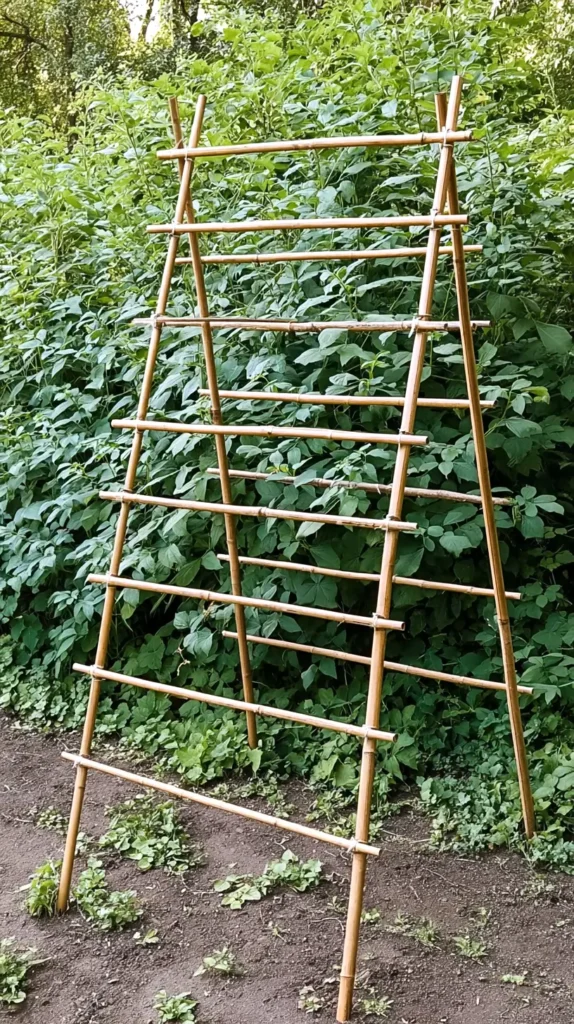
Bamboo stakes offer another option. They are lightweight and flexible. Plus, they bring texture without cost. Grouped together, they look deliberate.
Here are materials that play well with budgets:
- Cedar or pine boards
- Galvanized wire fencing
- Cattle panels cut to size
- Bamboo poles
- Zip ties or garden wire
However, mixing materials often looks best. Wood frames paired with wire feel balanced. Metal paired with greenery softens quickly. Nature does the styling for you.
I have found that restraint matters more than price. Avoid overbuilding. Extra layers confuse the eye. Simple shapes read as confident.
Also, think about aging. Wood silvers. Metal dulls. Bamboo weathers. All of that looks better with time. Meanwhile, plastic rarely improves.
Because style lives in cohesion, repeat materials elsewhere. Match the trellis to raised beds or edging. Suddenly, the whole yard looks intentional.
That is how a cucumber trellis looks expensive without costing much.
How To Build A Simple DIY Cucumber Trellis
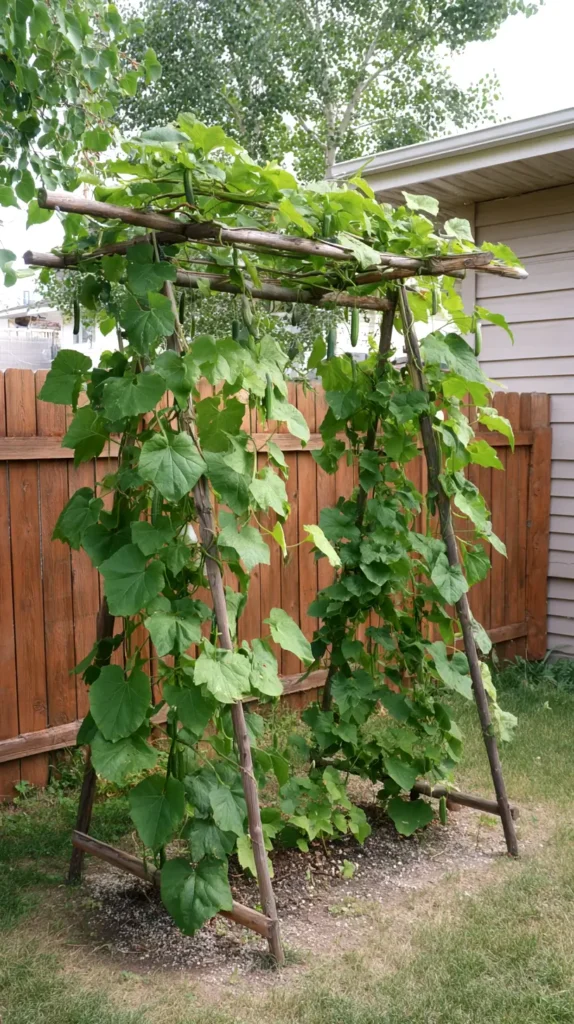
Building does not need drama. A cucumber trellis rewards calm assembly. The goal is sturdy, not fancy. Focus helps.
Start by choosing a location. Sun exposure matters. So does accessibility. You want to reach both sides easily. That saves frustration later.
Next, set posts securely. Dig deep enough to prevent wobble. Therefore, aim for at least twelve inches. Gravel at the base improves drainage.
Attach your climbing surface next. Wire panels or fencing should feel taut. Slack invites sagging later. Zip ties work fast. Screws last longer.
Here is a straightforward build path:
- Mark spacing based on plant count
- Install vertical posts firmly
- Attach wire or panel tightly
- Test stability with a gentle shake
- Adjust before planting
However, do not overthink measurements. Cucumbers adapt. Perfection is unnecessary. Function leads.
I have found that slightly taller trellises outperform short ones. Plants stretch quickly. Give them room.
Meanwhile, consider entry points. Leave gaps for training vines. You will guide them early. Later, they take over happily.
Because safety matters, smooth sharp edges. Gloves help. Rust-proofing helps more.
Once built, step back. Look at proportions. Adjust if needed. This is the moment to tweak.
A cucumber trellis built this way lasts for seasons. It also stays friendly to budgets.
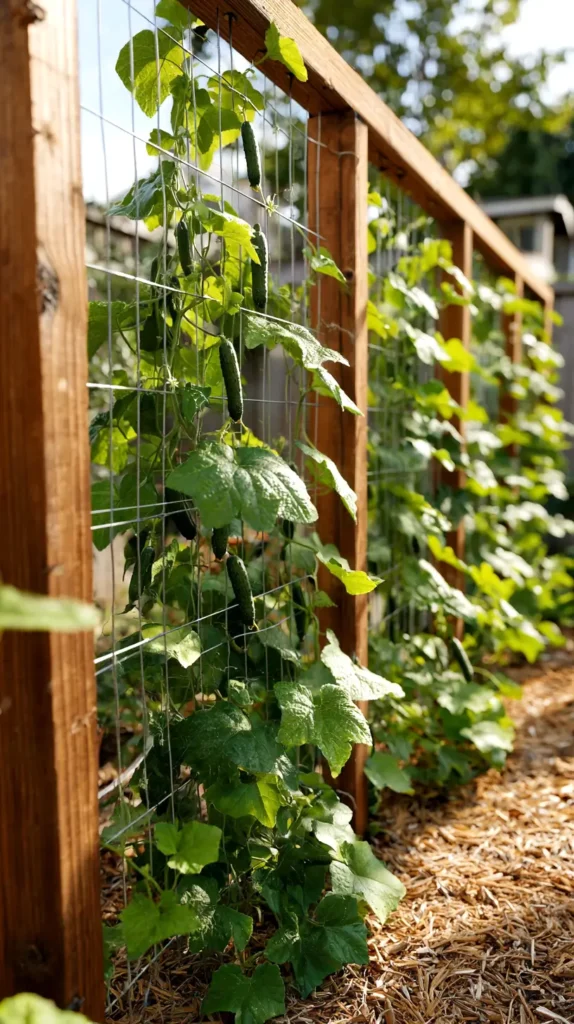
The Modular Cucumber Trellis Trick That Saves Money And Sanity
Here is a cucumber trellis idea that quietly fixes several problems at once. Build it in panels. Not one big fixed structure. Separate, removable sections that hook together when needed. This changes everything.
Most backyard trellises fail because they commit too hard. They assume cucumbers deserve permanent real estate. However, cucumbers are seasonal guests. They arrive loudly. They leave abruptly. A modular setup respects that rhythm.
Instead of anchoring one long frame, create two or three narrow trellis panels. Each panel stands alone with simple ground stakes. When cucumbers need space, you line them up. When the season ends, you separate them.
That flexibility matters. Panels store flat. They stack against a shed wall. They slide behind a garage fridge without drama. Meanwhile, the garden regains breathing room.
The real value shows up mid-season. If one plant explodes faster, you add a panel beside it. If another struggles, you remove support and redirect growth elsewhere. Nothing feels locked in.
I have found this approach also solves awkward garden gaps. Short bed? Use one panel. Long bed? Use three. Curved space? Angle them slightly. Straight lines are optional.
A modular cucumber trellis also doubles as a temporary screen. Line panels near seating. Vines create privacy without fences. Shade appears naturally. The space looks styled, not improvised.
Because each panel is identical, repairs stay simple. One damaged section does not ruin the whole system. You fix or replace only what failed.
That is the quiet brilliance. Less commitment. More control. Same materials. Better results.
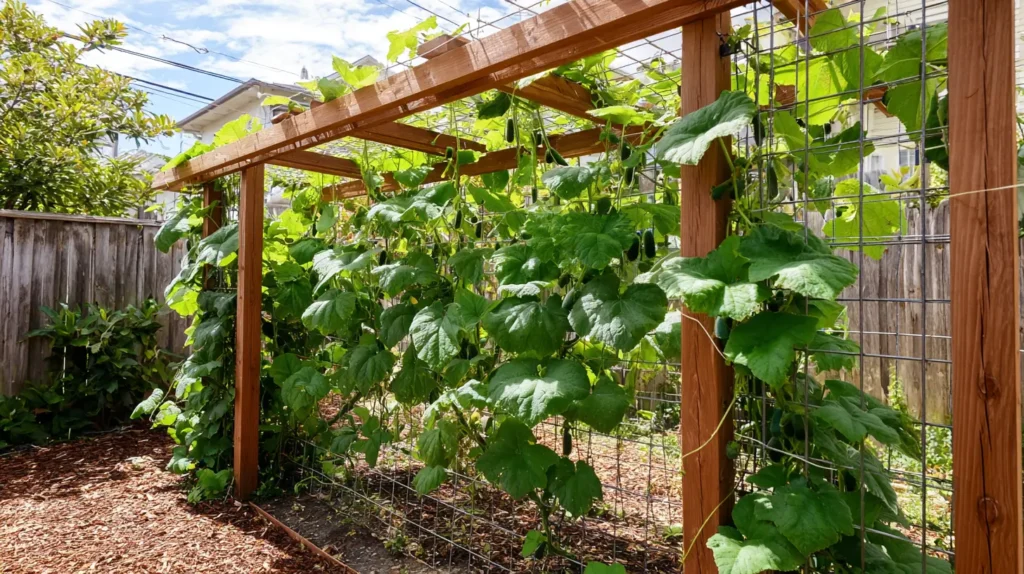
Styling Your Cucumber Trellis Without Spending More
Here is the fun part. Styling costs nothing when done right. A cucumber trellis dresses itself with time. You simply set the stage.
Start with placement. Align the trellis with sightlines. Frame views rather than blocking them. That keeps the yard open.
Then think repetition. One trellis looks lonely. Two look planned. Three look intentional. Odd numbers usually win visually.
Plants help too. Nasturtiums climb politely. Marigolds sit below obediently. Herbs soften edges. Everything earns space.
Consider these styling tricks:
- Paint wood frames a muted shade
- Let vines spill slightly for softness
- Add matching stakes elsewhere
- Keep surrounding beds tidy
- Avoid mixing too many shapes
However, restraint remains key. Too much decoration distracts from growth. The plants should star.
I have noticed that neutral tones age best. Natural wood beats bright paint long-term. Greens do the rest.
Meanwhile, symmetry calms the eye. Even spacing feels deliberate. Chaos reads accidental.
Because light changes everything, notice shadows. Trellises cast patterns. Those patterns add interest without cost.
Over time, the cucumber trellis blends into the garden. It stops shouting and starts belonging.
That is the goal. Useful. Quietly stylish.
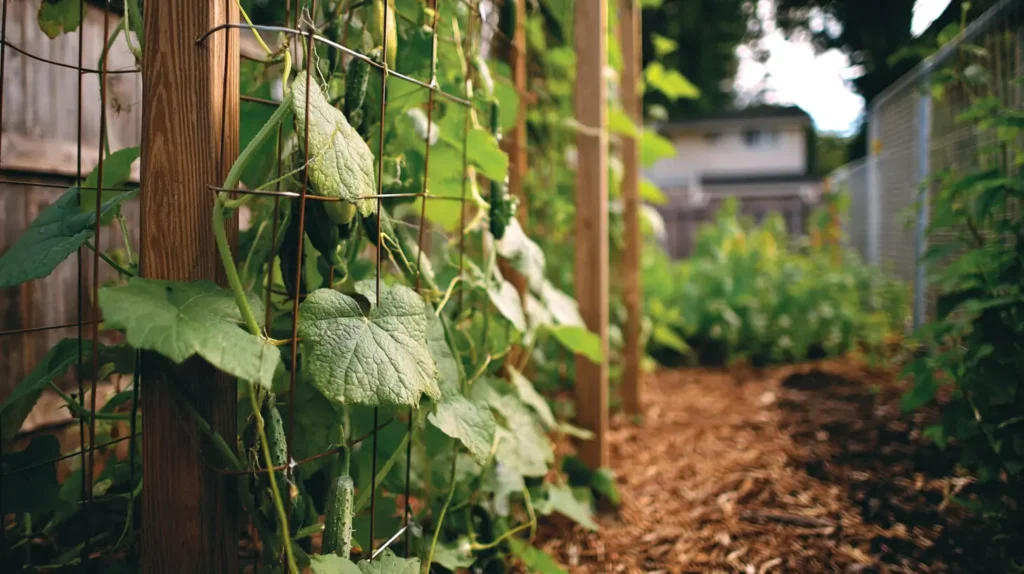
Training Cucumbers To Love Their Trellis
Plants need guidance early. Cucumbers included. A cucumber trellis works best with gentle training. Think suggestion, not force.
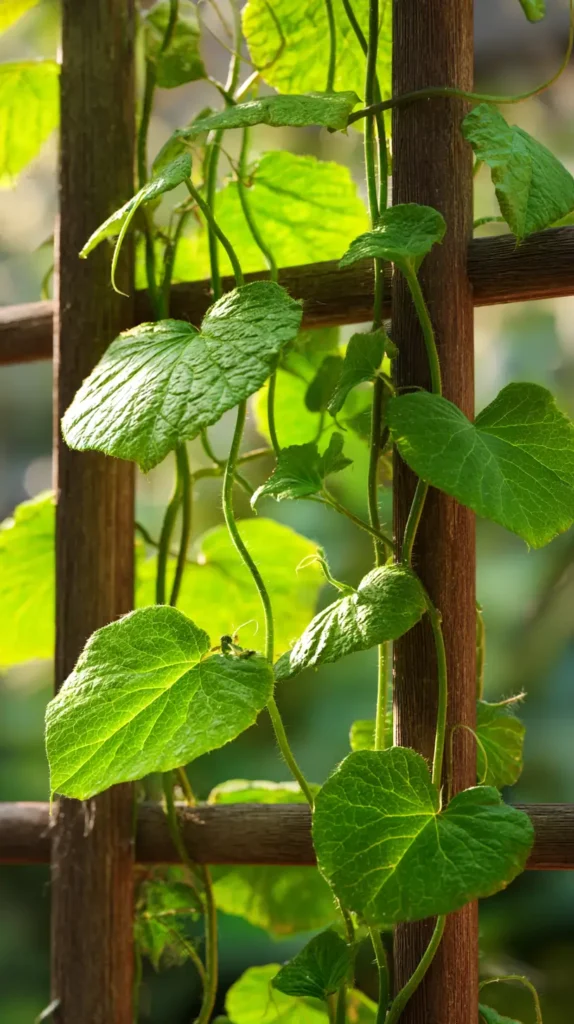
Start when vines are young. Guide tendrils toward the structure. They grab quickly. Nature handles the rest.
Use soft ties if needed. Avoid tight knots. Growth accelerates fast. Flexibility prevents damage.
Here is what helps:
- Train in the morning when vines bend easily
- Check weekly during early growth
- Redirect wandering shoots calmly
- Remove damaged stems promptly
- Let gravity assist upward growth
However, avoid constant fussing. Overhandling stresses plants. Once attached, step back.
I have found that consistency matters more than intensity. Regular checks beat frantic fixes.
Meanwhile, spacing prevents tangles. Give each plant its lane. That improves airflow and access.
Because cucumbers grow fast, expect surprises. Vines leap overnight. That is normal. Adjust calmly.
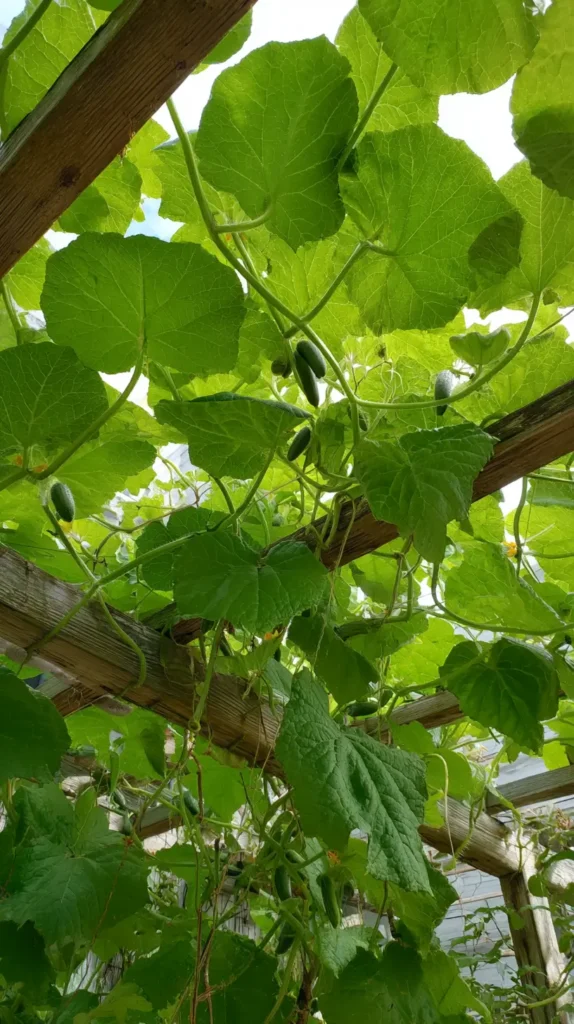
Soon, the trellis disappears behind leaves. That moment feels satisfying. Order emerges quietly.
A cucumber trellis succeeds when it becomes invisible beneath growth.
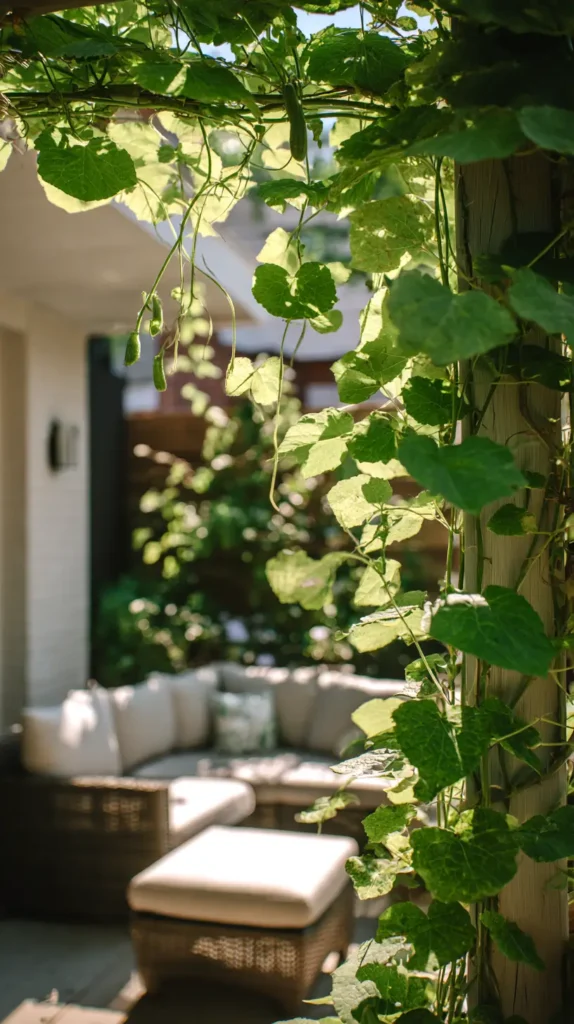
Treating A Cucumber Trellis Like Backyard Furniture Instead Of Garden Gear
I think part of the reason people resist building a cucumber trellis is mental framing. It gets lumped into “garden equipment,” which sounds dusty and bossy. That framing is the problem. A trellis works better when you treat it like furniture.
Furniture implies intention. It suggests placement matters. It hints that proportion counts. Once you see a cucumber trellis that way, decisions get easier and smarter.
Start by thinking about scale. A trellis should match its surroundings, not dominate them. Low beds pair better with lighter frames. Taller beds can handle height without drama. Balance matters more than strength here.
Then consider repetition. Backyard furniture almost always comes in sets. One chair feels lonely. Two feel planned. A matching pair of trellises instantly looks styled, even before vines appear.
Materials matter for the same reason they matter indoors. Wood warms things up. Metal adds structure. Mixing both creates contrast without chaos. Meanwhile, plastic never quite commits to a look.
I have found that placement changes behavior. A trellis tucked into a corner gets ignored. One aligned with a path gets admired. People notice what sits in their line of sight.
Lighting also plays a role. Morning light through vines casts patterns that soften everything nearby. Afternoon shadows add texture. That visual payoff costs nothing.
A cucumber trellis treated like furniture earns care. You straighten it, you clean it, and you store it properly. That extends its life naturally.
When the season ends, it does not feel disposable. It feels reusable. Next spring, it comes back out like a favorite chair. Familiar. Reliable. Ready.
That shift in mindset saves money quietly. It also makes the garden feel designed, not assembled.
Step-by-Step How To Build And Grow Cucumbers On A Cucumber Trellis
1) Know The Basic Cucumber Rules First
Cucumbers are warm-weather plants. They hate cold like it’s personal.
Planting too early is the fastest way to get sad vines.
Use these temperature targets:
- Soil temp for planting outdoors: 60°F minimum, 65–70°F is better
- Best daytime temps for growth: 70–85°F
- Growth slows below: 60°F
- Frost tolerance: none
2) When To Plant By USDA Zone
Instead of guessing, tie planting to your last frost date and soil warmth.
- Zones 3–5: Plant outdoors 2–4 weeks after last frost when soil hits 60°F
- Zones 6–7: Plant outdoors 1–3 weeks after last frost when soil hits 60°F
- Zones 8–9: Plant outdoors at last frost or 1–2 weeks after, once nights stay above 55°F
- Zones 10–11: Plant in late winter to spring, and again in late summer for fall harvest
If you want a simple shortcut: If nights are still dipping under 55°F, wait.
3) How Long They Take And What Growth Looks Like
Most slicing cucumbers mature in 50–70 days from seed.
Pickling types often run 45–60 days.
A realistic timeline:
- Week 1–2: seeds sprout (faster in warm soil)
- Week 3–5: vines start running and grabbing
- Week 5–7: flowers show up, then tiny cucumbers
- Week 7+: steady harvest if you keep picking
4) Trellis Size That Actually Works
A cucumber trellis should be sturdy because vines get heavy.
Aim for:
- Height: 5–6 feet (minimum 4 feet)
- Length: 4–8 feet depending on space
- Grid openings: 4–6 inches (perfect for training)
5) The Simplest DIY Cucumber Trellis Build
This is the easiest “looks good, works hard” version: wood posts + wire panel.
Materials (budget-friendly and easy):
- Two pressure-treated 2x2s or 2x3s, 6–7 feet long
- One top board (1×2 or 2×2), about 4 feet long
- One welded wire panel or garden fence (about 4 ft x 5 ft)
- Exterior screws
- Staples or heavy-duty zip ties
- Optional: gravel for post holes
Tools:
- Drill or driver
- Staple gun (if using staples)
- Tape measure
- Shovel
6) Build Steps You Can Follow Without Overthinking
- Pick your spot. Choose full sun, with room to reach both sides.
- Mark your post spacing. Set posts 3–4 feet apart for a 4-foot-wide trellis.
- Dig two holes. Go 12–18 inches deep so it won’t wobble.
- Set posts straight. Backfill soil tightly, or add gravel first for drainage.
- Attach the top board. Screw it across the posts to lock the frame.
- Attach the wire panel. Pull it tight, then staple or zip tie it down.
- Check stability. Give it a firm shake now, not after vines take over.
- Mulch below. Mulch keeps cucumbers cleaner and watering easier.
That’s the whole build. No fancy cuts. No drama.
7) Planting And Spacing So The Trellis Works
Plant cucumbers close enough to climb, but not so close they fight.
- Plant spacing: 12 inches apart for trellis growing
- Row spacing: 2–3 feet between trellises or beds
- Seeds per spot: 2–3 seeds, then thin to the strongest plant
Place seeds 1 inch deep in warm soil.
8) Training Cucumbers Up The Trellis
This is the part most people skip, then blame the plant.
- Start training when vines hit 8–12 inches long
- Gently guide the vine to the wire grid
- Use soft ties only if needed
- Check once a week and redirect “escape artists”
After that, cucumbers usually climb like they’re trying to prove a point.
9) A Few “Keep Them Alive” Notes
- Water deeply, not daily sprinkles
- Pick often to keep production going
- If leaves stay wet all night, airflow improves on a trellis
- Harvest before cucumbers get huge and bitter
Common Mistakes That Waste Money
Mistakes cost more than materials. Learning saves budgets. A cucumber trellis highlights that truth.
First mistake is going too flimsy. Lightweight stakes collapse under weight. That creates repairs. Repairs cost time.
The second mistake involves poor anchoring. Shallow posts lean. Leaning stresses joints. Everything suffers.
Another issue involves overcrowding. Too many plants fight for space. Yields drop. Frustration rises.
Avoid these pitfalls:
- Using thin wire alone
- Skipping ground support
- Overloading one panel
- Ignoring early training
- Placing trellis in shade
However, the biggest mistake involves overbuying. Fancy kits tempt. Most are unnecessary. DIY adapts better.
I have noticed that simple builds adjust easily. Complex systems resist change. Gardens evolve. Structures should, too.
Meanwhile, skipping maintenance invites failure. Check fasteners seasonally. Tighten as needed.
Because money-savvy choices compound, small fixes prevent replacements. That mindset pays off.
A cucumber trellis does best when you plan ahead!
Making Your Trellis Work Beyond Cucumbers
Versatility stretches value. A cucumber trellis should multitask. That is where savings multiply.
Once the season ends, do not dismantle. Let the structure stay. Peas love it next. Beans follow gladly.
Flowers also climb. Sweet peas soften spring beds. Morning glories add drama. Structure remains the same.
Consider off-season uses:
- Support tomatoes temporarily
- Hold netting for shade cloth
- Frame lightweight lights
- Anchor frost covers
- Define garden zones
However, avoid permanent attachments. Flexibility matters. Seasonal swaps keep things fresh.
I have found that consistent structures simplify planning. You know what fits. You plant accordingly.
Meanwhile, reused materials save money repeatedly. That aligns with budget goals.
Because style thrives on repetition, recurring structures unify gardens. Everything looks cohesive.
A cucumber trellis that adapts earns loyalty. It becomes infrastructure, not decor.
Final Thoughts
I like projects that quietly improve daily routines without demanding attention. A cucumber trellis does exactly that. Growth stays organized. Space stays usable. The garden feels calmer without extra effort.
What I appreciate most is the confidence it brings over time. Worry about sprawl fades. Awkward bending becomes less common. Harvesting turns into a simple habit instead of a chore.
I have found that building once and reusing often saves both money and patience. That approach works far beyond the garden. Consistency usually beats constant upgrades. Gardens respond well to that kind of steady thinking.
Living in Orlando means outdoor spaces matter all year. Because of that, smart structures pay off faster here. Sun, rain, and sudden enthusiasm from plants demand support that lasts. A trellis handles those conditions with quiet reliability.
Style does not require spending more to make a point. Choosing well matters far more than buying often. A cucumber trellis proves that lesson every single season.
I also enjoy how easily these ideas travel. Pinterest loves practical inspiration that looks good and works hard. Simple builds tend to spread because they make sense.
So build something useful and let it age honestly. Give plants room to do their thing. Over time, the structure stops feeling like a project.
That is how a cucumber trellis becomes more than wood and wire. It becomes part of how you garden.