I have a very specific affection for French onion soup, and it has nothing to do with cold weather. This isn’t seasonal for me; it’s aesthetic, practical, and quietly strategic. French onion soup sounds like something ordered in a low-lit café, even when it starts in a home kitchen. That contrast makes it powerful right away. I’ve found that dishes with built-in confidence do half the work for you.
What keeps pulling me back is how this soup plays both sides. On one hand, it looks indulgent. On the other, it shops responsibly. The flavor runs deep without creating chaos, which I appreciate. Most impressive recipes demand either money or stress. This one asks for onions, time, and attention. That trade always works in my favor.
Living in Orlando changes how I think about soup nights. Weather doesn’t decide them; intention does. Air conditioning creates its own season, and I lean into that happily. I tend to notice that warm meals slow everything down, even when it’s sunny outside. Standing at the stove while onions caramelize feels grounding (and oddly satisfying). Someone usually wanders in to ask what smells so good.
This French onion soup recipe fits how I like to cook. It respects a budget while still delivering something polished. Nothing exists just to impress. Every step earns its spot. Each ingredient has a job. It’s the kind of recipe that quietly makes you look like you know what you’re doing, which is my favorite outcome in the kitchen.
Some of the links on this page are affiliate links. That means if you click and make a purchase, I may earn a small commission at no extra cost to you. If you’re curious about the fine print, you can check out my full disclosure.
Why French Onion Soup Always Sounds Like More Effort Than It Is
French onion soup carries a reputation that does a lot of heavy lifting. People hear the name and immediately picture restaurants, heavy bowls, and quiet conversations. That expectation works in your favor when you’re cooking smart. You don’t have to oversell it. The dish already walked in with confidence.
I tend to notice that recipes built around time instead of ingredients feel more luxurious. This soup is mostly onions, broth, bread, and cheese. However, the slow caramelization transforms those onions into something deeply savory and complex. Time replaces cost here, which feels like a fair trade.
There’s also something about the structure that feels intentional. The broth is rich but not overwhelming. The bread adds substance without heaviness. The cheese finishes everything with warmth and comfort. Nothing feels accidental.
What I appreciate most is how forgiving it is.
- The onions don’t need perfection, just patience
- The broth can be boxed without apology
- The cheese can be practical instead of fancy
- The bread can be day-old and actually better
French onion soup doesn’t punish substitutions. It rewards attention. That makes it ideal for anyone trying to cook well without overspending.
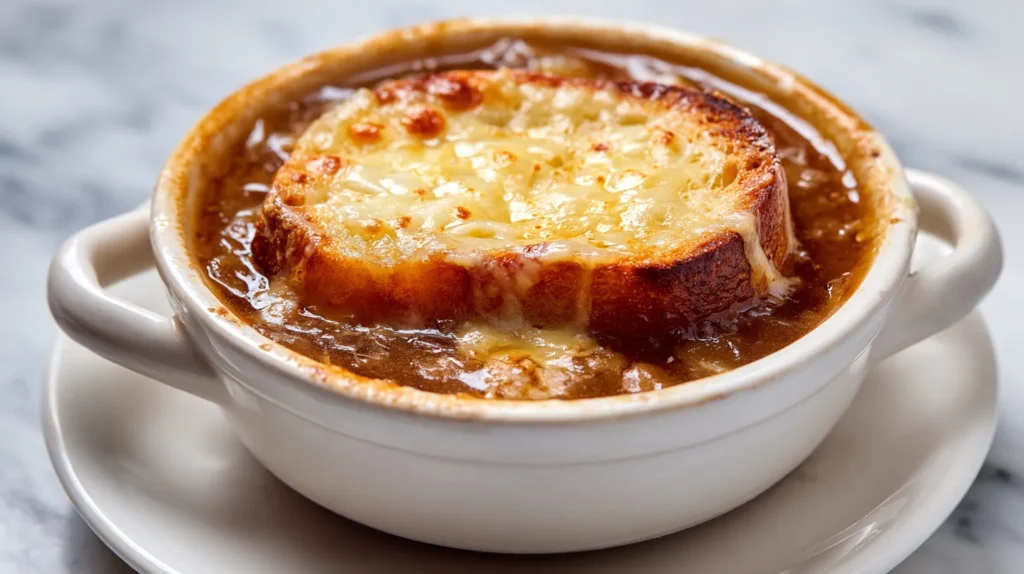
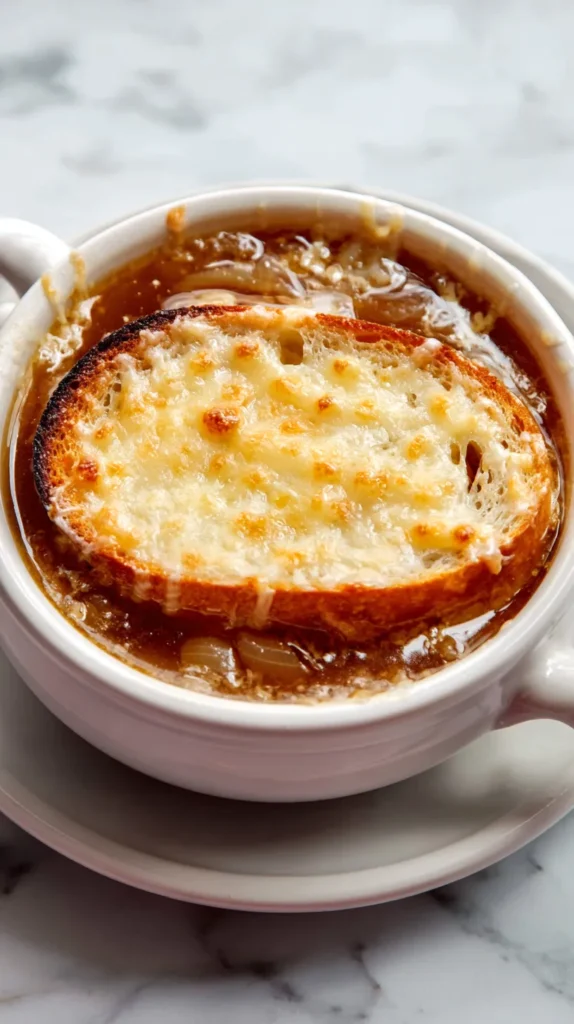
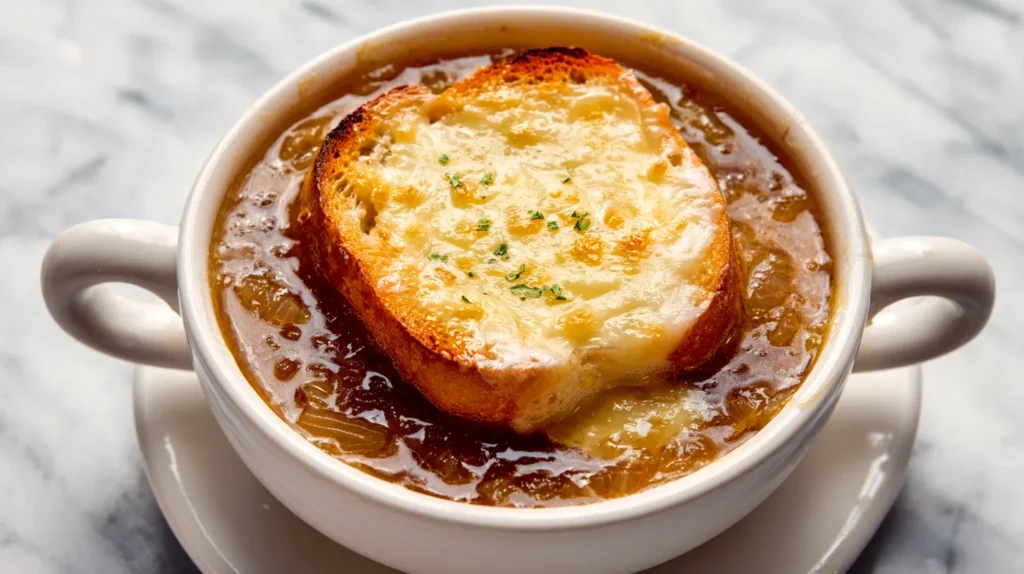
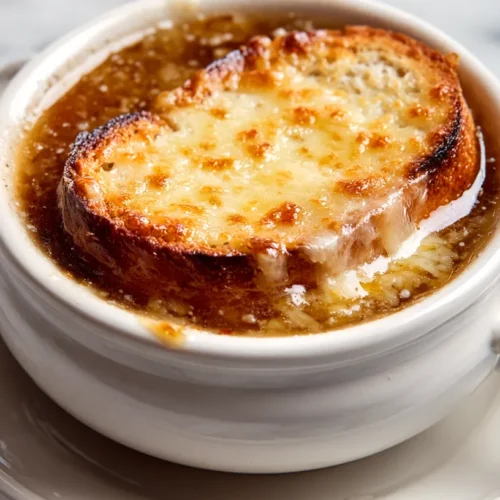
It’s a deep, glossy brown broth with real weight to it, not thin or washed out. You can see strands of fully caramelized onions throughout the bowl, soft and dark, almost jammy, not pale or stringy. The onions look intentionally cooked down, not rushed. The surface of the soup has a slight sheen from the broth, which signals richness without greasiness.
On top sits a round of toasted bread that still holds its shape. The edges peek out slightly, darker and crisp, while the center sinks just enough into the broth to anchor everything. The bread looks sturdy, not soggy, and clearly chosen on purpose.
The cheese layer is melted fully across the top, bubbling and lightly browned in spots. It isn’t piled high or sloppy. Instead, it looks evenly melted, with golden patches and a few darker toasted areas around the edges. You can still see texture in the cheese rather than a flat blanket. That bubbling finish tells you it just came out from under the broiler.
The bowl itself feels substantial. Wide enough to show the top clearly, but deep enough to promise a real serving underneath. When you look at it, the soup reads as cozy but polished. It looks restaurant-worthy without being styled or fussy.
Overall, it’s warm-toned, rich-looking, and quietly elegant. Nothing flashy. Nothing rustic for the sake of being rustic. Just intentional, comforting, and confident sitting on the table.
The Budget Philosophy Behind This French Onion Soup
Before I cook French onion soup, I decide what deserves money and what deserves restraint. That decision keeps the recipe grounded. You don’t need to splurge everywhere to get a great result. You just need to choose wisely.
Onions are where I never cut corners. Yellow onions, bought in bulk bags, are affordable and reliable. They caramelize beautifully and hold up to long cooking. Pre-sliced onions cost more and lose flavor faster, so I skip them every time.
Broth matters, but not in a precious way. Boxed beef broth gives depth without drama. I’ve found that mid-range brands work better than bargain cans here. You’re not buying luxury, just consistency.
Cheese is where restraint pays off. Gruyère sounds romantic, but Swiss or provolone melts just as well and costs less. You’re paying for melt, not a passport.
Here’s how I keep costs steady:
- Buy onions in five-pound bags
- Use boxed broth instead of homemade
- Choose Swiss or provolone over specialty cheese
- Use day-old bread instead of fresh
Every choice keeps the soup grounded while still delivering that restaurant-style impression. That balance is the point.
French Onion Soup Ingredients and Measurements That Make Sense
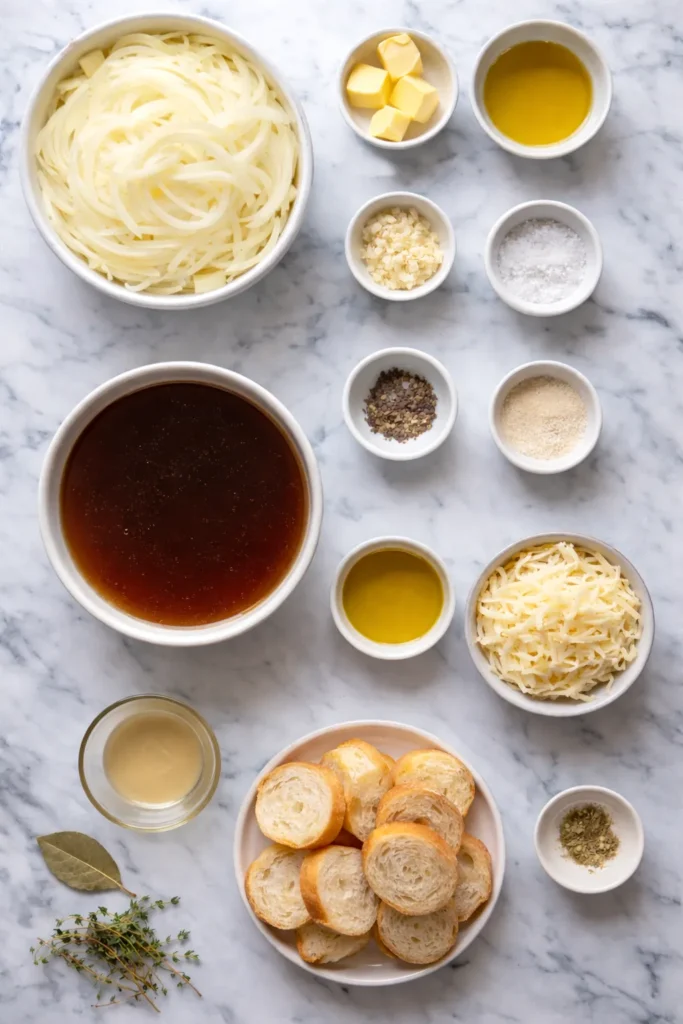
This recipe serves four generously and scales easily. Everything listed earns its place. Nothing is decorative. Nothing is extra.
Ingredients:
- 4 large yellow onions, thinly sliced
- 3 tablespoons unsalted butter
- 1 tablespoon olive oil
- 1 teaspoon salt
- 1/2 teaspoon black pepper
- 1 teaspoon sugar
- 2 cloves garlic, minced
- 1/2 cup dry white wine or cooking wine
- 6 cups beef broth
- 1 teaspoon Worcestershire sauce
- 1 bay leaf
- 1 teaspoon fresh thyme or 1/2 teaspoon dried
- 1 baguette, sliced into rounds
- 1 1/2 cups shredded Swiss or provolone cheese
What I like about this list is how normal it is. You’re not hunting obscure ingredients. You’re not buying something you’ll never use again. This is everyday food doing something elevated.
I’ve found that keeping the ingredient list simple makes the cooking calmer. Instead of juggling, I stay focused and clear. Meanwhile, flavor builds slowly and deliberately.
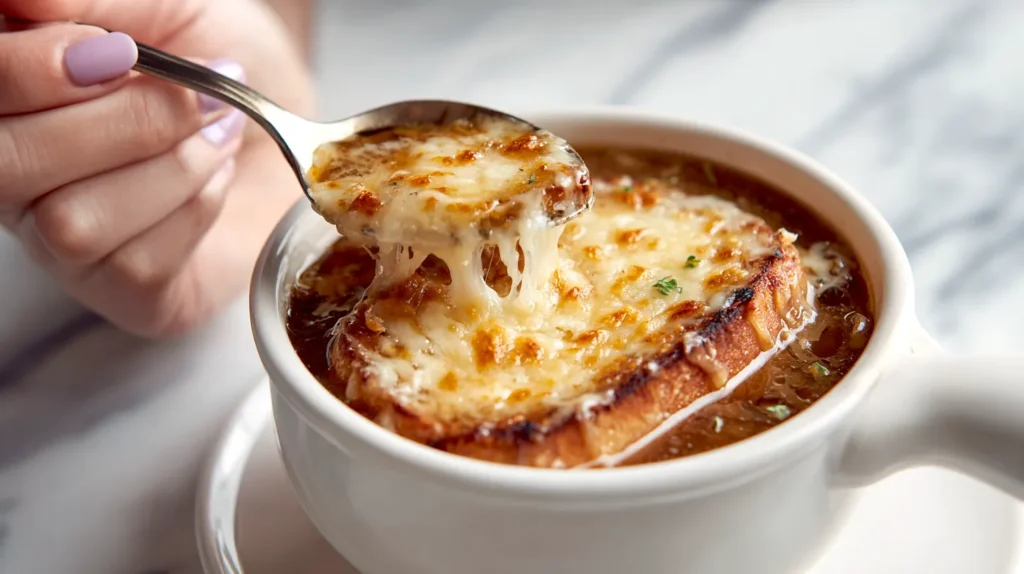
How I Caramelize Onions Without Rushing or Fussing
Caramelizing onions is where French onion soup either shines or falls flat. This part isn’t hard, but it does require attention. I start by melting the butter and olive oil together in a heavy pot over medium heat. Once melted, I add the onions, salt, pepper, and sugar.
At first, the onions will look like too much. That’s normal. They shrink dramatically as they cook. I stir to coat them, then let them sit. I stir occasionally, not constantly. The goal is slow browning, not steaming.
After about 20 minutes, they soften and deepen in color. Around 35 to 40 minutes, they become dark, jammy, and deeply aromatic. If bits stick to the pot, that’s good. That’s flavor.
Helpful reminders during this stage:
- Keep the heat at medium or medium-low
- Stir every few minutes, not every few seconds
- Scrape browned bits gently
- Trust the process
Once caramelized, I add the garlic and stir briefly. Then I pour in the wine to deglaze the pot. This lifts all that flavor into the soup and adds balance.
Building The Soup Without Overcomplicating It
Once the onions finish caramelizing, I keep the rest calm and simple. French onion soup doesn’t need extra tricks at this point. I’ve found that people start fussing right here, which is funny. The best move is steady heat and a little patience. So I add the broth, Worcestershire, thyme, and a bay leaf. Then I bring everything to a gentle simmer. After that, I let it cook uncovered for about 20 minutes.
Meanwhile, I taste the broth once it settles. If it needs salt, I add a pinch, slowly. Broth brands vary more than people expect. However, I never rush this part. A soup that’s slightly under-seasoned fixes easily. One that’s overdone does not. I also pull the bay leaf before serving. That leaf turns intense fast, and nobody wants a surprise crunch.
While the soup simmers, I toast the bread until crisp. Soft bread dissolves, and that ruins the whole top layer. I tend to use baguette slices because they hold shape well. Still, any crusty bread works if it’s sturdy. Then I line up oven-safe bowls so assembly stays smooth.
Here’s the order I stick to, every time:
- Ladle hot soup into bowls
- Place one toasted bread slice on top
- Cover the bread with shredded cheese
- Broil until melted and lightly browned
Afterward, I watch the broiler like it owes me money. Cheese goes from perfect to scorched quickly. When it bubbles and browns, I pull it out immediately. Then I let the bowls rest for one minute. That pause matters. It helps the top set slightly and saves tongues. Someone usually says, “Okay, this looks expensive!” and I don’t correct them.
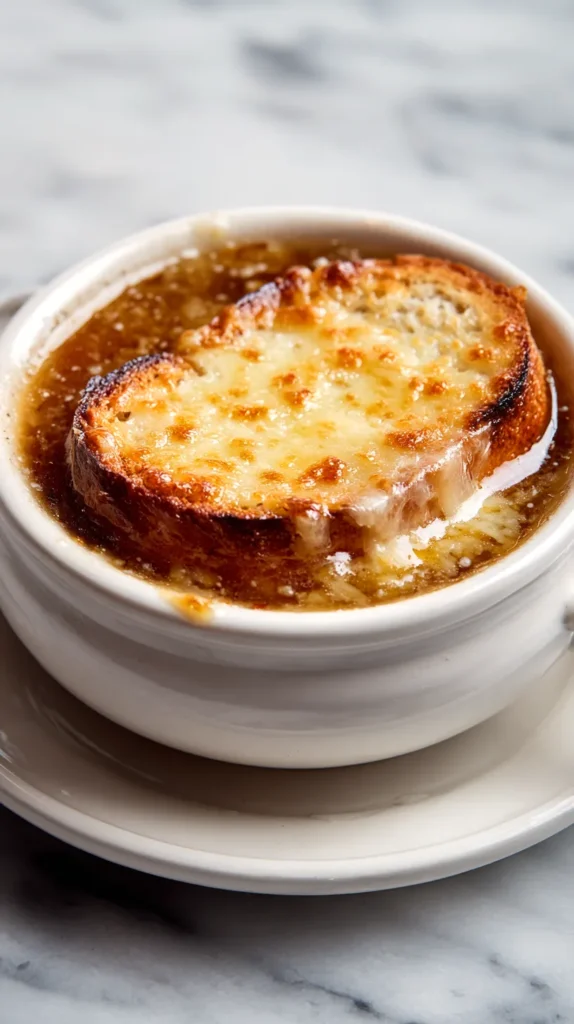
Smart Serving Choices That Make It Feel Intentional
Presentation doesn’t require extra money. It requires restraint. I serve French onion soup in wide bowls when I can because they show off the cheese and bread better. That wider surface lets the bubbly top do its thing. However, any oven-safe bowl works, and I never let dishware stop dinner. The goal is confidence, not perfection.
I keep sides intentionally simple. A basic green salad balances the richness without stealing attention. Roasted vegetables work well too, especially when they’re lightly seasoned. This soup already brings depth and warmth, so sides should stay calm. I’ve found that too many extras make the meal feel cluttered instead of thoughtful.
Leftovers reheat better than most people expect, which I appreciate. I skip broiling again and warm everything gently instead. That slower reheat keeps the broth balanced and the onions mellow. If needed, I add fresh cheese at the end. It melts quietly and still delivers that cozy top layer.
Here are the serving habits I rely on every time:
- Use wide bowls for better presentation
- Serve immediately while the cheese still bubbles
- Pair with something light and fresh
- Keep portions generous but not overwhelming
I also like to wipe the rims of the bowls before serving. That tiny detail changes everything (and takes ten seconds). It makes the meal look intentional without extra effort. French onion soup already encourages slower eating, which I love. People pause between bites. Conversations stretch naturally. That shift in pace changes the whole table. To me, that’s the real luxury.
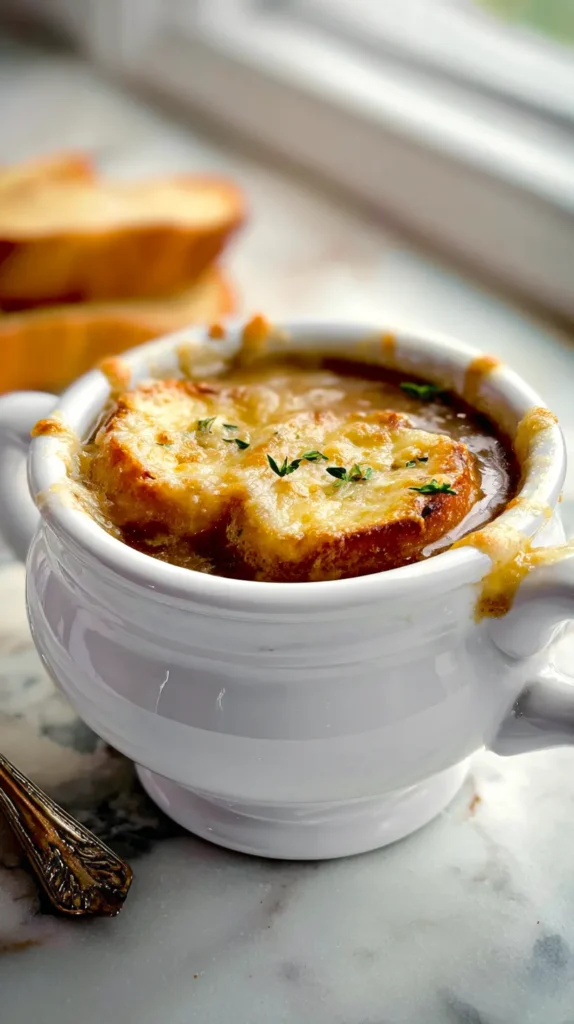
Budget Swaps That Still Respect The Dish
French onion soup is surprisingly flexible, which I appreciate. It tolerates smart swaps without losing its identity. That flexibility is what makes it such a reliable budget recipe. You’re not locked into one exact version. You’re aiming for balance, depth, and melt, not rigid rules.
Broth is the first place people worry, but it’s also the easiest adjustment. Beef broth gives the deepest flavor, which is why it’s classic. However, vegetable broth works well for a lighter option. Chicken broth lands somewhere in the middle and still tastes intentional. I’ve found that using a broth you already like matters more than chasing the “right” one.
Wine is optional, not sacred. If I skip it, I add extra broth and a small splash of apple cider vinegar. That bit of acidity balances the sweetness of the onions without calling attention to itself. It’s subtle, but it works.
Bread is forgiving too. Any crusty loaf does the job as long as it’s sturdy. Day-old bread actually performs better because it holds shape longer. Fresh bread looks nice, but it turns soggy fast, which ruins the top layer.
Cheese is where people overthink the most, so I simplify it:
- Swiss melts smoothly and tastes classic
- Provolone gives stretch without overpowering
- Mozzarella blends brown well and stay budget-friendly
I stick to cheeses that melt evenly and don’t separate. Texture matters more than the name on the label. French onion soup isn’t about perfection. It’s about confidence and restraint. When those show up, the dish always works.
French Onion Soup
Ingredients
- 4 large yellow onions thinly sliced
- 3 tablespoons unsalted butter
- 1 tablespoon olive oil
- 1 teaspoon salt
- 1/2 teaspoon black pepper
- 1 teaspoon sugar
- 2 cloves garlic minced
- 1/2 cup dry white wine or cooking wine
- 6 cups beef broth
- 1 teaspoon Worcestershire sauce
- 1 bay leaf
- 1 teaspoon fresh thyme or 1/2 teaspoon dried
- 1 baguette sliced into rounds
- 1 1/2 cups shredded Swiss or provolone cheese
Instructions
- Heat the butter and olive oil together in a large pot over medium heat until melted.
- Add the sliced onions, salt, black pepper, and sugar, stirring to coat the onions evenly.
- Cook the onions, stirring occasionally, for 35 to 45 minutes until deeply golden and caramelized.
- Add the minced garlic and cook for 1 minute until fragrant.
- Pour in the white wine and scrape the bottom of the pot to loosen any browned bits.
- Simmer for 3 to 5 minutes until the wine reduces slightly.
- Add the beef broth, Worcestershire sauce, bay leaf, and thyme, then stir to combine.
- Bring the soup to a gentle simmer and cook for 20 minutes.
- While the soup simmers, toast the baguette slices until lightly golden.
- Remove the bay leaf from the soup and ladle the soup into oven-safe bowls.
- Top each bowl with a toasted baguette slice and a generous amount of shredded cheese.
- Broil until the cheese is melted and lightly browned, watching closely to prevent burning.
Last Few Thoughts
I’ve found that some recipes earn their spot because they quietly handle several needs at once. This one checks comfort, style, and budget without asking me to choose. That balance matters more than perfection. When dinner looks intentional, the whole evening usually settles down.
French onion soup fits into my routine in a very real way. It works when I want cozy food that still looks grown-up. It also works when I want something special without extra spending. Even better, it doesn’t need a holiday to justify the effort. That kind of dependability earns loyalty fast.
Living in Orlando means soup is never about temperature. Instead, it’s about mood, timing, and choosing comfort anyway. I tend to notice that warm bowls slow people down, even on busy nights. Conversations stretch longer, and the table gets quieter in a good way. Someone usually says, “This feels fancy,” and I let that moment hang.
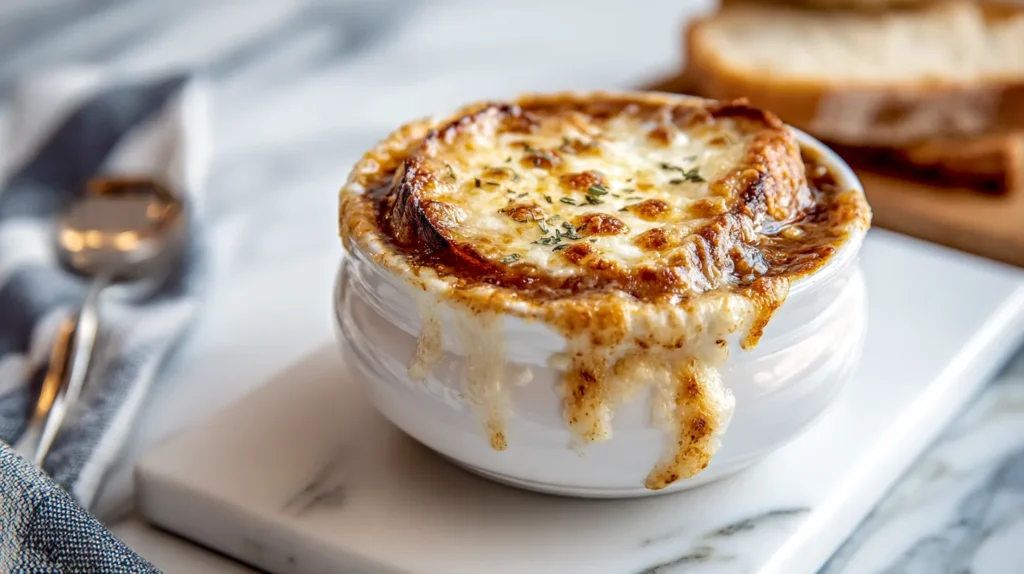
Meanwhile, I appreciate how well this dish shows up visually. The browned cheese, the toasty edges, and the glossy broth photograph beautifully. So yes, it fits right in on Pinterest boards focused on cozy but elevated meals. However, I don’t make it for the camera. I make it because it respects my budget and my taste.
French onion soup proves you can eat well on purpose without overspending. That confidence is the real luxury.