Something always felt slightly off in my house, even when everything looked technically fine. The couch worked. The rug behaved. The walls weren’t screaming for help. Still, the space felt unfinished, like it stopped one step short of clicking. I kept scrolling past homes online that felt warmer, calmer, and somehow more styled, yet clearly not expensive. Eventually, the pattern became obvious, and I couldn’t unsee it. Indoor plants kept showing up, quietly doing all the heavy lifting.
At first, I resisted the idea because plants felt impractical. They also felt like one more thing to manage, and I wasn’t looking for a new responsibility. Budget mattered too, and anything that felt like a “design trend” usually comes with inflated price tags. Still, I kept noticing how rooms with greenery looked layered instead of cluttered. They felt intentional without feeling try-hard. Even small spaces looked finished in a way mine didn’t.
Living in Orlando makes this even funnier, because greenery is everywhere outside. Palm trees. Bushes. Things growing whether you want them to or not. Yet indoors, I somehow ignored the easiest style upgrade sitting right there. I also noticed that the prettiest homes weren’t filled with rare plants or matching pots. They were casual about it, almost relaxed, like the plants belonged there and always had.
What surprised me most wasn’t how much plants added to a room. It was how little else they needed to work. Nothing required tearing out walls or planning a shopping spree. No dramatic overhaul showed up either. One small shift changed how the entire space felt. Once I noticed that difference, my attention shifted to every other room. I started wondering where else that same quiet change could make an impact.
That’s where this gets interesting, because indoor plants aren’t really about plants at all. They’re about balance, restraint, and knowing where to spend money so it actually shows. And that part took me longer to realize.
Some of the links on this page are affiliate links, which means I may earn a small commission if you purchase through them. It never costs you extra. You can always peek at my full disclosure if you’d like the details.
Indoor Plants As the Cheapest “Finished Touch”
There’s this odd moment when a room moves from furnished to finished, and it happens quietly. You don’t usually catch it in real time, but the absence is obvious when it never arrives. That gap bothered me longer than I expected. Adding things that made sense on paper didn’t fix it. Eventually, something clicked in a slightly annoying way. Indoor plants closed that gap faster than anything else I tried. Artwork didn’t manage it. Throw pillows came close but missed. Lighting surprised me the most, because plants softened edges in a way other decor never quite pulls off.
What’s funny is how low the bar actually is once you see it. A full collection isn’t required. Variety doesn’t matter nearly as much as people think. Confidence isn’t even part of the equation. One plant placed well outperforms five decorative objects all fighting for attention. That realization stings a little if you love a good Target run, but it’s also weirdly freeing when it sinks in.
Here’s the reframe that changed things for me: plants aren’t decor pieces. They’re visual pauses. They give the eye somewhere to rest. When everything else is neutral, structured, or straight-lined, greenery adds movement without chaos. That’s why rooms suddenly look styled instead of staged.
And yes, this works on a budget.
Some of the most effective placements I’ve noticed involve:
- A single medium plant next to furniture with clean lines
- Something leafy breaking up shelves that feel too symmetrical
- Greenery near windows where it feels obvious and unforced
What doesn’t work as well is scattering tiny plants everywhere and hoping they add up to something intentional. They rarely do. Bigger always reads calmer. Fewer always reads smarter. That’s the part people don’t talk about enough.
If a room feels unfinished, it usually doesn’t need more stuff. It needs one better choice. Indoor plants tend to be that choice more often than not.
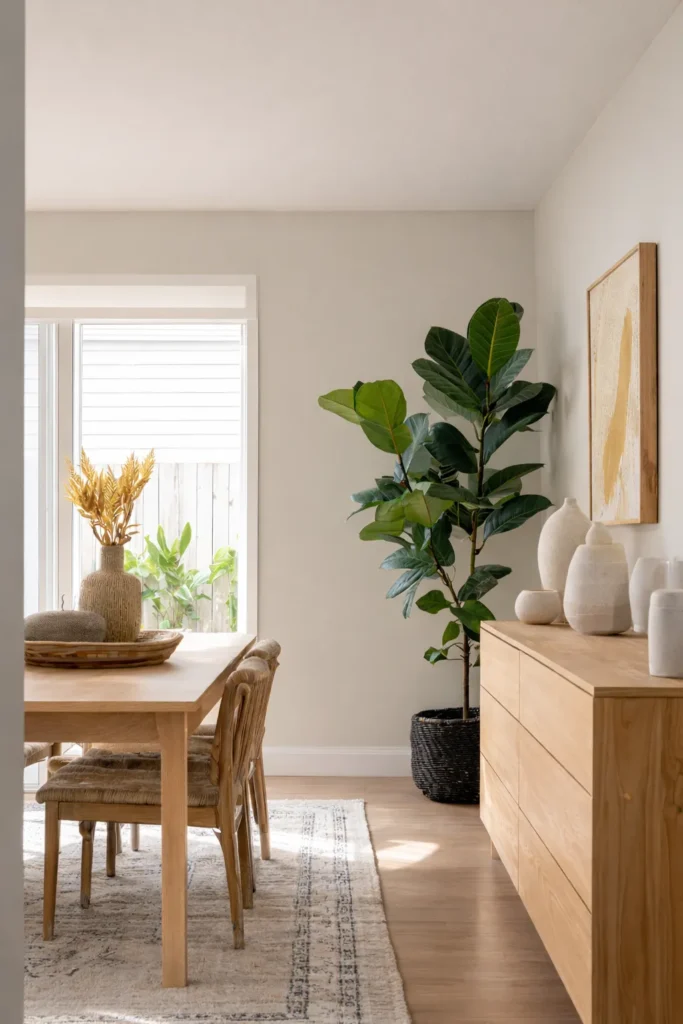
The Difference Between “Trying” and “Letting It Be”
I used to think good-looking homes required effort you could feel. Like someone was constantly adjusting things behind the scenes. Now I notice the opposite. The spaces that look best feel relaxed, almost accidental, even when they’re clearly curated. Indoor plants play a big role in that illusion.
There’s something about greenery that immediately lowers the temperature of a room. Not literally, but visually. Hard edges soften. Empty corners feel purposeful. Even mismatched furniture suddenly looks cohesive, which feels unfair but useful. Plants don’t care if your style is modern, traditional, or somewhere confused in the middle.
Here’s where assumptions get flipped. Many people think plants make a space look busier. In reality, they often do the opposite. A plant can replace multiple decorative items because it brings color, texture, and height all at once. That’s efficient styling, which matters when you’re trying to stay money-savvy.
What helps is letting plants exist without overthinking them. They don’t need perfect pots. They don’t need matching containers. In fact, when everything matches too much, the room starts to feel stiff. A slightly imperfect pot often looks better because it feels lived-in.
I tend to notice this most in rooms that almost work but don’t quite land. You can sense the effort. The plants that work best don’t scream for attention. They sit quietly, doing their job, making everything else look more intentional by comparison.
And here’s the thing people rarely admit. Indoor plants let you stop buying so much other decor. Once greenery is in place, the urge to fill every surface disappears. That alone can save serious money over time.
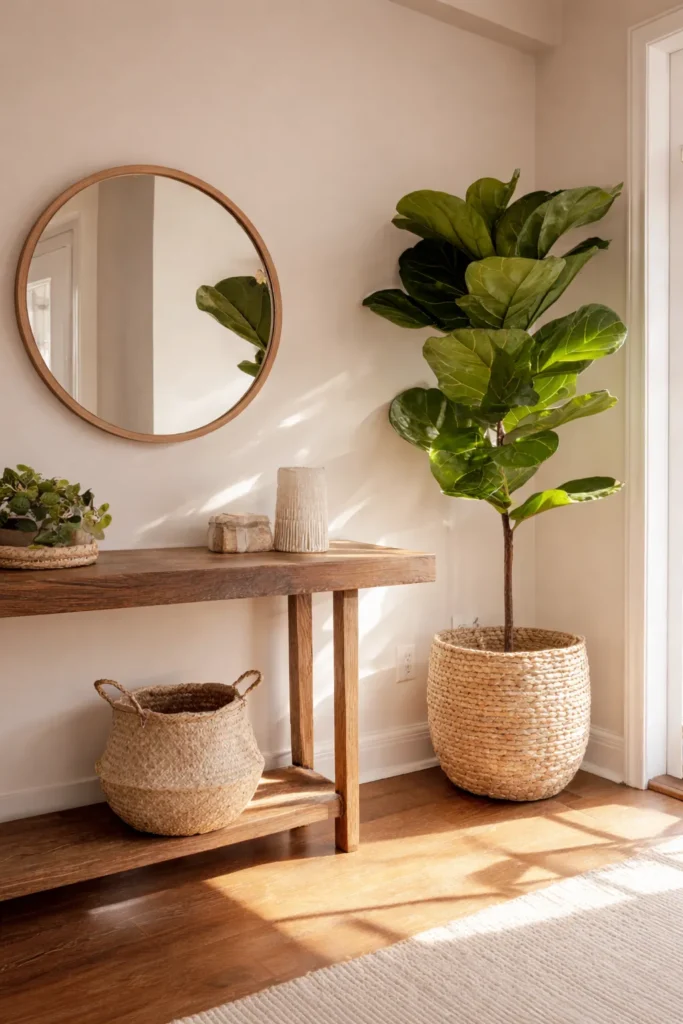
When Indoor Plants Replace Expensive Decor
This is where the budget conversation gets real. I’ve noticed that many expensive-looking rooms actually rely less on decor than cheaper ones do. They choose fewer pieces, but those pieces do more work. Indoor plants fall into that category beautifully.
A plant can act like:
- A piece of art without needing wall space
- A sculptural object without feeling heavy
- A color accent that doesn’t lock you into a palette
That flexibility matters. Trends change fast, and decor tied too closely to a moment can feel dated quickly. Plants don’t age the same way. They’re oddly timeless, even when everything else shifts around them.
Another assumption worth breaking is that plants only work in bright, airy spaces. That’s not true. Greenery can anchor darker rooms just as well, sometimes better. It adds contrast where things might otherwise feel flat. Even one plant can change how moody spaces read.
I also like how plants scale naturally. You can start small and stop whenever it feels right. No pressure to complete a set. No need to “finish” a collection. That’s rare in home decor, where everything usually wants companions.
Whenever I’m stuck choosing between a decorative object and a plant at the same price, the plant wins without much debate. Objects stay exactly the same forever, which sounds fine until it isn’t. Plants shift. They stretch. They change slightly week by week. That movement adds depth you can’t fake with a vase or a tray, no matter how perfectly styled it looks on day one.
Once you see plants as replacements instead of additions, the entire budget equation shifts. You stop layering decor on top of decor and start editing instead.
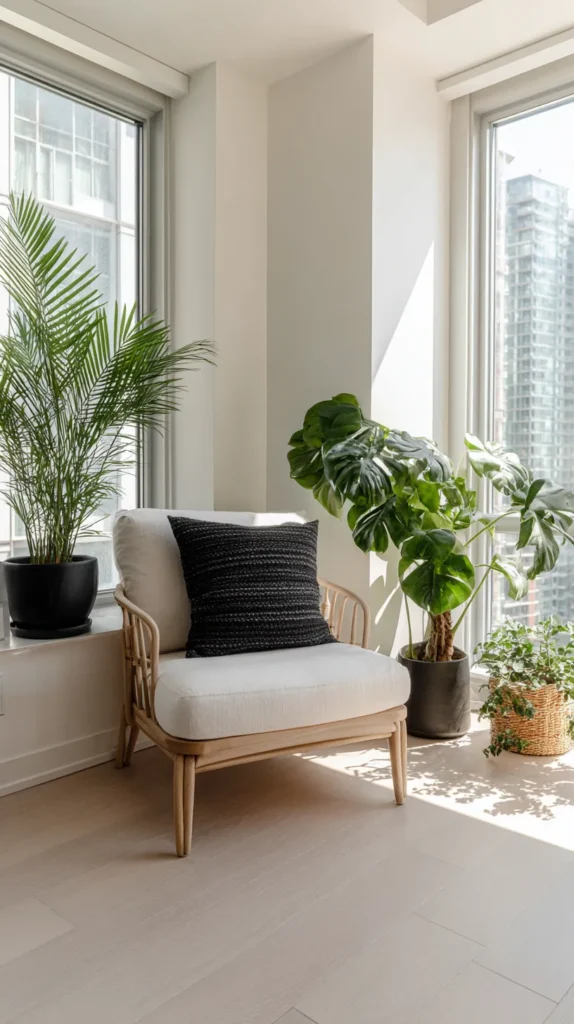
Which Indoor Plants Actually Work and Why
Let’s be honest for a second, because this is where frustration usually starts. Some plants look amazing in stores and absolutely collapse once they get home. I’ve learned that the best indoor plants aren’t the dramatic ones. They’re the ones that quietly cooperate with real life.
The plants that work indoors tend to share the same easygoing personality. Uneven light doesn’t throw them off. Missed waterings don’t send them into a spiral. Even when conditions aren’t perfect, they hold their shape and keep showing up. That reliability is exactly why I keep circling back to the same few names every time.
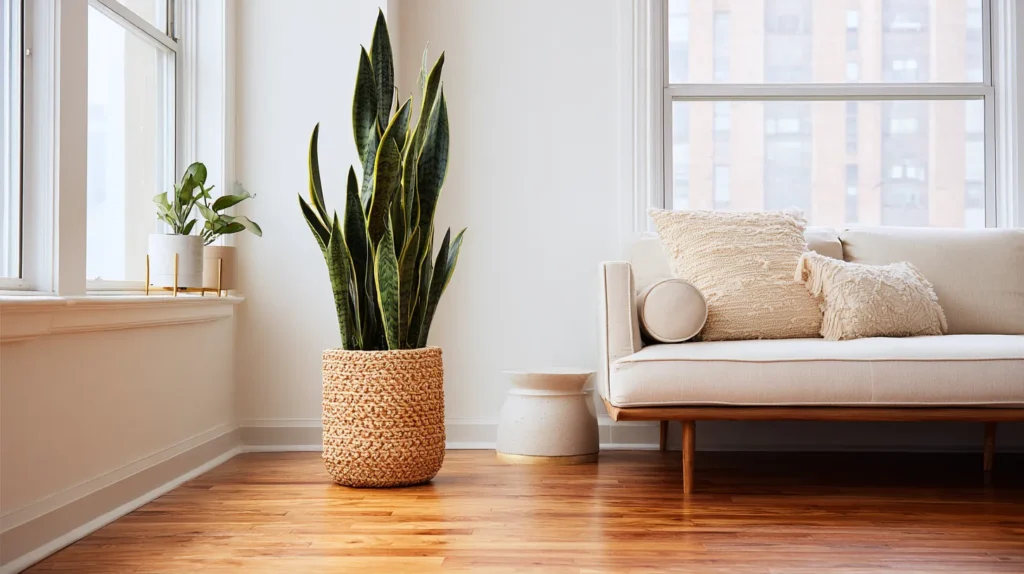
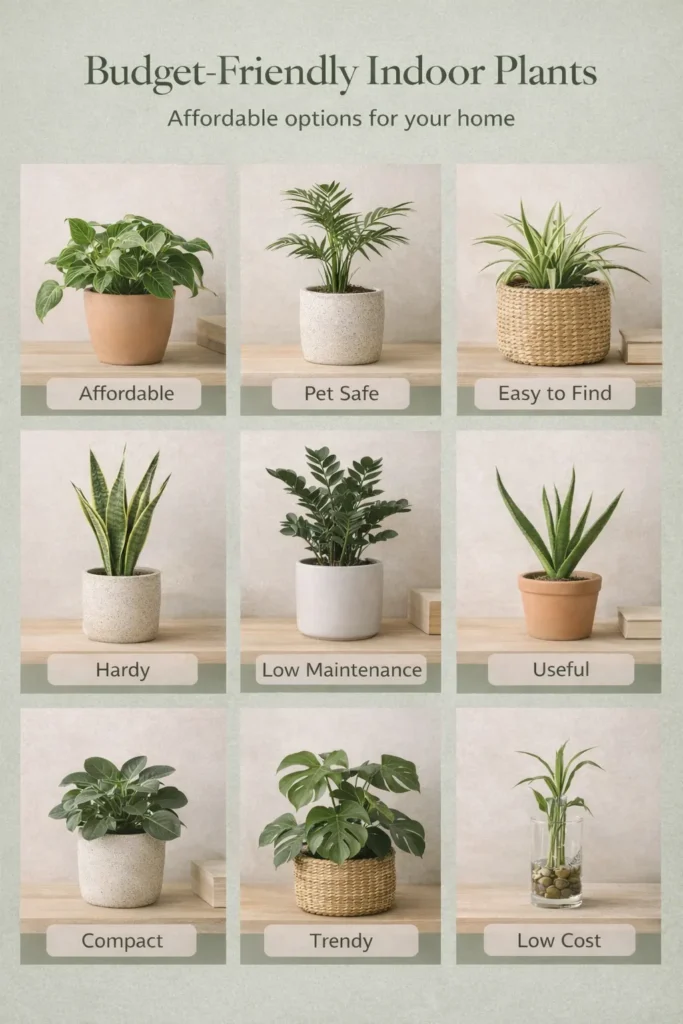
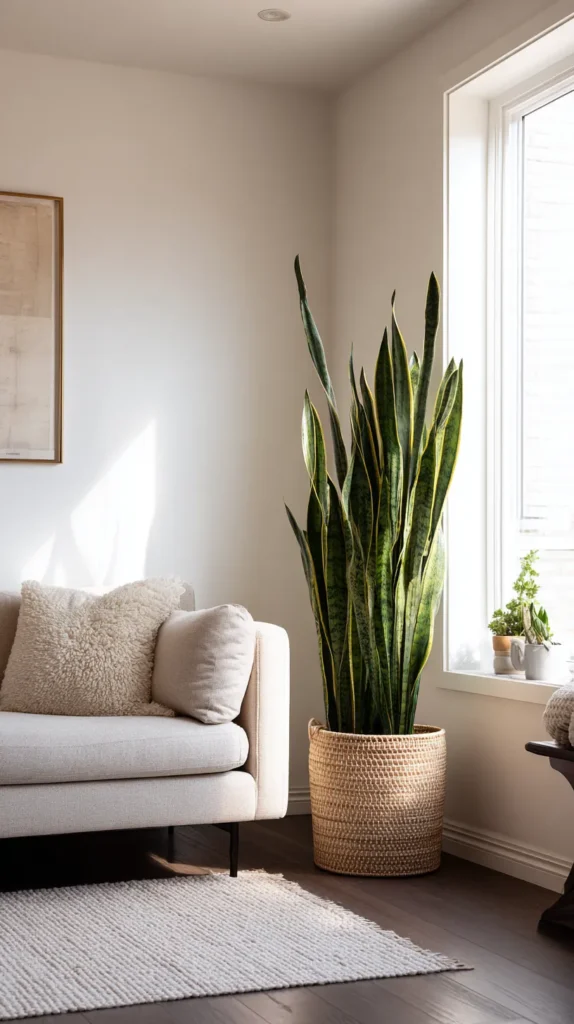
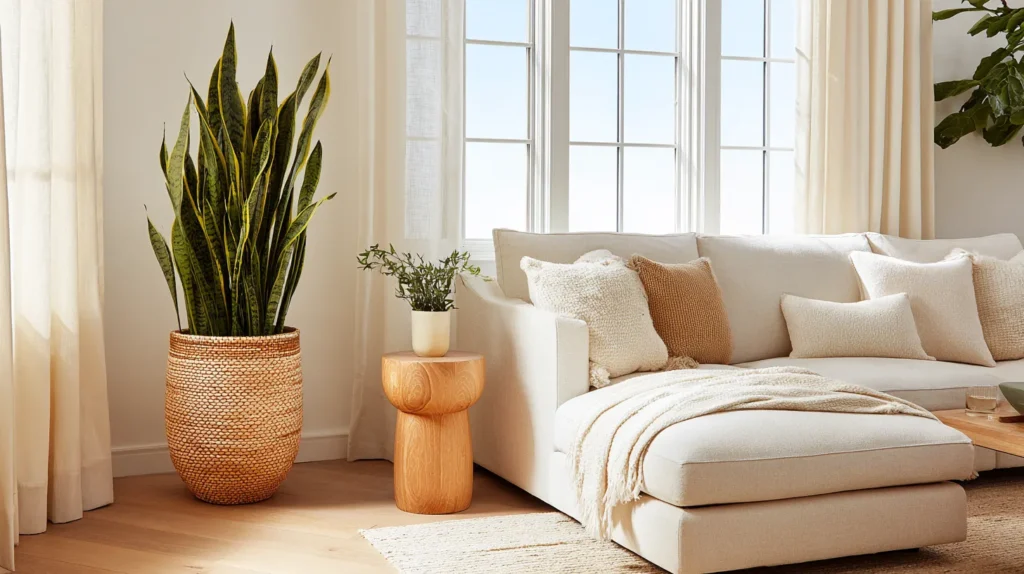
Snake plants are at the top of that list for me. They handle low light, bright light, and everything in between without complaint. They also grow upright, which adds height without spreading mess. That alone makes them great for corners and tight spaces.
Pothos plants come next, especially for shelves or bookcases. They trail softly, tolerate missed waterings, and still look full. I like how they add movement without feeling busy. They’re forgiving, which matters more than people admit.
ZZ plants deserve more credit than they get. Their thick, glossy leaves store water, so they don’t mind being ignored. They also look polished without effort, which makes rooms feel intentional fast.
I also tend to recommend rubber plants for spaces that need structure. They have broad leaves, grow slowly, and hold visual weight without chaos. That balance makes them reliable long-term.
Here’s the reframe worth remembering. Good indoor plants aren’t chosen for looks alone. They’re chosen for behavior. When plants survive, they stop feeling like a gamble and start feeling like a smart styling decision.
And that’s when greenery actually earns its place.
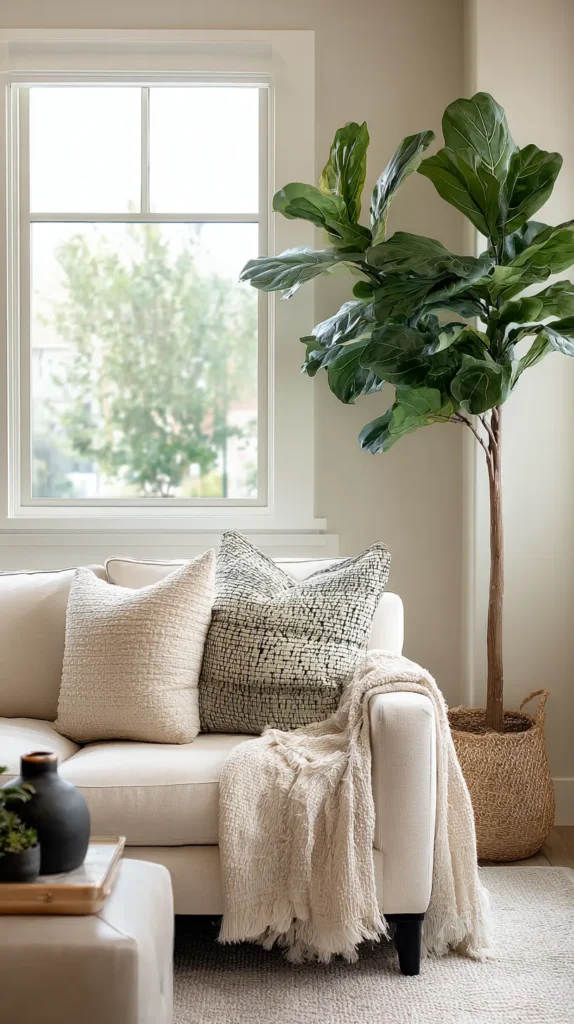
Why Not All Greenery Works the Same Way
This is where people get tripped up, and honestly, it’s understandable. Not every plant placement works, and not every plant earns its keep visually. Indoor plants are powerful, but only when they’re allowed to breathe.
Crowding them into tight spaces often backfires. When a plant looks cramped, the room feels cramped. When a plant looks like it belongs, the space relaxes. That relationship matters more than the type of plant itself.
Scale plays a bigger role than variety. One plant with presence beats several small ones fighting for relevance. Height matters too. A taller plant draws the eye upward, which subtly makes a room feel larger. That’s a trick expensive homes use constantly, and it costs very little.
There’s a difference I didn’t notice at first between decorative greenery and structural greenery. Some plants behave more like furniture than accents. They define zones without walls. Transitions soften naturally. Forgotten corners suddenly feel intentional instead of ignored.
Another thing that surprised me is how forgiving plants are once they’re inside. Movement doesn’t feel risky. A corner works until it doesn’t. A shelf gets a trial run. Beside a chair becomes an option, not a commitment. Very few decor pieces allow that kind of low-stakes experimenting without consequences, which makes plants feel oddly freeing in a space.
I tend to notice that once a plant finds the right spot, everything else clicks into place around it. That’s usually the sign you’ve nailed it. When a room stops asking for more and starts feeling settled, the plant did its job.
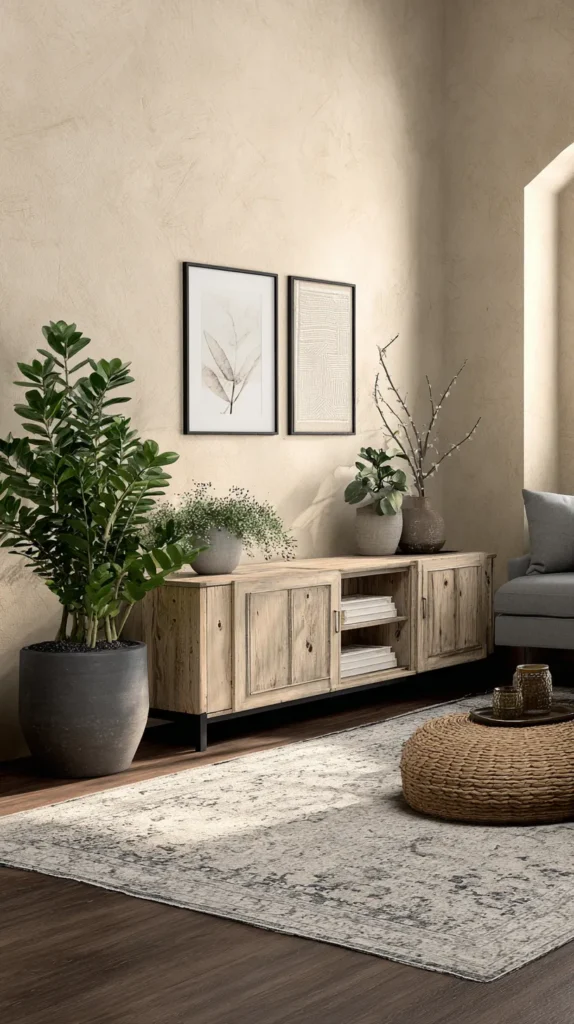
The Subtle Confidence of a Green Corner
There’s something steady about a room with one strong green element in it. The space doesn’t need extra explanation or added emphasis. A single plant can carry visual weight without competing with anything else. I tend to notice that indoor plants work best when they’re treated as part of the structure of a room, not as a statement piece. When greenery sits quietly in the background, everything around it looks more intentional.
Corners are especially powerful for this. An empty corner can feel awkward, like a sentence that ends too early. Add a plant, and suddenly the space feels intentional. Not filled. Finished.
This works especially well in homes where decor budgets are tight. Corners don’t need furniture. They need presence. Plants provide that without adding bulk or cost.
Another thing I’ve noticed is how plants affect perception. Rooms with greenery often photograph better, which matters if you care about sharing your space online. They add depth and color in a way cameras love. That’s probably why they show up constantly on Pinterest without anyone pointing them out.
There’s also a psychological shift that happens. Spaces with greenery feel calmer. Not spa-like. Just settled. That calmness makes everything else look more expensive by comparison, which feels like cheating in the best way.
If you’re unsure where to start, start with one corner you don’t love. Add one plant. Then stop. Sit with it. Notice what changes. That pause is important, because it teaches you restraint, and restraint is what keeps a space stylish instead of cluttered.
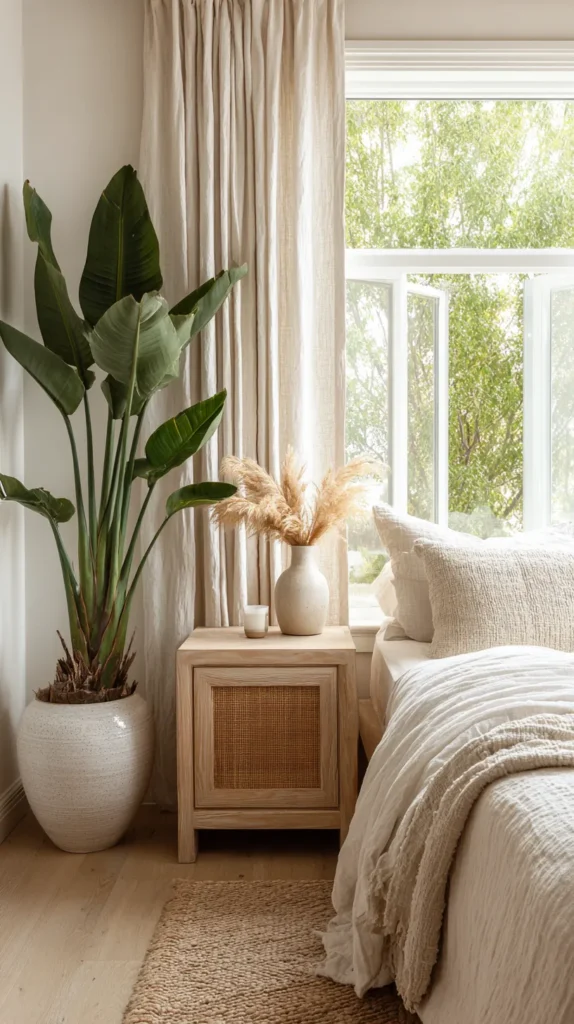
Styling Without Chasing Trends
I get tired just thinking about trends. Not inspired-tired. Actual tired. The kind where you see something everywhere and immediately think, “Cool, so this expires in six months.” I notice that pressure even when I don’t want to. Suddenly, a perfectly fine room starts whispering that it’s behind.
Here’s where indoor plants shift how I think about a space. They don’t require constant updates or seasonal swaps to keep working. Nothing about them signals that they’re outdated or behind. Their presence stays steady while everything else changes, which feels refreshing in a world obsessed with constant refreshes. That kind of consistency appeals to me more than I expected.
I’ve found that when a space leans too hard into trends, it never settles. Something always feels temporary. Something always needs swapping. Meanwhile, rooms built on a few steady choices feel calmer, even when nothing new gets added. Plants sit firmly in that steady category, and they do it without trying.
Pause here, because this is the part people miss. Not chasing trends doesn’t mean giving up style. It means refusing to let style bully you.
A plant that works now will still work later. Neutral walls today. Color next year. Different furniture eventually. The plant doesn’t flinch. It adapts without drama, which quietly protects your budget.
I also notice how plants remove the pressure to finish a room. They don’t wait for perfection. They move in early and let the rest unfold. That permission matters more than it sounds.
Rooms styled slowly feel better to live in. Indoor plants encourage that pace without announcing it. They let you stop tweaking, stop chasing, and trust that the space will catch up.
That shift changes how decorating feels entirely.
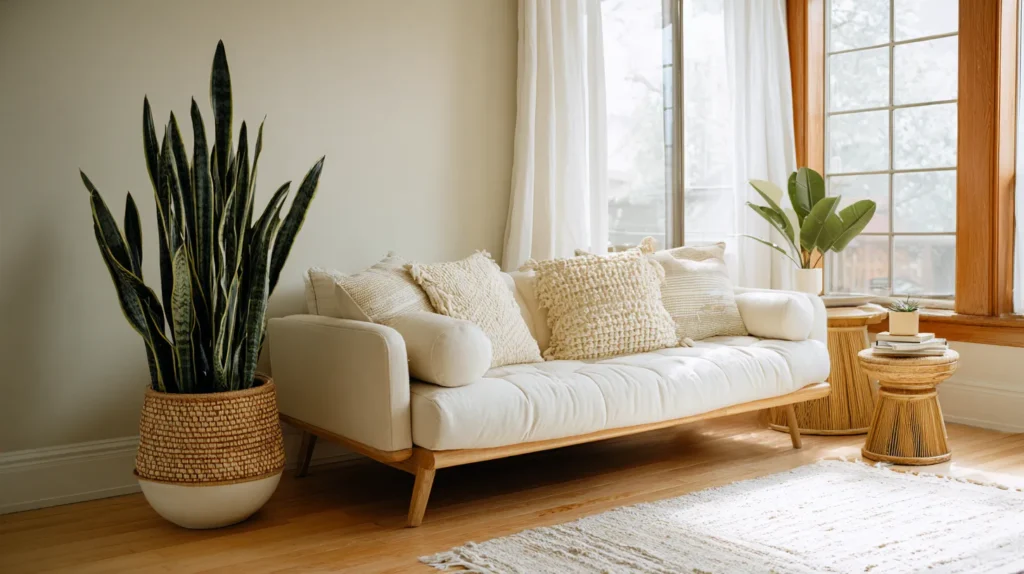
When Less Decor Actually Looks Better
This part can feel uncomfortable if you love decorating, and yes, I’m including myself here. I always assume a room needs one more thing, like it’s unfinished homework. But I’ve found that once greenery enters the picture, that urge softens. Not disappears forever, but quiets enough to notice.
Indoor plants change the math of a room. They take up visual space without taking over physical space, which sounds subtle but matters a lot. Instead of stacking objects, layering textures, or filling every surface, the room starts to breathe. Walls stop begging for art. Shelves stop asking for balance. Furniture gets to stand on its own without backup.
Here’s the reframe that caught me off guard. When a room feels like it needs more, it usually needs less. What’s missing isn’t another object. It’s contrast. Plants provide that immediately, without adding clutter or noise.
I tend to notice something interesting after adding greenery. My desire to “fix” the space drops. I stop circling the room mentally. I stop thinking about what to buy next. That pause is telling. When the urge to tweak fades, the room has probably landed where it needs to be.
There’s also a quiet budget win here. Fewer impulse purchases happen when the space already feels complete. Fewer trend-driven swaps sneak in. More confidence shows up in stopping, which is harder than buying but way more effective.
This is the part people don’t expect. Indoor plants don’t just add style. They remove pressure. They let you step back and say, “Okay, this is enough,” without the room feeling sparse or unfinished.
And that restraint ends up looking expensive, even when it isn’t!
Letting the Space Do the Talking
At some point, I notice a shift happens with decorating. It stops being about adding and starts being about listening, which sounds abstract but feels very real in practice. The room starts giving feedback. Something either settles or it doesn’t. Indoor plants seem to speed up that moment of clarity.
What I like most is how little they demand. You don’t need to announce them. You don’t need to style around them constantly. They don’t need a backstory or an explanation. They just exist, quietly changing how everything else reads. That restraint is refreshing, especially when decor often feels like it’s competing for attention.
Here’s a surprising thought that took me a while to accept. The strongest rooms don’t try to impress you. They let you arrive. Plants help create that pause. They soften the space without asking for praise, which makes everything else feel more intentional by comparison.
I tend to notice that once greenery is in place, I stop over-directing the room. Pillow adjustments drop off. Shelf scanning loses its urgency. Mental furniture rearranging fades out, even when I’m standing still. At that point, the space feels settled enough that I don’t feel the urge to interfere, which is usually my signal to stop touching things.
This reframes a common assumption that good style comes from effort you can see. I don’t think that’s true anymore. I think it comes from choices that allow the room to settle. Indoor plants support that settling process without taking control.
There’s also something grounding about letting a space be what it is. Not perfect. Not finished forever. Just complete enough for now. Plants seem comfortable with that in-between stage, which gives me permission to be comfortable there too.
Final Thoughts
I used to believe a stylish home required constant effort, like a project that never closed. New pillows showed up. New colors rotated in. Another small fix always waited its turn. Over time, though, something else started standing out to me. The homes that lingered in my mind weren’t busy or updated every season. They relied on a few solid choices and then let those choices do the work.
Indoor plants slowly became part of that realization. Not as a big design moment, but as a pattern I kept noticing. Rooms with greenery felt calm without being boring. They looked finished without feeling locked in. That combination is harder to pull off than it sounds.
Living in Orlando probably nudged this perspective along, because nature here doesn’t ask for perfection. Things grow anyway. You adjust instead of controlling every detail. Bringing that attitude indoors changed how I think about styling entirely.
Another thing I can’t ignore is how often plant-filled spaces show up on Pinterest. The images don’t rely on bold tricks or trend-heavy styling. What comes through instead is a sense of balance and ease. Those rooms photograph as grounded and lived-in, which explains why people keep saving them long after louder styles fade.
What keeps surprising me is how small the shift can be. One corner changes. One decision replaces another purchase. One pause creates space for everything else to make sense.
I tend to notice that when a room finally stops asking for attention, it’s because I stopped trying to impress it.
Sometimes the smartest move isn’t adding more at all. It’s recognizing when the room already said enough.