Simple one-tier wedding cakes have been sitting in my brain for weeks, and I need to say it out loud. Wedding cakes got out of control.
Not delicious out of control. Architectural out of control.
Somewhere along the way, we decided height equals importance. More tiers must mean more love. More frosting must mean more celebration. That logic sounds impressive until you look at the invoice.
I’ve found that once money enters the picture, the fantasy shifts. Suddenly you’re not admiring the cake. You’re calculating it.
Meanwhile, simple one-tier wedding cakes just sit there, calm and unbothered. They don’t compete with chandeliers or try to win some invisible stacking contest. Instead, they hold their ground quietly and look steady, like they know the spotlight will find them anyway.
And steady feels refreshing.
Living in Orlando, I see dramatic wedding setups constantly. Massive venues. Sparkling ballrooms. Cake tables built like theater stages. Still, the setups that stay with me look edited rather than oversized.
That contrast sticks.
There’s something powerful about restraint in a world obsessed with spectacle. There’s something bold about choosing clarity over height.
Now I know the questions that pop up immediately.
Will one tier look small? Will guests whisper? Or will it read as a budget shortcut instead of a sharp design choice you made on purpose?
Those worries move fast. They sneak in before you can stop them.
But what if the smallest cake in the room actually carries the clearest message?
What if simple one-tier wedding cakes aren’t about shrinking the celebration? What if they’re about sharpening it?
Because once you remove the extra layers, the real details start to show.
And that shift changes how you see everything else.
A few links on this page are affiliate links, so if you click and buy, I might earn a small commission. It never costs you more, and it helps support the site. You can read my full disclosure if you’re into the fine print.
The Confident Energy of Simple One-Tier Wedding Cakes
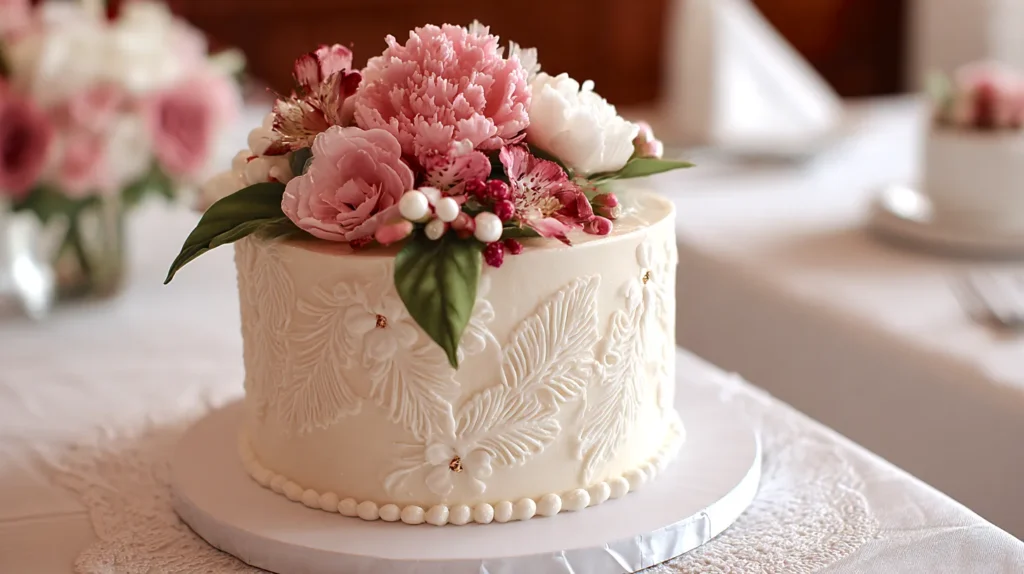
If you’re shopping for simple one-tier wedding cakes, confidence comes from execution, not size. A single tier leaves zero room to hide uneven layers or sloppy frosting.
Start by studying the buttercream finish closely. Run your eye along the sides. Do they look smooth and even? Are the edges sharp and clean? Crisp edges signal skill. Rounded or uneven tops often reveal rushed work.
Next, ask about height. Standard cakes stand about four inches tall. However, many bakers offer double-barrel options reaching six to eight inches. That extra height creates presence without stacking tiers.
Proportion changes everything. A taller, narrow cake often looks more elegant than a short, wide one.
Now evaluate decoration restraint.
Focus on one strong detail instead of several competing ones:
- A clean textured buttercream finish
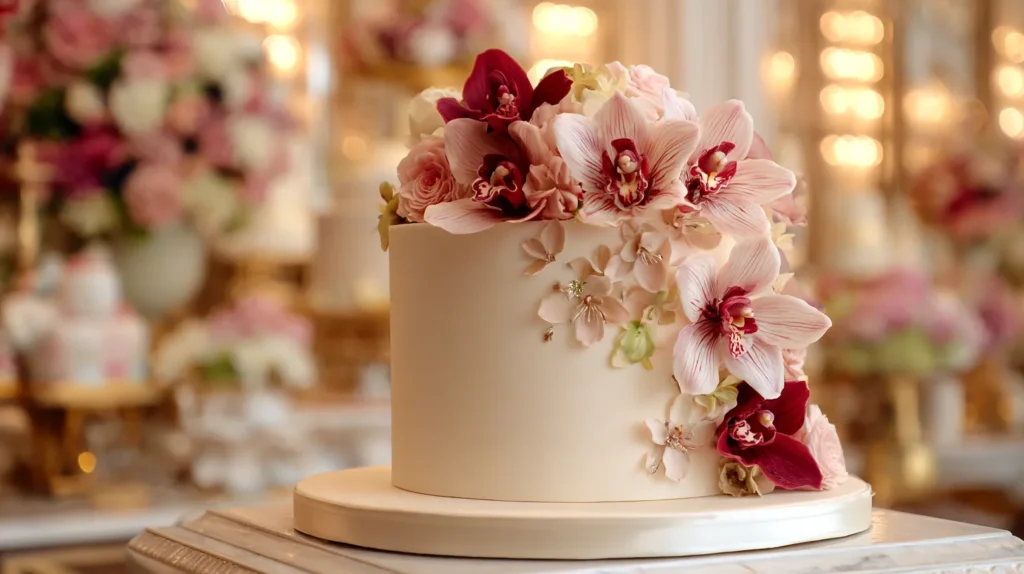
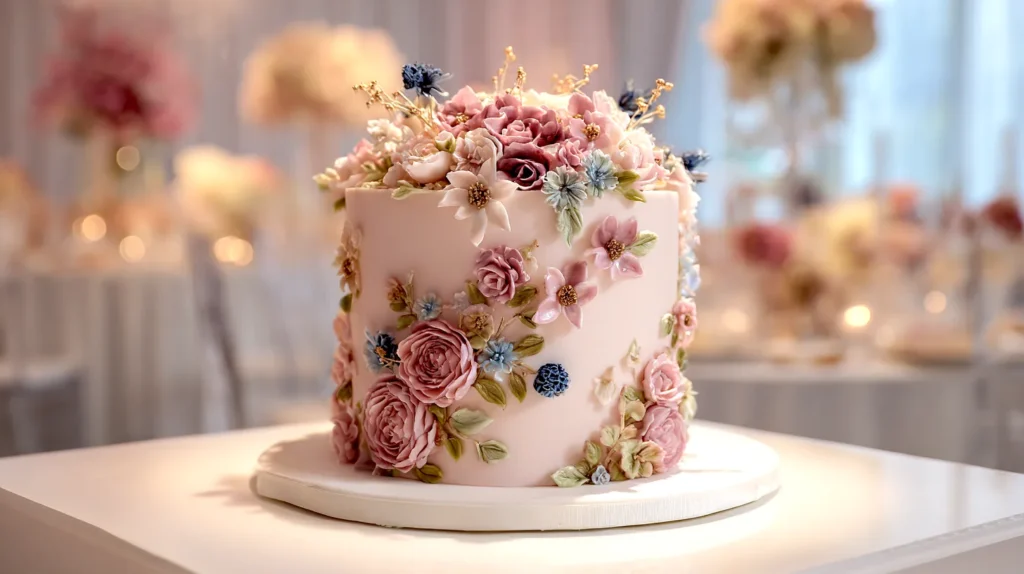
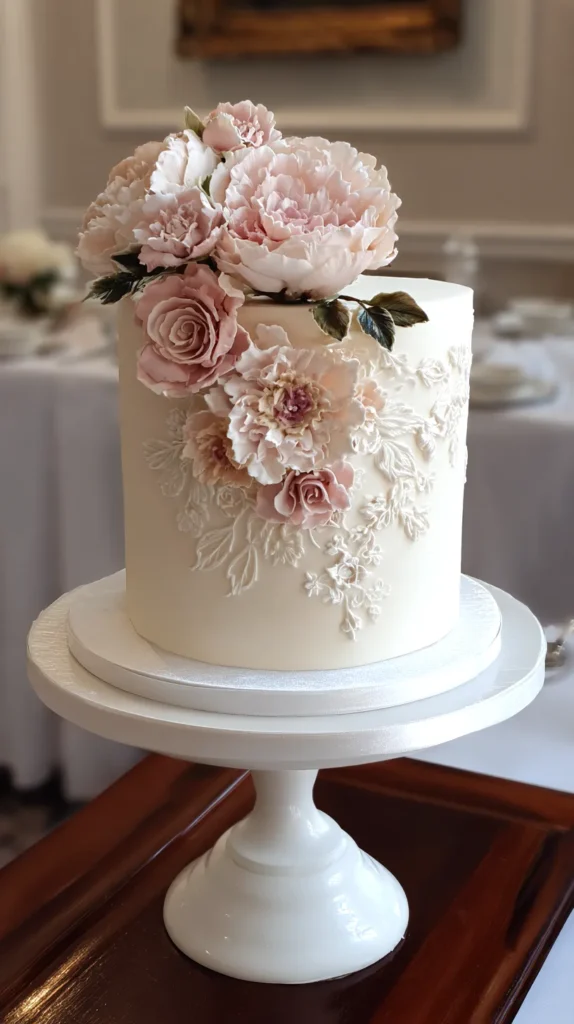
- A single floral cluster placed intentionally
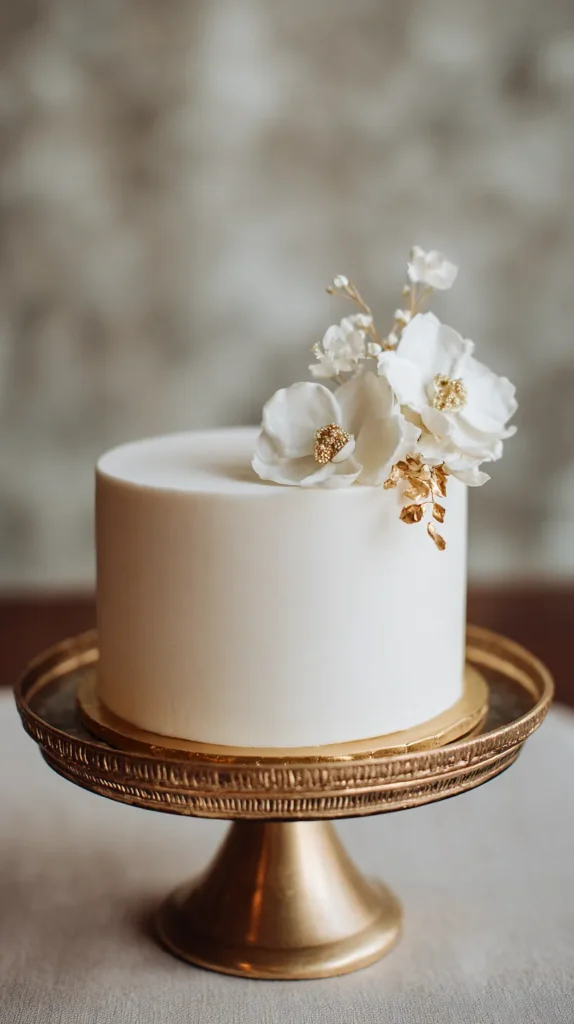
- A minimal gold monogram
- Subtle horizontal ridges
- A smooth fondant wrap with no borders
Avoid combining multiple trends. One clear focal point looks intentional. Three accents look crowded.
Also ask about serving capacity. An eight-inch cake typically serves 24 to 32 guests. A ten-inch cake can serve around 38 to 50. Knowing this prevents overordering.
Finally, consider the cake stand. A pedestal with added height lifts the presentation instantly. That simple choice solves the “will it look small?” concern.
Confidence in simple one-tier wedding cakes comes from clean craftsmanship, balanced proportion, and disciplined design.
That’s what makes minimal look strong instead of incomplete.
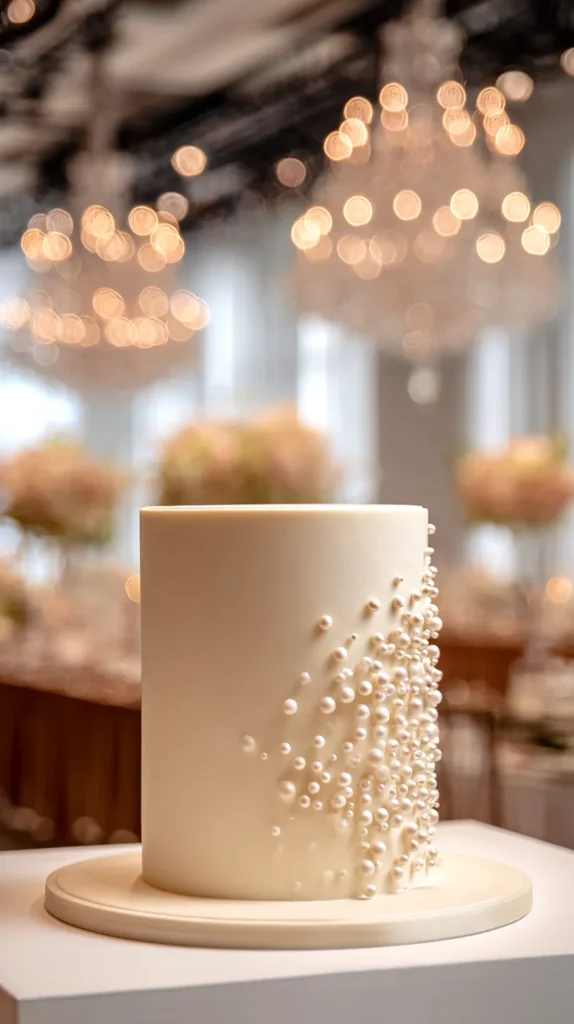
Bigger Isn’t Automatically Better
There’s a belief floating around that more tiers equal more celebration.
However, tier count mostly affects structure and labor, not guest enjoyment.
Each additional tier requires internal supports like dowels and cake boards. Bakers must stack those layers carefully to prevent shifting. That stacking increases assembly time and often requires on-site finishing.
More tiers also increase delivery risk. Taller cakes demand level transport, careful temperature control, and sometimes extra staff. Those logistics raise the final invoice without increasing servings proportionally.
Here’s where the math matters.
A 150-guest wedding can be fully served with sheet cakes prepared in the kitchen. The display cake does not need to match the full guest count visually. That separation reduces structure while preserving portions.
Simple one-tier wedding cakes allow presentation and volume to work independently.
For example, a 10-inch display cake serves roughly 38 to 50 guests depending on slice size. The remaining slices can come from two standard sheet cakes, each serving about 50 to 60 guests. Guests still receive identical pieces.
No one at the table measures tier height. Most guests take one slice, and industry estimates suggest about 60 to 70 percent of attendees actually eat cake. That reduces the need for oversized displays.
Instead of investing in vertical stacking, you can invest in higher-quality ingredients or upgraded finishes. You can request smoother buttercream, sharper edges, or precise floral placement.
Bigger cakes photograph dramatically. However, they rarely improve taste or service efficiency.
Simple one-tier wedding cakes remove structural complexity while maintaining visual polish and portion consistency.
That’s not aesthetic minimalism. That’s cost-effectiveness backed up by real numbers and smart planning.
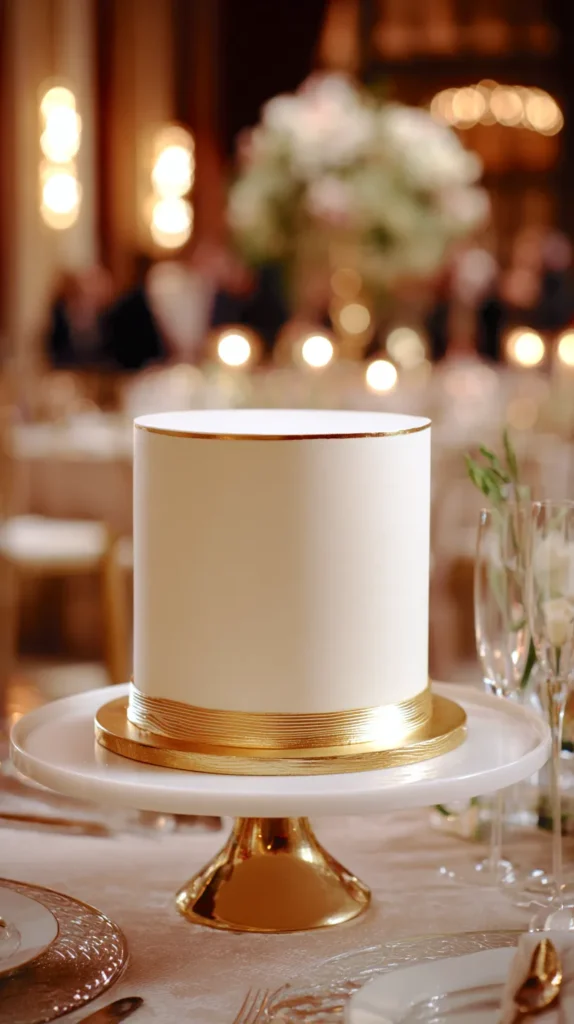
The Budget Strategy That Makes Sense
Let’s actually talk numbers this time.
In most U.S. markets, wedding cake pricing falls between $5 and $12 per slice. Basic buttercream designs often sit around $6 to $8 per slice. Elaborate multi-tier designs usually land closer to $9 to $12 per slice because of labor, structure, and assembly time.
Now, picture a common scenario.
A 150-guest wedding at $9 per slice totals $1,350 for cake alone. Add delivery fees ranging from $75 to $200, plus setup fees around $150, and you can easily reach $1,600 before tax.
That’s a noticeable chunk of a wedding budget.
Here’s where simple one-tier wedding cakes shift the math in a meaningful way.
Order a single 8-inch display cake serving about 40 guests at $8 per slice, and you spend roughly $320. Add two full sheet cakes for the remaining 110 servings at about $3 per slice, totaling $330.
Now your complete cake cost lands near $650.
That’s a difference of about $950 compared to the stacked option.
Nine hundred dollars covers upgraded florals, extended photography time, or higher-quality linens. That amount can even offset venue add-ons or music upgrades.
Here’s another overlooked factor.
Each additional tier increases labor even when guest count stays the same. Bakers add internal supports. They stack on site. They smooth seams between layers. Those steps raise the bill without increasing flavor.
Simple one-tier wedding cakes remove those structural charges entirely.
Guests still receive full portions. Photos still look polished. The table still appears intentional and cohesive.
Instead of paying for height, you invest in quality ingredients and clean design.
Financial clarity? Now that’s a power-up!
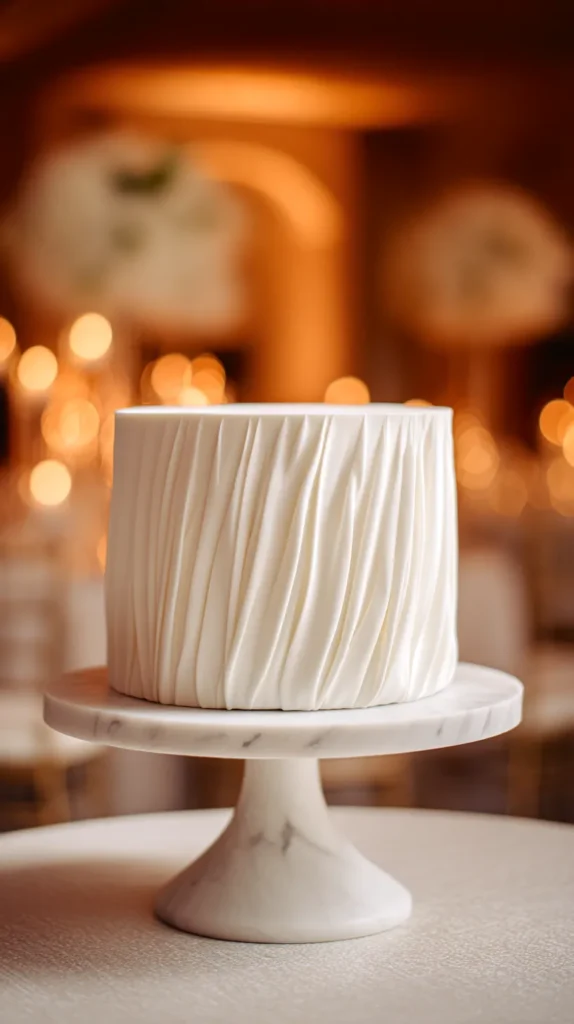
Design Details That Elevate Simple One-Tier Wedding Cakes
A single tier carries responsibility.
That responsibility feels exciting when you understand what to look for.
When you’re working with simple one-tier wedding cakes, design becomes deliberate in practical ways. Every choice affects proportion, texture, and visual balance. There’s no extra layer to distract the eye.
Start with structure.
Ask your baker how tall the cake will be. Standard tiers measure about four inches. Double-barrel versions can reach six to eight inches tall. That extra height adds presence without stacking.
Height alone can change perception dramatically.
Next, evaluate the finish.
• Smooth ivory buttercream with sharp, clean edges
• A soft semi-naked finish with controlled texture
• Pressed edible flowers placed intentionally
• A minimalist monogram in gold leaf
• Fresh fruit arranged with spacing and balance
Each option works best when it stands alone.
Here’s the contrast to keep in mind.
Stacked cakes often repeat borders or patterns on every level. That repetition can look busy quickly. A single tier forces editing. Editing improves clarity.
I tend to notice that when decoration stays focused, craftsmanship becomes visible. Guests see smooth frosting. They see clean lines. They see thoughtful spacing.
That level of detail reads high-end.
Simple one-tier wedding cakes rely on proportion and finish instead of volume. Because of that, they age well in photographs. They avoid looking tied to one trend cycle.
Timeless design protects your investment long after the reception ends.
Long-term joy beats flashy thrills any day!
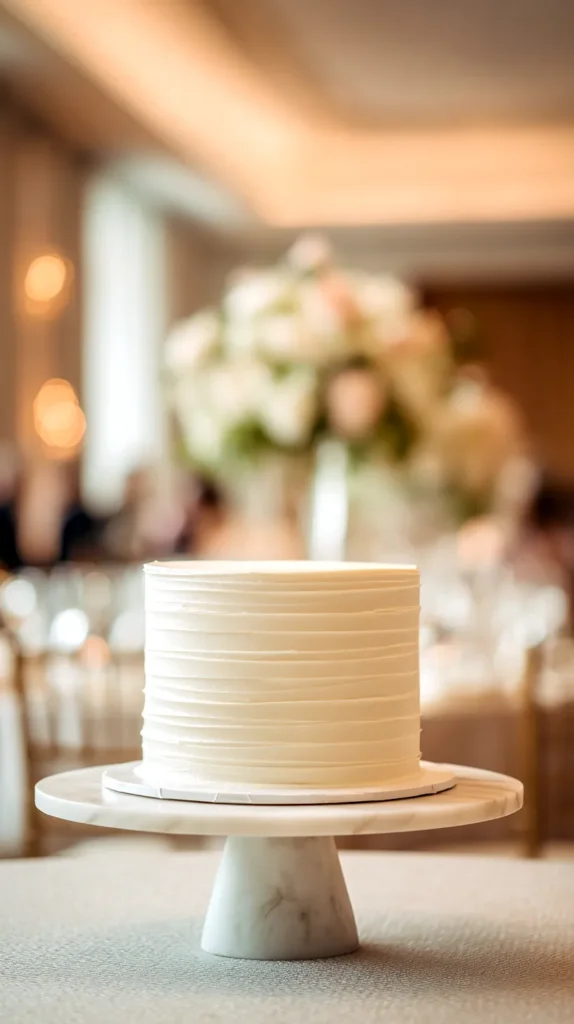
The Guest Experience Shift
Let’s zoom out for a moment.
Guests rarely remember tier count. What stays with them is how the night flowed from start to finish. Laughter moving from table to table leaves a stronger impression than stacked layers ever could. The taste of dessert lingers longer in memory than the height of the display.
Simple one-tier wedding cakes quietly change the rhythm of service. Cutting becomes straightforward. Portions stay even. Lines move without awkward pauses.
Nobody stands around wondering which tier comes first. Nobody waits while someone negotiates structure.
That smoother rhythm shifts reception energy in subtle ways.
When dessert flows easily, guests drift back to dancing faster. They reconnect with friends. They lean into conversation instead of logistics.
That shift matters more than height ever could.
I’ve found that when décor stops competing for attention, connection increases naturally. People engage with each other instead of observing a towering centerpiece from a distance.
Here’s the contrast.
A multi-tier cake can feel like a museum exhibit. A single tier feels approachable. Guests step closer without hesitation.
Approachable equals inviting. Inviting equals memorable.
Memorable moments rarely depend on vertical inches of frosting. They depend on how the night felt as it unfolded.
Simple one-tier wedding cakes support that flow quietly. They serve the experience rather than dominate it.
And that balance changes the tone of the entire celebration.
Instead of spotlighting structure, you spotlight people. Instead of focusing on spectacle, you encourage interaction.
That interaction becomes the story guests carry home.
At the end of the night, nobody measures tiers. They measure warmth.
Warmth totally trumps height, every time!
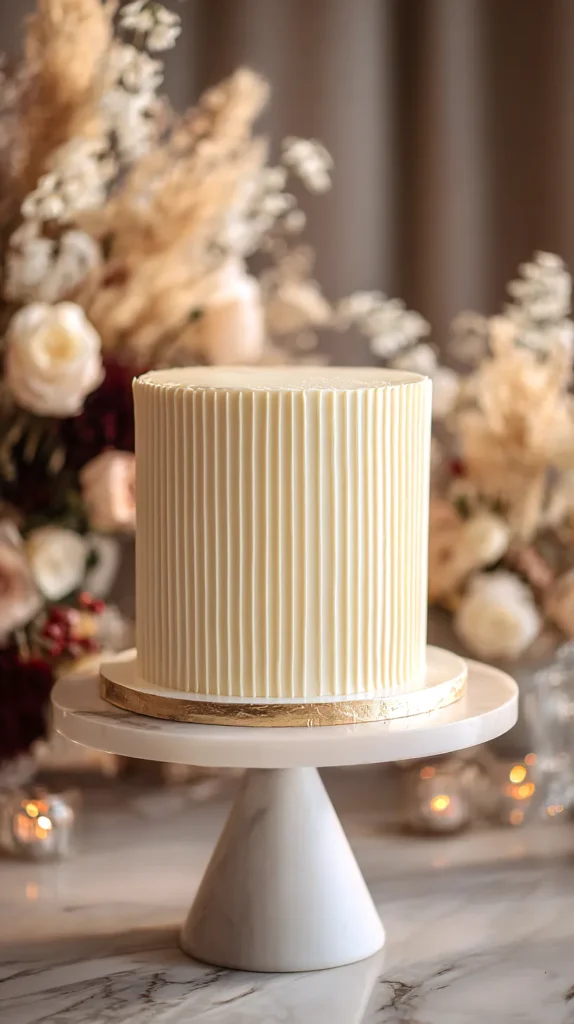
Styling the Table Instead of the Cake
Alright, here’s where the fun begins!
If you choose simple one-tier wedding cakes, you unlock creative freedom instantly. The cake stops carrying the entire visual load.
Instead of building upward, you design outward.
Height can come from candleholders. Texture can come from linen. Drama can come from florals arranged with intention.
Layer the table, not the cake.
Use varying candle heights to create movement. Add a textured runner that contrasts the buttercream. Place the cake slightly off-center for balance.
That small shift changes the entire composition.
Negative space feels intentional, not empty. It gives the eye room to rest.
I tend to notice that when a cake stands alone on a beautiful pedestal, it commands attention quietly. Nothing fights for space.
That stand matters more than people realize.
A stunning pedestal instantly elevates a modest tier. Suddenly, the cake looks curated rather than minimal.
Here’s the reframe.
More tiers add bulk. Better styling adds polish.
Simple one-tier wedding cakes allow surrounding elements to shine without competition. Candles glow brighter. Florals appear softer. Linen texture becomes part of the story.
Instead of overwhelming guests, the table feels balanced. Balanced design reads expensive because it looks edited.
And here’s the money-savvy angle.
You can reuse or resell décor pieces later. You can’t resell the structural cake height.
That practical difference keeps your budget flexible long after the reception ends.
Flexibility reduces planning stress. Lower stress keeps your decisions sharp.
Sharp decisions always look better in photos than those flashy displays.
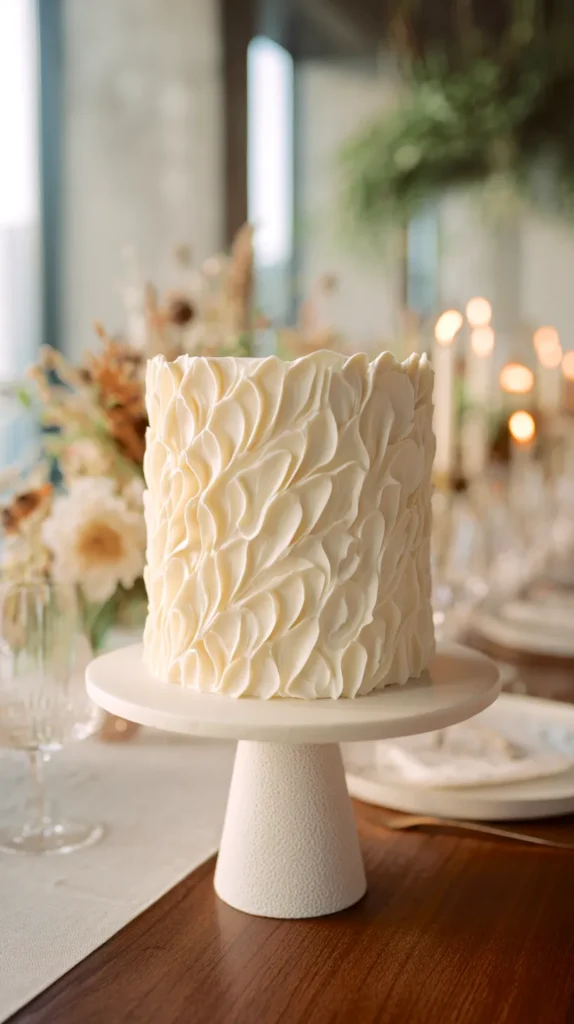
When Trends Calm Down
Wedding trends move fast. One year it’s metallic drips. The next year it’s dramatic florals. Then it’s textured buttercream mountains.
Eventually, trends calm down.
Clean design is here to stay!
I’ve found that simple one-tier wedding cakes don’t chase fads. They lean into timelessness instead. That choice protects your photos from feeling locked into one year.
Timelessness equals staying power.
When you look back at wedding images years later, you want elegance, not overload. You want clarity, not clutter competing for attention.
Here’s the quiet contrast.
Trends demand reaction. Timeless design creates intention.
I tend to notice that restraint rarely feels dated. Over-decoration often does. What feels exciting in the moment can look heavy later.
That shift surprises people once they see it.
Minimal design doesn’t scream for attention. It earns it slowly through balance and proportion. That slow confidence feels steady.
And steady confidence lasts.
Simple one-tier wedding cakes align beautifully with money-savvy style. They say, “We chose this on purpose.” That message ages better than any trend cycle.
Intentional choices age well. Trendy excess fades faster than expected.
The difference might look small today. It feels significant later when you revisit albums with fresh eyes.
Choosing simplicity now protects you from future regret. That protection feels quiet, but it’s powerful.
No room for regret in wedding memories, especially when a little planning could’ve saved the day!
The Emotional Freedom of Simplicity
I want to talk about something nobody includes in the cake consultation.
Headspace.
More tiers mean more structure. More structure means more logistics. Those logistics invite more opinions.
I’ve found that simple one-tier wedding cakes remove an entire layer of mental strain. One flavor direction. One design focus. One steady anchor on the table.
That clarity protects your energy from the start.
Instead of debating height proportions and support rods, you settle the cake early. That early decision reduces background stress.
Here’s what people rarely admit.
Decision fatigue builds quietly during wedding planning. It hides behind inspiration boards. It disguises itself as “just exploring options.”
Then suddenly, you’re second-guessing everything.
Simple one-tier wedding cakes interrupt that spiral before it expands. They create a natural boundary. They offer a defined stopping point.
Stopping feels empowering.
When one visible choice feels final, conversations change. You stop circling back. You stop reopening closed decisions.
I tend to notice that once couples commit to one tier, their tone shifts. They protect their energy more carefully. They redirect focus toward connection.
Instead of stacking layers, they stack intention. Instead of chasing spectacle, they guard clarity.
That shift reframes a common assumption. Bigger does not mean safer. Bigger often means more to manage.
Clarity, however, feels steady.
Guests never count tiers at dessert. Instead, they notice how easily the line moves and how smooth the service feels. A steady rhythm keeps the energy light, and laughter drifting through the room becomes the detail that sticks.
Simple one-tier wedding cakes symbolize thoughtful restraint under pressure. They quietly say, “We chose this deliberately.”
That deliberate choice builds emotional steadiness.
Emotional steadiness totally sets the vibe for a wedding way more than any frosting height ever could!
Final Thoughts on Simple One-Tier Wedding Cakes
I keep circling back to this idea.
Simple one-tier wedding cakes look understated at first glance. Then they start looking bold once you sit with them.
That shift still fascinates me.
Living in Orlando, I see dramatic wedding displays all the time. Glittering ballrooms. Towering floral installs. Cakes that almost compete with chandeliers.
Still, the setups that linger in my mind feel edited. They look calm. They look intentional.
I’ve found that money-savvy style rarely shouts. It stands steady and lets the details speak.
Pinterest overflows with stacked masterpieces. Scroll long enough and they blur together into one tall silhouette.
Then a single, clean tier shows up in the feed. It stops the scroll. It makes you look twice.
That quiet confidence feels refreshing.
Simple one-tier wedding cakes aren’t about cutting back. They’re about choosing well and meaning it. That choice shows discipline without looking stiff, and clarity without looking plain. You don’t need stacked height to prove celebration when intention already does the talking.
And here’s the part I love most.
When you choose restraint on purpose, you free yourself from comparison. You stop chasing spectacle. You start building something that actually reflects you.
That kind of decision feels grounded. It feels smart. It feels steady.
In a world that loves to go big or go home, sometimes opting for less is the real power play.