Wedding flowers can get wildly rude with the pricing, can’t they? One minute you’re saving bridal bouquets on Pinterest. Next, you’re wondering if peonies require a loan officer. I love pretty flowers as much as the next woman with a soft spot for dreamy details. Still, I tend to notice that the smartest bouquets don’t always look expensive.
That’s the fun little twist here. A bouquet can look lush, romantic, and very “I have my life together,” without draining the honeymoon fund. The trick lives in flower choices, color, shape, season, and a few sneaky budget moves. Once those pieces click, the whole bouquet starts behaving.
As a mom in Orlando, I also think about heat, wilt, and real-life chaos. Flowers must survive photos, hugs, car rides, and somebody asking where the boutonnières went. So, yes, pretty matters. Practical matters too.
This post is for the bride who wants beautiful flowers without paying scary-florist-money for every stem. Maybe you want a grocery store glow-up. Perhaps one gorgeous bouquet can look intentional instead of clearance-bin bridal. Either way, bridal bouquets can be budget-friendly and still look polished.
There’s a sweet spot between bare-bones and wildly overdone. It’s not loud. Nothing feels fussy. Yet once you see it, those flower prices start looking a lot less bossy. The best part comes when simple flowers start looking like smart choices. That wedding math makes my budget-loving heart grin.
Some of the links on this page are affiliate links, which means I may earn a small commission if you purchase through them. It never costs you extra. You can always peek at my full disclosure if you’d like the details.
Bridal Bouquets That Look Expensive Without Being Fancy
I’ve found that bridal bouquets look pricey when they have a clear shape. Rare flowers or dramatic stems flown in from somewhere mysterious aren’t required. They need one main idea. That idea can be soft, wild, classic, colorful, or clean.
Here’s where many budget bouquets go sideways. Brides buy every pretty flower they see, then the bouquet loses focus. More flowers can make things look busier, not better. That’s annoying, because “more” seems safer when you’re nervous.
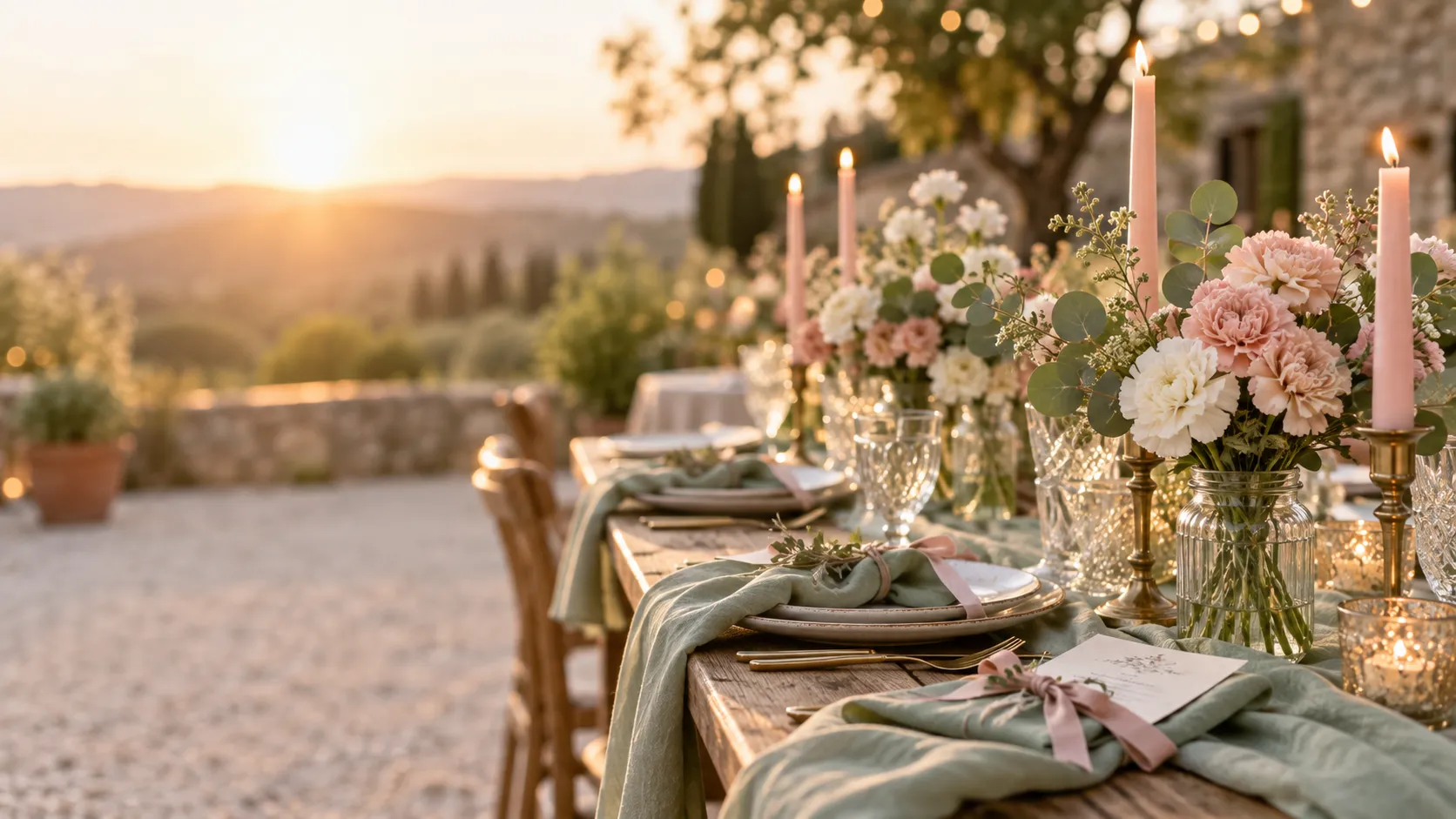
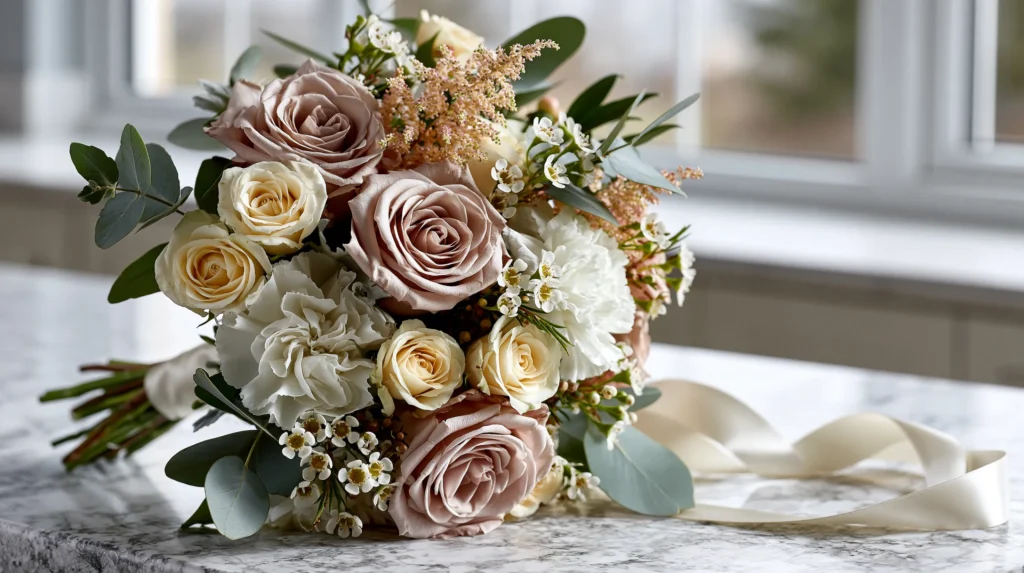
A simple flower plan works harder. For a soft romantic bouquet, use white roses, blush carnations, cream spray roses, and eucalyptus. Add waxflower for tiny detail that looks delicate, not fussy. That mix gives you fullness without a luxury price tag.
For a clean classic bouquet, use white roses, ranunculus, baby’s breath, and Italian ruscus. However, skip too many greens if you want a formal look. Greenery saves money, but too much can change the mood fast. A little restraint can look surprisingly expensive. Plus, it keeps the bouquet from fighting with the dress. It also keeps photos from looking crowded or confused.
Color also carries a bouquet. One tight color family usually looks richer than ten random shades. Blush, cream, peach, and soft coral work beautifully together. Meanwhile, white, ivory, and sage look calm and bridal without trying too hard.
The biggest budget reframe is this: cheap flowers aren’t the problem. Random flowers are the problem. Bridal bouquets look thoughtful when every stem has a job. Once you treat the bouquet like an outfit, not a flower pile, things get very interesting. Suddenly, “simple” stops sounding like a compromise. It starts sounding like taste. That’s the sweet spot.

Make Grocery Store Flowers Look Planned
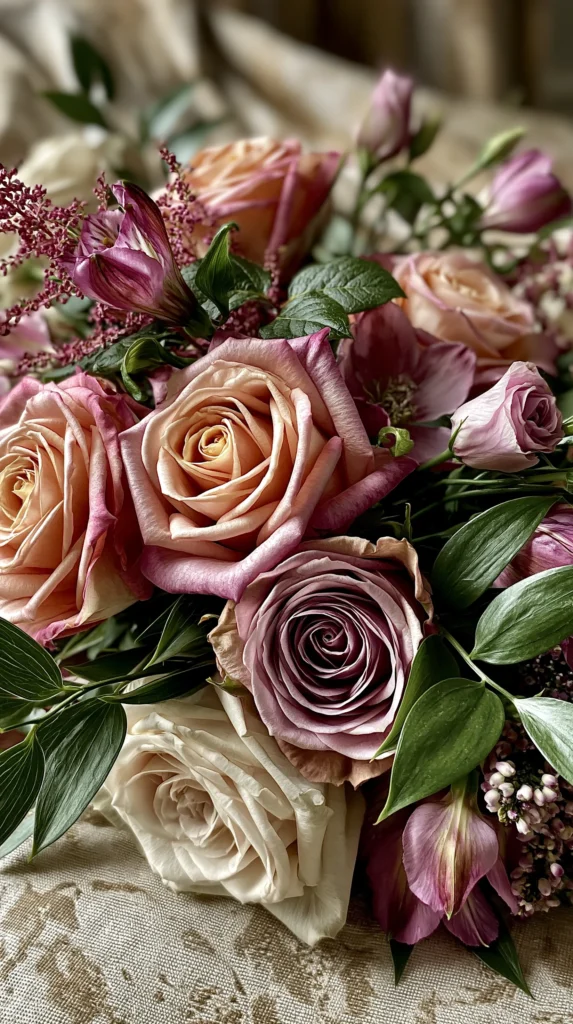
Grocery store flowers can absolutely work for a wedding bouquet. I said it, and I stand by it. Still, the secret is not grabbing three mixed bunches and hoping for romance. Those premade bundles often include one odd purple daisy that ruins the plot.
Instead, buy flowers by color and texture. Remove anything that screams birthday vase. Then build around one pretty bloom and two supporting flowers. This keeps the bouquet from looking like it came with a barcode.
For budget-friendly bridal bouquets, try a tight flower plan. These grocery store combinations can look shockingly polished. Start here:
- Soft blush bouquet: blush roses, white carnations, pink alstroemeria, and seeded eucalyptus.
- Cream garden bouquet: white hydrangeas, cream spray roses, waxflower, and Italian ruscus.
- Peachy summer bouquet: peach roses, white lisianthus, pale orange carnations, and dusty miller.
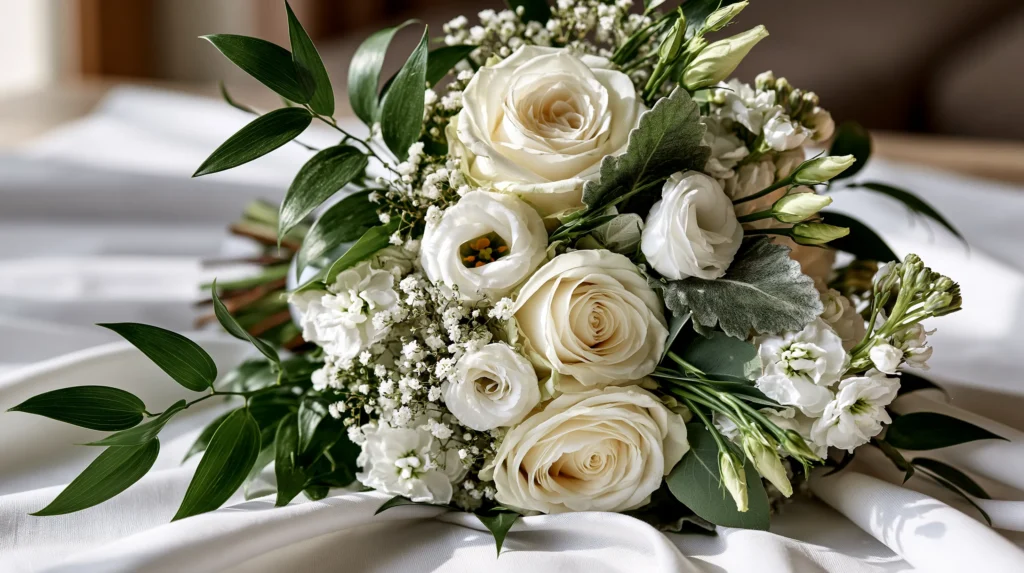
- Simple white bouquet: white roses, baby’s breath, white stock, and silver dollar eucalyptus.
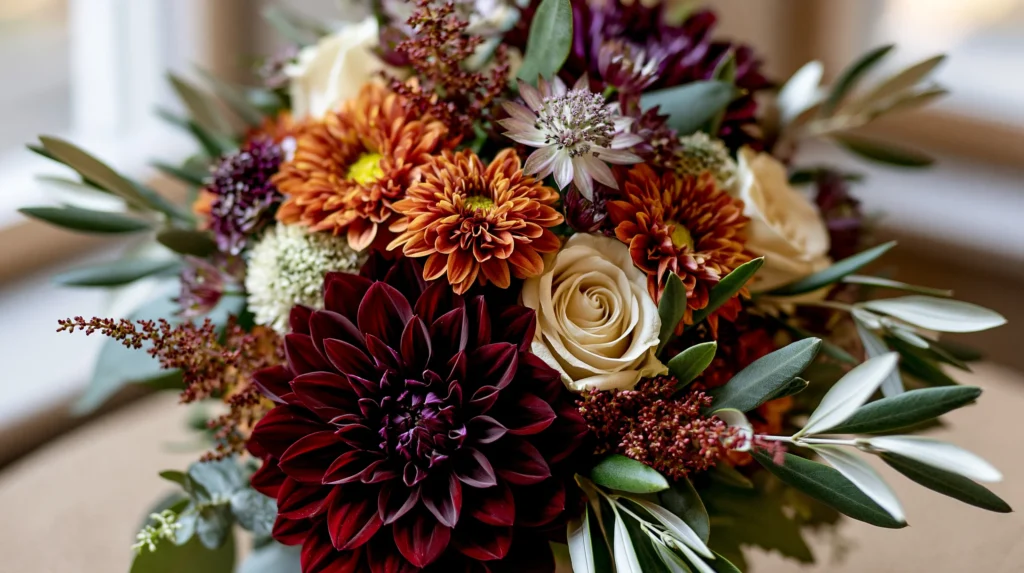
- Moody fall bouquet: burgundy mums, cream roses, rust carnations, and olive branches.
The funny part? Carnations keep getting treated like the floral equivalent of sensible shoes. Yet they fill space beautifully. They also last well, which matters when wedding day timing gets dramatic.
However, grocery flowers need editing. Pull off bruised petals. Remove extra leaves below the binding point. Cut stems at an angle and keep everything in cool water. These tiny steps make the bouquet look handled, not hurried.
Another good move is buying extra greenery separately. Eucalyptus, ruscus, and leatherleaf can stretch each bouquet without adding much cost. That gives your flowers room to breathe. It also makes smaller blooms look more generous.
A grocery bouquet should look chosen, not rescued. That tiny difference changes everything. Nobody needs to know the roses shared a cart with cereal.

Bridal Bouquets By Season So Your Budget Behaves
Seasonal flowers usually make bridal bouquets cheaper, fresher, and easier to find. That’s a lovely little budget triangle. Flowers cost more when they must travel far or arrive out of season. Meanwhile, seasonal stems often look better because they’re having their moment.
I’d build the bouquet around what the season already offers. It looks more natural. Plus, nobody wants to pay premium prices for flowers fighting the calendar. The calendar wins that fight every time.
Here are budget-friendly seasonal bouquet ideas:
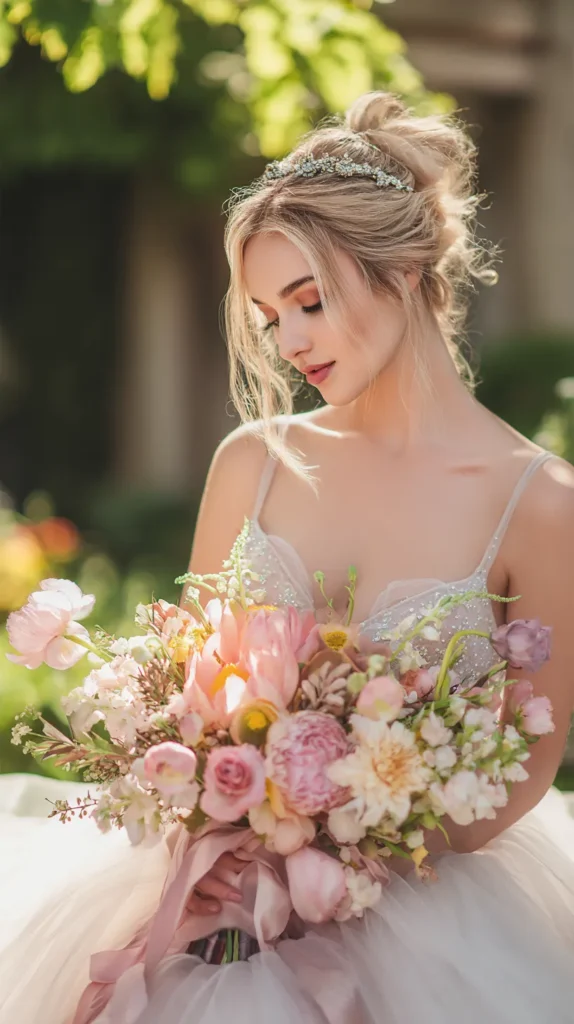
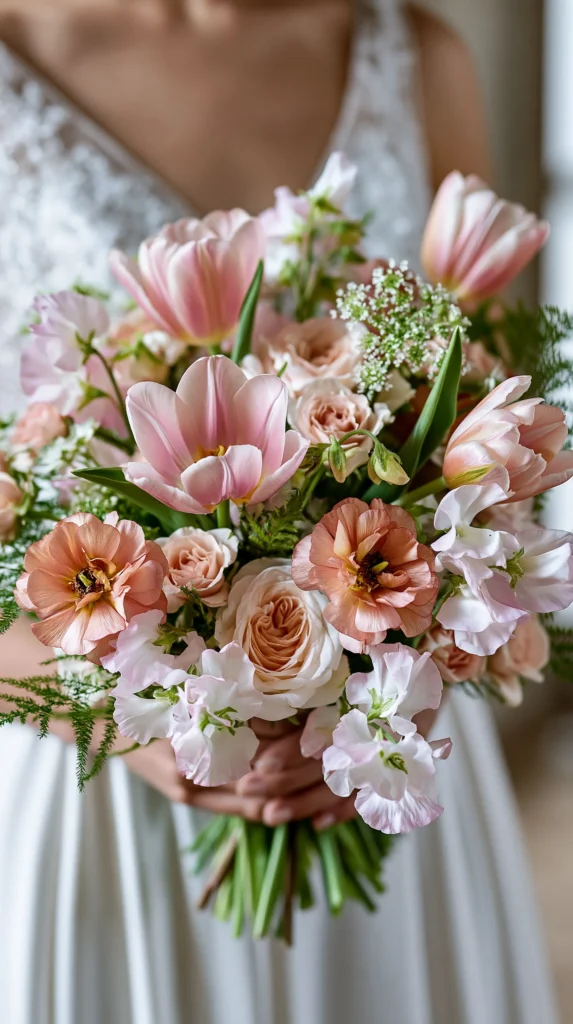
- Spring bouquet: tulips, ranunculus, sweet peas, spray roses, and fern.
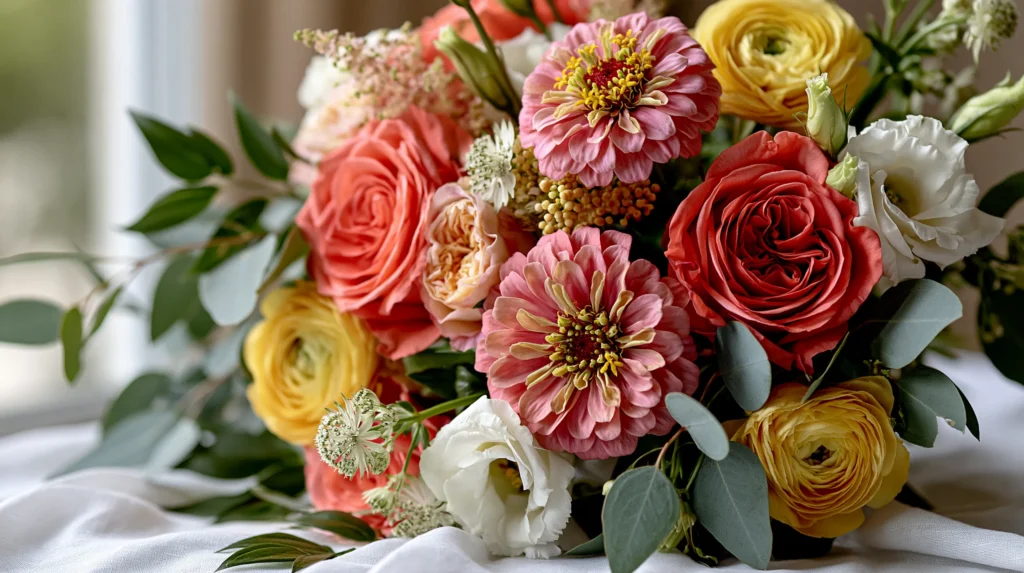
- Summer bouquet: zinnias, lisianthus, cosmos, garden roses, and eucalyptus.
- Fall bouquet: dahlias, mums, marigolds, roses, and olive branches.
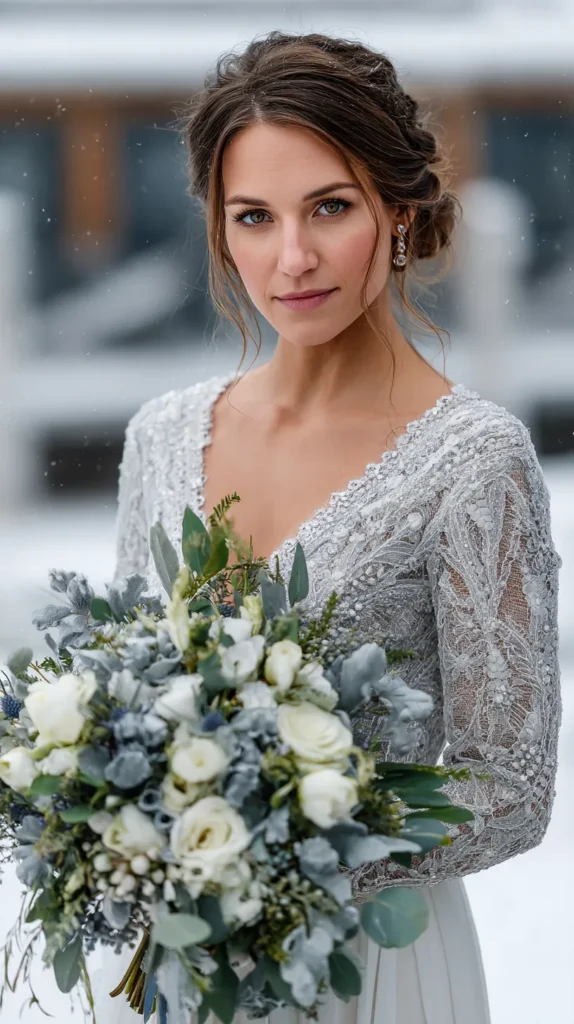
- Winter bouquet: amaryllis, white roses, carnations, anemones, and pine greenery.
- Year-round bouquet: roses, carnations, baby’s breath, stock, and ruscus.
Spring looks lovely in blush, lavender, ivory, or butter yellow. Summer can handle coral, peach, white, and hot pink. Fall plays beautifully with burgundy, rust, cream, copper, and dusty rose. Winter likes ivory, deep red, emerald, soft blue, and champagne.
Here’s the sneaky part. Seasonal flowers don’t have to look themed. Fall bouquets don’t need pumpkins. Winter bouquets don’t need pinecones. Spring bouquets don’t need to look like Easter brunch.
Instead, let the season guide the stems, not the whole personality. That keeps the bouquet elegant and budget-friendly. Bridal bouquets behave better when the flower choices match the season, the weather, and the wallet. Trends are cute, but invoices are very real. No weird calendar rebellion needed. Ask what arrived fresh that week. Then build around the prettiest affordable stems available. That one question can save money without killing the whole look.

The Small Bouquet Trick That Looks Intentional
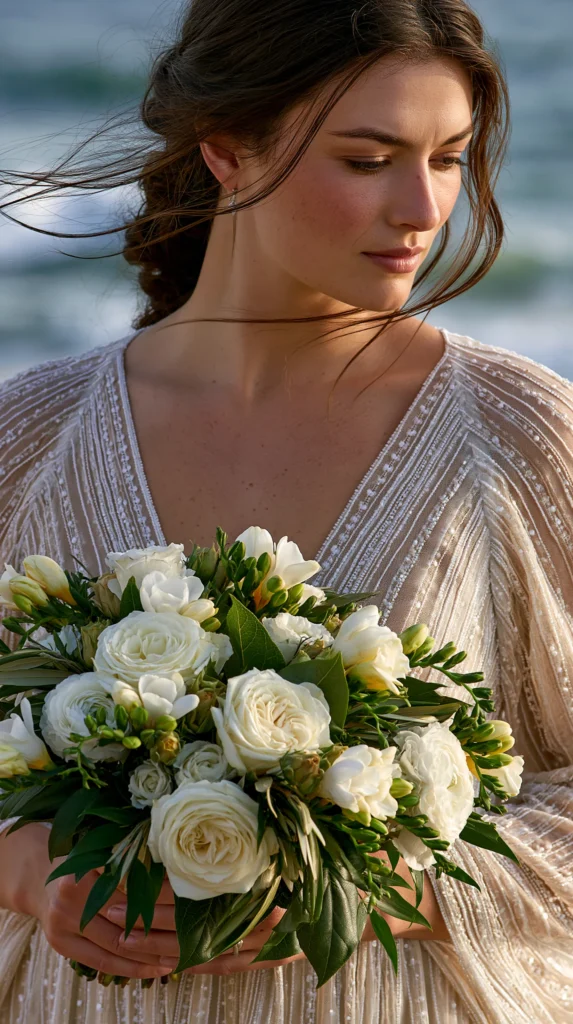
A smaller bouquet can look more expensive than a giant one. That sounds wrong at first, which is exactly why I love it. Oversized bouquets can look amazing in photos, sure. However, they can also hide the dress, strain the wrist, and eat the budget alive.
Smaller bridal bouquets work best when the flowers have shape and texture. You want blooms that hold attention without needing twenty backup dancers. Roses, ranunculus, lisianthus, anemones, and calla lilies all do this well. Add a little greenery, then stop before things get fluffy.
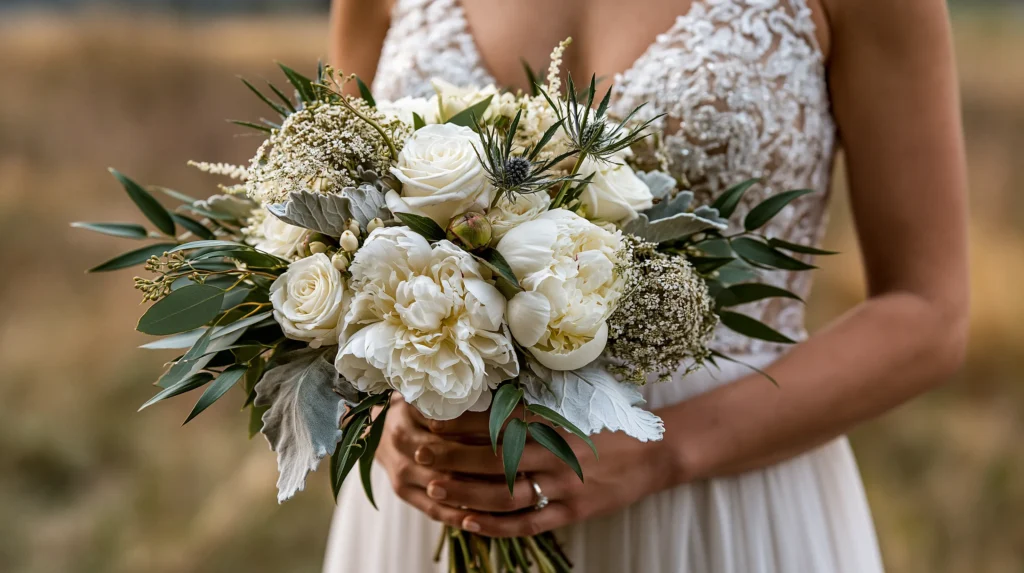
The trick is density. A tight bouquet of quality-looking flowers often beats a huge bouquet of filler. For example, white roses, ivory ranunculus, blue thistle, and eucalyptus can look crisp and styled. Another pretty option uses blush roses, pink lisianthus, waxflower, and dusty miller.
Scale matters more than people think. A petite bride may look swallowed by a massive bouquet. Simple dresses often shine with clean flowers. Meanwhile, a detailed gown might need a calmer bouquet to avoid visual chaos. That’s not boring. Balance just looks extra lovely with a veil.
Here’s the reframe. A small bouquet doesn’t say “cheap.” It says edited. It says you knew when to stop, which reads very grown-up and slightly smug.
Ribbon helps too. A long satin ribbon can add movement without adding flowers. Choose ivory, champagne, blush, sage, or dusty blue. Let the ribbon trail a bit for photos. Suddenly, the bouquet looks styled without adding more stems.
Once the bouquet looks intentional, nobody counts stems. They notice the whole picture. Your hands will thank you too, which nobody mentions enough. That’s the sneaky luxury of editing well.

Bridal Bouquets With Specific Flowers That Stretch Every Dollar
Some flowers earn their spot because they give you size, color, and texture. Others cost too much for too little drama. I’m not here to bully tiny expensive blooms, but the budget needs boundaries. A wedding bouquet should not require a financial recovery plan. One pricier stem can steer the whole look.
For bridal bouquets on a budget, I’d mix one “pretty face” flower with hardworking fillers. That keeps the bouquet lovely without making every stem precious. Basically, let one bloom get the spotlight, then let the supporting cast do its job.
Try these specific bouquet formulas:
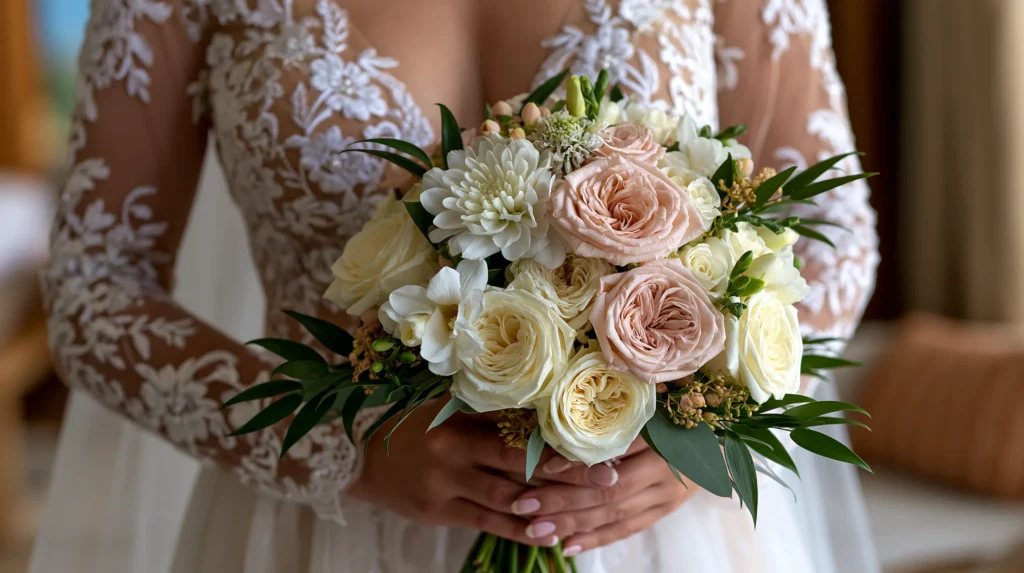
- Romantic blush bouquet: blush roses, white carnations, spray roses, waxflower, and eucalyptus.
- Blue garden bouquet: white roses, blue hydrangeas, delphinium, baby’s breath, and eucalyptus.
- Wildflower-style bouquet: daisies, cosmos, chamomile, lavender, and Queen Anne’s lace.
- Elegant white bouquet: white lisianthus, ivory roses, white stock, ranunculus, and ruscus.
- Colorful summer bouquet: zinnias, coral roses, yellow ranunculus, pink carnations, and greenery.
- Fall garden bouquet: burgundy dahlias, rust mums, cream roses, scabiosa, and olive branches.
- Winter romance bouquet: red roses, white carnations, anemones, pine greenery, and hypericum berries.
Hydrangeas can stretch a bouquet fast, but they need water. Use them carefully if the ceremony sits outdoors. Baby’s breath can also look lovely, but too much can turn cloudy.
Carnations, stock, mums, and alstroemeria deserve more respect. They fill space, last well, and come in useful colors. Meanwhile, ranunculus and lisianthus add that soft bridal look without requiring peony money.
The goal isn’t the cheapest possible bouquet. It’s the smartest bouquet that still looks like a wedding bouquet. That difference matters more than people admit. That’s the win.
Color Stories That Make Cheap Flowers Look Chosen
Color can make inexpensive flowers look planned, polished, and weirdly fancy. I tend to trust color more than price. A $30 bouquet in a tight palette can beat a $200 bouquet with confused colors. That sounds dramatic, but weddings invite drama anyway.
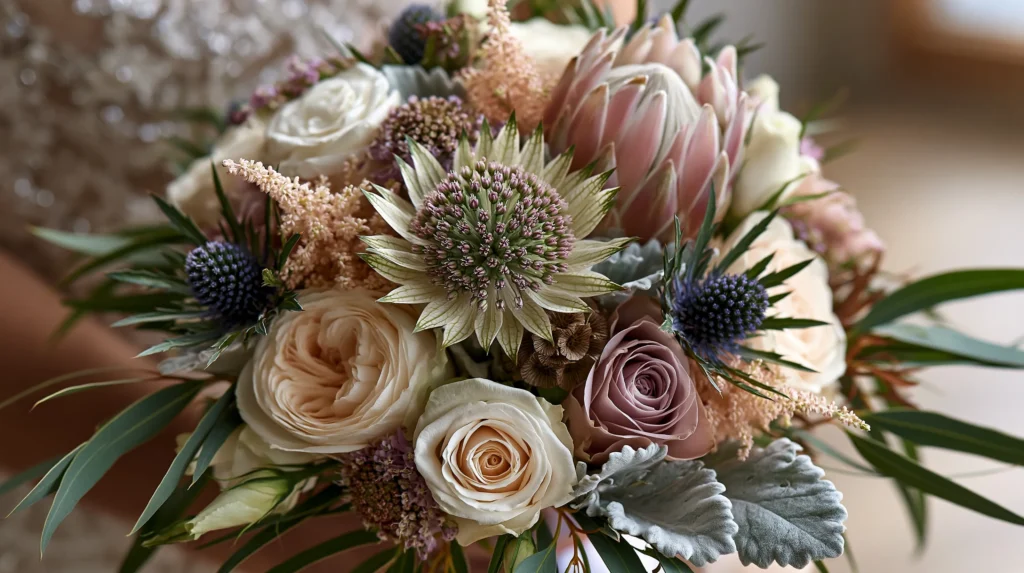
For bridal bouquets, I’d start with three colors at most. Try ivory, blush, and sage for a soft garden look. Use peach, coral, and cream for warm summer photos. Choose burgundy, rust, and dusty rose for fall without going full hayride.
White flowers need texture, or they can look flat. Mix white roses, stock, lisianthus, and baby’s breath for layers. Add Italian ruscus if you want length. Use silver dollar eucalyptus if you want softness.
Pastels can look dreamy, but they need contrast. Blush roses, pale peach carnations, lavender stock, and greenery work well together. However, add too many pastels, and the bouquet may look washed out in photos.
Bold colors need more control. Bright pink zinnias, orange ranunculus, coral roses, and greenery can look joyful. Still, add white or cream to give the eye somewhere quiet to land. That quiet color does more than people expect.
Here’s the sneaky assumption flip. Expensive-looking bouquets don’t always use expensive colors. They use limited colors. That restraint makes even simple flowers look styled.
I also love matching the bouquet mood to the venue. A backyard wedding can handle wildflowers and herbs. Ballrooms may need roses, lisianthus, and cleaner greenery. Same budget, different story. That’s why matching the mood matters. For photos, color can do the heavy lifting before price enters the chat.

Where To Save And Where To Spend
Wedding flowers can turn into a sneaky budget leak. One small upgrade becomes six. Then suddenly, every table “needs” another arrangement. Sir, this is a wedding, not a botanical takeover.
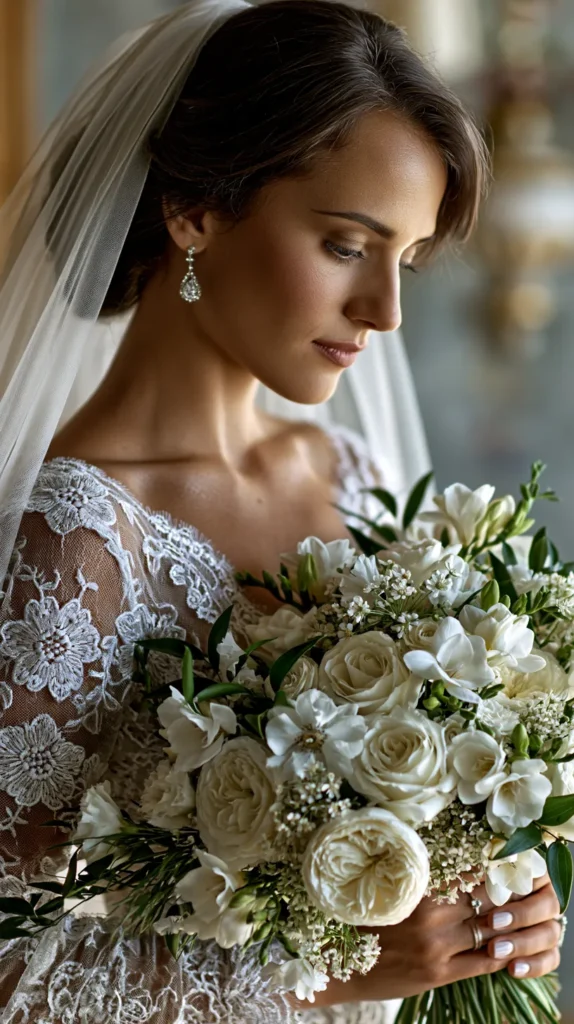
I’d spend the most on the bride’s bouquet because it appears in the most photos. However, that doesn’t mean it needs luxury flowers. It means the main bouquet deserves the best shape, color plan, and ribbon.
Save money here first:
- Use bridesmaid bouquets with fewer flower types, like roses, carnations, and eucalyptus.
- Choose baby’s breath bundles for aisle markers instead of full arrangements.
- Reuse ceremony flowers at the reception when possible.
- Pick one statement bouquet instead of upgrading every floral piece.
- Use seasonal flowers for bridal bouquets, bridesmaid bouquets, and centerpieces.
- Skip fragile flowers if the wedding happens outdoors in heat.
- Choose greenery garlands only where guests will notice them.
Spend a little more where photos matter. The bride’s bouquet, ceremony arch corners, and sweetheart table usually work hardest. Meanwhile, bathroom flowers can calm down. Nobody needs a floral moment near the hand soap.
Specific flowers can help stretch the whole plan. Use roses, carnations, stock, mums, lisianthus, and eucalyptus across several arrangements. Repeating stems makes everything look connected. It also helps the florist order smarter.
Here’s another budget reframe. A wedding doesn’t need flowers everywhere. It needs flowers in the right places. That one shift can save real money without making the day look bare.
Bridal bouquets should set the floral mood. Let everything else support that mood without competing for rent. That’s how budget flowers start looking expensive. The bouquet leads, and the rest follows politely.
Bridal Bouquets FAQ For Budget Weddings
What budget flowers work best? Carnations, mums, baby’s breath, alstroemeria, stock, and daisies often cost less. Roses can also work well because stores carry them year-round. Mix them with eucalyptus, ruscus, or leatherleaf for fullness.
What flowers look expensive fast? Ranunculus, lisianthus, anemones, garden roses, and orchids can elevate a bouquet fast. However, you don’t need many. Add a few standout blooms with carnations, stock, and spray roses. That mix gives drama without total budget nonsense.
What spring flowers work well? For spring, use tulips, ranunculus, sweet peas, lilacs, and spray roses. Add fern or ruscus for greenery. Keep the colors soft, unless you want a bold garden look.
Which flowers handle summer heat? Roses, carnations, zinnias, orchids, and lisianthus usually handle warmth better than delicate blooms. In hot places, hydrangeas can wilt fast. As an Orlando girl, I respect any flower that survives humidity.
Can I make my own wedding bouquet? Yes, but practice before wedding week. Make one test bouquet with your chosen flowers. Then check how long it lasts, how it photographs, and how heavy it gets. Wedding-day surprises belong in speeches, not bouquets.
How many flower types should a bouquet include? Three to five flower types usually work well. Use one main flower, two supporting blooms, and greenery. That formula keeps the bouquet full without looking messy.
Are silk flowers cheaper than fresh flowers? Sometimes, but nice silk flowers can cost more than expected. They work best when you want keepsakes or hard-to-find colors. Fresh seasonal flowers often win for budget.
Can bridesmaids carry cheaper flowers? Yes. Use carnations, roses, stock, and eucalyptus. Keep colors close to the bride’s bouquet. Simple and sane.
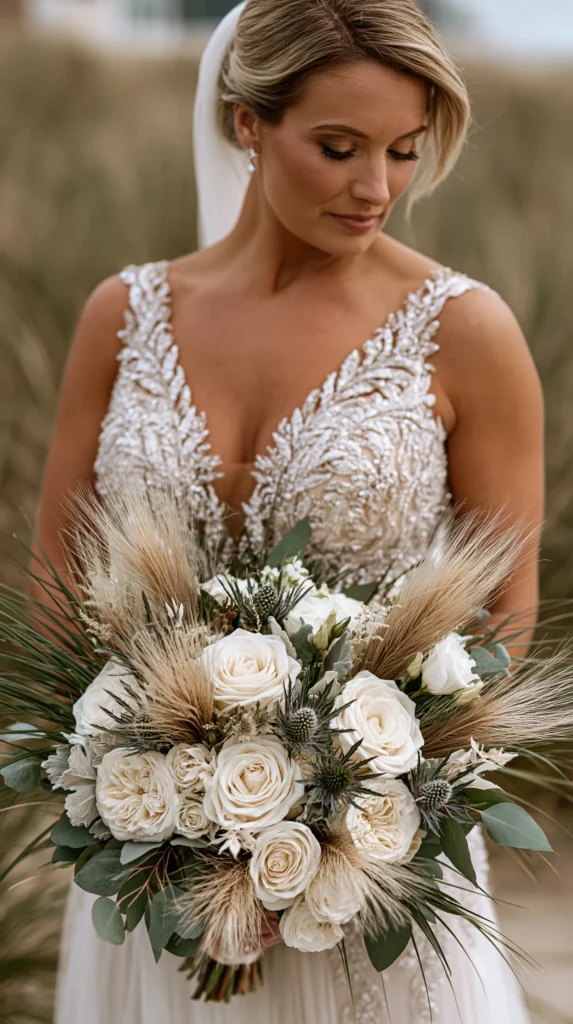
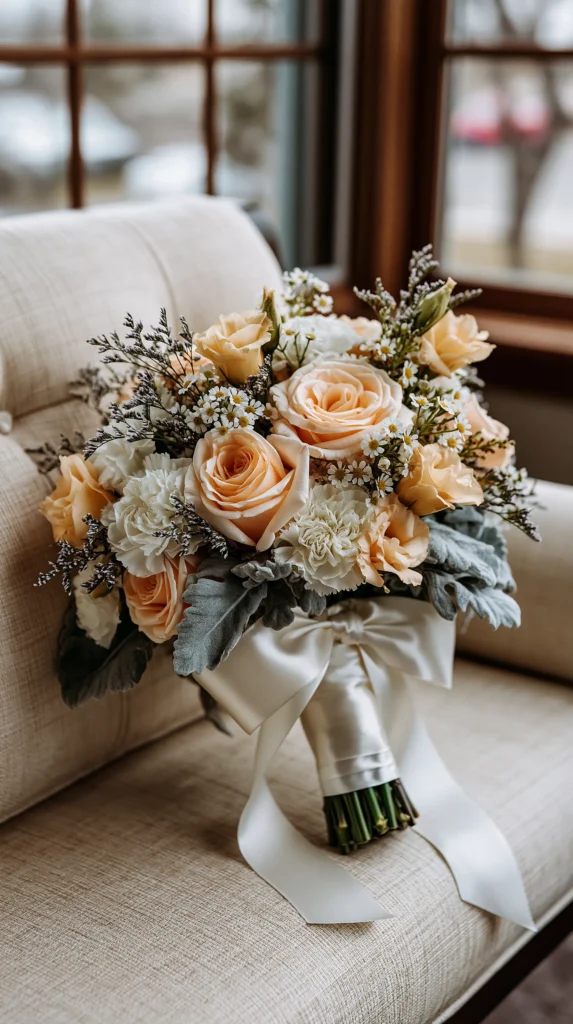
The Pretty Little Wedding Detail Worth Keeping Simple
I always think wedding details get calmer when they stop trying to prove something. Flowers don’t need to announce the entire wedding budget. They just need to look pretty, make sense, and survive the day without causing emotional damage.
That’s why I like bridal bouquets with a smart plan. Choose flowers that match the season. Keep the colors tight. Spend where photos matter, then let the rest of the flowers relax a bit. The whole thing starts looking less like a puzzle and more like a pretty choice.
Living in Orlando has made me deeply suspicious of fragile flowers in heat. I want beauty, yes. But I also want stems that won’t surrender before the ceremony. That matters for brides everywhere, even without Florida humidity acting like an unpaid guest.
Pinterest can make every bouquet look dreamy and wildly expensive. However, those photos also teach a useful lesson. The best bouquets usually have focus, color, texture, and restraint. Skip endless stems. Avoid every trendy flower. Please spare us floral chaos with a ribbon.
So, choose the bouquet that fits your dress, season, venue, and budget. Let it look charming without trying too hard. Weddings already come with enough tiny decisions wearing fancy shoes. A beautiful bouquet doesn’t need to empty your wallet to earn its close-up. Let that be the bouquet hill we happily marry on. Pretty can still be practical, and that’s my favorite wedding plot twist. I’ll take that over floral panic every single time.