A bento box lunch sounds delightfully organized until the fridge holds half a cucumber and three crackers. Then the cute little compartments start looking judgmental. I can picture the scene: standing with the door open and doing snack math like a tax audit. Still, this lunch style can save money, reduce waste, and make noon far less boring.
As a mom, I love any meal that looks thoughtful without requiring a full kitchen production. That matters on busy mornings, especially when someone suddenly remembers a form, a water bottle, or shoes. The trick isn’t buying fancy boxes or tiny star cutters. It’s learning how to turn ordinary groceries into a meal that looks varied and tastes good.
I tend to notice that people make this harder than needed. They picture matching containers, perfect fruit, and twelve tiny foods arranged like jewelry. Meanwhile, a useful lunch can start with crackers, cheese, leftover chicken, and whatever produce still looks usable.
There’s also a sneaky budget benefit here. Small portions let you stretch pricier foods without making the meal seem skimpy. A little turkey looks generous beside fruit, vegetables, dip, and something crunchy. Suddenly, yesterday’s odds and ends become today’s varied lunch.
This post includes my favorite budget formula, one complete recipe, easy swaps, and packing tips. Serving ideas and common questions come later. Nothing needs to match. It doesn’t need to look ready for a catalog.
The best part comes later, though. Once you see the formula, you may never look at random refrigerator scraps the same way again.
Some of the links on this page are affiliate links, which means I may earn a small commission if you purchase through them. It never costs you extra. You can always peek at my full disclosure if you’d like the details.
Why a Bento Box Lunch Works So Well
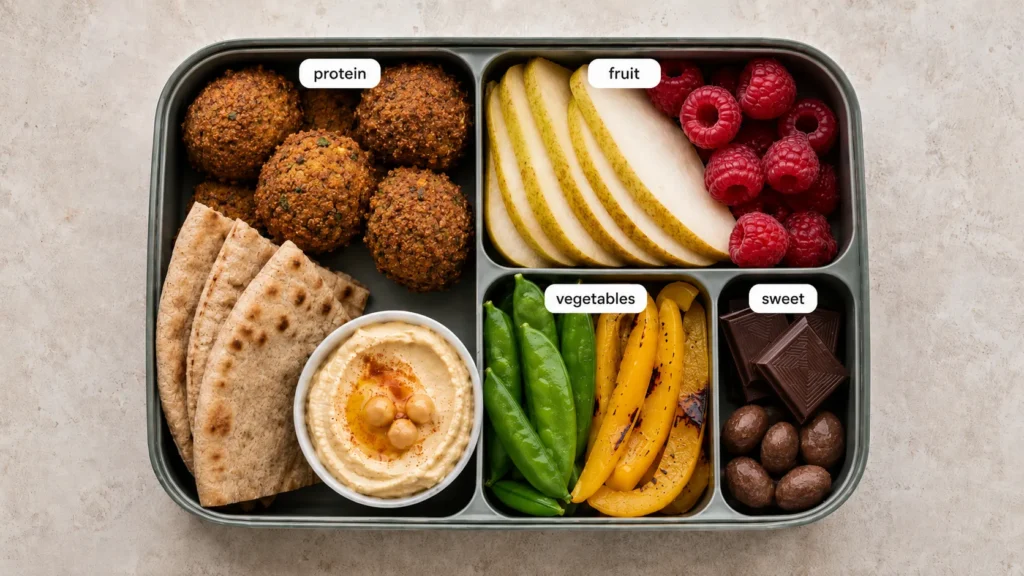
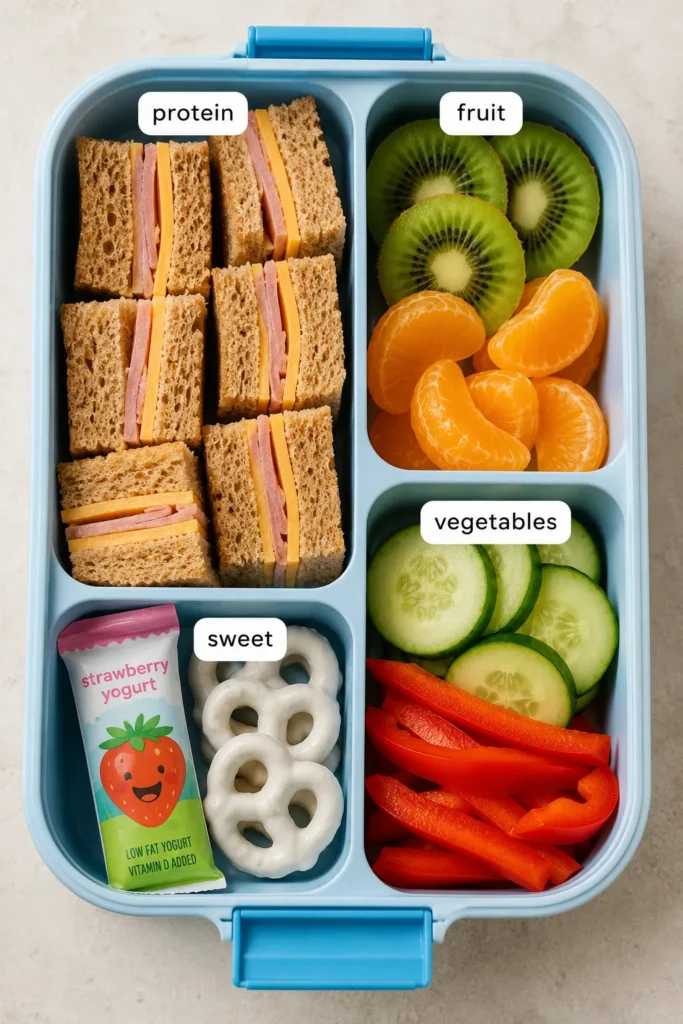
The first surprise is simple. A bento box lunch isn’t really about the box. It’s about combining small foods with different purposes. One item fills you up, another adds crunch, and something sweet keeps lunch pleasant.
That balance makes a basic meal look more complete. A plain sandwich can seem repetitive after three bites. However, sliced turkey, cheese cubes, crackers, cucumbers, and apples create little changes in texture. Your brain notices variety, even when the ingredients stay very ordinary.
Here’s the reframe: smaller portions don’t always mean less food. They often make the same amount look more generous. Spread two ounces of turkey across one sandwich, and it disappears. Fold those slices into a compartment, and suddenly they look like a proper part of lunch.
I also like the built-in flexibility. You can pack one version for a child and another for yourself. The base stays similar, while the flavors change. Add mustard for one person, ranch for another, and hummus for someone feeling fancy.
Still, the box doesn’t fix every lunch problem. It won’t make a hated vegetable suddenly beloved. Yet it can make unfamiliar foods seem less demanding. One cucumber slice seems easier than a whole pile on the plate.
You’re also not required to fill every space with a different ingredient. Repeat fruit if needed. Use two kinds of crackers if that empties open packages. Practical beats perfect every time.
Once that pressure disappears, the method becomes much easier. Then the real savings start showing up, which is where this gets especially useful. I’d give the bento box lunch a regular place in any busy routine. It turns scattered ingredients into a meal with purpose.

The Budget Formula Behind the Compartments
A pretty lunch can become expensive fast. Specialty snacks, mini packages, and pre-cut produce quietly raise the total. I’d rather spend money on groceries than tiny plastic wrappers. So, I’d build each bento box lunch with a simple formula and keep the ingredients ordinary.
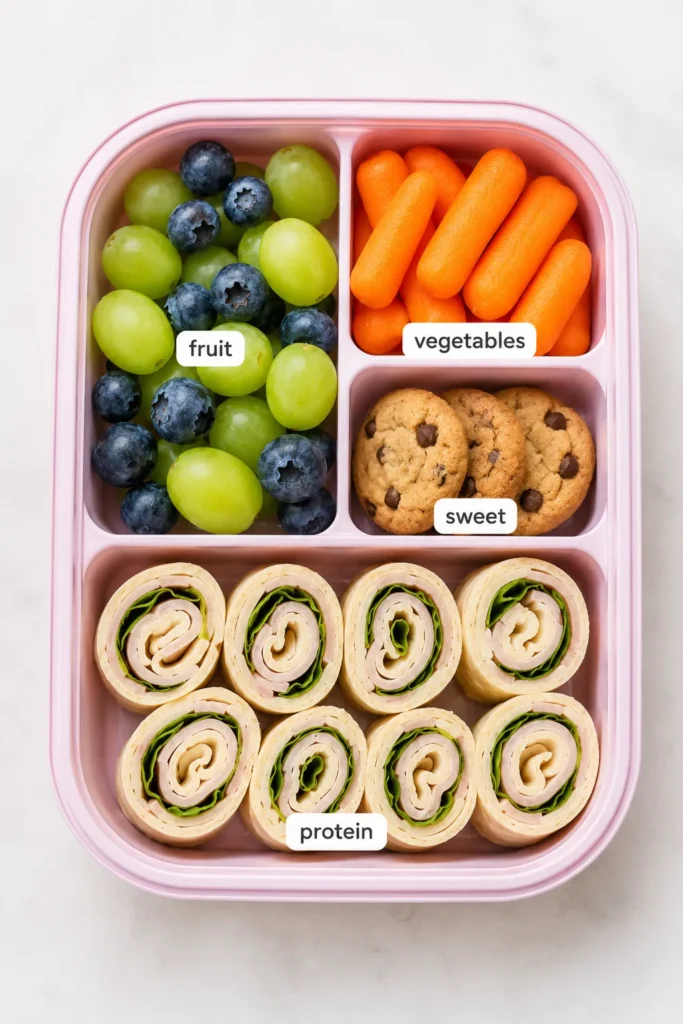
Choose one filling item, one produce pair, one crunchy item, and one small extra. That mix gives enough contrast without demanding eight purchases. Most weeks, I’d pull from foods already planned for breakfast or dinner. My basic budget formula looks like this:
- Protein: Turkey, chicken, eggs, beans, tuna, cheese, or hummus
- Produce: One fruit and one vegetable, fresh or thawed
- Crunch: Crackers, pretzels, popcorn, pita pieces, or toasted tortilla strips
- Extra: Dip, raisins, yogurt, a cookie, or a few chocolate chips
This isn’t a rigid rule. Some days, cheese covers the protein slot. Other days, peanut butter works, unless allergies change the plan. The goal is useful variety, not food-group perfection.
Buying larger packages usually lowers the cost. Divide crackers at home instead of buying snack packs. Slice your own cheese rather than choosing single portions. Those tiny steps matter over a full school year.
Frozen produce can help, too. Thawed peas, corn, mango, and berries work better than many people expect. Just drain them well before packing. Nobody wants lunchbox juice wandering into the crackers.
Another smart move involves planned leftovers. Roast extra chicken at dinner, then save a few pieces for lunch. Cook two more eggs than breakfast needs. That’s not meal prep with matching labels. It’s simply thinking one meal ahead.
Now the formula sounds easy. The next question is what to pack first. I have a favorite answer for that.
My Go-To Bento Box Lunch Recipe
This easy bento box lunch gives you salty, sweet, crisp, and creamy bites. It makes one adult serving or one hearty child serving. You can double everything for two lunches. The total cost stays low when you use store brands and larger packages. For one lunch, gather:
- Prep time: 10 minutes
- Cook time: 0 minutes
- Servings: 1
- 2 ounces sliced turkey, folded or rolled
- 1 ounce cheddar cheese, cut into cubes
- 1/2 cup whole-grain crackers
- 1/2 cup cucumber slices
- 1/2 cup apple slices
- 2 tablespoons ranch dressing
- 1 teaspoon lemon juice
- 1 tablespoon raisins or dried cranberries
- 1 small cookie, optional
The lemon juice keeps the apple slices from browning. Toss the apples gently, then shake off extra liquid. That tiny step keeps the lunch looking fresh without changing the flavor much.
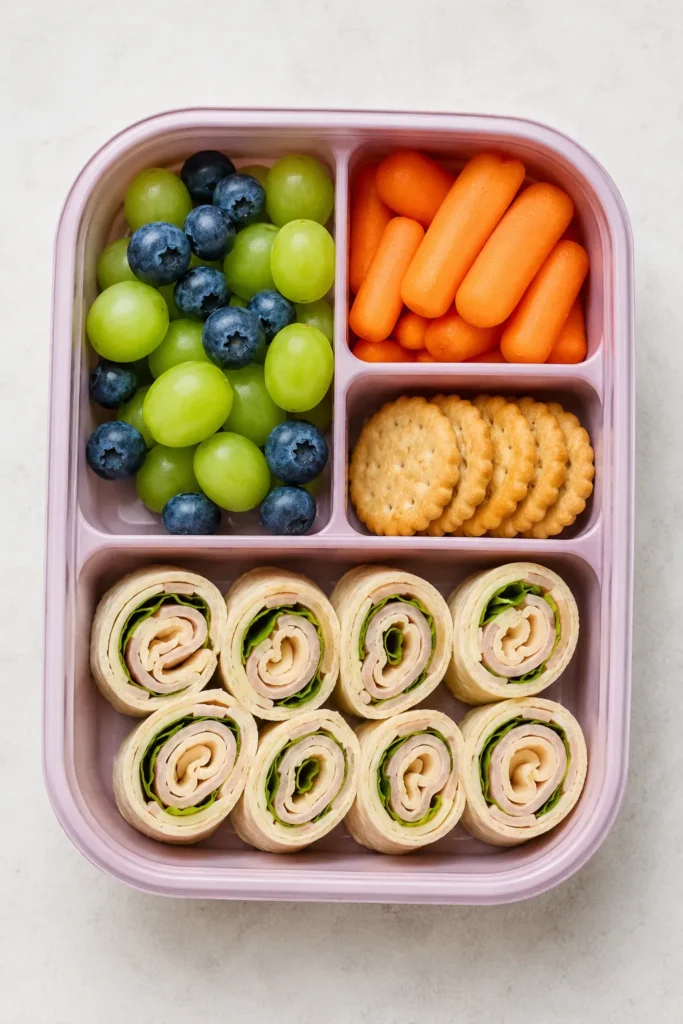
Next, place the turkey and cheese in the largest compartment. Add crackers beside them, or use a separate section. Keep the ranch in a small sealed cup. Then add cucumbers, apples, raisins, and the optional cookie.
Here’s the useful twist. You don’t need to copy the arrangement exactly. Put the crackers under the turkey if space gets tight. Swap cheddar for mozzarella. Use grapes instead of apples when they cost less.
I prefer packing the dip separately because leaks create chaos. A silicone cup can work inside the box, but only with a tight lid. Test the container at home before trusting it near a backpack.
Serve the lunch cold. Add an ice pack if it stays unrefrigerated longer than two hours. For best texture, pack it the night before and add crackers that morning.
The recipe looks simple because it is. Still, the real trick involves the order, and that part saves surprising time.

How I Pack It Without Morning Chaos
Morning has a strange talent for speeding up. Five calm minutes become twelve missing minutes without warning. Because of that, I’d pack most items before breakfast starts. The goal is less thinking, not more hustle. Use this order:
- Wash and dry the produce completely.
- Cut the cucumber, apple, turkey, and cheese.
- Toss the apple slices with lemon juice.
- Fill the dip cup and close it tightly.
- Place moist foods away from crackers.
- Add dry items last for better texture.
- Close the box and refrigerate it.
- Add an ice pack before leaving.
Drying matters more than people expect. Wet cucumber slices can soften crackers and dilute dips. Paper towels work fine, though a clean kitchen towel creates less waste.
I’d also group tasks when packing several lunches. Slice all fruit first. Then cut cheese and portion crackers. This reduces constant switching, which saves time and keeps the counter calmer.
Here’s my unpopular opinion: decorative picks rarely earn their storage space. They’re cute, yes. However, a simple folded turkey slice works just as well. Save the tiny accessories for days when you enjoy the extra fuss.
You can prepare most boxes one day ahead. Still, crackers, popcorn, and pretzels stay crisper when you add them later. Apples keep well with lemon juice, while bananas usually look rough by lunch.
For food safety, keep turkey, cheese, eggs, chicken, yogurt, and dips cold. Use an insulated bag with a frozen pack. When possible, place the pack above the food because cold air moves downward.
That’s the practical bento box lunch process. Yet packing speed only solves half the problem. Freshness decides whether anyone eats the lunch.
The Small Choices That Keep Lunch Fresh
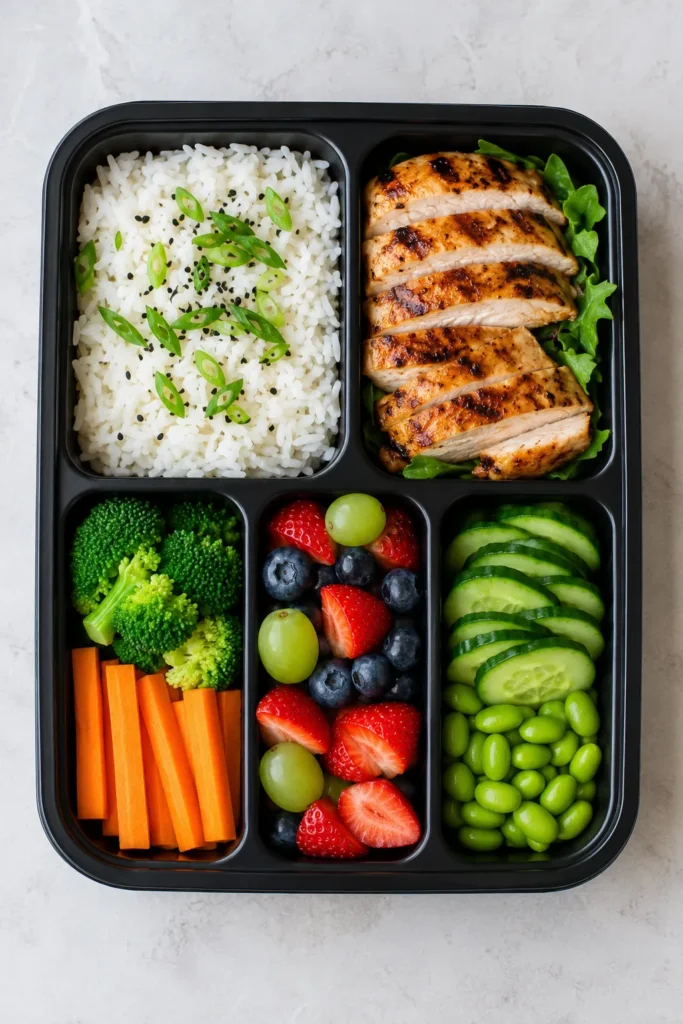
Keeping a bento box lunch fresh has less to do with expensive containers than people think. A tight seal helps, of course. Still, moisture control matters just as much. Dry food stays crisp when wet food stays in its own lane.
Start with clean, fully dry produce. Cucumbers, berries, and grapes can carry more water than expected. After washing them, blot everything well. This one habit protects crackers, cheese, and sandwiches from becoming damp.
Temperature also changes texture. Cold cheese stays firm, while warm cheese turns oily. Turkey tastes better chilled, and yogurt needs steady cold. Therefore, an ice pack isn’t optional when refrigeration isn’t available.
There’s another small issue: trapped smells. Strong onions, tuna, and certain cheeses can spread their aromas through the entire box. Use separate sealed cups when needed. Better yet, save stronger foods for boxes with removable compartments.
I’ve found that apple slices hold up well with lemon juice. Pears work, too, though they soften faster. Berries can last, but only when they’re dry and uncrushed. Place soft fruit above heavier items whenever possible.
Now for the surprising part. More food doesn’t always create a better lunch. Overfilled boxes mash fruit, crack chips, and make opening the lid messy. Leave a little breathing room, especially around delicate items.
You might also place a small paper towel under very juicy produce. That trick works well with watermelon, orange pieces, and thawed fruit. Remove it before serving younger children, since loose paper can become annoying.
Good texture makes simple ingredients seem more appealing. Once lunch stays crisp and cold, inexpensive foods stop looking like leftovers. They look planned, which changes the whole mood. That small shift can rescue a very ordinary grocery week.

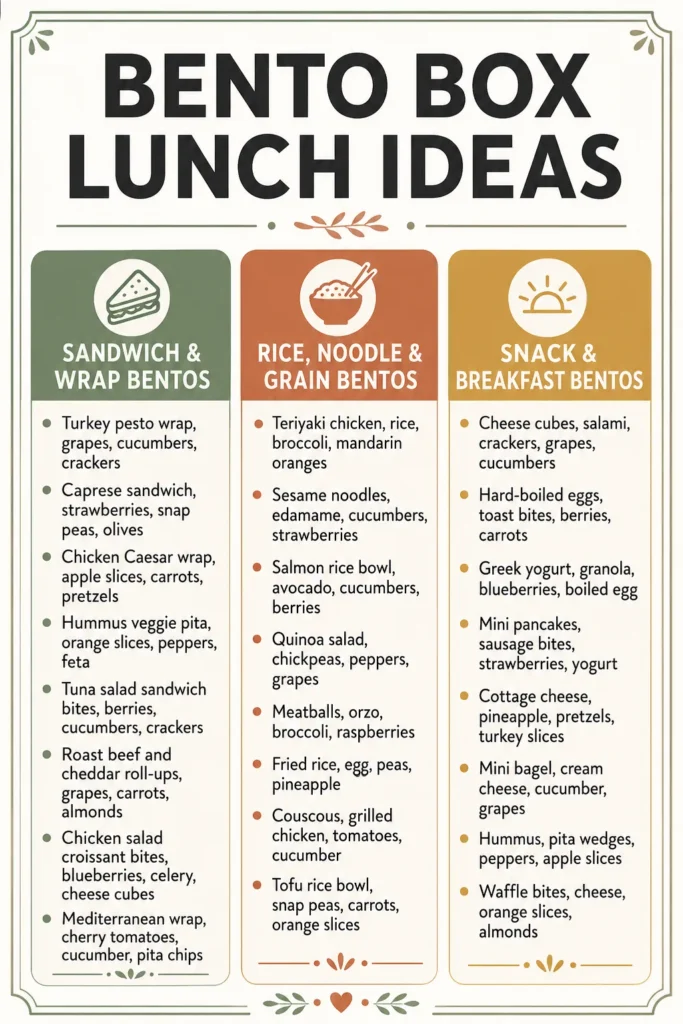
Bento Box Lunch Ideas for Picky Eaters
Picky eating can make lunch packing feel like a negotiation nobody requested. The usual advice says to add variety. However, too much variety can overwhelm some eaters. A better plan pairs familiar foods with one low-pressure option.
I like a “safe, safe, maybe” approach. Two items should already be welcome. One item can be new, changed, or less familiar. The portion stays tiny, so it doesn’t dominate the box. Try combinations like these:
- Turkey rolls, crackers, cucumber, and apple slices
- Cheese cubes, pretzels, grapes, and one carrot coin
- Sunflower butter, mini waffles, strawberries, and celery
- Chicken pieces, tortilla strips, corn, and mild salsa
- Hard-boiled egg, toast squares, berries, and peas
- Hummus, pita triangles, melon, and one pepper strip
Notice that none of these lunches hides the unfamiliar food. Hiding can create distrust once someone notices. Instead, keep the portion small and let repeated exposure do quiet work.
Dips can help, but they’re not a requirement. Some children love ranch, hummus, yogurt, or ketchup. Others dislike mixed textures. Follow the eater, not the internet’s idea of a perfect lunch.
You can also deconstruct favorite meals. Pack pizza ingredients separately with sauce. Turn a turkey sandwich into turkey, bread squares, cheese, and mustard. The taste stays familiar, while the format changes.
Here’s another reframe: an untouched food still gave information. Maybe it smelled strong, warmed up, or touched something wet. That clue helps the next attempt. It doesn’t mean the whole idea failed.
A bento box lunch should lower pressure, not create a daily test. Keep portions realistic, repeat favorites freely, and adjust slowly. That steady approach usually works better than a dramatic lunchbox makeover. Small changes usually win.

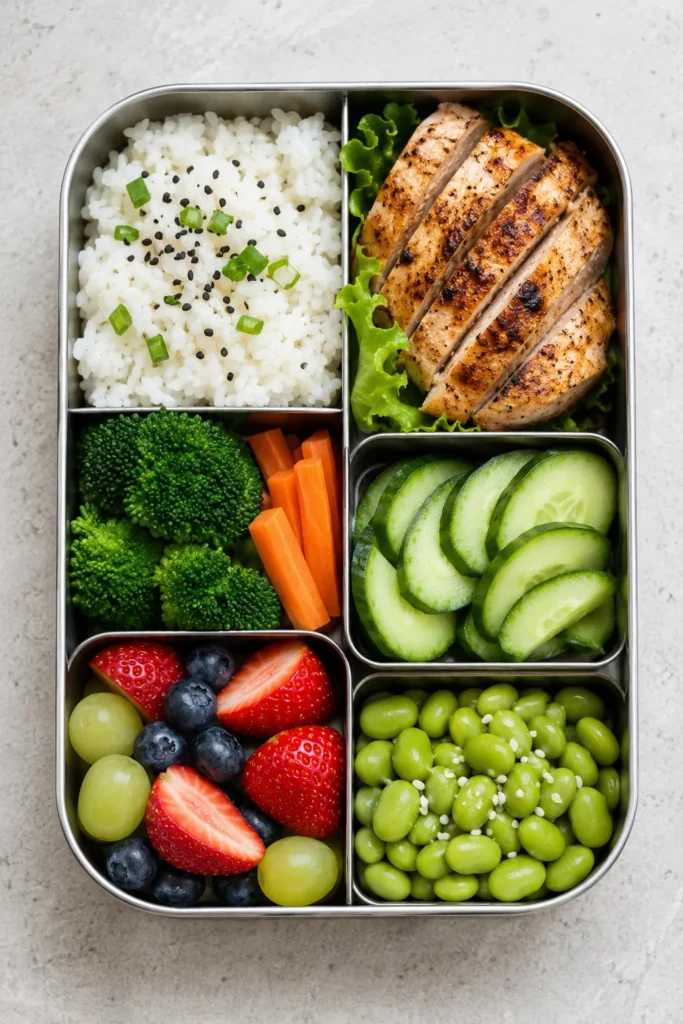
Serving Ideas That Make It More Fun
Serving a bento box lunch doesn’t require a theme or decorative fork. Those extras can be lovely. Still, the lunch should suit the day without them. I’d start with one small detail that makes the meal easier to enjoy.
For children, that detail might be sliced fruit they can grab quickly. Adults might prefer a better dip or a square of dark chocolate. The point isn’t cuteness. It’s giving lunch one thing worth looking forward to.
At home, open the box and serve it as a snack plate. Add soup on cold days, or pair it with a salad. This works especially well for light dinners when cooking sounds deeply unnecessary.
For school lunches, include a napkin and any needed utensil. That seems obvious until yogurt arrives without a spoon. I’d also avoid foods that require complicated opening. Convenience matters when lunch periods move quickly.
Picnics offer another easy use. Pack each person a separate box, then place drinks and extra fruit in one cooler. Nobody needs plates, and portions stay clear. Cleanup becomes pleasantly boring.
Adults can make the same meal more filling with larger protein portions. Add another ounce of turkey, one boiled egg, or extra hummus. You can also include olives, roasted nuts, or leftover roasted vegetables.
Here’s the contrast: a lunch can look playful and still be practical. You don’t need animal-shaped cheese to make compartments useful. Yet one cookie tucked beside the fruit can improve morale. I support strategic cookies.
Serving style should fit the day. Some mornings need speed, while weekends allow more charm. Either way, simple food gains interest when each bite offers a different texture.
The box gets the attention, but the tiny choices create the pleasure. That distinction matters more than any matching lid.
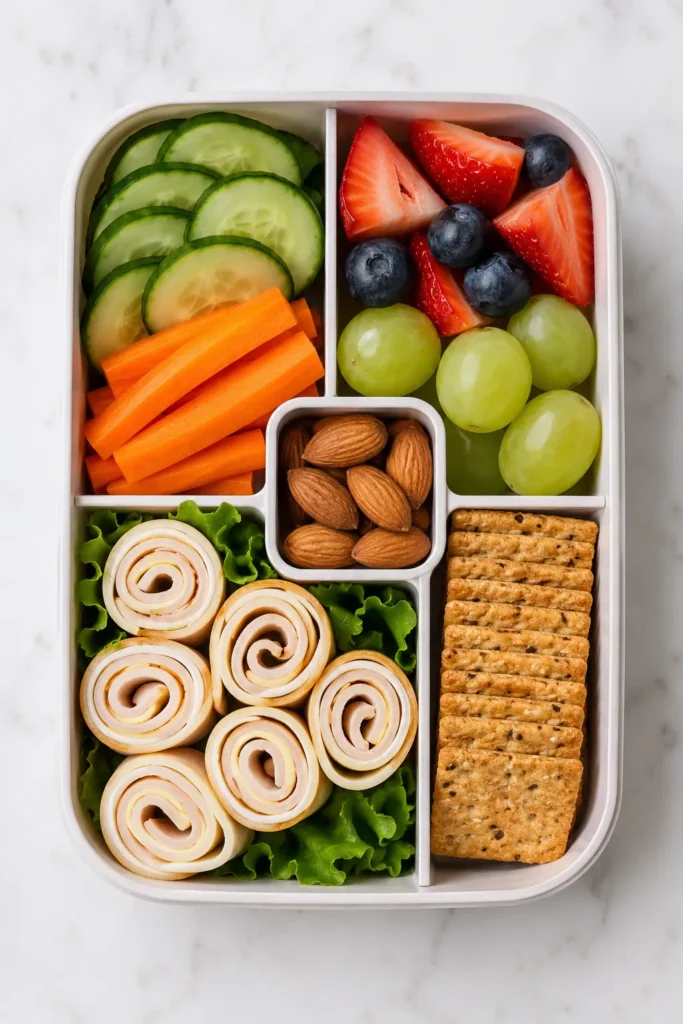
Bento Box Lunch FAQs
Can I make a bento box lunch the night before? Yes, you can pack most foods one day ahead. Keep crackers and other crisp items separate until morning. Dry produce well, seal dips tightly, and refrigerate the box right away.
How long can it stay out of the refrigerator? Perishable foods shouldn’t sit above 40°F for more than two hours. On very hot days, that window drops to one hour. Use an insulated bag and at least one frozen ice pack.
What can I use instead of a bento box? A divided food container works well, but it isn’t required. Use small reusable cups inside a regular container. Muffin liners can separate dry foods, though they won’t stop leaks.
How much food should I pack? Start with the eater’s usual lunch amount. Then divide that food across several sections. Smaller children may need less variety, while adults may need more protein.
How do I keep crackers from getting soft? Keep them away from fruit, vegetables, dips, and chilled condensation. Add them in the morning when possible. A separate snack bag offers the safest texture.
Are these lunches only for children? Not at all. Adults often enjoy them because portions stay organized and lunch feels less repetitive. Add stronger flavors, extra protein, or leftovers to make the meal more filling.
What if I don’t have time to cut everything? Use foods that need little prep. Grapes, baby carrots, cheese sticks, crackers, and rolled turkey save time. Convenience foods can still fit a budget when you choose them carefully.
The main answer stays simple. Use what you have, protect the texture, and pack enough food. The box should serve your day, not run it.
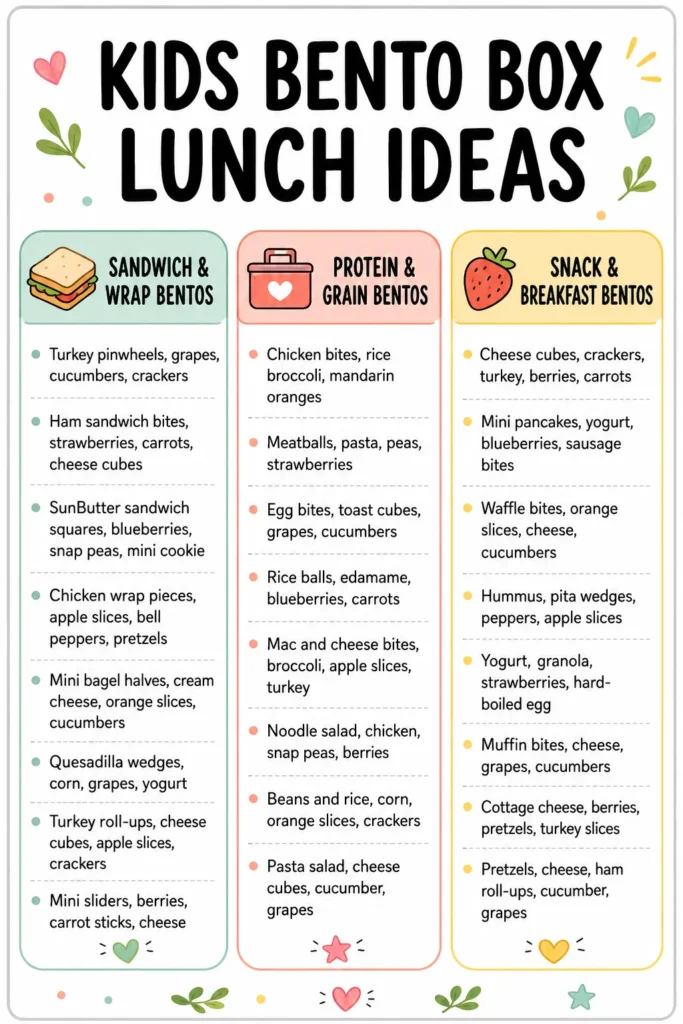
The Lunchbox Plot Twist I Didn’t Expect
I can see why compartment lunches seem harder than sandwiches. From a distance, they can look fussy. Up close, they need less work because nothing becomes one perfect meal.
As a mom, I appreciate any plan that survives a rushed morning and a nearly empty refrigerator. That doesn’t mean every box looks beautiful. Sometimes the color palette is beige, except for a handful of grapes. We move on.
What keeps me interested is the small sense of choice. Lunch can include a salty bite, a crisp bite, and something sweet. That variety makes ordinary groceries seem less repetitive. It also gives leftovers a second life without announcing them as leftovers. I might pack turkey today, eggs tomorrow, and hummus after that.
Pinterest can make this style seem like a competitive craft. I enjoy the pretty ideas, but I refuse to measure cucumber flowers before coffee. A useful bento box lunch only needs enough food, safe storage, and a few textures.
There’s freedom in lowering the bar. Use the box you own. Cut the cheese into squares because squares are easy. Add the cookie because life has meetings.
The quiet win appears later, when less food goes to waste and fewer groceries disappear in the fridge. A soft apple becomes slices. Three crackers become crunch. Half a chicken breast becomes tomorrow’s best compartment.
That’s when the whole method clicks. You’re not arranging tiny foods for applause. Instead, you’re turning what you bought into a lunch someone might enjoy. Fancy lid optional.