Nobody warns you about the wedding seating chart. You survive the dress hunt, the venue drama, the great cake-tasting debate. Then someone hands you a list of 140 names and says, “Just figure out where everyone sits!”
Cool. Great. Totally fine.
I’ve found that this one task breaks more couples than the budget itself. It’s part logic puzzle, part family therapy, and part group project where nobody else helps. Your aunt won’t sit near your other aunt. Meanwhile, your college friends multiply like rabbits. And your partner shrugs and says, “Can’t people just sit wherever?”
(No, sweetie. They cannot.)
Here in Orlando, I’ve watched friends plan weddings at every price point you can imagine. The fancy ones and the backyard ones share one thing. Somehow, the seating plan causes the most tears every single time. That’s wild to me, because it’s also the cheapest problem on your entire list.
You don’t need a calligrapher. A big budget isn’t required either. What you need is a system, a little strategy, and maybe a cold drink while you work. Two of those three things are free, which is kind of the theme around here.
So that’s what we’re doing today. We’re building a seating plan that costs almost nothing and looks like you hired someone. I’ll even tell you exactly where to put your loudest uncle. But first, we need to talk about the mistake almost everyone makes on day one. It’s sneaky, it’s expensive, and I’d bet money you’re about to make it.

Some of the links on this page are affiliate links, which means I may earn a small commission if you purchase through them. It never costs you extra. You can always peek at my full disclosure if you’d like the details.
Why a Wedding Seating Chart Saves You Real Money
Here’s the part nobody says out loud. A wedding seating chart isn’t a decoration. It’s a budget tool wearing a pretty dress.
Think about how caterers and venues charge you. Most price per table, per linen, per centerpiece, per chair. When guests seat themselves, they spread out like spilled marbles. Ten tables end up half full, and you’ve paid for ten centerpieces instead of seven. That’s real money gone, just because Cousin Derek wanted elbow room.
A chart packs your tables efficiently. You control exactly how many rounds you rent and how many florals you order. Favor counts get precise too. I’ve seen couples cut two full tables from their layout during this step. Two tables can mean a few hundred dollars back in your pocket. Fewer tables also means fewer linens, fewer table numbers, and fewer rented chairs. That covers your welcome drinks, easy.
There’s a hidden savings too, and it’s my favorite one. Chaos costs money at weddings. When 140 people wander around hunting for seats, dinner starts late. Late dinner means overtime fees for your venue, your photographer, and sometimes your band. Overtime rates are brutal (we’re talking hundreds per hour at some places). A clear plan keeps the night on schedule, and the schedule protects your wallet.
Some couples skip the chart to “save time and money.” I get the instinct, but it backfires almost every time. You’re not saving anything. The cost just moves from your to-do list to your final invoice. Meanwhile, the chart is free. Funny enough, the free thing is the money-saver here, which still makes me laugh.
So before you buy one more thing for this wedding, block out an evening. This is the project that pays you back.
Start With the Guest List, Not the Pretty Stuff
I tend to notice the same mistake over and over. Couples open Pinterest, fall in love with a gorgeous mirror display, and start designing. Then reality shows up wearing sweatpants. The RSVPs shift, the table count changes, and that beautiful design gets redone three times.
Design comes last. Data comes first. (I know, thrilling.)
Before you touch anything pretty, get your information locked down. Here’s what you need in one place:
- Your confirmed guest count, not your invited count, because those numbers are wildly different
- Your venue’s table sizes, since a 60-inch round seats eight comfortably and ten miserably
- Your must-sit-together groups, like immediate family, bridal party dates, and grandparents
- Your must-sit-apart pairs, and yes, write them down without guilt
- Guests with special needs, like wheelchair access, high chairs, or hearing considerations
That last bullet matters more than people think. Grandma shouldn’t sit next to the speaker stack. Your friend with the new baby needs a clear exit path. These details decide table placement before style ever enters the room.
Keep all of it in one document, too. Scattered notes on napkins and random text threads will always betray you later, I promise.
Now here’s my slightly spicy opinion. Don’t start any of this until at least 80 percent of your RSVPs are in. Working earlier just means working twice. The wedding seating chart you build in month one won’t survive contact with your real guest list.
Once your numbers hold steady, everything downstream gets faster. The display, the cards, the layout, all of it. Boring prep is what makes the pretty part painless, and I’ll die on that hill.
Budget-Friendly Wedding Seating Chart Ideas That Look Expensive
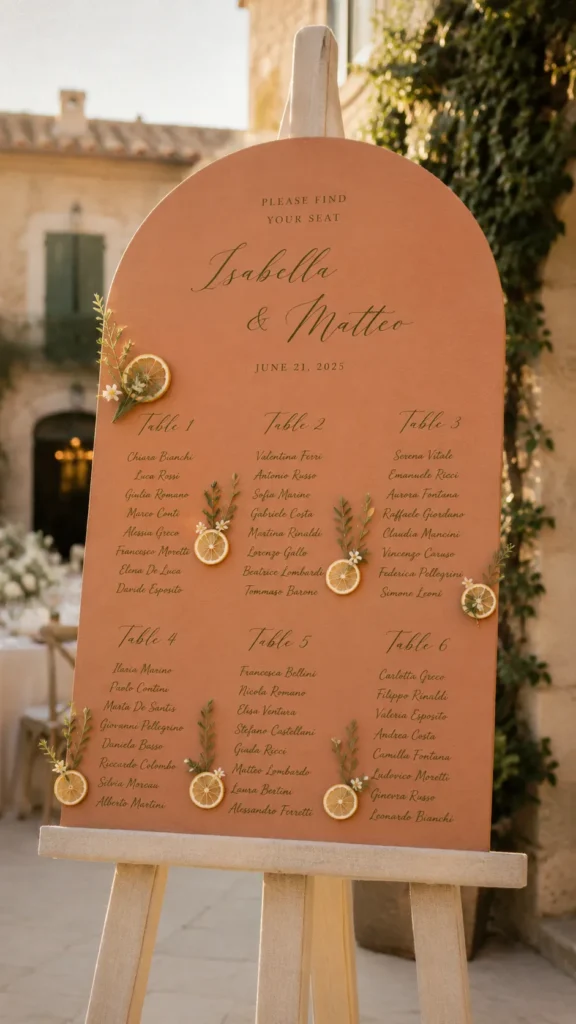
Now the fun part. You’ve seen those dreamy displays that look like they cost a fortune. Most of them cost less than a pizza night, and nobody at your wedding will know the difference.
The trick is choosing one big statement instead of lots of little pieces. One large sign reads as intentional and chic. Dozens of tiny printed cards read as fussy, and they cost more to produce anyway.
Here are my favorite cheap-but-fancy wedding seating chart displays:
- A thrifted mirror with names in paint pen, which wipes off later (rentals run $75+)
- An old window frame from a salvage shop, with one paper list behind each pane
- A clothesline of cards on twine with mini clothespins, perfect for rustic or backyard vibes
- One oversized poster print from an office print shop, mounted on a $10 easel
- A wine cork board if you’ve been “collecting research” for months like some of us
Print shops are the secret weapon here. A 24×36 engineer print costs just a few dollars at many office supply stores. Design it free in Canva, pick a template, swap in your names, done. People will assume you hired a stationer. Matte paper looks more upscale than glossy, and it usually costs the same. Black ink on cream paper reads timeless without the color-printing fee.
One warning from someone who’s watched this go sideways. Skip anything with individual moving parts outside, because Florida wind has no respect for your love story. Cards scatter, seed paper flies, and suddenly your guests are playing 52-name pickup.
Big, bold, and anchored down. That’s the whole formula, and it photographs beautifully too.
Match Your Seating Chart to Your Wedding Style
Here’s a question nobody asks until it’s too late. Does your seating display actually match the rest of your wedding? A gorgeous sign in the wrong style looks like it wandered in from another party.
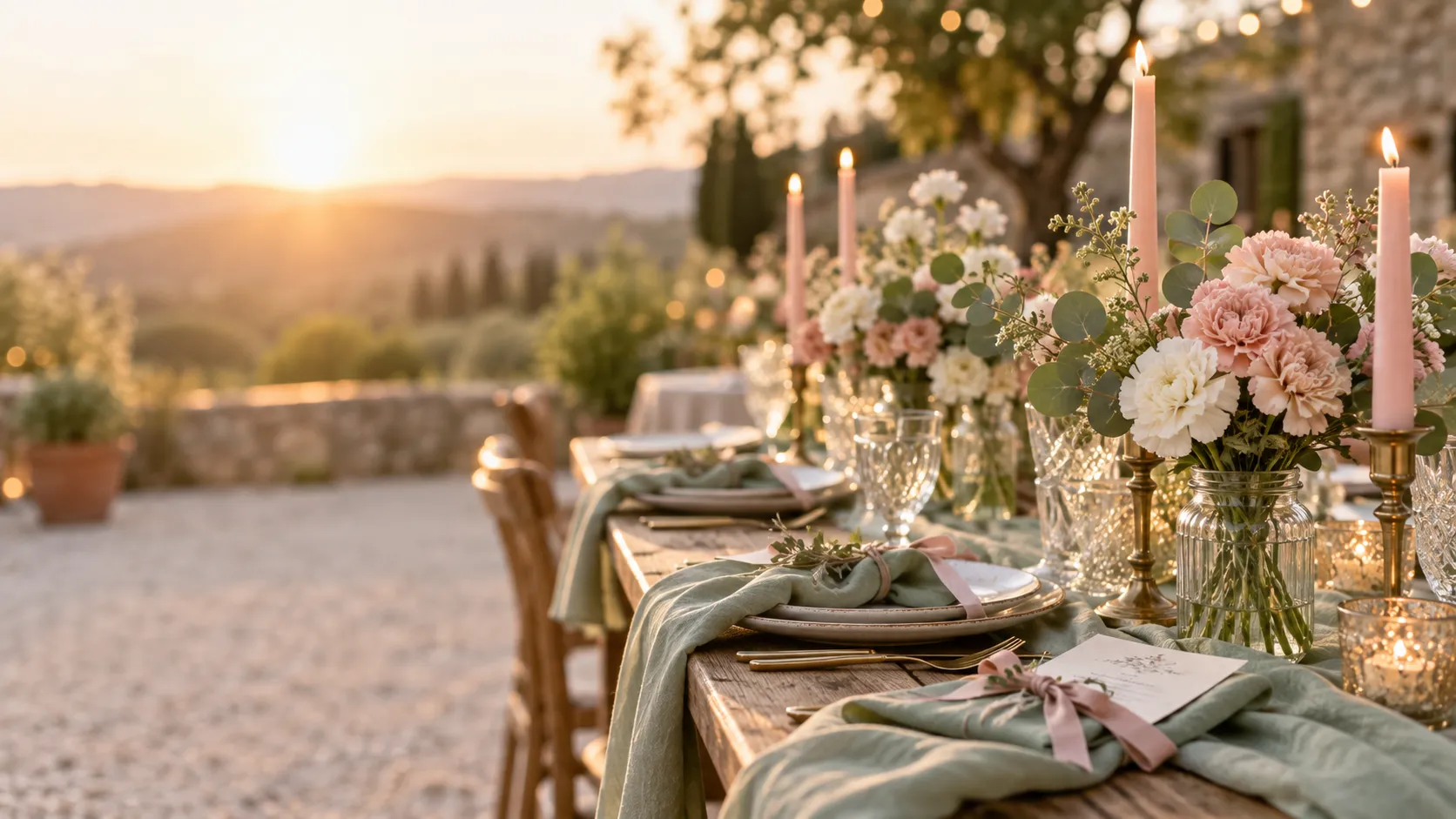
I tend to notice this at receptions more than I’d like. The flowers say garden romance, but the chart says corporate conference. Your display is a design piece, so let it echo your theme, colors, and venue.
Let me make this easy with a few pairings I love:
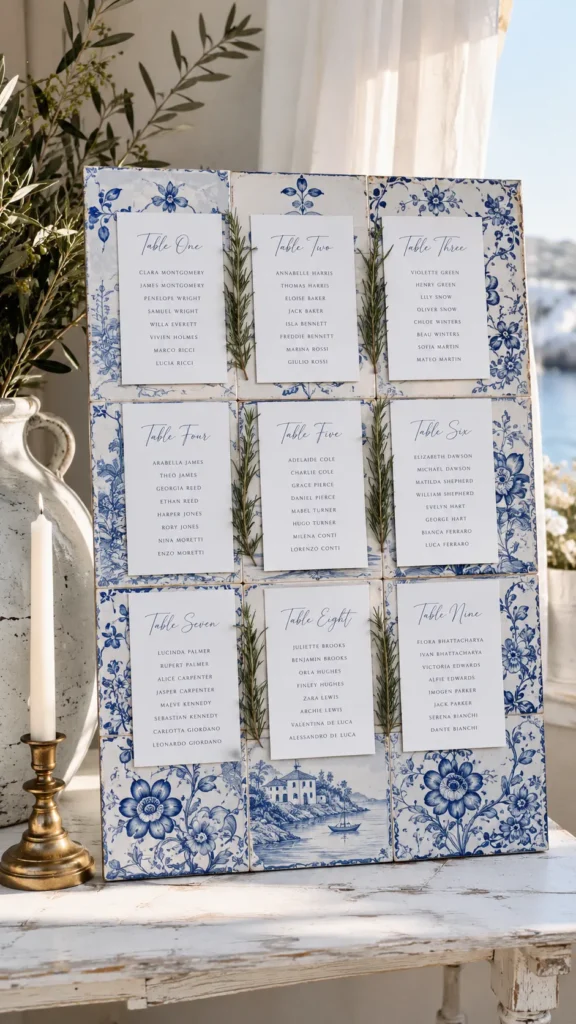
- Coastal or Mediterranean weddings shine with blue and white tile patterns, crisp cards, and sprigs of rosemary
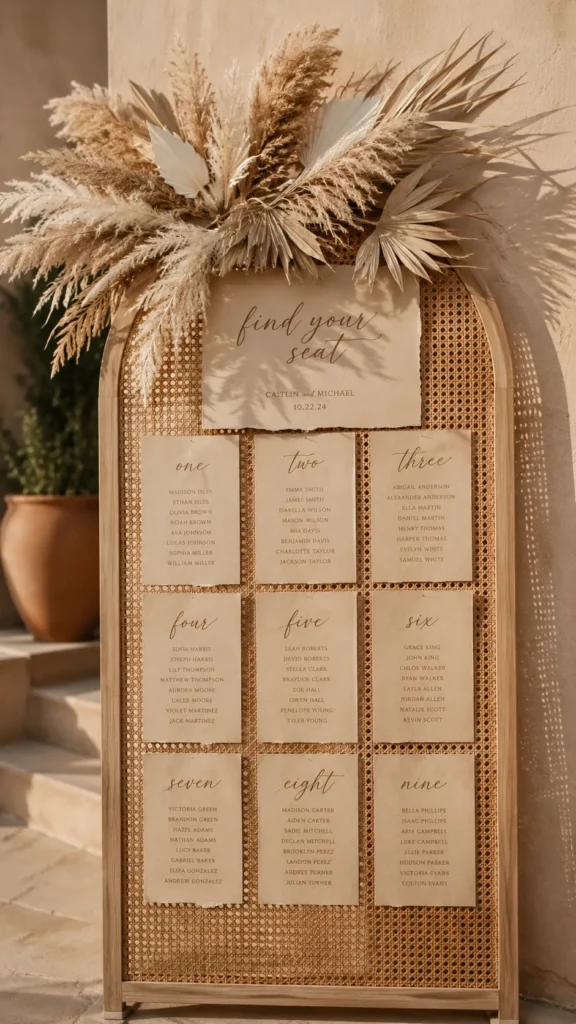
- Boho and desert celebrations want warm neutrals, cane or rattan panels, and dried pampas grass
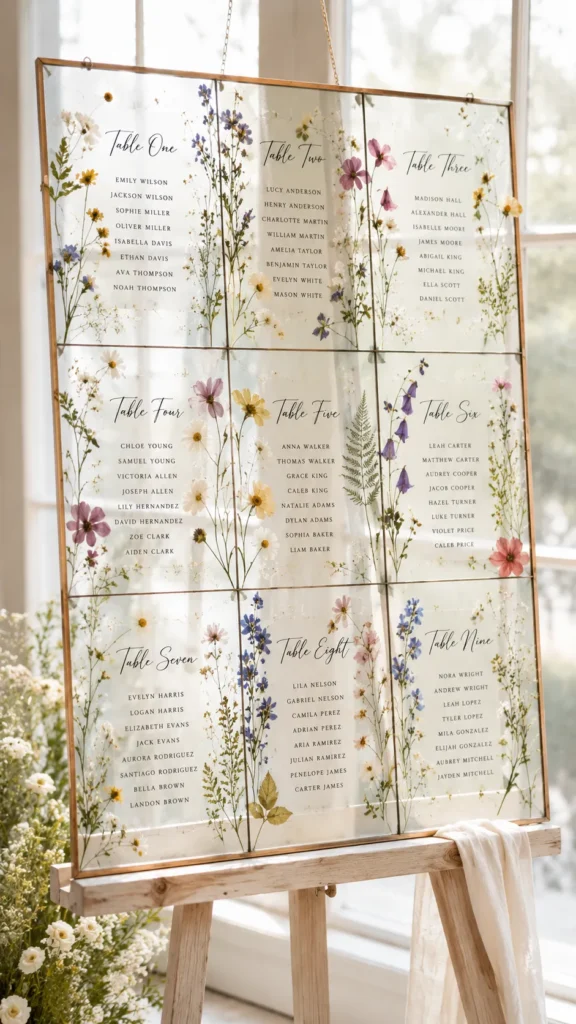
- Garden and spring weddings glow with pressed wildflowers, soft script, and pale wood easels
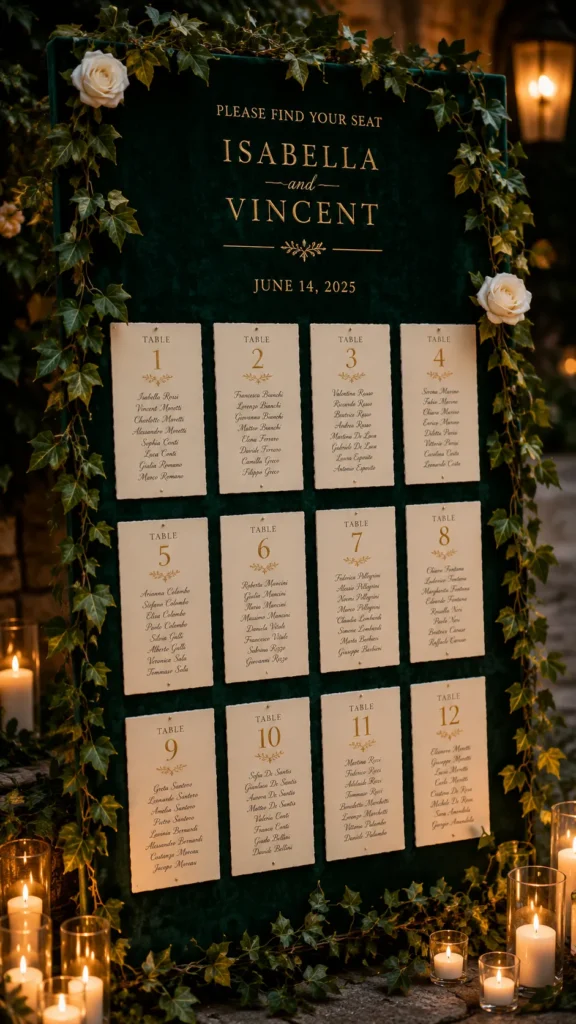
- Formal evening affairs love deep velvet, gold accents, and candlelight for drama
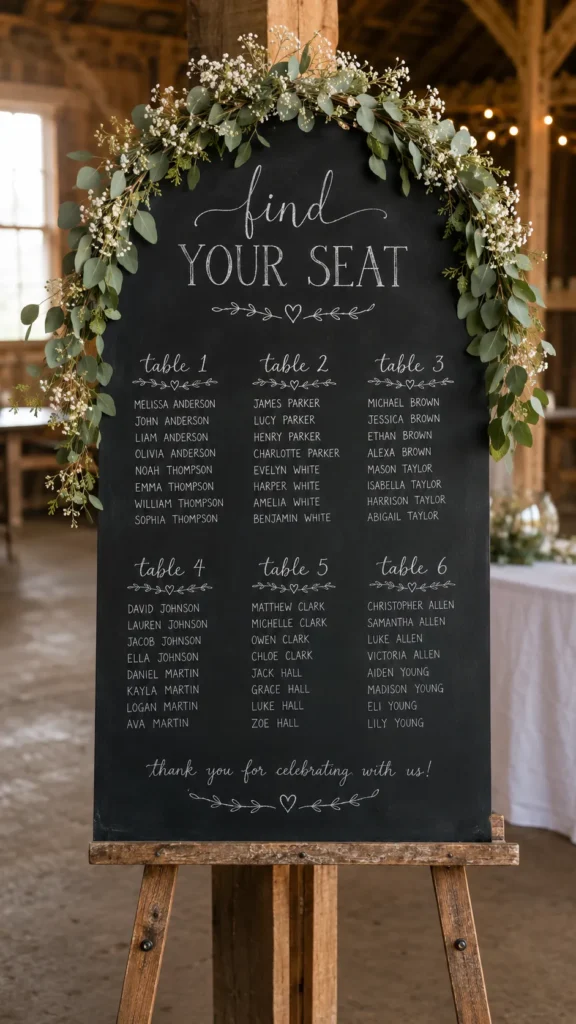
- Rustic barn weddings feel right at home with chalkboard signs and trailing eucalyptus
Pick the palette first, then the materials. That order keeps you from buying something pretty that clashes with everything else. Two or three shared colors between your florals and your sign tie the whole room together.
Now the reframe that saves money here. Style match doesn’t mean spending more. A coordinated wedding seating chart often costs less. You’re using the flowers, fabrics, and colors already in your budget. Steal a few blooms from your centerpiece order. Borrow a swatch from your linens.
The goal is one cohesive look, not five competing ones. When your display matches your tables, guests sense it fast. They feel it before reading a single name. Cohesion reads as expensive, even when your receipts say otherwise.
Assigned Seats or Assigned Tables? Let’s Settle This
This question starts more arguments than the guest list itself. Assigned seats mean every person has one exact chair. With assigned tables, guests pick their own chair within their table. They sound similar, but the workload difference is enormous.
Assigned seats require place cards, a master list, and a saint’s patience. You’re making 140 individual decisions instead of 14 table decisions. Formal dinners with plated meals sometimes need this, since servers match entrées to seats. If your caterer truly requires it, then fine, you’ll manage.
For everyone else, assigned tables win, and it’s not close. Guests get structure without the micromanaged vibe. You get order without producing a small stationery empire. Your budget gets a break, because escort displays cost far less than individual place settings. Grandma finds Table 4 just fine without a card telling her which chair to claim.
Here’s the reframe that helps couples relax. Guests don’t want total freedom. Open seating sounds breezy, but it’s stressful for the people you love. Nobody enjoys circling a reception hall, scanning for an open seat like it’s middle school lunch. A table assignment is a kindness. You’re telling each guest, “We thought about you, and you belong right there.”
I’ve found that a wedding seating chart with table assignments fits nearly every budget celebration. It’s one sign, one list, zero place cards. Buffet dinner? Table assignments. Food trucks? Same answer. Family-style feast? Still yes.
Save assigned seats for the head table only, where it matters. Everywhere else, point people to a table and trust them with the rest. Your sanity is a wedding expense too, even if it never shows up on a spreadsheet.
DIY Your Wedding Seating Chart Without Losing Your Mind
Let’s talk method, because winging this is how people end up crying over index cards at midnight. The actual sorting process needs to be flexible, cheap, and easy to redo. RSVPs will change after you start. That’s not pessimism, that’s math.
My favorite system costs about three dollars and lives on your kitchen wall:
- Grab sticky notes and write one guest name per note
- Draw circles on a poster board, one per table, labeled with the table size
- Color-code your groups, like pink for family, yellow for work friends, blue for college crew
- Stick, stare, and shuffle until the combinations stop making you wince
- Photograph the board after every session, so a rogue breeze can’t erase your progress
The colors are the real magic. Problems become visible instantly. A table that’s all one color might be perfect or might be a powder keg. At least now you can see it. Mixed tables work best when guests share one connection point, like a person or a hometown. Keep a small “unsure” pile off to the side for the true wildcards.
Work in short sessions, twenty minutes tops. Your brain turns to soup after that, and soup brains seat exes together. Come back the next day with fresh eyes and move three notes. Repeat until it clicks.
Digital folks can build the same thing in a free spreadsheet with colored cells. Same idea, fewer paper cuts, easier to share with your partner.
Whichever route you choose, a DIY wedding seating chart should take three or four short sessions total. Anyone telling you it takes weeks is doing it the hard way. Systems beat stress, every single time.

Where to Put the Tricky People
Every guest list has landmines. Divorced parents, feuding cousins, the friend who brings up politics before appetizers. Pretending these dynamics don’t exist won’t make them disappear. Planning around them will.
Start with divorced parents, since they cause the most anxiety. Give each parent their own table with their own people, positioned at equal distance from the head table. Equal is the magic word. Nobody’s counting inches, but everyone notices favoritism. Same row, opposite sides, both facing you. Done and diplomatic.
Exes and feuds need a buffer of at least one table. Not opposite ends of the room, because that looks deliberate and dramatic. One or two tables of separation reads as coincidence, and coincidence keeps the peace. You’re not hiding people from each other. All you’re removing is the shared centerpiece. Buffer tables work for chatty coworkers too, not just old flames.
Now for the guests everyone overthinks. Single friends don’t need a designated singles table, and most of them dread it. That setup screams “we’ve arranged a hostage mixer.” Tuck singles into tables where they already know two or three people. Comfort first, matchmaking never (unless they’ve begged you, and even then, subtle).
Kids are the opposite case. A kids’ table with coloring pages and crayons is the cheapest entertainment upgrade at any wedding. Parents get one adult conversation, kids get freedom, and a $15 craft-store haul handles the whole thing. Place it near the parents’ tables but away from the DJ speakers.
The loudest uncle I promised to place? Put him with the fun table near the dance floor, far from the microphone. Energy needs a home. Give it one on purpose, or it will find the toast portion of your evening.

Free Tools That Make a Wedding Seating Chart Way Easier
You don’t need to buy software for this, ever. The free stuff is genuinely good now, and I’m a little annoyed nobody told me sooner.
These tools cover the whole job without costing a cent:
- Google Sheets for your master list, RSVPs, meal choices, and table numbers in one shareable place
- Canva’s free tier for designing the display sign, with dozens of wedding seating chart templates already built
- Zola and WeddingWire, which both include free drag-and-drop seating tools tied to your RSVP list
- Your venue’s floor plan PDF, which most coordinators will email you if you just ask
That last one surprises people. Venues usually have exact layouts with table positions, dance floor, bar, and outlets marked. Request it early. Sorting guests without the floor plan is like packing a car you’ve never seen. Bookmark all these tools in one folder, too, so you’re not hunting for links later.
The drag-and-drop tools deserve a special shoutout. They sync with your digital RSVPs automatically. When Cousin Amy finally responds in week nine (Amy, please), her name is ready to place. No rewriting, no sticky-note surgery. Changes take seconds instead of evenings.
Here’s my one caution with the fancy-free tools. Don’t let the software talk you into features you’ll never use. Nobody needs 3D venue renderings or lighting simulations. You need names at tables. Shiny extras eat your evening and add nothing to the actual wedding.
My ideal combo is simple. Sheets for data, a drag-and-drop tool for sorting, Canva for the final pretty sign. Total cost, zero dollars. Time required, a couple of relaxed evenings with snacks. Compare that to “seating chart services” charging $150+, and suddenly DIY sounds delightful.
Timing Tricks Nobody Tells You About
Timing is the part every checklist gets wrong. Most planning guides tell you to finalize seating a month out. Whoever wrote that has never met a wedding guest, because guests treat RSVP deadlines like gentle suggestions.
Here’s a schedule that survives real human behavior. Set your RSVP deadline four weeks before the wedding, then expect stragglers for another week. Start rough sorting at three weeks out, once most answers are in. Lock the full layout at ten days out. Print anything with names at one week, and not a minute sooner. Write these dates in your planner right now, while you’re thinking about it.
That printing rule is the one people ignore, and it costs them. Someone always cancels or adds a plus-one in the final stretch. If your gorgeous sign is already printed, you’re paying a rush fee to fix one name. Late printing sounds risky but saves money almost every time. Engineer prints take an hour at the shop, so there’s no reason to gamble early.
Build yourself two flex seats too. Leave one open spot at two different tables, scattered where nobody notices. Surprise guests happen at almost every wedding (the plus-one who “definitely RSVP’d,” sure). Flex seats turn a day-of crisis into a shrug.
One more move separates calm couples from frantic ones. Email your final wedding seating chart to your coordinator, your caterer, and one trusted friend. Day-of questions then skip you entirely. You should be getting your hair done, not explaining where Table 9 goes.
Rushed decisions are expensive decisions. A realistic timeline is the cheapest insurance your reception will ever get. It costs nothing but a calendar reminder.

FAQs About Wedding Seating Charts
Do I really need a seating chart for a small wedding?
Under 30 guests, you can skip it or use one long family-style table. Between 30 and 50, assign tables anyway. Even small crowds hesitate at the door, and a simple sign fixes that for a few dollars.
What’s the cheapest way to display a wedding seating chart?
An engineer print from an office supply store, designed free in Canva. It costs just a few dollars for a poster-sized sign. Mount it on foam board or borrow an easel, and it looks completely custom.
Should tables be numbered or named?
Numbers are easier for guests to find quickly. Names are cuter but slower (nobody knows where “Table Buttercup” lives). If you want charm, use both, with the number printed large and the name small.
How do I handle guests who RSVP late?
Keep flex seats open at two tables and place latecomers there. Don’t redesign your whole layout for one slow responder. Their lateness is their problem, and your flex seats already solved it.
Do I list guests alphabetically or by table?
Alphabetically, always. Guests scan for their own name, not your table logic. Alphabetical order gets 140 people seated in minutes, and fast seating keeps dinner on schedule.

The Chart That Runs Itself (You’re Welcome)
Here’s what I hope you take from all this. The wedding seating chart is the one wedding task where effort beats money, completely and every time. A thoughtful plan built with sticky notes outperforms an expensive one built in a panic. Nobody remembers what the sign cost. Everyone remembers finding their seat easily and sitting next to someone great.
That’s the quiet win here. Good seating disappears. When it works, dinner just flows, conversations spark, and the room hums along without a single traffic jam. Your guests will never know how many times you shuffled those sticky notes. Let them think you’re naturally gifted at this. (You are now.)
I keep thinking about the Orlando weddings I’ve attended, from ballroom fancy to backyard string lights. The best ones weren’t the priciest ones. They were the ones where somebody clearly thought about the people in the room. Right down to which cousin sat where. Care shows up in details, and details don’t require a big budget.
So grab your guest list, your sticky notes, and your beverage of choice. Give it a few short sessions and watch the puzzle click together. One evening of shuffling beats a month of dread, and I mean that. Save your favorite display ideas to Pinterest while you’re at it. Future you will want that mirror tutorial handy.
Then print that sign, prop it up, and walk away like it was easy. Your secret’s safe with me.