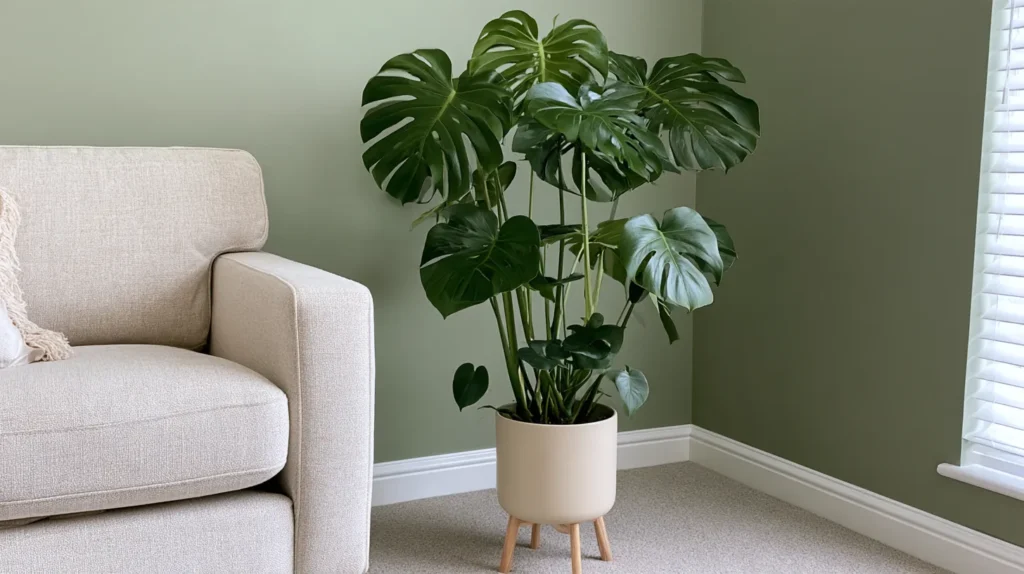
My monstera has more main character energy than any plant has a right to. It just sits by the window looking gorgeous, judging every succulent I’ve killed before it. Monstera plant care sounds fancy, like something you’d need a greenhouse degree for. It’s really not, and I say that as someone who once forgot a fern existed for three weeks.
Living in Orlando, my houseplants either thrive like tropical royalty or melt into sad puddles by July. There’s no in-between here, and my monstera decided early on which team it’s on. Every leaf split reads like a tiny victory lap (dramatic, I know, but plants deserve hype too!)
For a long time, I assumed monstera plant care meant constant fussing and pricey gadgets. Turns out, most of what really works is stupidly simple and barely costs anything. My favorite parts, weirdly, are the little myths everyone repeats like gospel. It’s the kind of thing that makes you wonder what else you’ve been doing wrong for years. Some of them are wrong in ways that genuinely surprised me.
There’s one mistake almost everyone makes early on, though. It’s the reason so many monsteras stall out before they ever get interesting. By the end, you’ll know exactly what your monstera wants, and it’s probably not what you think. And no, this isn’t going to be another list telling you to just “trust your gut.” Stick around, because I’m about to ruin a popular watering habit for you.
Some of the links on this page are affiliate links, which means I may earn a small commission if you purchase through them. It never costs you extra. You can always peek at my full disclosure if you’d like the details.
The Real Truth About Monstera Plant Care
Monstera plant care gets a reputation it doesn’t deserve. People treat it like a fragile houseguest that needs a perfectly humid greenhouse and constant hovering. In reality, this plant wants a handful of basics covered consistently, not perfectly. You don’t need a botany degree, just some consistency and a little patience.
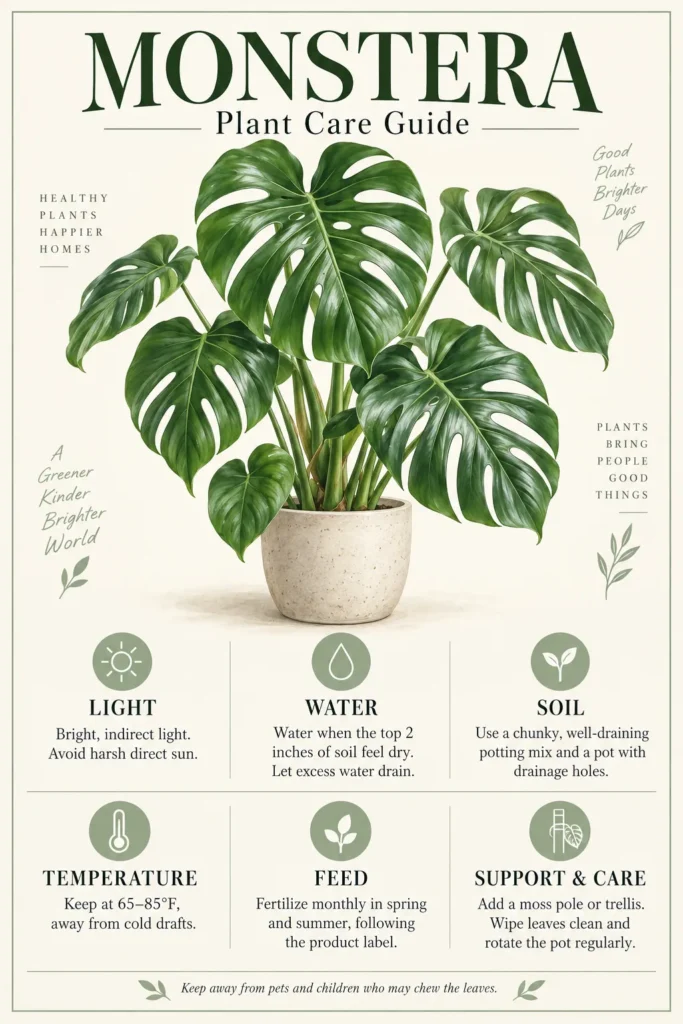
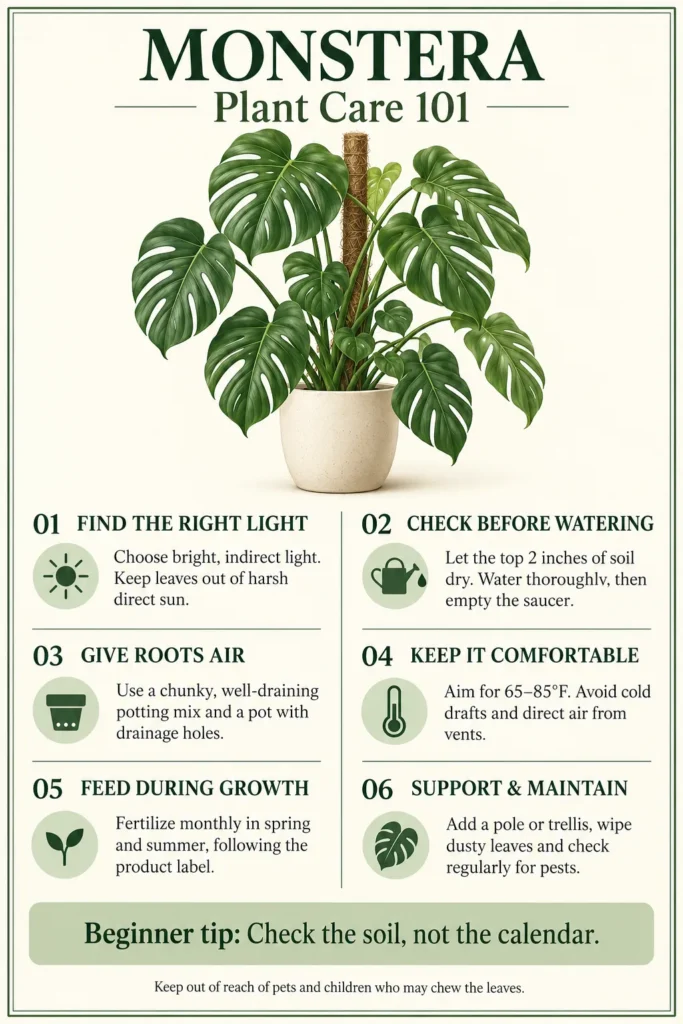
I’ve found that most monstera drama traces back to one of five things. Get these right, and the plant pretty much runs itself:
- Bright, indirect light works best, ideally a few feet back from a bright window
- Water only once the top two inches of soil turn dry to the touch
- Chunky, well-draining soil matters, since regular potting mix alone stays too soggy
- A pot with a drainage hole is non-negotiable, no matter how cute the ceramic one is
- Light feeding in spring and summer helps, but skip it completely once winter hits
None of this calls for expensive gadgets or a subscription box of plant products. Good monstera plant care leans less on fancy tools and more on steady, boring consistency. I’d argue neglect kills more monsteras than overwatering ever does, and that surprises people every time. That single myth alone has probably killed more houseplants than pests ever have. We’re taught that more attention equals a healthier plant, but monsteras don’t read that memo.
Once these basics click, the rest of monstera plant care starts to seem like second nature. You stop overthinking every yellow leaf and start trusting the process a little more. You’ll probably still panic over one dramatic leaf, since that’s completely normal. Most of us do, and the plant genuinely doesn’t mind the extra attention once in a while.
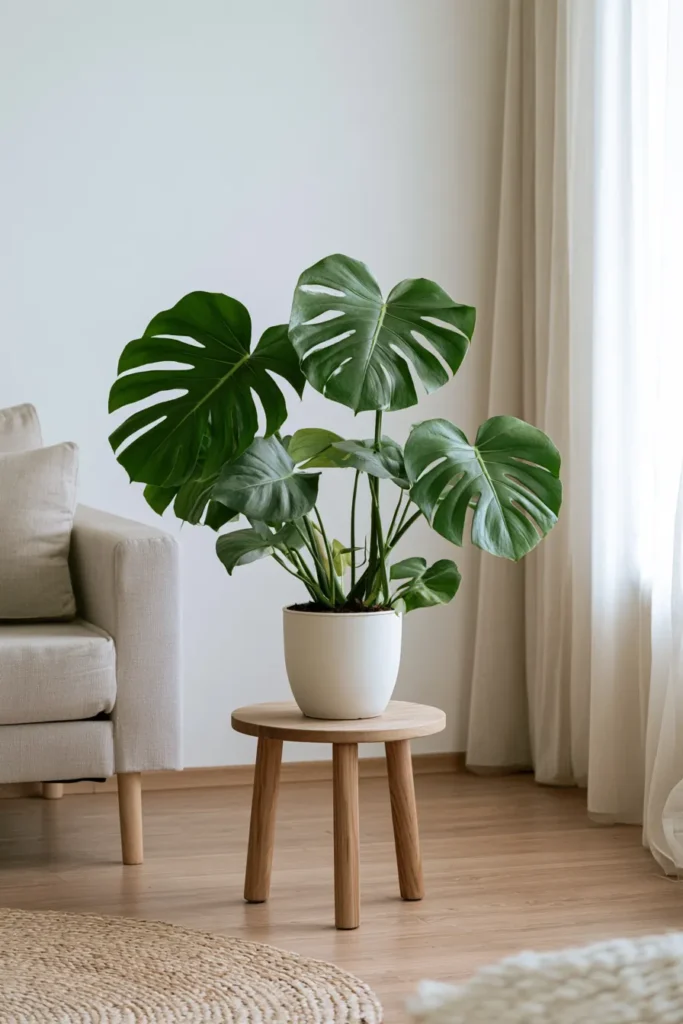
Monstera Plant Care Myths That Won’t Die
Somewhere along the way, the internet decided monstera plant care requires daily misting. It also insists on a moss pole from day one. Neither claim holds up, and I say that with real confidence. Misting barely raises humidity for more than a few minutes, so it does very little for the plant. It mostly just gives you something satisfying to do with a spray bottle.
Another myth involves size. Bigger leaves supposedly mean a healthier plant, but that’s not always accurate. A smaller monstera with steady new growth beats a huge one that’s stalled and stressed. Growth rate tells you far more than leaf size ever will.
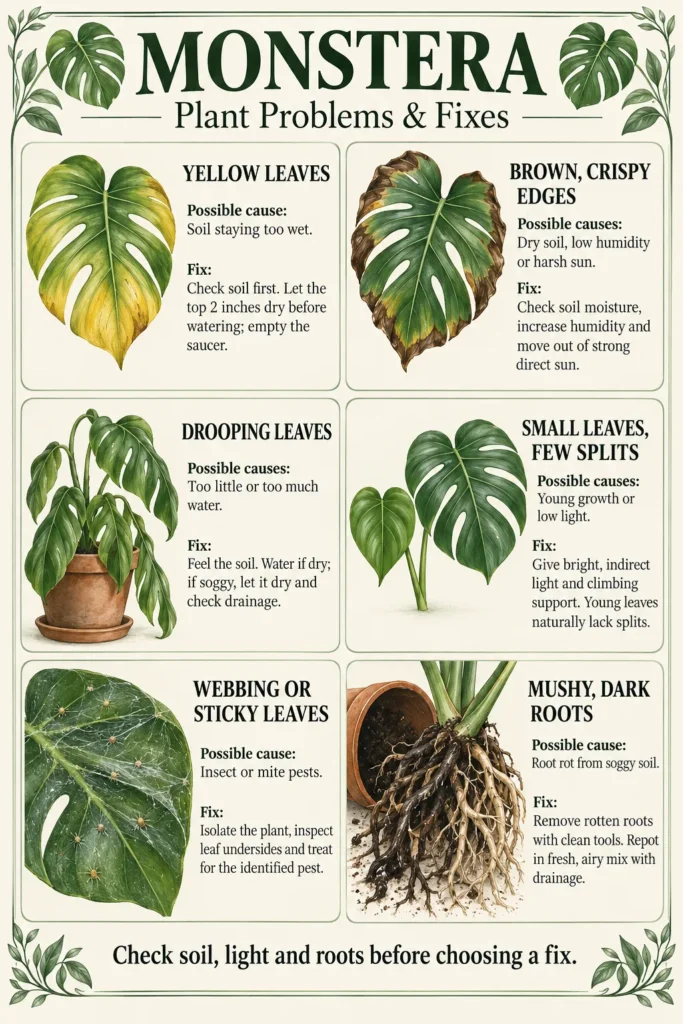
Then there’s the classic brown-tip panic. People assume brown tips always mean underwatering, so they drown the poor plant in response. Brown tips usually point to tap water minerals, low humidity, or salt buildup from fertilizer. Overcorrecting with more water usually makes things worse, not better.
My least favorite myth, though, is that monsteras need constant repotting to grow big and fast. Rushing a repot puts more stress on the roots than it relieves. Plants tend to settle in slowly, then take off once they’re ready.
I’ll admit, some of these myths sound so confident that I believed them for years. Once you start questioning the popular advice, monstera plant care gets a lot less stressful. It becomes less about rules and more about watching your specific plant. That shift alone will save you a lot of unnecessary worry.
Confidence online doesn’t equal accuracy, and plant advice spreads fast without much fact-checking behind it. I’ve found that the calmest plant owners are the ones who stopped chasing every trend. They just watch their own monstera and adjust from there.
Watering Without Losing Your Mind
Water anxiety is real, and monsteras seem to bring it out in people. I get it, since overwatering is the fastest way to lose one. But there’s a simple rhythm here once you stop overthinking every single day.
Here’s what I check before I ever pick up the watering can:
- Stick a finger two inches into the soil and check for dryness
- Look at the leaves for slight drooping, which often signals thirst
- Lift the pot and notice if it seems lighter than usual
- Check the drainage hole for water pooling underneath after a soak
- Watch for yellowing lower leaves, which usually means too much water
None of these tricks require special tools or apps that track your plant’s mood. A finger and a little attention will tell you almost everything. I tend to notice that most watering disasters come from a fixed schedule instead of actual observation. Calendars don’t know your home’s humidity, sunlight, or season.
If in doubt, wait another day rather than watering just in case. Monsteras recover from mild thirst far more easily than from soggy roots. Once you get used to your specific plant, this whole process moves fast. Eventually you’ll stop second-guessing every leaf and just glance, check, and move on.
Seasons change the rhythm too, which trips people up more than expected. A monstera drinks far more during warm, bright months than during a cool winter stretch. Watering on the exact same schedule year-round almost guarantees a soggy pot eventually. Let the plant, not the month on the calendar, tell you what it needs. That single adjustment fixes more watering problems than any fancy moisture meter could.
The Humidity Myth Nobody Wants to Admit
Everyone talks about humidity like monsteras will wilt without a rainforest setup. Living somewhere humid, like Orlando, definitely helps, but it’s not a strict requirement everywhere. Plenty of monsteras thrive in average household humidity without any extra effort. The plant is more adaptable than the internet gives it credit for.
Pebble trays and humidifiers can help in extremely dry climates, sure. But most homes sit in a range that’s perfectly fine for this plant. I tend to notice people buying gadgets before they’ve even confirmed there’s a real problem. That’s money spent solving something that was never truly broken in the first place.
Grouping plants together does raise humidity slightly, and it looks nice too. Still, don’t expect it to fix a plant that’s struggling for other reasons. Light and watering habits matter far more than the humidity number on some app. Chasing a perfect percentage often distracts from the basics that really move the needle.
If your monstera’s leaves look a little crispy at the edges, humidity might play a small role. But check watering consistency and light exposure first, since those cause most problems. Once those are solid, worry about humidity if issues still linger. It rarely ends up being the real culprit, in my experience.
Air conditioning gets blamed a lot too, and it’s not entirely fair. Dry indoor air from AC units can crisp leaf edges slightly, sure, but rarely causes serious damage. A monstera near a vent will usually just tell you by drying out faster than others. Moving it a few feet away often solves the whole issue instantly. No humidifier required, no dramatic rescue mission needed, just a small shift in placement.

Monstera Plant Care on a Budget, Because Duh
This site exists because fancy doesn’t always mean better, and monstera plant care proves that daily. You genuinely don’t need designer pots or subscription fertilizer boxes to grow a thriving plant. Some of the best results come from the cheapest, laziest choices available.
Here’s where I’d spend zero extra money without guilt:
- Skip the moss pole and use a sturdy stick or wooden dowel instead
- Propagate cuttings in water instead of buying a second plant
- Repot into thrifted pots, as long as you drill a drainage hole
- Make your own chunky soil mix using regular potting soil, bark, and perlite
- Use diluted leftover aquarium water occasionally instead of buying fertilizer
Every one of these swaps performs just as well as the pricier version. I’ve found that plants genuinely don’t care where the pot came from. They care about drainage, light, and consistent water, not brand names or aesthetics. A dollar store find with a hole drilled in it works beautifully.
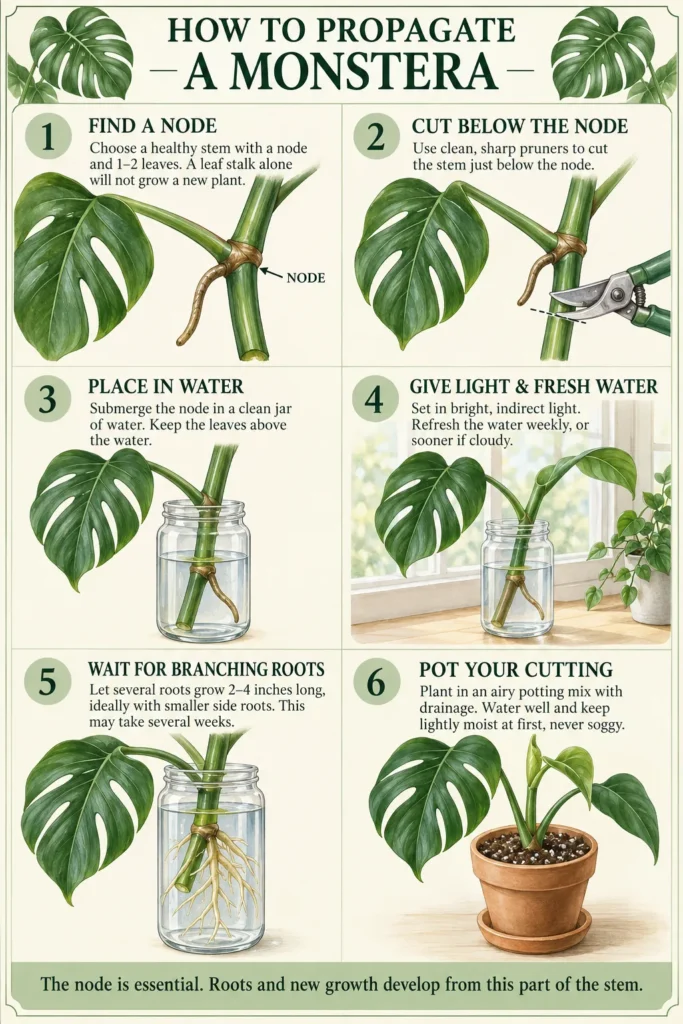
Even propagation, which sounds intimidating, just needs a node, some water, and patience. Free plants from one healthy monstera count as the ultimate budget win. Good monstera plant care rewards patience over spending, not fancy purchases. That’s refreshing in a world full of overpriced plant influencers selling gadgets you don’t need! Your wallet and your windowsill can both win here.
I tend to notice thrifted planters get overlooked simply because they aren’t pretty at first glance. A quick coat of leftover paint fixes that in about ten minutes. Old dowels, chopsticks, or even a sturdy branch from the yard work fine as stakes. None of this needs to look Pinterest-perfect on day one to work beautifully for years.
Repotting Without a Total Meltdown
Repotting sounds scarier than it really is, and I say that as someone who used to dread it. Most monsteras only need a new pot every one to two years. Watch for roots circling the pot or poking through the drainage hole first. That’s the only real signal worth watching for.
Size up gradually instead of jumping several pot sizes at once. Going too big traps excess moisture around roots that haven’t grown into that space yet. That extra moisture is often what leads to root rot down the line. A pot just two inches wider usually gives plenty of room.
Spring and early summer make the best repotting windows, since growth is already ramping up. The plant recovers faster when it’s already in an active growth phase. Repotting in winter can stress a monstera that’s essentially resting for the season.
Gently loosen the roots before placing the plant in fresh soil. Fill in around the edges, then water thoroughly to help everything settle. Skip fertilizer for a few weeks afterward, since fresh soil already has nutrients. Give the plant time to adjust before expecting new growth right away.
I tend to notice people repot far more often than necessary, almost out of nervous habit. Unless roots are cramped or drainage has slowed down, your monstera is probably fine right where it is. Restraint here saves both money and unnecessary stress on the plant.
Bigger isn’t always the goal, either, no matter what social media suggests. A slightly snug pot can keep a monstera compact and manageable indoors. Not everyone wants a plant the size of a small tree in their living room. Sizing up slowly gives you more control over how large this thing eventually gets.

Monstera Plant Care Mistakes I See Constantly
Some mistakes show up again and again, no matter how many guides exist online. Most of them come from good intentions rather than carelessness, which somehow makes them trickier to spot.
Here’s the lineup I’d flag first:
- Watering on a strict schedule instead of checking the actual soil
- Placing the plant in direct sun, which scorches those beautiful leaves
- Using a pot with no drainage hole because it matched the decor
- Fertilizing heavily in winter when the plant isn’t actively growing
- Moving the plant constantly, which stresses it more than people realize
That last one surprises people the most, in my experience. Monsteras like a stable spot and don’t love being shuffled around the house. Constant moving disrupts their light adjustment and can slow growth noticeably.
Another sneaky mistake involves cleaning leaves with harsh products or too much force. A soft, damp cloth works better than shiny leaf sprays ever will. Those sprays can clog the pores plants use to breathe properly.
Fixing even two or three of these habits usually changes everything fast. Good monstera plant care often comes down to subtraction, not addition. Stop doing the wrong things, and the plant handles the rest itself. It’s less about mastering new tricks and more about breaking old ones.
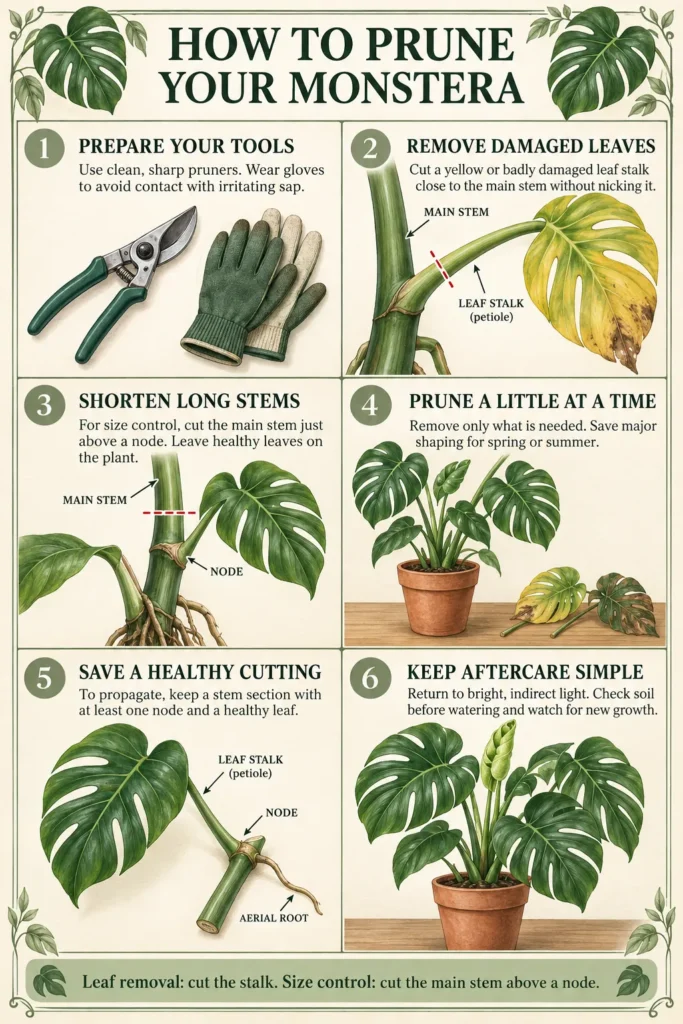
I’d also add ignoring pests until they’ve taken over completely. Small clusters of bugs are easy to handle with a damp cloth or diluted soap. Waiting weeks to deal with them turns a quick fix into a bigger project. Checking leaves occasionally while you water takes seconds and saves a lot of hassle later.

Those Fancy Holes, Finally Explained
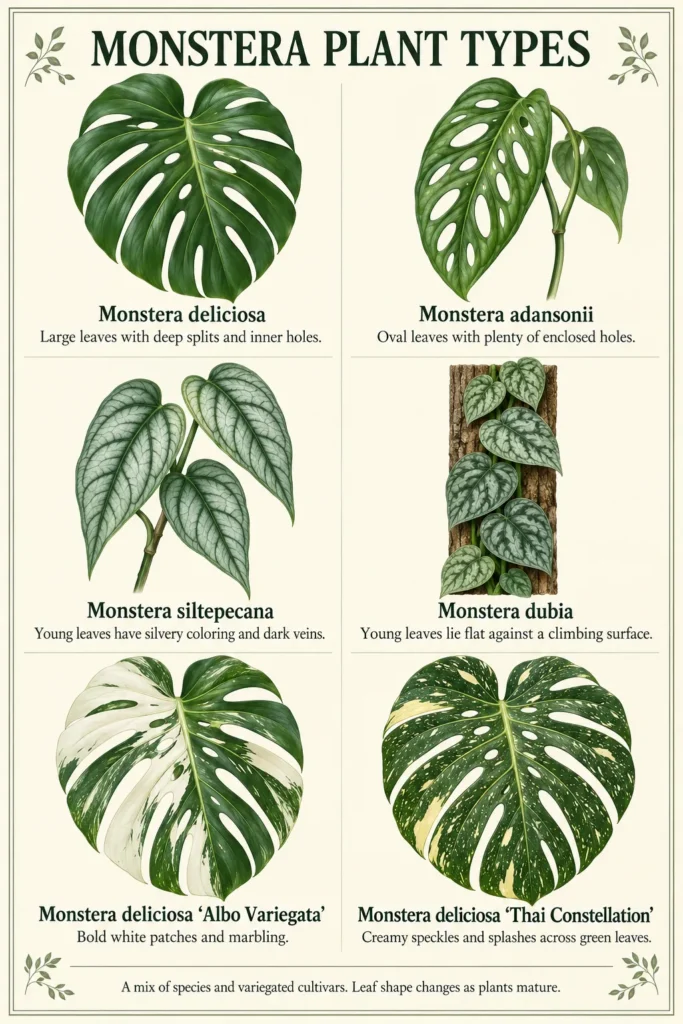
Those iconic splits and holes are called fenestrations, and people ask about them constantly. New monsteras usually start with plain, heart-shaped leaves and no holes at all. That’s completely normal, so don’t panic if your baby plant looks basic right now.
Fenestrations typically show up once the plant matures and gets enough light. Younger monsteras simply haven’t reached the growth stage where splitting happens yet. Patience matters more here than any product or trick you could try.
Light plays a bigger role in fenestration than most people expect. Bright, indirect light encourages the plant to put energy into bigger, split leaves. Low light often keeps leaves smaller and mostly solid, even on older plants.
Pot size and root space matter too, oddly enough. A slightly snug pot can encourage a monstera to focus on maturing rather than just spreading roots. Once mature, new leaves usually show more dramatic splits than the ones before them.
I tend to notice new plant owners stressing over unsplit leaves way too early. Give your monstera time, good light, and consistent care, and the holes will come. Rushing this process rarely speeds anything up. Some of the most rewarding plant moments happen quietly, leaf by leaf, without any dramatic intervention at all.
Every new leaf on a mature monstera unfurls slightly bigger and more dramatic than the last one. Watching that happen becomes strangely addictive once you notice the pattern. I’d compare it to slow, satisfying progress you can genuinely track on a windowsill. There’s no rushing a plant into its best form, and that’s kind of the whole point.

Your Monstera Questions, Answered Fast
How often should I water my monstera? Check the soil instead of the calendar. Water once the top two inches turn dry, which might mean every one to two weeks depending on your home and the season.
Why are my monstera’s leaves not splitting? Your plant is probably still young or not getting enough light. Fenestrations show up with maturity and bright, indirect light, so give it time.
Does monstera plant care work in low light? The plant can survive in low light, but it won’t thrive there. Leaves stay smaller and splits become rare without brighter conditions.
Is monstera plant care expensive to keep up? Not even close. Basic soil, a decent pot, and occasional feeding cover almost everything this plant needs, and most of that you probably already own.
How do I know if my monstera needs a bigger pot? Check for roots circling the pot or poking out of the drainage hole. That’s your cue to size up gradually.
Should I clean my monstera’s leaves regularly? Yes, a soft damp cloth every few weeks keeps them dust-free. Clean leaves absorb more light, which helps the whole plant grow steadily.
One Last Leaf of Advice
Somewhere between killing my first unlucky plant and watching this monstera thrive, I stopped overthinking the whole process. Monstera plant care turned out to be less about rules and more about paying quiet attention. That shift changed how I treat every plant on my windowsill now.
Living in Orlando gave this plant a head start, but the basics matter everywhere else too. Light, water, and a little restraint carry most of the weight. Everything else is just noise dressed up as expertise.
I still catch myself hovering over one dramatic yellow leaf sometimes, because old habits stick around. But I trust the process more than I used to, and that trust makes plant care genuinely enjoyable. Watching a new leaf unfurl still gets me every single time.
There’s something satisfying about proving a “high-maintenance” plant wrong with almost zero effort. Orlando humidity gets some of the credit, sure, but consistency did most of the heavy lifting. Anyone anywhere can pull this off with a decent window and a little patience.
If you’ve been putting off getting a monstera, consider this your nudge to just start. Pin this now, save it to Pinterest, and come back whenever your plant throws a leafy tantrum. Your future self, staring at one dramatic leaf, will thank you for the head start!
Turns out, the plant everyone hypes up as high-maintenance just wanted the basics done right. Simple wins, every single time, no matter what the plant influencers tell you.