My driveway has a way of humbling me every single spring. Weeds creep in, edges blur, and suddenly my whole yard looks unfinished. Driveway landscaping keeps sliding to the bottom of my list, right under cleaning out the garage.
Then I scroll through photos of gorgeous entrances and get instantly inspired. Something about a planted driveway makes an entire house look more expensive. That’s a strange kind of magic, if you ask me.
Living in Orlando means I’ve learned which plants survive brutal summer heat. So when I finally tackled my own entrance, I expected a fast, simple fix. What I found changed how I think about that whole space entirely.
I used to think curb appeal was just a fresh coat of paint. Turns out, the space along your driveway does a lot of quiet work. It’s the first thing anyone notices, even before they reach your front door.
This post walks through real ideas for that space, without the overwhelm. Some fit into a single weekend, while others take a whole season to fill in. Either way, your driveway is about to get a lot more interesting.
I’ll admit, one idea on this list surprised me more than the rest. It’s simple, cheap, and somehow the one most people skip completely. Let’s start from the ground up, quite literally.
Grab your coffee, or your third iced tea of the day. This one’s worth reading slowly, corner by corner.
Some of the links on this page are affiliate links, which means I may earn a small commission if you purchase through them. It never costs you extra. You can always peek at my full disclosure if you’d like the details.
Why Driveway Landscaping Isn’t Just a Someday Project
I used to file curb appeal under “someday, maybe.” Paint colors and door wreaths seemed far more urgent than a strip of dirt by the pavement. Then I started noticing how much attention that space quietly gets.
Visitors don’t walk your backyard first. They walk straight past your driveway, whether you’ve planted anything there or not. That single fact changed how I ranked my outdoor projects.
I’ve found that driveway landscaping does more emotional work than people expect. A few well-placed plants make a plain house look intentional instead of forgotten. Meanwhile, bare dirt next to concrete reads as neglect, even when the house looks great otherwise.
Here’s the surprising part: none of this requires a big budget. Small additions, like a shrub border or a cluster of tough flowers, shift an entrance’s whole vibe. You don’t need a crew or a five-figure makeover to notice a real difference.
Some folks assume landscaping only matters out back, where people relax. But your driveway gets more daily traffic than any patio ever will. That thought alone reshuffled my whole outdoor priority list.
Think about your own street. Which houses catch your eye while driving past? Rarely, it’s the ones with the nicest cars out front.
Almost always, it’s the ones where someone clearly cared about that in-between space. So no, driveway landscaping isn’t some far-off, someday project. It’s a small, sneaky upgrade that quietly earns its keep.
Here’s the thing nobody tells you upfront: it compounds. A tidy driveway edge makes the whole yard look tended. That one corner covers for a dozen other chores.
I’m not saying skip the mulch bed by your porch. Just stop treating the driveway like an afterthought. It’s earned a real spot on the list.

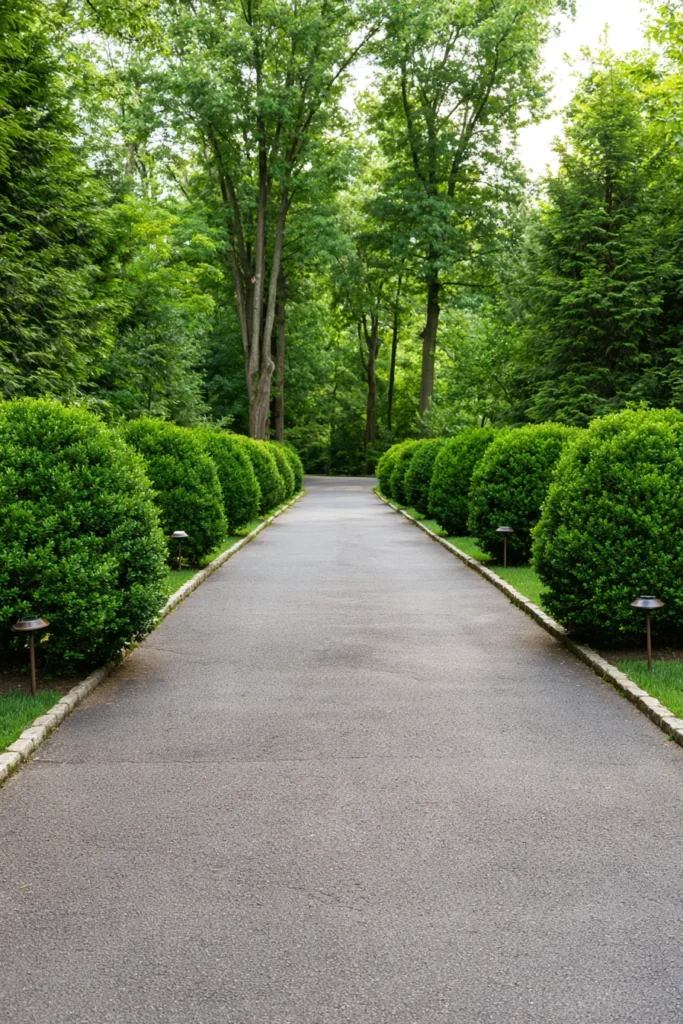
Driveway Entrance Curb Appeal on a Tight Budget
Curb appeal near the entrance doesn’t need a fat budget or a fancy designer. Small, cheap touches make the biggest difference, more often than not. People notice the details first, even without naming exactly why a space looks put-together.
Before spending a dime, walk your own entrance like a total stranger would. Check the edges, the lighting, and whatever’s growing near the pavement. That single walk-through usually reveals two or three easy fixes.
A few budget-friendly upgrades I keep coming back to:
- Fresh mulch or gravel to define clean, crisp edges
- Solar path lights for cheap evening glow
- A couple of potted plants near the entry point
- Simple edging to separate grass from pavement
- One bold plant as a focal point instead of many small ones
None of these require a contractor. Most fit into a single weekend, and some take less than an hour.
Here’s a plot twist, though: sometimes less really is more. Cramming every idea into one small space backfires fast. Instead, pick one or two upgrades and let them genuinely stand out.
I tend to notice that overdone entrances start looking cluttered within a season. Plants grow, mulch fades, and suddenly that curated look turns messy. Choosing fewer, sturdier elements saves both money and future weekends.
Simple and a little sparse almost always beats an entrance that’s trying too hard.
I’ll be blunt: most driveway entrances don’t need a redesign, just a cleanup. Pull the weeds, straighten the edges, and add one nice element that catches the eye. That combination does more than any expensive overhaul ever could.
You can always add more later, once you see what holds up. Budgets stretch further when you build slowly instead of all at once. Patience saves money here in ways impatience never will.

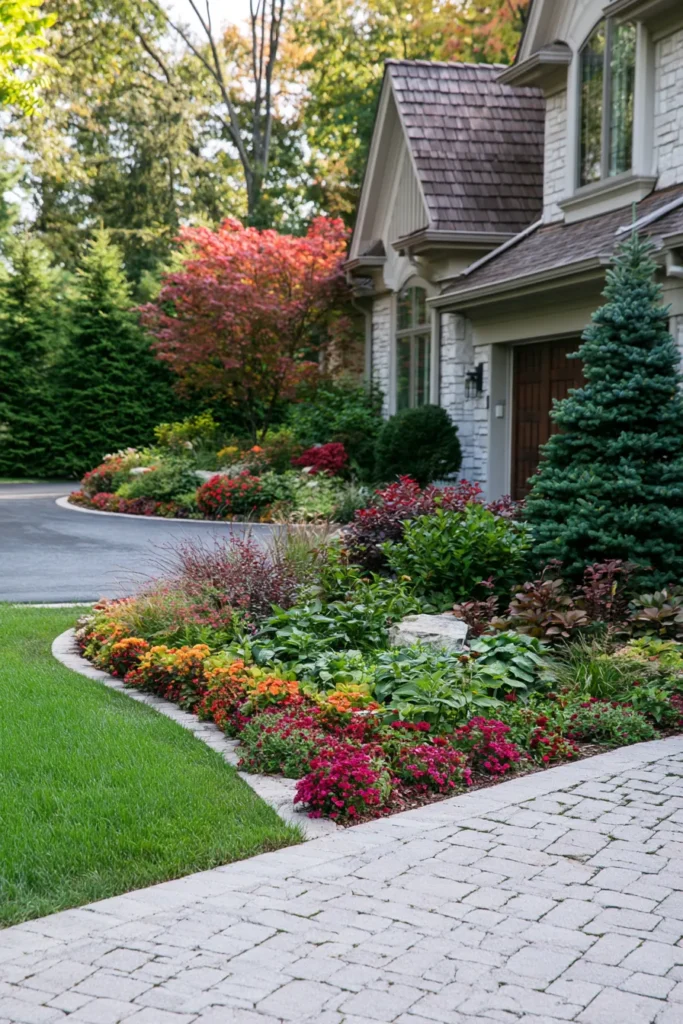
Little Garden Ideas for That Narrow Strip
Not every garden idea needs a whole yard to work with. Some of the prettiest little gardens live in that narrow strip beside a driveway. That thin space is more useful than people give it credit for.
Think of it as a mini stage, not leftover dirt. A cluster of tall grasses or a few flowering perennials can transform that strip fast. Height matters more than you’d expect here, believe it or not. One tall plant draws the eye up, instead of down at plain concrete.
I’ve found that repetition works surprisingly well in tight spaces. Planting the same flower every few feet, rather than a random mix, makes a narrow garden look planned. It’s also cheaper, since you’re buying in bulk instead of one-offs.
Color matters too, though maybe not the way you’d expect. Loud, mismatched colors can shrink a small space visually. Sticking to two or three shades keeps a tiny garden calm instead of chaotic.
This is where driveway landscaping gets genuinely fun instead of purely functional. You’re not filling space out of obligation anymore. Instead, you’re designing a small, specific moment that greets you every time you pull in.
I keep coming back to one idea: small gardens force better decisions. There’s nowhere to hide a bad choice here, so every single plant has to earn its spot.
Don’t underestimate a strip that’s barely two feet wide. It holds more visual weight than people assume, since it’s the first patch of green anyone sees. Treat it like a tiny showcase, and it’ll act like one.
I’ve also noticed that seasonal swaps keep this space looking fresh. Swapping a few annuals each season costs little and refreshes the whole entrance. It’s a small habit that pays off every few months.

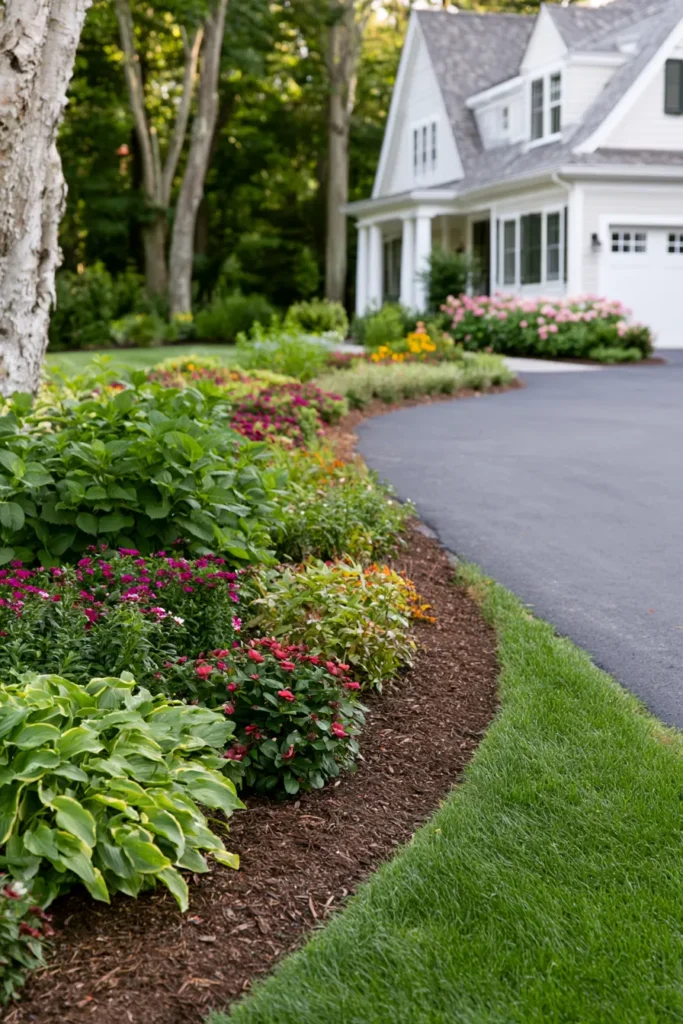
Long Driveway Landscaping, Simplified
Long driveways come with a very specific kind of pressure. All that stretch of pavement can look like an airport runway if nobody deals with it. Filling that much space on a budget seems impossible at first.
Here’s the trick that changed everything for me: rhythm beats variety. A long driveway doesn’t need ten different plants scattered everywhere. It needs one or two repeated elements that build a pattern as you drive up.
A simple approach that works well:
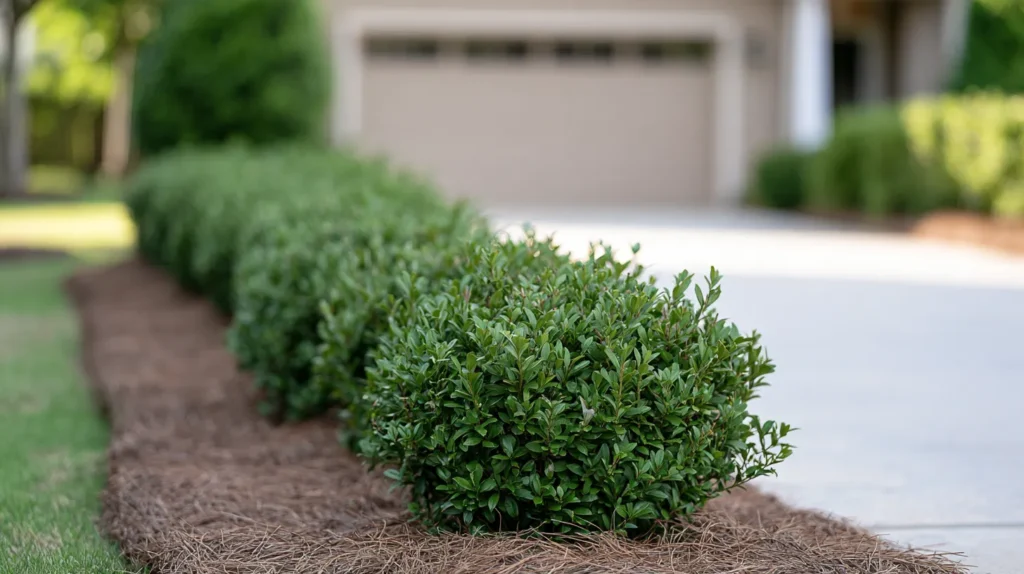
- Plant the same shrub every ten to fifteen feet
- Use uniform lighting spaced evenly along the edge
- Add one or two larger trees as natural markers
- Skip small, delicate plants that get lost from a distance
- Let mulch or gravel handle the visual work in between
This kind of driveway landscaping relies on spacing more than variety, which saves real money. Buying fifteen of the same plant usually costs less than buying fifteen different ones.
There’s a practical bonus here too. Repeated plantings are easier to maintain, since you’re not juggling different watering needs or bloom times. That matters a lot when the driveway already eats up half your yard.
I’ll admit, this approach seems almost too simple at first glance. It looks like it should require more effort to appear intentional. Instead, the opposite happens, every single time.
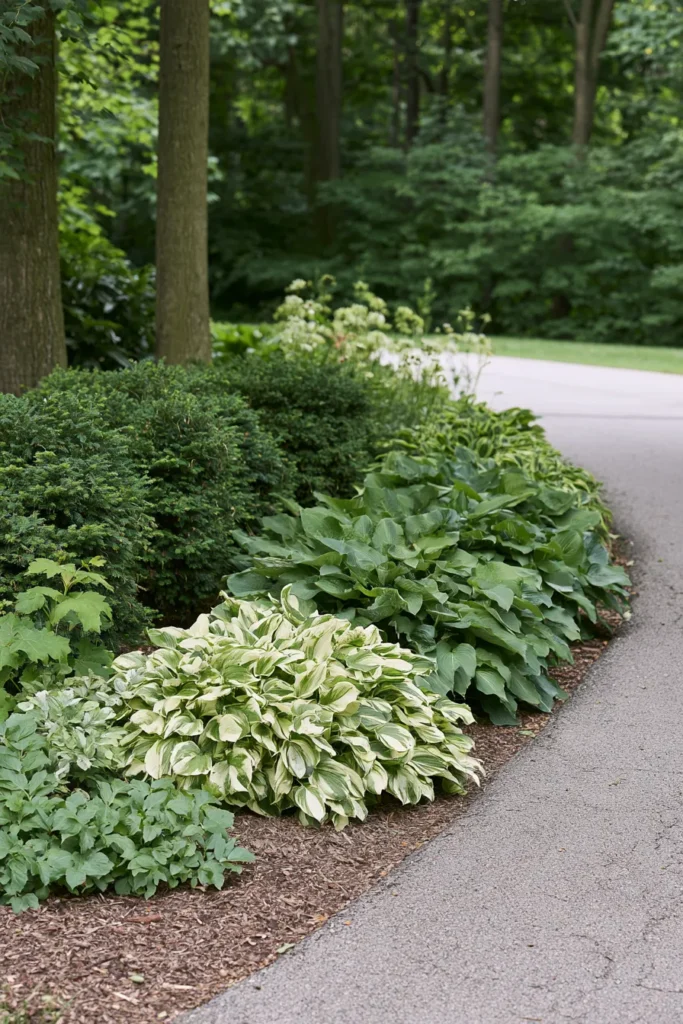
Plants That Won’t Quit Along the Pavement
Some plants look great on a nursery shelf and then quietly die within a month. Driveways make everything harder, since heat reflects off pavement and bakes the nearby soil. That combination punishes delicate plants fast.
Tougher plants tend to win here, even when they’re less flashy. Ornamental grasses, sedum, and low junipers handle heat and neglect far better than delicate flowers. They also cost less at the garden center, which never hurts.
I tend to notice people overwater new driveway plantings out of guilt. It seems wrong to leave a thirsty-looking plant alone. But many hardy varieties prefer drier soil, and too much water causes more damage than none.
Full sun near a driveway isn’t always a bad thing, either. Some plants genuinely thrive in that reflected heat, almost like it toughens them up. Once you match the plant to real conditions, maintenance drops fast.
This is where patience matters more than talent. A newly planted driveway strip looks sparse for the first season, no matter how it’s arranged. Give those tough little plants a full year before judging the results.
Trust me on this one: the second season looks nothing like the first.
This is really the heart of smart driveway landscaping, if you ask me. Pick plants built for the actual conditions, not the ones that photographed best online. Everything downstream gets easier once that one decision is right.
I also keep a short list taped inside a cabinet, just plants I know will survive our summers. It saves me from impulse-buying something pretty and doomed at the garden center. A little restraint here goes a long way.
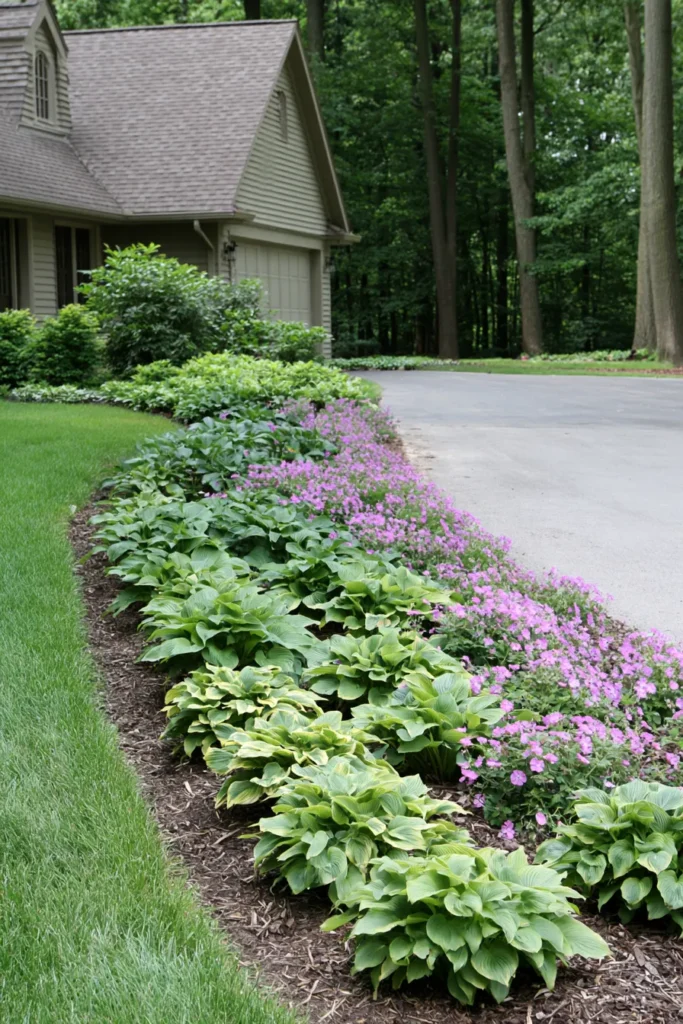
End of Driveway Landscaping, the Part Everyone Skips
People ignore the end of a driveway more than any other part. Most focus on the entrance near the house and skip the far edge completely. That’s usually the spot right by the mailbox or the street.
I’ve noticed this forgotten corner shapes a first impression before anyone reaches the house. Cars slow down there. Neighbors walk past it daily, whether they mean to notice it or not.
A few easy ways to fix this overlooked spot:
- Add a small planting bed around the mailbox post
- Use low, tough groundcover instead of bare mulch
- Line the edge with a simple border to stop grass creep
- Add one small tree or tall shrub as a subtle marker
None of these require ripping anything out or hiring help. Most take an afternoon, especially with an existing patch of grass or dirt to work from.
People skip end of driveway landscaping because it seems less important than the front door area. That assumption doesn’t hold up once you notice how often that spot gets seen. It’s basically a preview of your whole property.
This little stretch rarely gets a second thought, yet it quietly sets the tone for everything else.
I tend to notice a bare mailbox post before almost anything else on a street. It reads as unfinished, even when the rest of the yard looks great. One small planting bed usually fixes that impression fast.
Give this spot even ten minutes of attention this weekend. It’s a low-effort fix that punches well above its size. Nobody expects much from the end of a driveway, so it’s easy to impress. Even one flowering shrub near that post changes the whole look of the corner.
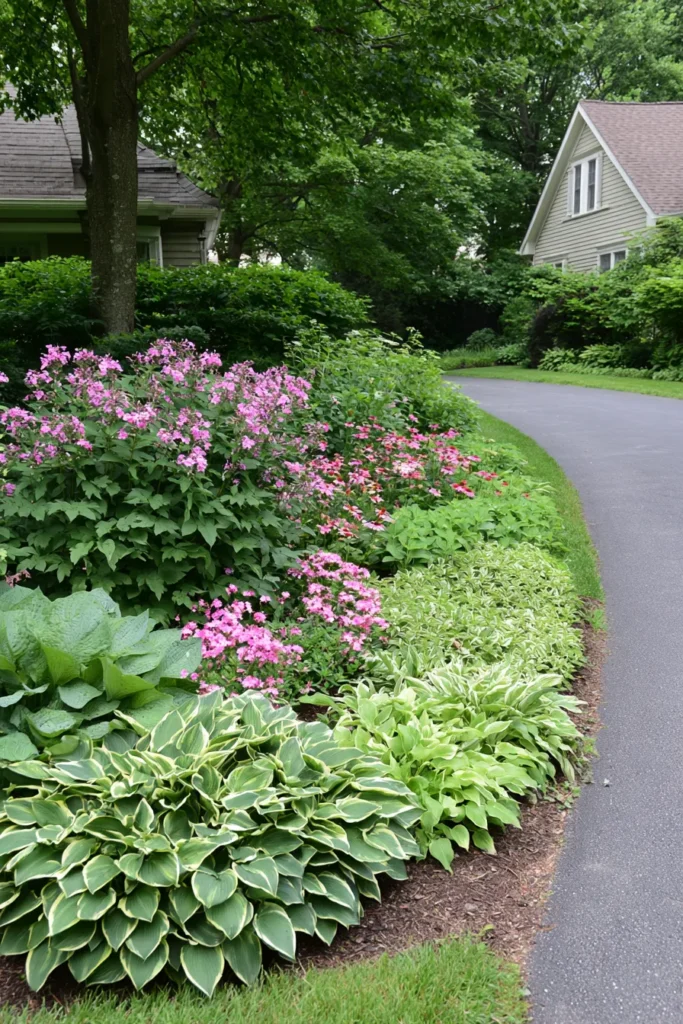
A Few Mistakes I’d Skip Next Time
There are a few mistakes I’ve noticed play out again and again near driveways. Planting too close to the pavement is probably the biggest one. Roots eventually push against concrete, and cracks follow within a few years.
Choosing thirsty plants for a hot, reflective spot is another classic misstep. It seems harmless at first, since everything looks fine during the early weeks. Then summer hits, and suddenly you’re watering daily just to keep things alive.
Overplanting ranks high on this list too. It’s tempting to fill every inch with something green right away. But plants grow. A strip that looked perfectly spaced in spring often turns into a jungle by fall.
Ignoring drainage causes quieter problems that show up later. Water runs off pavement fast, and low spots near a driveway can flood after heavy rain. Raised beds or better grading usually solve this before it becomes a bigger headache.
I’d also skip choosing plants purely because they looked good at the store. That approach rarely accounts for sun exposure, soil type, or nearby pavement. A little research beforehand saves a lot of frustration later.
Most of these mistakes share the same root cause: rushing. Good driveway landscaping rewards patience far more than it rewards speed. Slowing down for even one extra week usually prevents a costly redo.
Consider this list a friendly warning rather than a judgment. Nobody gets a driveway perfect on the first try, and that’s genuinely fine. Learning as you go is half the fun of any yard project.
Small fixes usually beat starting over from scratch. Move a plant, adjust the spacing, or swap out one struggling shrub. None of that requires tearing the whole bed apart.
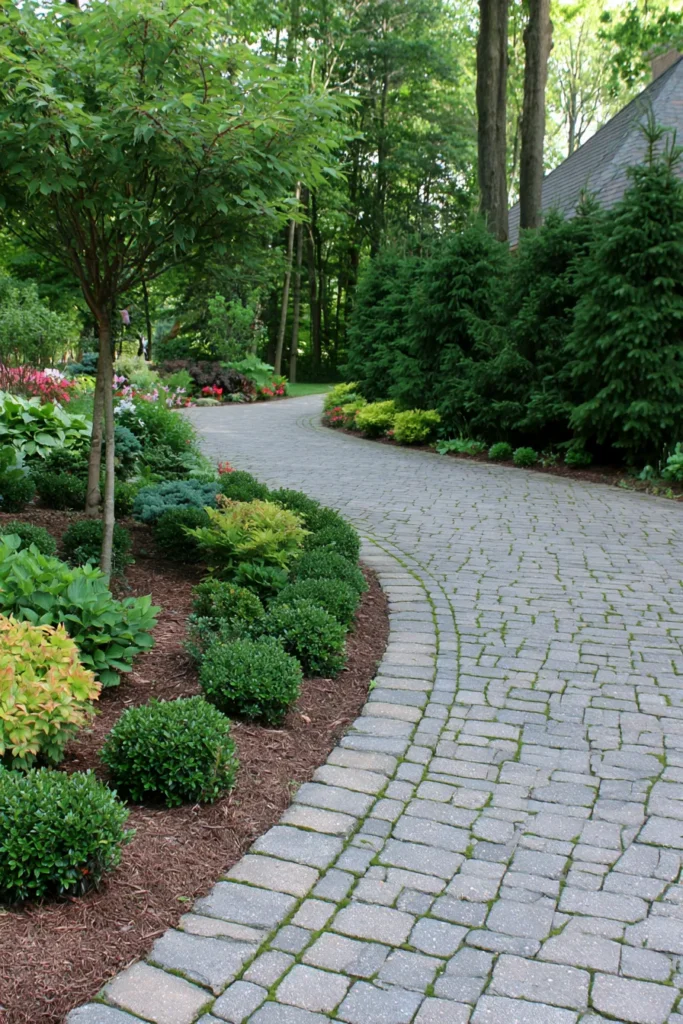
Front Driveway Landscaping That Welcomes You Home
Front driveway landscaping sets the tone the moment you pull in after a long day. That first glance matters more than people admit. A welcoming entrance can turn a stressful commute into something that lands a little softer.
Lighting plays a bigger role here than most budgets account for. Warm, low path lights near the front of the driveway create an inviting glow without costing much. Solar options make this even easier, since wiring isn’t required.
Some upgrades that make the biggest visual impact near the front:
- Seasonal flowers in pots for easy color swaps
- A small arbor or trellis near the entry point
- Consistent lighting that guides the eye toward the house
- A clear, defined path connecting driveway to front door
- One statement plant near the garage or entryway
None of these upgrades demand a full landscaping overhaul. Most work as small additions layered in over time, based on budget and mood.
I’ve found that front driveway landscaping works best when it echoes the whole house, not separate from it. Colors, materials, and style should match whatever’s already happening near the front door. That connection makes an entrance look finished instead of randomly decorated.
Pulling into a driveway that looks genuinely cared for changes something small but real.
It’s a tiny, daily reminder that home is worth a little effort. You don’t notice it every single day, but you’d notice fast if it disappeared. That’s the quiet power of a well-planned entrance.
I’d rather spend a Saturday morning out front than scroll past another gorgeous driveway online. There’s something satisfying about matching your own space to the ideas you’ve been saving. Start small, and the rest tends to follow naturally.
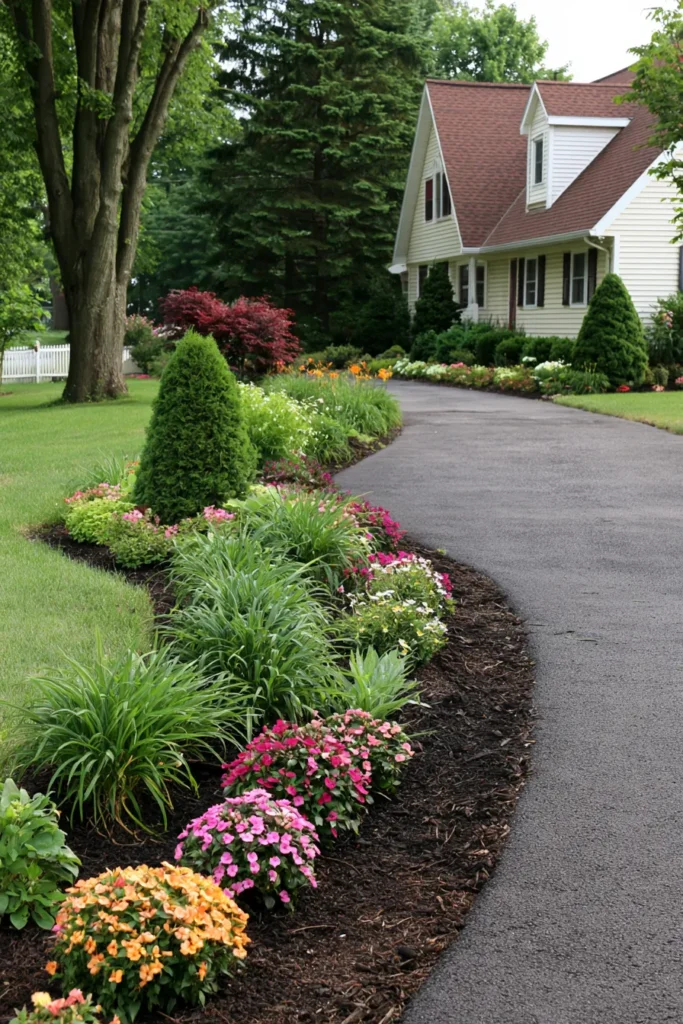
Quick Questions About Driveway Landscaping
What’s the cheapest way to start driveway landscaping?
Mulch, gravel, and a few hardy plants go a long way before anything gets pricey.
How do I landscape a long driveway without spending a fortune?
Repeat the same plant or shrub instead of buying lots of different types. It costs less and looks planned.
What plants survive best next to a hot driveway?
Look for drought-tolerant options like ornamental grasses, sedum, and low junipers. They handle reflected heat well.
Should both sides of a driveway match perfectly?
Not really. Uneven, natural-looking plantings often look more relaxed than a perfectly mirrored setup.
How close can plants sit next to a driveway?
Give plants at least a foot or two of space so roots don’t damage the pavement.
Alright, Let’s Give That Driveway Its Moment
I didn’t expect a strip of pavement to change how I see my whole property. Driveway landscaping turned out to be one of those quiet upgrades that pays off big. Once I started noticing it, I couldn’t stop.
Living in Orlando taught me that heat forgives almost nothing, including lazy plant choices. That lesson saved me from a few expensive mistakes already. Some plants simply weren’t built for pavement-level sun, no matter how good they looked online.
I still catch myself saving Pinterest boards full of driveways I’ll probably never fully copy. That’s fine, though. Half the fun is collecting ideas and slowly figuring out what fits your own space.
This isn’t about achieving some flawless, magazine-ready entrance overnight. It’s about noticing a forgotten stretch of your property and giving it real attention. Small changes, done consistently, beat one expensive weekend project every time.
So next time you pull into your driveway, take a real look at what greets you. Chances are, there’s a small fix hiding in plain sight. And chances are, you’ll wonder why you waited this long to notice it.
Start with one corner, one weekend, one small plant if that’s all you’ve got in you. Momentum builds faster than people expect once that first fix is finished. Before long, the whole entrance starts pulling its weight.
Your driveway isn’t just a slab of concrete leading to a garage. It’s the very first impression your house makes, every single day, on repeat. Give it a little credit, and it’ll return the favor.