I live in Orlando, where yards either explode with color or straight up give up by June. Every spring, I walk past the same bare strip by my porch and think, “this is the year.” Then July hits, the humidity wins, and that strip just sits there, judging me quietly. That’s why I tend to think flower bed ideas matter more than people give them credit for.
Sound familiar? If you’ve ever stared at a sad, empty patch of lawn, I see you. That mix of guilt and ambition is exactly why I’m talking to you right now. I’m not a landscaper, and I don’t own a wheelbarrow with a name.
But I’ve found that a little planning turns an awkward yard corner into something people genuinely compliment. This isn’t about turning your yard into a magazine spread overnight, so relax. It’s about small, doable moves that make your house look loved from the curb. Some of these cost almost nothing.
Others need a weekend and one trip to the hardware store. Either way, none of them require a green thumb you were secretly born without. Grab your coffee (or wine, zero judgment here) and let’s get into it. One idea coming up completely changed how I think about front-yard color. It’s not the one you’d expect.
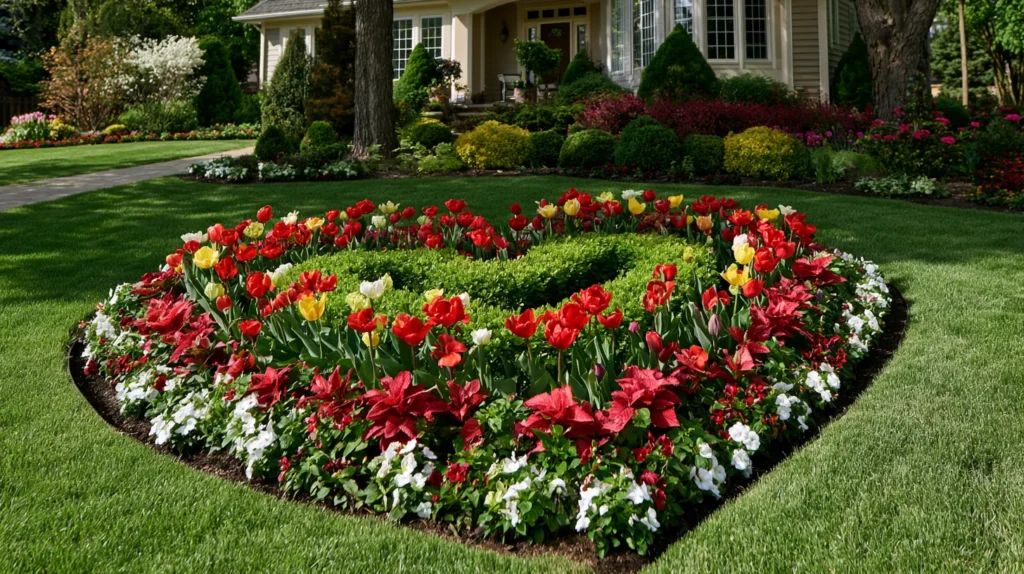
Some of the links on this page are affiliate links, which means I may earn a small commission if you purchase through them. It never costs you extra. You can always peek at my full disclosure if you’d like the details.
The Front Yard Confidence Problem
A front yard has one job: make people slow down and think, “oh, that’s cute.” Mine used to make people speed up instead, and I get it. Something about a plain rectangle of grass reads as unfinished, even when the lawn looks fine. I tend to notice something simple: one flower bed makes a whole house look finished. It says someone lives there and truly likes it. That’s the entire secret, and it isn’t a big design trick.
Here’s the part nobody tells you: you don’t need the whole yard done at once. Picking one spot near the front door or under a window works well. Committing to it beats a half-hearted plan for the entire property. Small, confident choices photograph better than sprawling, uncertain ones, and they cost less too.
I also think Pinterest trained us to expect instant, magazine-level yards. That expectation sets people up to quit early. A front yard is not a one-weekend personality transplant. It grows into itself, sometimes literally, over a full season or two. Plants fill in, edges soften, and colors shift as things bloom on their own schedule.
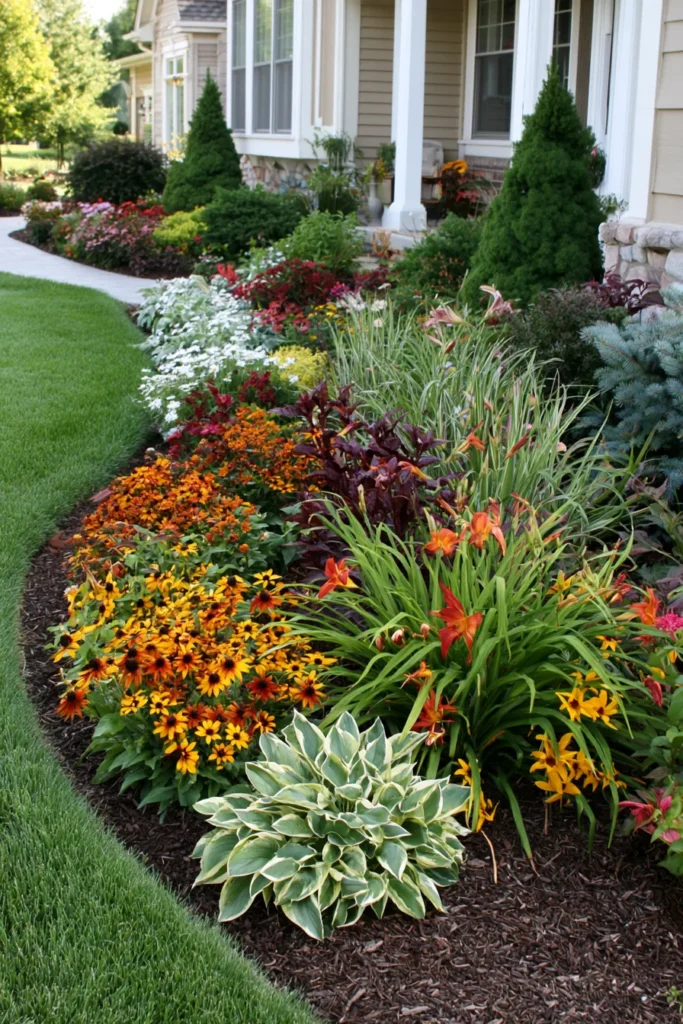
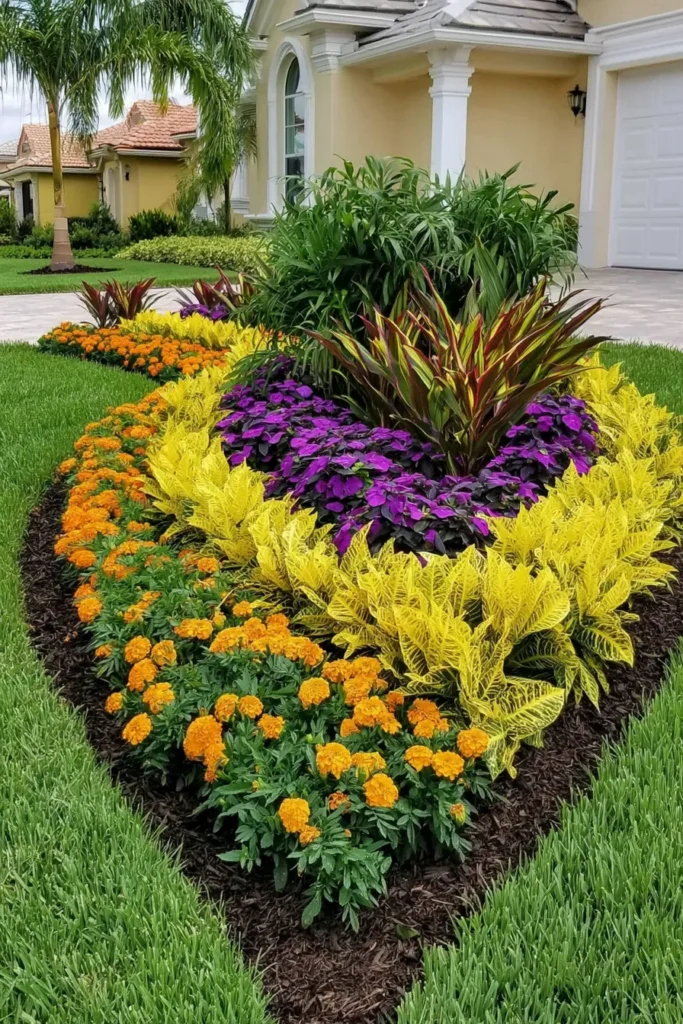
What moves the needle, in my opinion, is contrast. A plain lawn next to a bed with layered heights and bold colors reads as designed. That’s true even if you bought everything on clearance. Height variation matters more than most people realize.
A bed that’s all one level looks like a green blob from the street. Add one taller plant, some mid-height color, and a low border. Suddenly, it looks planned instead of accidental. That shift alone changes how the whole house reads to anyone driving by.

DIY Flower Bed Ideas for the Front of Your House
DIY flower bed ideas get a bad reputation because people picture curved brick borders and rented equipment. Most of the best ones use stuff you already have lying around. Or they need a quick trip to the hardware store, cheaper than takeout. I tend to notice the simplest borders end up looking the most intentional. That seems backwards until you try it yourself.
A few starter moves that don’t require any special skill:
- Outline the bed using a garden hose laid on the grass, then spray paint the line before digging.
- Use edging that matches your house, like black metal for modern homes or scalloped concrete for cottage-style ones.
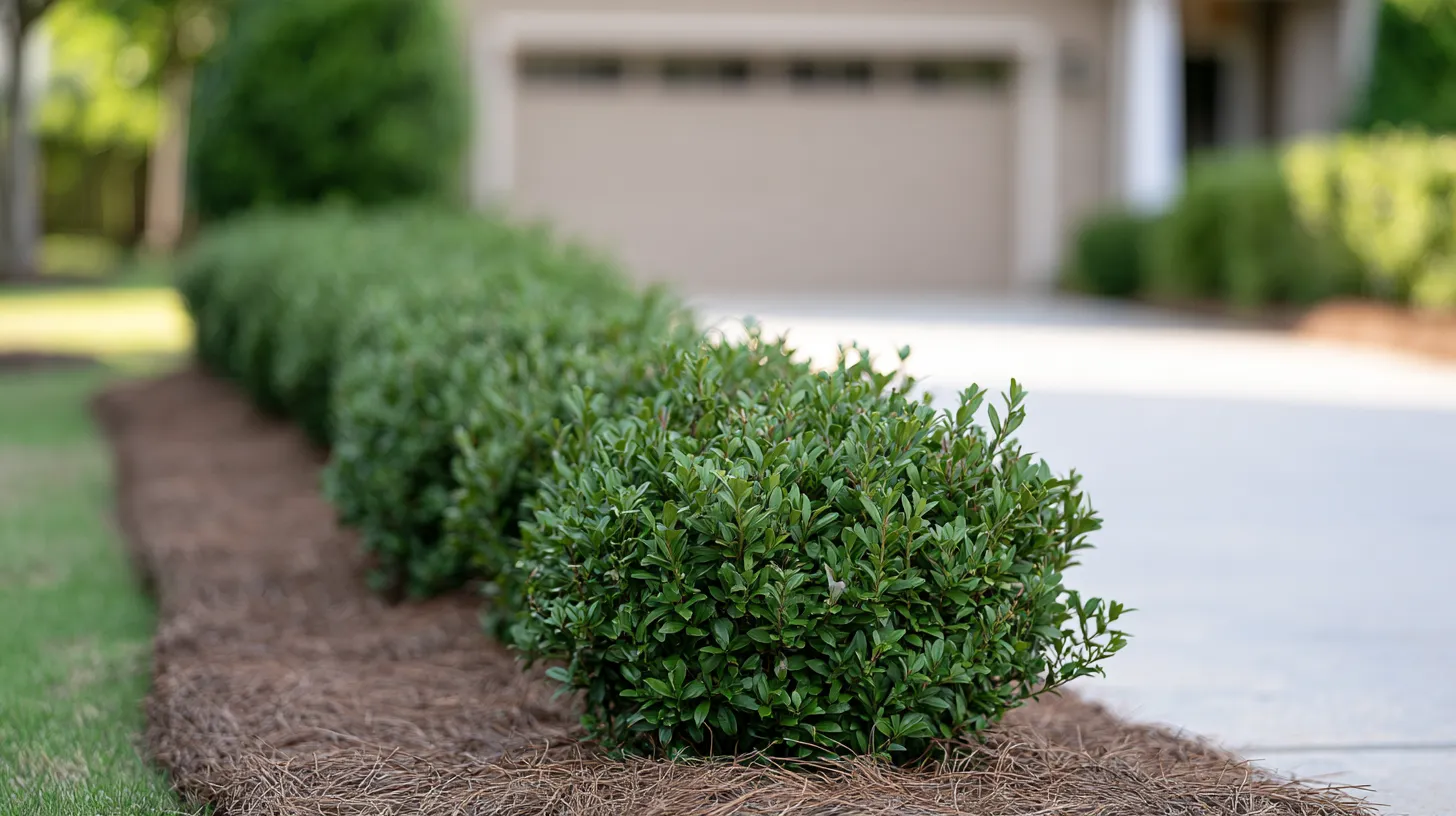
- Skip the mulch-only look and add a low border plant so the bed reads as designed, not decorated.
- Reuse old bricks or pavers stacked in a simple line instead of buying new edging material.
- Keep the shape simple, since a clean curve or straight line looks more finished than a wiggly one.
Once the shape exists, the plants matter less than people assume. A boring shape looks messy no matter what you plant in it. Even three clearance-rack plants look good inside a clean, confident outline.
I also think people overspend on soil before they’ve even decided on a shape, which is backwards. Get the outline right first. Live with it a few days, then adjust before digging the whole thing up. That one habit alone has saved me from redoing a bed twice.
Flower bed ideas that start with shape instead of plants almost always look more professional. They also tend to cost less. You’re not stuck replacing things you didn’t plan well the first time.

Small Yard, Big Personality
Small yards get treated like a problem to solve, not a shape to work with. I disagree with that completely. A tiny front yard makes decisions easier, since you can’t fit ten competing ideas into it. That limitation forces better choices, whether you like it or not.
I’ve found that small spaces reward repetition more than variety. Picking two or three plant types and repeating them looks calmer. It even reads as more expensive than cramming in one of everything. A packed, chaotic mix might seem generous, but it usually reads as cluttered from the sidewalk. Fewer choices, repeated with confidence, almost always wins.
Vertical space matters even more in a small yard, since you’re short on ground to work with. A trellis, a tall planter, or even a single upright shrub adds height without eating up square footage. That upward movement tricks the eye into thinking the space is bigger than it is. It’s a strange little magic trick, but it works.
Color also behaves differently in small spaces. Too many bright, competing colors in a tight area can feel busy instead of cheerful. I tend to notice something here too: one dominant color plus one accent color looks more polished. Five colors fighting for attention rarely works. Restraint isn’t boring here; it’s the whole strategy.
One more thing worth saying out loud: small yards are cheaper to fully commit to. Fewer plants, less soil, and smaller edging bills add up. You can finish the whole project in a weekend instead of dragging it out for months. That’s not a consolation prize; it’s genuinely the advantage. A smaller commitment means you’re more likely to enjoy the process instead of dreading it.

Raised Flower Bed Ideas Are the Lazy Girl’s Best Friend
Raised flower bed ideas get pitched as a vegetable-garden thing, but I think that undersells them badly. A raised bed near the front porch solves about five problems at once. Most people don’t realize it until they’ve built one. Bad soil stops being a dealbreaker, for starters, since you’re filling it with whatever mix you want.
Here’s why I’m a fan, in no particular order:
- Weeding gets easier because the bed sits above ground level, closer to your hands and your patience.
- Drainage improves instantly, which matters a ton in areas that swing between drought and downpour.
- Bad backs get a break, since you’re not bending all the way to the ground for basic maintenance.
- Structure appears automatically, because the box itself gives the whole space a defined edge.
- Kids and dogs respect boundaries better when there’s an actual physical edge to the bed.
A raised bed also photographs well without much effort. That matters if you’re the type who takes a proud picture the second something blooms. The box does half the design work before a single flower goes in.
Cost-wise, you don’t need fancy cedar or a kit from a catalog. Cinder blocks, cheap lumber, or even stacked stone can build a raised bed for very little money. I tend to think people overcomplicate this step, picturing something that looks like a furniture showroom. A raised bed just needs to hold soil and look intentional; everything past that is optional.
One more perk: raised beds drain faster after heavy rain, which matters a lot here in Florida. Fewer soggy roots means fewer replacement trips to the garden center. That alone pays for the lumber pretty quickly.
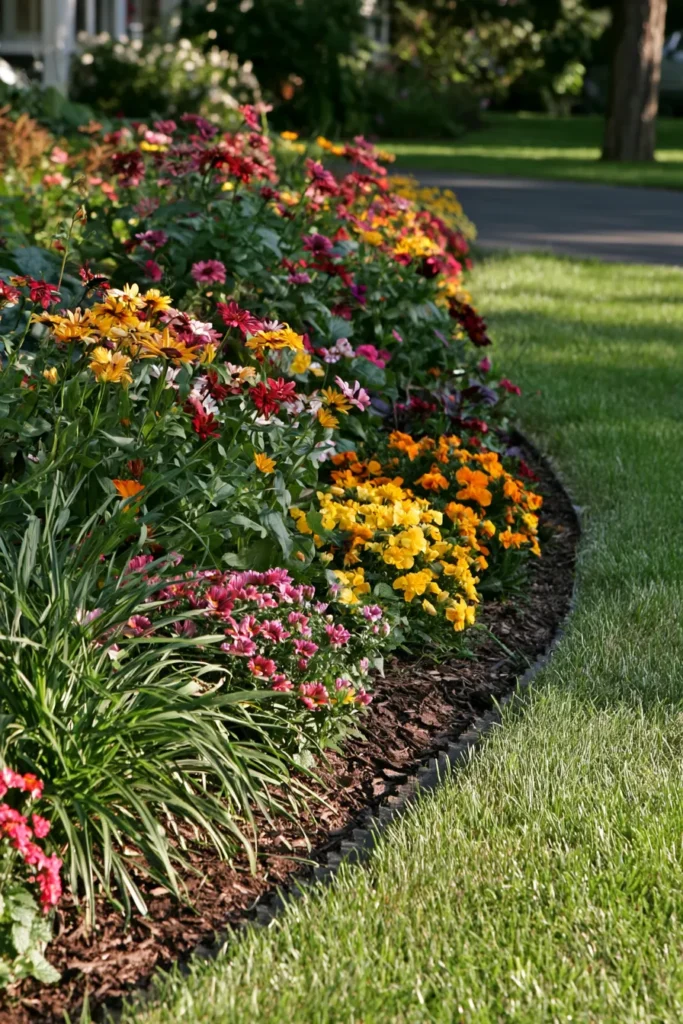
The Backyard Nobody Sees (But You Should Still Love)
Backyards get ignored in a weird way. We spend way more time back there than anyone spending time out front. I tend to think this whole setup is backwards. The space where you drink your coffee deserves real thought. It beats the strip strangers glance at while driving by.
A backyard bed can afford to be a little wilder, a little less curated. There’s no sidewalk audience judging the edges. That freedom is genuinely nice. You can plant things that spread a bit and mix textures more loosely. A corner can even get slightly overgrown without anyone side-eyeing it from the street.
Privacy also plays a bigger role back there than it does up front. Taller plantings along a fence line do double duty. They add color while blocking a nosy neighbor’s view or an ugly utility box. I’ve found that a layered bed against a fence looks intentional, not like an afterthought. That’s especially true once things fill in.
Function matters more in a backyard bed too. If there’s a grill, a fire pit, or a hammock nearby, the bed should support that use. It shouldn’t fight it. Thorny plants near a walking path are a mistake everyone makes exactly once. Soft, low plants near seating areas make the whole space feel more relaxed and less like a showroom.
I also think backyard beds get more forgiveness for trial and error. Nobody’s grading you on it. Try a plant, watch it fail spectacularly, pull it out, and try something else without any real consequence. That relaxed setting makes the backyard the best place to learn what grows well in your yard.
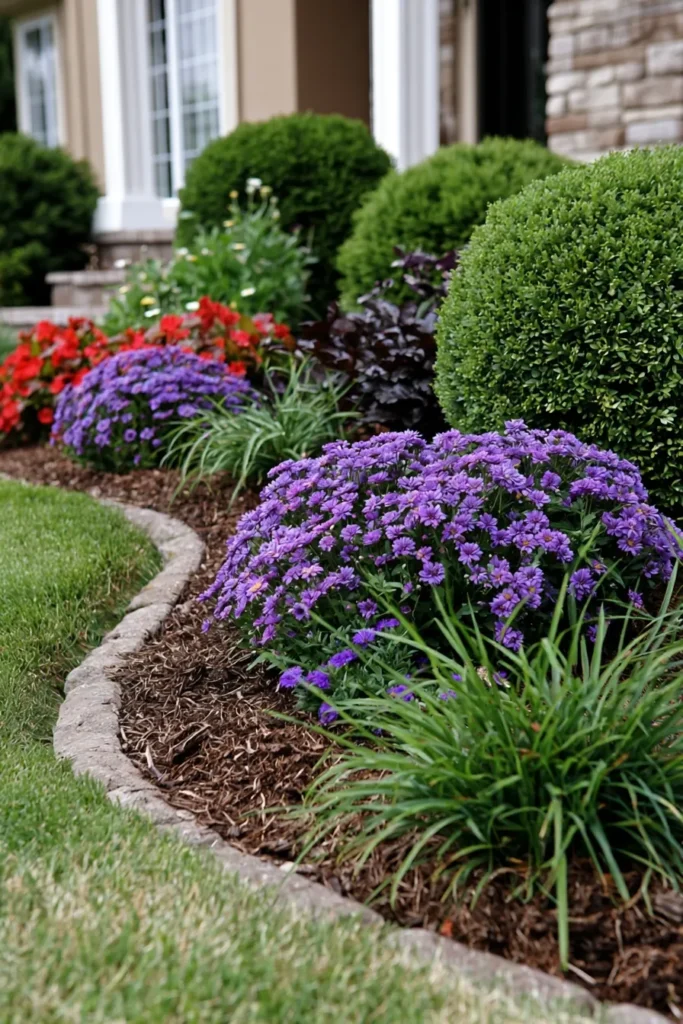
Flower Bed Ideas for Fall, Winter, and Everything Between
Flower bed ideas don’t have to stop once summer fades, and that surprises more people than it should. A front bed left empty from October through February just reads as forgotten. That’s true even if the rest of the yard looks fine. I tend to notice that a quick seasonal swap keeps a house looking cared for. That holds true no matter what month it is.
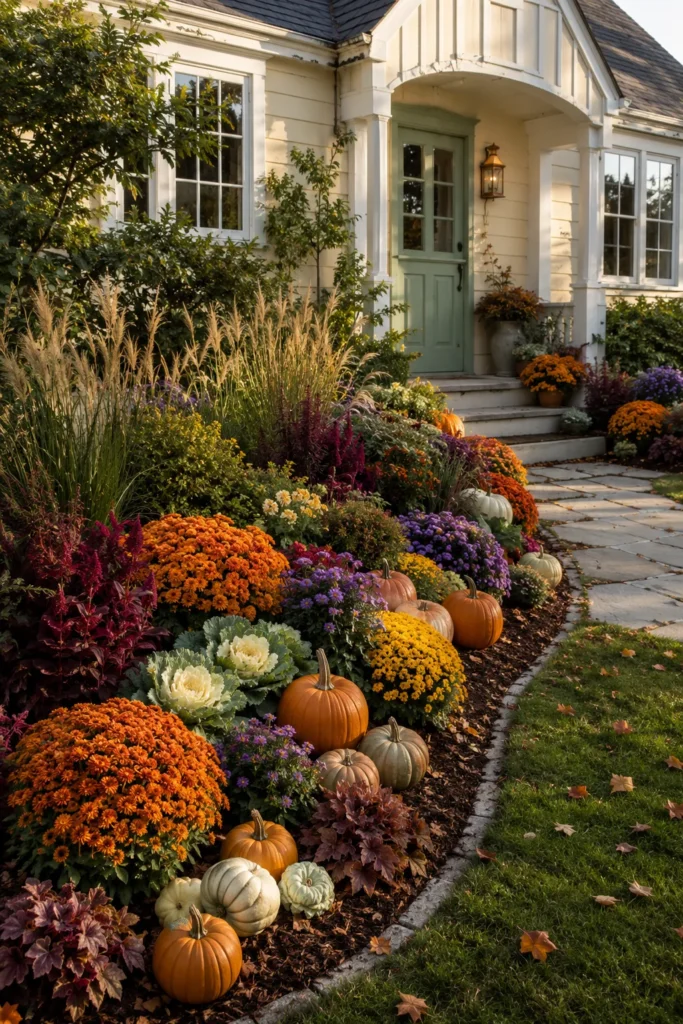
Fall is the easiest season to fake, at least in terms of effort. Mums in warm oranges and golds do most of the heavy lifting. They last for weeks without much fuss. Small pumpkins and gourds tucked into the mulch add texture without costing much at all. Ornamental cabbage holds up surprisingly well through the first few cold snaps too.
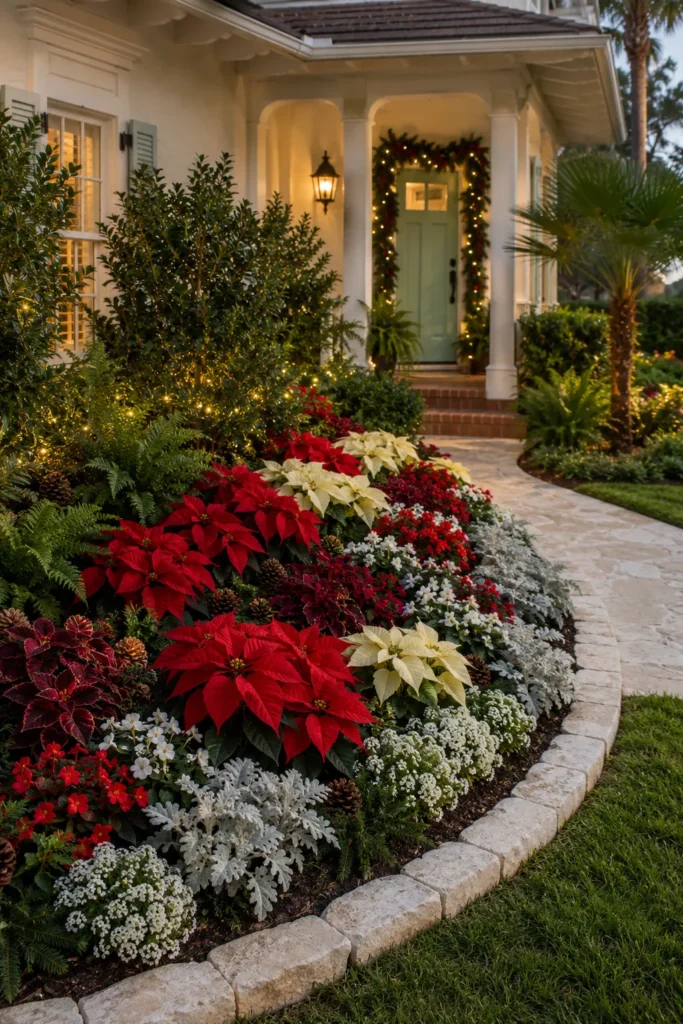
Winter gets skipped more than any other season, which seems like a missed opportunity. Evergreen branches, pinecones, and warm string lights turn a bare bed into something worth walking past. Poinsettias work in mild climates, and pansies handle cooler ones better than most people expect. Even a plain bed with fresh mulch and a single lit shrub looks intentional instead of neglected.
The trick that ties it together is treating the bed like a rotating display, not a permanent installation. Plan two or three swaps a year instead of one big spring planting you hope survives everything. That approach costs less overall, since you’re buying smaller batches suited to the actual season. Flower bed ideas built around rotation age better than ones frozen in a single look. The front of the house never goes through that awkward, half-finished stretch.
Flower Bed Ideas Around Trees
Flower bed ideas around trees get overlooked constantly, and I think that’s a real shame. Bare dirt circling a tree trunk reads as unfinished, even in a yard that’s tidy everywhere else. Grass also struggles to grow well right up against tree roots. That leaves the ring looking patchy no matter how often it gets mowed.
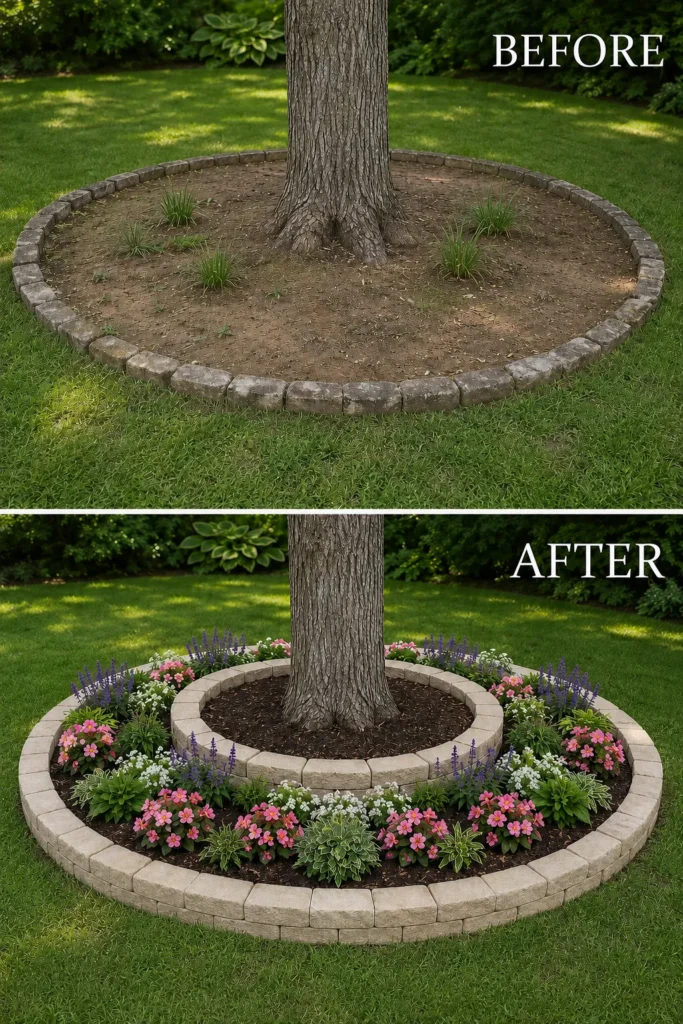
A simple stone or brick ring solves the messiest part of the problem right away. Once the edge exists, the space inside asks for very little. Low, shade-tolerant plants like hostas or heuchera fill it in without competing with the tree for light. Ground cover works too, especially in a spot too shaded for grass to ever really thrive.
I’ve found that a two-tier ring adds a surprising amount of polish. A slightly raised inner circle around the trunk does the trick. It keeps mulch from washing away and gives the area a finished look instead of an afterthought. Adding a few flowering plants around the outer edge brings in color without crowding the roots underneath.
This is one of those small details that changes how a whole yard reads from the street. A tree with a defined, planted base looks like part of the landscaping plan. Bare dirt ringing the trunk looks like something nobody got around to yet. The fix costs very little and takes an afternoon. It’s one of the better returns on effort in this entire list.
Rainbow Flower Bed Ideas
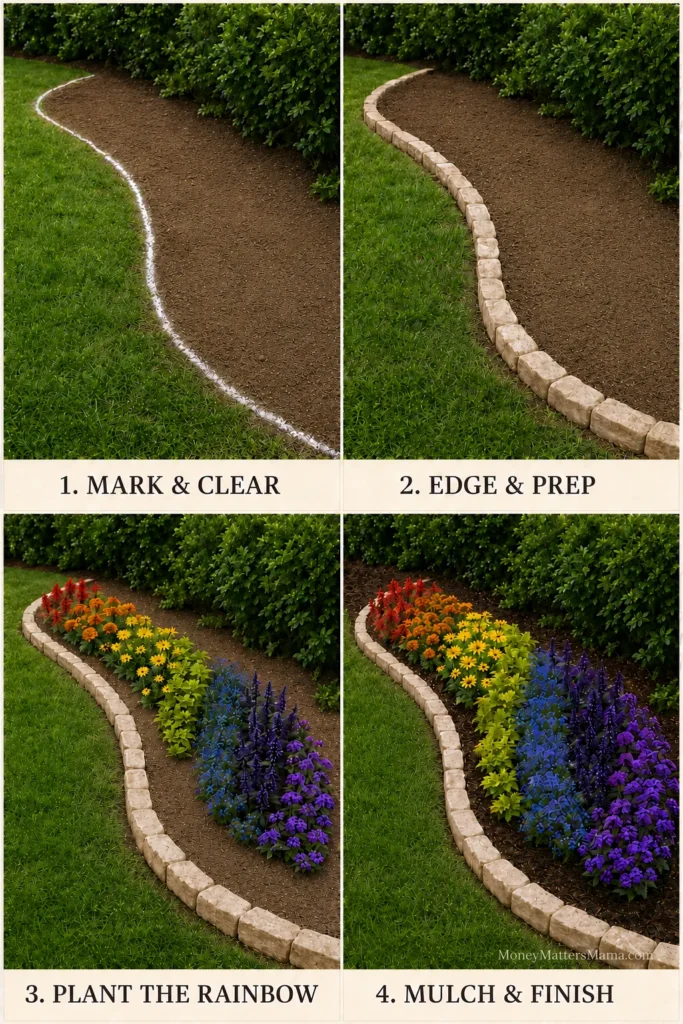
Flower bed ideas rarely get more fun than a rainbow bed, and I don’t say that lightly. Arranging plants in true color order turns a simple border into something people stop and photograph. That’s literally the same sequence a rainbow follows in the sky. It sounds like a lot of planning, but the process breaks down into steps anyone can follow.
Here’s the basic order that makes the effect work:
- Start with reds and oranges on one end, using zinnias, marigolds, or dahlias for bold color.
- Move into yellows and greens next, blending coreopsis or yellow marigolds with lighter foliage.
- Add blues and purples toward the other end, using salvia, lobelia, or petunias.
- Finish with a defined edge, since a rainbow bed needs a clean line to read as intentional.
- Mulch the whole bed one color, so the eye focuses on the plants instead of the dirt.
The hardest part isn’t the planting. It’s finding enough true colors within each family to keep the transition smooth. I tend to shop with a printed color chart in hand.
Garden center tags don’t always match reality once flowers bloom. A curved bed along a walkway shows this off better than a straight one. The curve gives the color order room to breathe.
One warning worth mentioning: this style needs more upkeep than a mixed bed. Faded blooms in one section break the whole effect. Deadheading regularly keeps the transition crisp through the season. Flower bed ideas this specific take a bit more attention. The payoff is a bed nobody else on the street has.
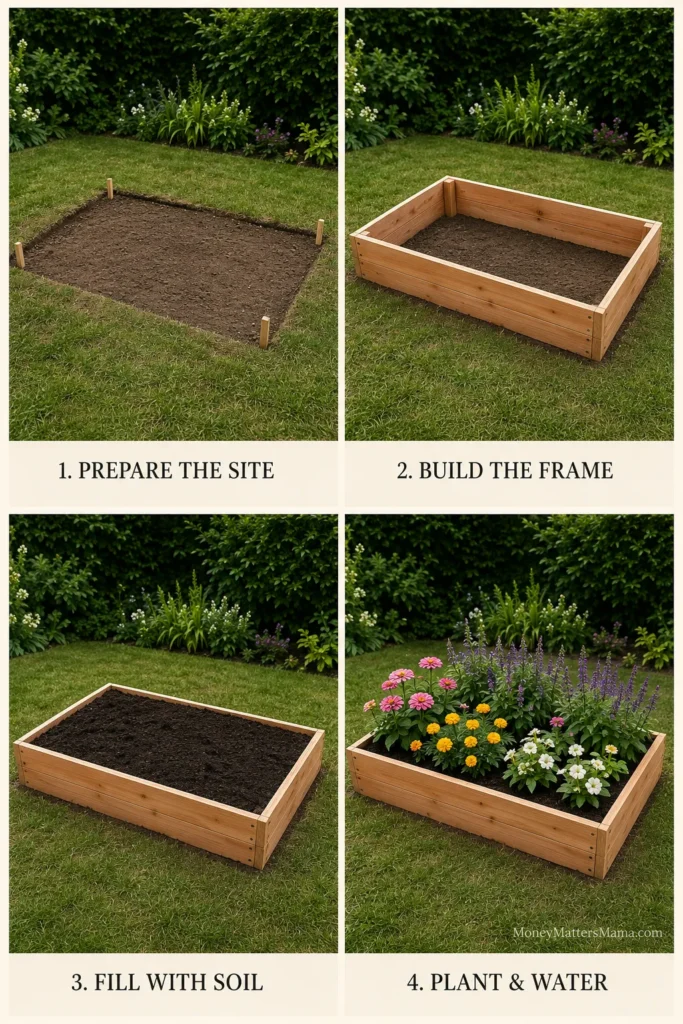
How to Build a Raised Flower Bed in Four Easy Steps
Flower bed ideas that involve a raised bed sound more complicated than the actual build. The whole project breaks down into four steps, and none of them require special skills or expensive tools. A single weekend afternoon is usually enough to finish the whole thing.
The basic build, start to finish:
- Prepare the site using stakes or a hose to mark the shape, then clear grass from inside it.
- Build the frame using untreated lumber, cinder blocks, or stacked stone, keeping the corners square as you go.
- Fill with soil, using a mix built for raised beds rather than plain topsoil, which compacts too easily.
- Plant and water right away, choosing a mix of heights so the bed looks full from day one.
A frame roughly six to eight inches tall works for most flowers, though vegetables usually want deeper soil. I tend to think people overbuild this step, picturing something elaborate before they’ve even measured the space. Untreated cedar or pine holds up fine for several years without needing a sealant or stain.
Cost stays low if you skip the pre-made kits and build the frame yourself from basic lumber. That single choice can cut the price by more than half. A pre-assembled raised bed box costs a lot more. Once it’s filled and planted, a raised bed looks finished almost immediately. That makes it one of the more satisfying weekend projects on this whole list.
Flower Bed Ideas That Don’t Require a Landscaping Degree
Flower bed ideas don’t need to come from a professional plan or a pricey consultation. Some of the best-looking beds I’ve come across started as one simple concept, repeated with a little confidence. Complexity isn’t the goal here; a clear idea beats a complicated one almost every time.
A few concepts worth stealing, none of which require special training:
- The single-color bed, where every plant sits somewhere on one color family, creating instant cohesion.
- The texture bed, mixing spiky, round, and feathery plant shapes instead of relying on color alone.
- The border-only bed, using one type of low plant to trace the edge of the house or walkway.
- The seasonal swap bed, planted with easy annuals that get replaced two or three times a year.
- The “one thriller, two fillers” formula, borrowed from container gardening but scaled up for a real bed.
That last formula deserves extra credit. Pick one taller, showier plant as the anchor, then two supporting plants that fill space around it. This formula works in almost any size bed and takes the guesswork out of plant shopping completely. It’s the one formula I come back to more than any other when I’m stuck.
I also think inspiration photos trip people up more than they help, oddly enough. A stunning bed from a cooler climate might use plants that simply won’t survive here. Instead of copying a photo exactly, borrow the shape and structure.
Then swap in plants suited to your growing zone. That adjustment prevents most of the expensive mistakes people make when chasing a look instead of a formula. A local garden center can point you toward substitutes with the same look and none of the heartbreak.
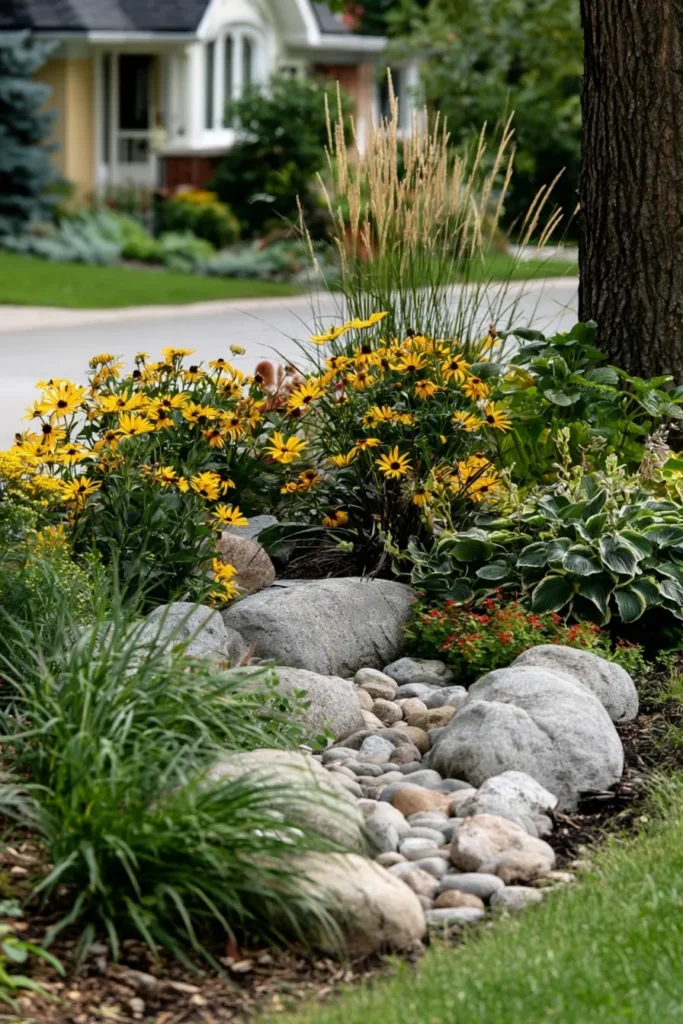
Front Yard Garden Design, Minus the Pinterest Pressure
Front yard garden design sounds official, like something you need a degree for, but it really isn’t. Most of what reads as “designed” comes down to repetition and restraint, not rare knowledge. I tend to think people overthink this step way more than necessary.
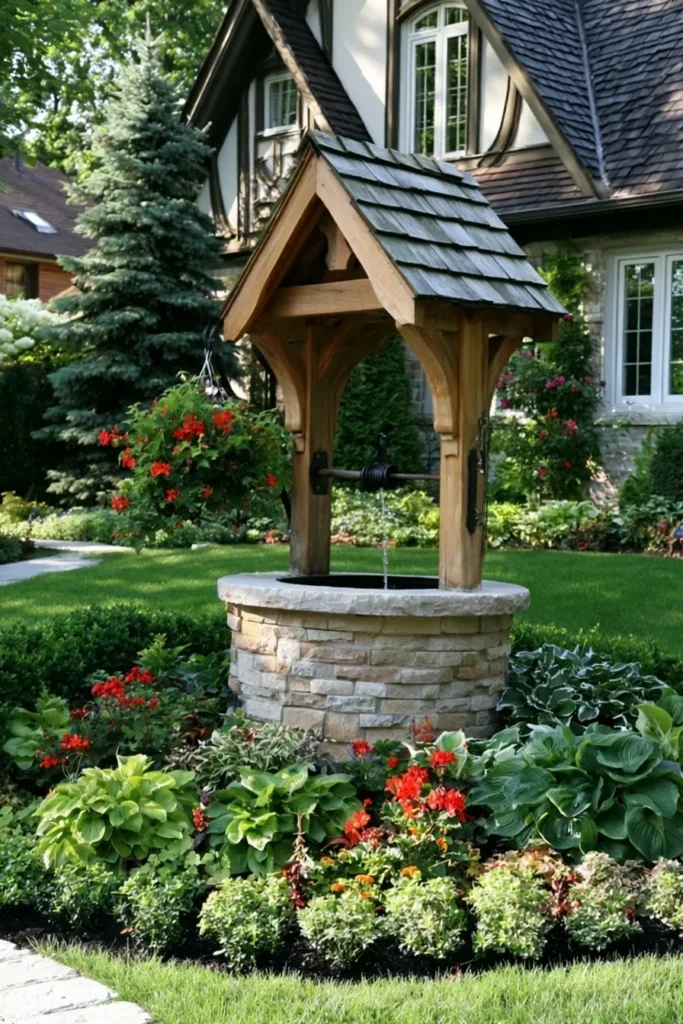
Symmetry is a cheap trick that works every single time. Matching planters on either side of a front door, or mirrored beds flanking a walkway, reads as intentional. Your brain relaxes when it sees balance, even if the plants inside are nothing fancy. That’s not lazy design; that’s efficient design. I’ll take efficient over exhausting any day of the week.
Sightlines matter too, more than most people consider upfront. Standing at the street and looking toward your front door shows you exactly what a visitor sees first. Whatever sits directly in that line of sight should be the nicest thing in the yard. It shouldn’t be an afterthought stuck in empty space. Even a single potted plant works there if it’s placed with real intention.
I’ve also found that mature plants get overrated compared to well-placed smaller ones. A yard full of tiny plants spaced correctly will fill in nicely within a season or two. Cramming in mature plants squeezed too close together looks overgrown immediately and costs a fortune upfront.
One thing I’ll say plainly: comparing your yard to a professionally designed one online is a losing game. Those photos often involve a crew, a budget, and lighting nobody mentions. Your yard doesn’t need to compete with that. It needs to look intentional and cared for. The goal is to read like someone truly lives there and likes it.
Budget Flower Bed Ideas for the Front of the House
Budget flower bed ideas for the front of the house don’t have to look budget once they’re finished. Money matters here, obviously. But the biggest cost savings come from timing and planning, not cutting corners on plants. I tend to notice people spend more when they’re rushing to finish before a party or a holiday.
A few ways to keep costs down without the finished look suffering:
- Buy plants small instead of mature, since baby plants cost far less and catch up within a season.
- Shop end-of-season sales, when garden centers discount stock they don’t want to carry over.
- Propagate from what you already have, splitting perennials instead of buying new ones every year.
- Choose one “splurge” plant and fill the rest of the bed with budget-friendly options around it.
- Skip decorative edging at first, adding it later once the plants themselves prove the layout works.
Timing also saves real money on flower bed ideas. Planting at the start of a growing season, instead of mid-summer when everything struggles, means fewer replacements later. I’ve found that patience with timing saves more money than any coupon or discount code ever could.
Free resources deserve a mention too. Neighbors dividing perennials, community plant swaps, and even curbside cuttings can fill a bed for close to nothing. Flower bed ideas built partly from free or shared plants often look as good as fully purchased ones.
Sometimes they look even better. The plants are already proven to survive your exact climate. That’s a budget win hiding in plain sight, and it’s proof that thrifty and beautiful aren’t opposites.
FAQ
How do I start a flower bed if I’ve never gardened before? Start small, with one defined shape near your front door or a window. Pick three easy plants suited to your growing zone, then expand once you see what survives.
What’s the cheapest way to edge a flower bed? Reused bricks, stacked stone, or a simple spray-painted line work well. Fancy edging materials look nice, but they’re rarely necessary for a clean, finished look.
Do raised flower beds work for front yards, not just vegetables? Absolutely. Raised beds near a porch or walkway solve drainage and soil problems. They also add instant structure to the whole space.
How many plants do I need for a small flower bed? Fewer than you’d think. Three to five plant types, repeated in odd-numbered groupings, usually looks more polished than one of everything.
Should my front yard and backyard beds match? Not necessarily. Front beds usually benefit from more restraint. Backyard beds can afford a looser, more personal style since fewer people see them.
Consider This Your Official Permission to Get Your Hands Dirty
So here we are, back where we started. Except now you’ve got actual flower bed ideas instead of just guilt about that empty patch of dirt. Funny how that works. I keep coming back to one conclusion with my own yard here in Orlando. Small, confident choices beat big, uncertain ones almost every time.
You don’t need a truck full of soil this weekend. Pick one bed, one shape, one small win, and let it prove itself before you tackle anything else. That approach has saved me money, time, and a lot of unnecessary frustration over the years.
I’ll also admit I’ve pinned more front-yard inspiration on Pinterest than I’ve planted. I’m guessing I’m not alone in that. There’s no shame in dreaming bigger than your current weekend allows. Just don’t let the dream photo talk you out of starting with something small and real.
Your yard doesn’t need to impress strangers driving past it. It needs to make you smile a little when you pull into the driveway after a long day. Start there, let it grow into itself, and stop apologizing for the plain patch you haven’t fixed yet.
Go grab a shovel. That dirt isn’t going to landscape itself, and neither is your excuse to keep scrolling instead of digging.