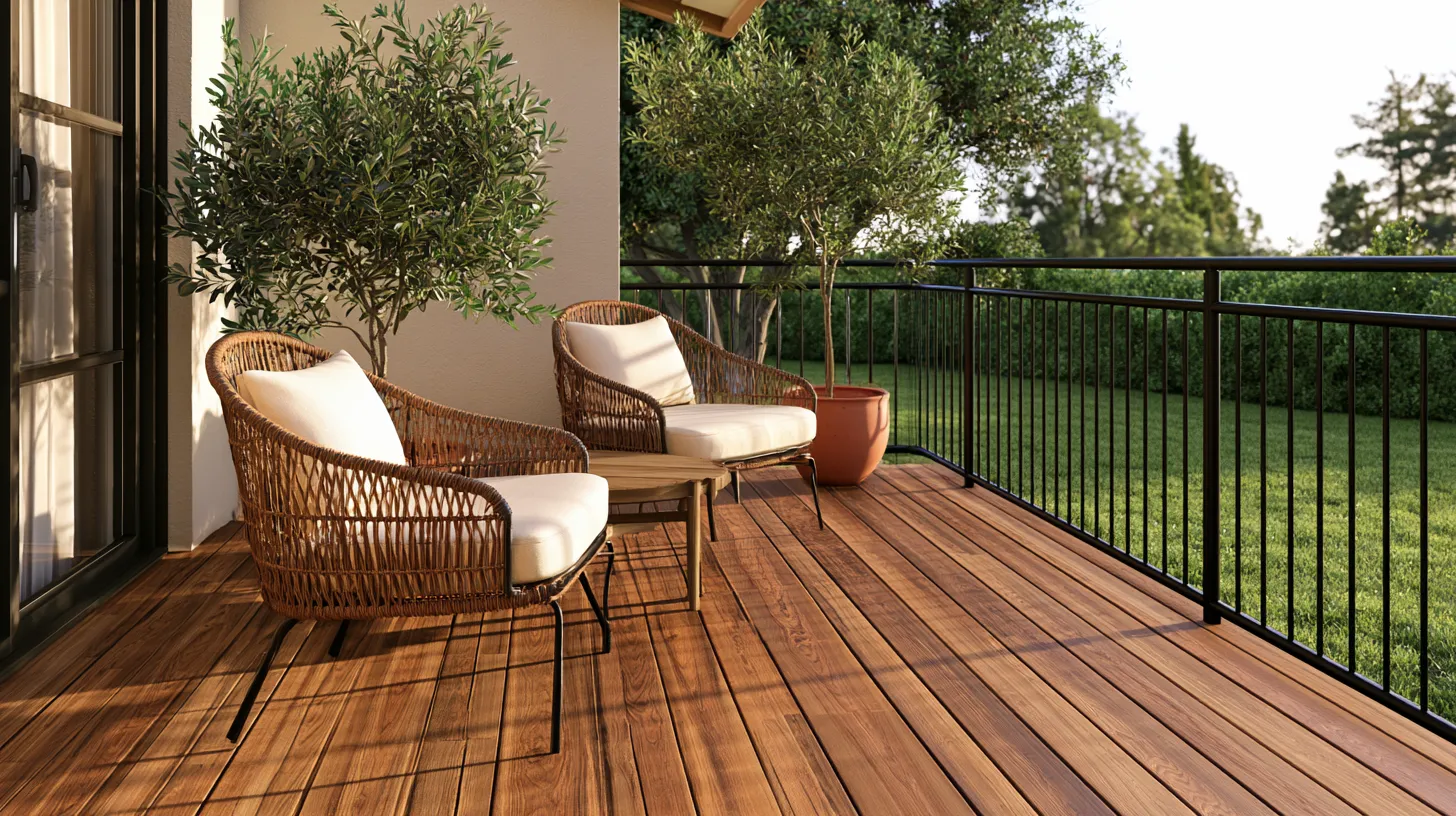
Can we talk about backyard garden design for a second? Because I’ve been staring at my own yard like it owes me money. Every gorgeous garden online seems to come with a hidden price tag the size of a car payment.
Here’s the thing, though. You don’t need a landscaper, a loan, or a single fancy raised bed kit. What you need is a plan, some patience, and the willingness to dig in flip-flops. (Not recommended, but I’ve seen it done.)
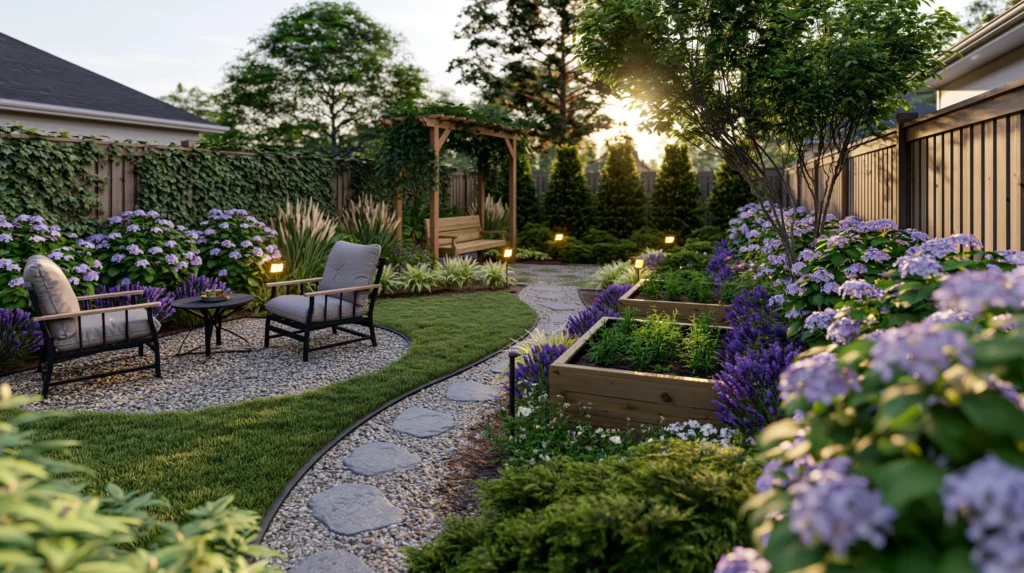
I live in Orlando, where the sun treats every plant like a personal challenge. If I can coax a garden from sandy soil and brutal heat, you can absolutely do this too. The heat builds character, or so I keep telling my hydrangeas.
Now for the fun part. Most of what makes a yard look pulled together costs almost nothing. It’s placement, repetition, and a few sneaky tricks that designers charge real money for. Once you see them, you can’t unsee them, and your wallet will thank you loudly. Mine sent a thank-you card.
So grab your iced coffee and let’s walk the yard together. I’ll show you where people waste money and the one design rule that changes everything. That rule surprised me, too, and I’ve been fluffing flower beds for years.
Stick around, because it’s hiding in plain sight at every fancy botanical garden you’ve ever visited.
Some of the links on this page are affiliate links, which means I may earn a small commission if you purchase through them. It never costs you extra. You can always peek at my full disclosure if you’d like the details.
Why Backyard Garden Design Doesn’t Need a Big Budget
Let me say the quiet part out loud. Most expensive yards don’t look expensive because of what’s in them. They look expensive because of how things are arranged. That’s it, truly, and nobody selling you a $400 planter wants you to hear it.
I tend to notice this at garden centers. Shoppers load their carts with one of everything, like they’re collecting plant Pokémon. Then they scatter those plants around the yard and wonder why it reads as chaos. Meanwhile, the neighbor with twelve dollars of marigolds in one tight cluster looks like she hired someone.
Design is a skill, not a purchase. And skills are free once you learn them. Good backyard garden design is really just deciding where things go before you buy them. The buying part can be as cheap as seeds and a rain barrel.
Here’s the contrast that reframed everything for me. A $50 plant placed badly looks like $5. Yet a $5 plant repeated five times looks like $50. Multiply that logic across a whole yard, and you’ll see exactly where budgets quietly leak.
You’re probably wondering if this works in a rental or a tiny yard. It does, and sometimes it works better, because small spaces force smart choices. Constraints are secretly a designer’s best friend. (Ask anyone who’s ever decorated a dorm room.)
So before you spend a dime, walk your yard at three different times of day. Notice where the light lands and where your eyes go first. Those two little observations will save you more money than any coupon ever will. We’ll put them to work in a minute, I promise.
Start With What You Already Own
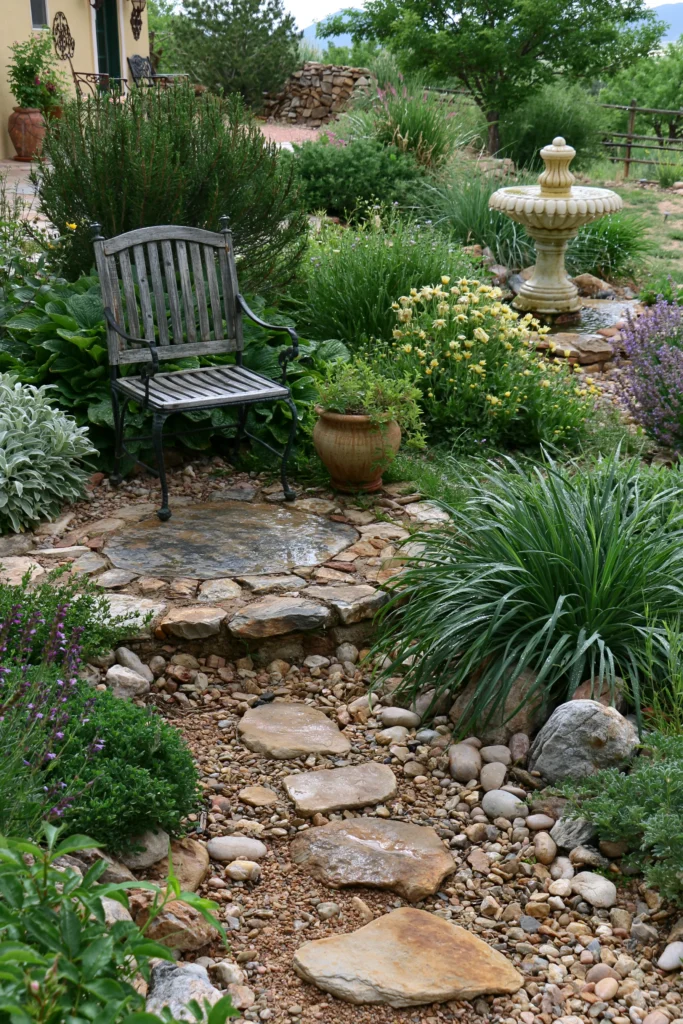
Before you shop, go shopping in your own garage. I mean that literally. Half of us already own the bones of a beautiful yard and don’t know it. That cracked terracotta pot? Bury it sideways in a bed and let something spill out of it.
Old ladders become plant stands. Leftover pavers become a little landing pad for a bistro chair. Even a broken birdbath can hold succulents if you’re willing to squint at it with love. The trick is seeing function instead of flaws, which takes about a week of practice.
I’ve found that the fastest glow-up is usually subtraction, not addition. Pull the sad, struggling shrub you’ve been apologizing to for two years. Suddenly the whole bed breathes. Editing costs nothing, yet it’s the step everyone skips because buying is more fun than digging.
Paint deserves its own little love letter here. One quart of outdoor paint can unify a mismatched pot collection into a set. Choose one color, paint everything, and watch your patio look intentional overnight. Designers call this cohesion, but you can call it eight dollars well spent. Dark green and charcoal hide wear the longest, if you want my two cents.
Your plants can multiply for free, too. Many perennials divide like they’re doing you a favor. Dig, split, replant, repeat. One hosta becomes three, and three becomes a border by next season. Neighbors trade cuttings all the time, so ask around before you buy anything.
Take a slow lap tonight and make two lists: keep and toss. Tomorrow’s yard is hiding inside today’s clutter, and it’s already paid for. Doesn’t that beat a checkout line?
Backyard Garden Design Zones That Make Sense
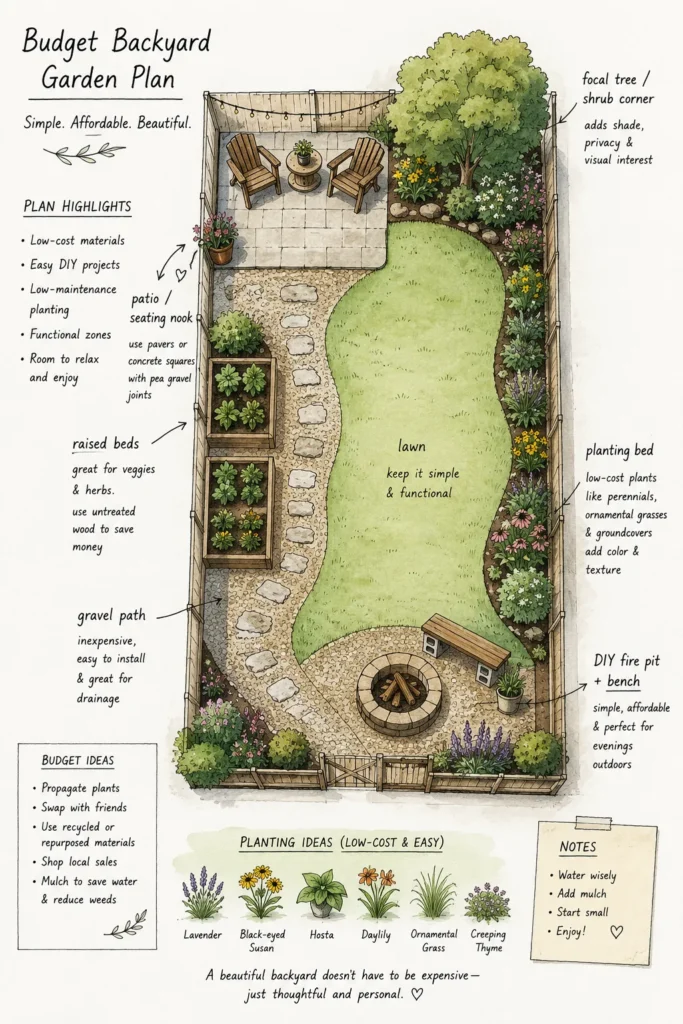
Zones sound fancy, but they’re just answers to one question. What do you want to do out there? Every good backyard garden design starts with that, not with plants. Plants are the outfit, and zones are the body wearing it.
Think about how you live for a second. If you drink coffee outside, you need a sitting spot. When your kids treat the lawn like a stadium, you need open grass. Nobody needs a meditation corner they’ll visit twice a year, no matter what the magazines say. Match the zones to your real life, not your fantasy life.
Here’s how I’d carve up an average yard without spending much:
- A sitting zone near the house, because nobody carries snacks far
- A play or open zone with tough grass and zero breakable decor
- A growing zone for veggies or flowers, placed in the sunniest strip
- A utility zone that hides trash cans, hoses, and the wheelbarrow of shame
- A wild edge you mostly ignore, where pollinators throw their parties
Notice what’s missing from that list. There’s no water feature, no pergola, no outdoor kitchen. Those can come later, once the layout earns them. Structure first, splurges second, and your future self stays out of credit card trouble. I learned that one the hard way, pergola receipt in hand.
One more thing while we’re here. Zones don’t need fences or walls to read as separate. A change in ground material does the job for pennies. Mulch here, gravel there, stepping stones between, and suddenly your yard has rooms. Guests will ask who designed it, and you get to smile mysteriously.
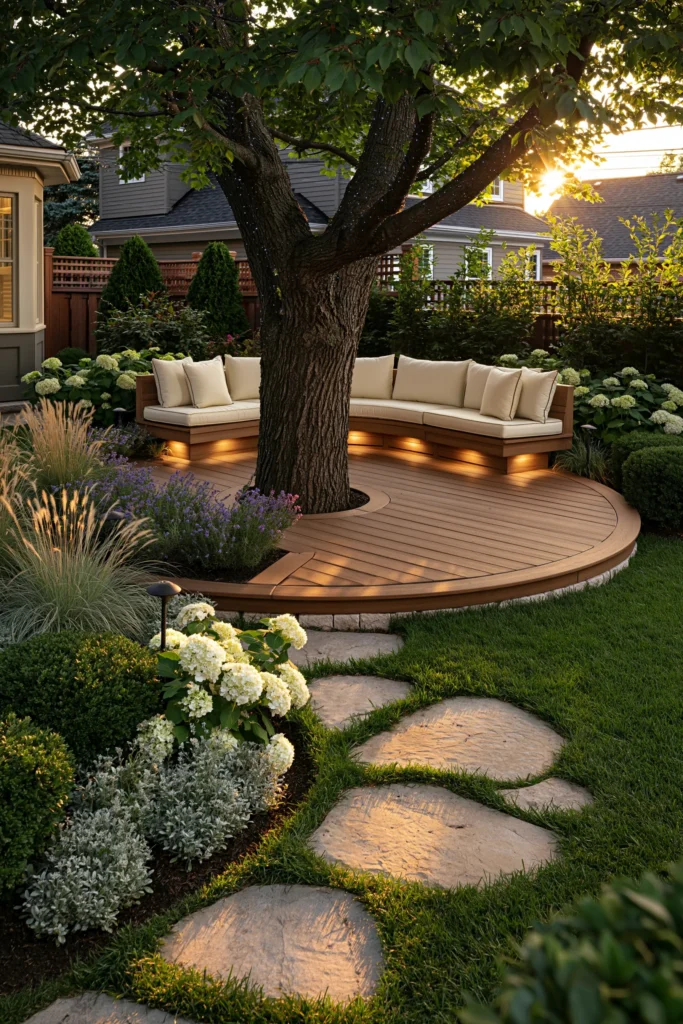
Thrifted Finds and Free Materials I Hunt For
I treat secondhand shopping like a sport, and the garden category is wildly underrated. People donate outdoor stuff constantly, especially every spring when moving trucks roll through town. Your patience will be rewarded, usually within two or three weekends.
Curb alerts and buy-nothing groups deserve a spot in your weekly routine. Free listings move fast, though, so turn those notifications on. I once watched a full set of iron chairs vanish in eleven minutes. Lesson learned, alerts on forever. Now I check listings with my morning coffee, like a tiny treasure hunt.
Here’s my running hit list when I’m out hunting:
- Terracotta and ceramic pots, because new ones cost a shocking amount
- Bricks and pavers for paths, edges, and instant patios
- Galvanized tubs and buckets, which make charming planters with a few drilled holes
- Metal or wood furniture with good bones and bad paint
- Trellises, obelisks, and anything climbable for beans or jasmine
- Tools with wooden handles, since older often means sturdier
Free materials hide in odd places, too. Tree services will sometimes drop wood chips at your house at no charge. Construction sites toss broken concrete that stacks into rustic bed edging. Coffee shops give away grounds, and grounds make compost very happy. Ask nicely and most places say yes.
The thrifted route does ask something of you, and I’ll be straight about it. You’ll wait longer, and your backyard garden design will come together in chapters instead of one weekend. But here’s the twist I didn’t expect: the slow version usually looks better. Collected yards have soul, and soul is the one thing money can’t rush.

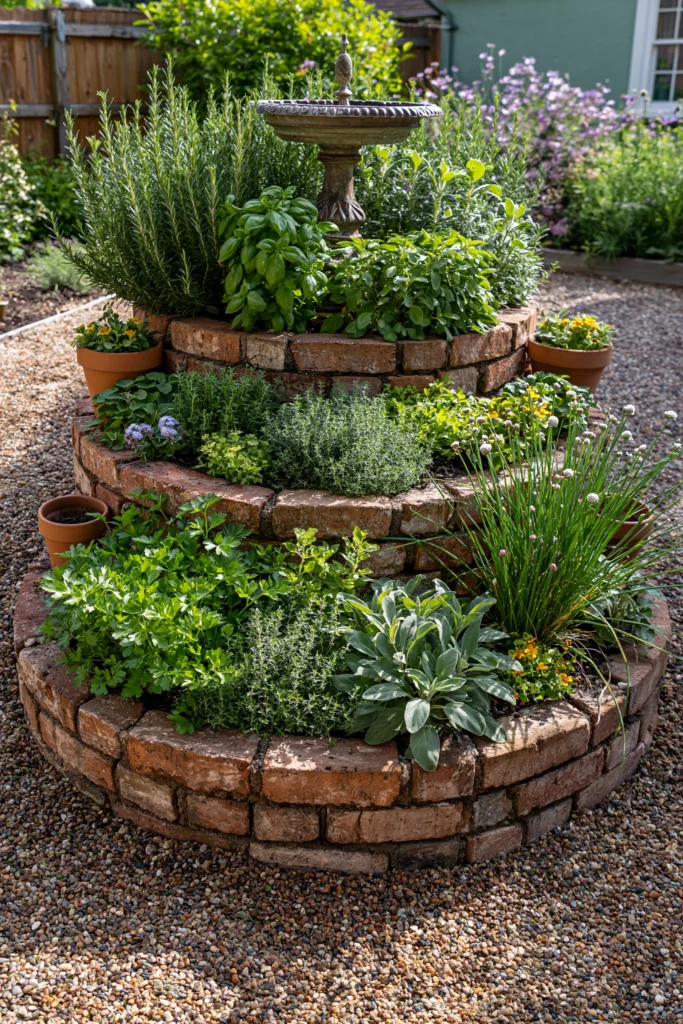
Plants That Earn Their Keep
Not all plants deserve your dollars, and I say that with love. Some divas demand constant water, special food, and emotional support. Others show up, do their job, and multiply like they’re paying rent. Guess which ones belong in a budget yard.
Perennials are the obvious heroes, since they return every year without a receipt. Annuals have their place, but treat them like party decorations, not furniture. Spend your real money on things that stay. Think of annuals as party confetti and perennials as the actual furniture.
My earn-their-keep shortlist looks like this:
- Self-seeders like zinnias and cosmos, which replant themselves for free
- Dividers like daylilies, hostas, and ornamental grasses that split into more plants
- Cut-and-come-again herbs like basil and mint (keep mint in a pot, trust me)
- Native plants that shrug off your local weather and skip the drama
- Groundcovers that smother weeds so you’re not buying mulch twice a year
Natives deserve an extra sentence, because they’re the quiet cheat code. They evolved for your exact dirt and rain, so they need less of everything. Less water, less fertilizer, less of you hovering with a hose at dusk. Your water bill notices the difference, too.
Now, a small confession that might ruffle feathers. I think most people buy plants too big. The gallon-size shrub costs triple the tiny one, yet they’re often the same size in two years. Smart backyard garden design plans for the plant’s future, not its first weekend. Buy small, plant patiently, and let time do the expensive part. Time works free of charge, which makes it my favorite contractor.
Small Backyard Garden Design Tricks That Look Expensive
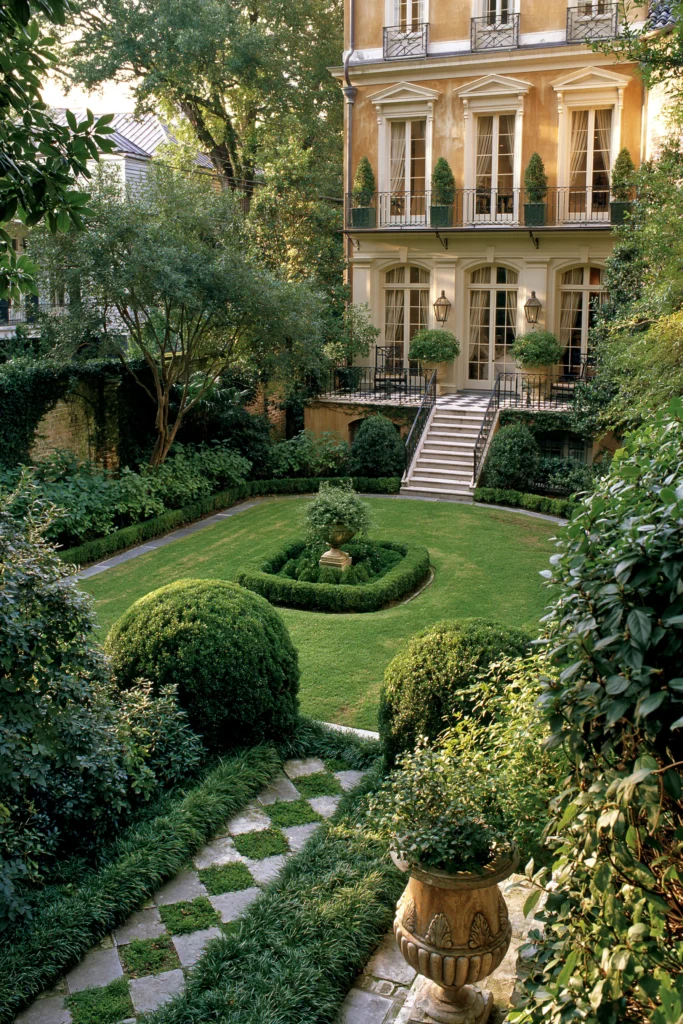
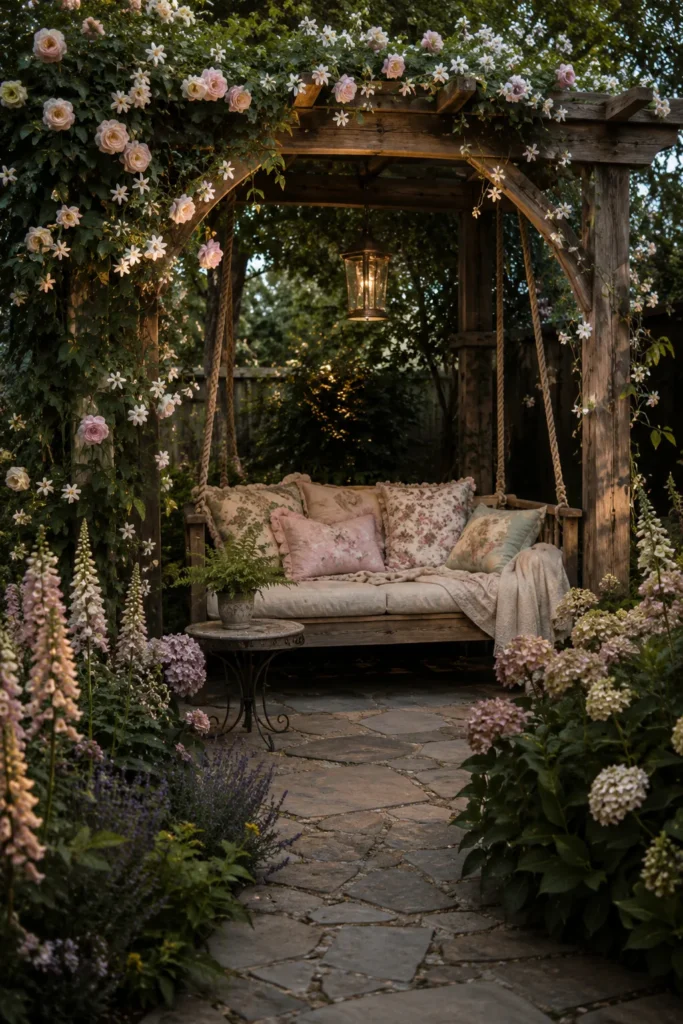
Remember that rule I teased at the beginning? Here it is: repetition. Repeat one plant, one color, or one pot style at least three times. Your eye reads the pattern as intentional, and intentional reads as expensive. Botanical gardens do this constantly, which is why they look so composed.
Repetition sounds boring until you see it work. Three matching pots by the door outperform seven cute mismatched ones every single time. I know that stings if you love collecting. Collect indoors, then repeat outdoors, and everyone wins.
Scale is the second trick, and it’s counterintuitive. Small yards need a few big things, not many little things. One oversized pot makes a patio look grand, while ten tiny pots make it look cluttered. When in doubt, size up, especially near doors and seating.
Curves come third. A gently curved bed line reads as designed, while straight strips read as default. You can lay out a curve with a garden hose in five minutes. Trace it, edge it, and admire how the lawn suddenly looks styled. Five minutes, zero dollars, maximum smug.
Then there’s the trick nobody talks about: empty space. Designers leave breathing room on purpose, and it costs exactly nothing. A patch of plain mulch or open lawn frames the plants around it. Resist filling every inch, even when the garden center tempts you.
Layer heights last, tall in back and low in front, like a class photo. None of these moves require money. Every one of them requires restraint, which is harder but much cheaper. Isn’t it funny that the priciest-looking yards are built on things you didn’t buy?

Lighting, Paths, and Little Luxuries
Once the layout works, this is where the magic sneaks in. Lighting changes a yard more than any plant I’ve ever purchased. And I’m counting some very dramatic plants in that comparison.
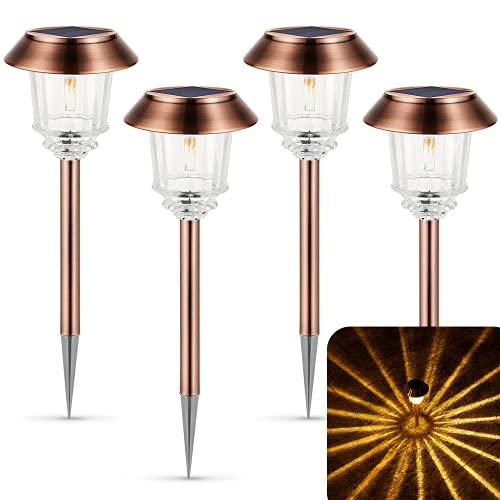
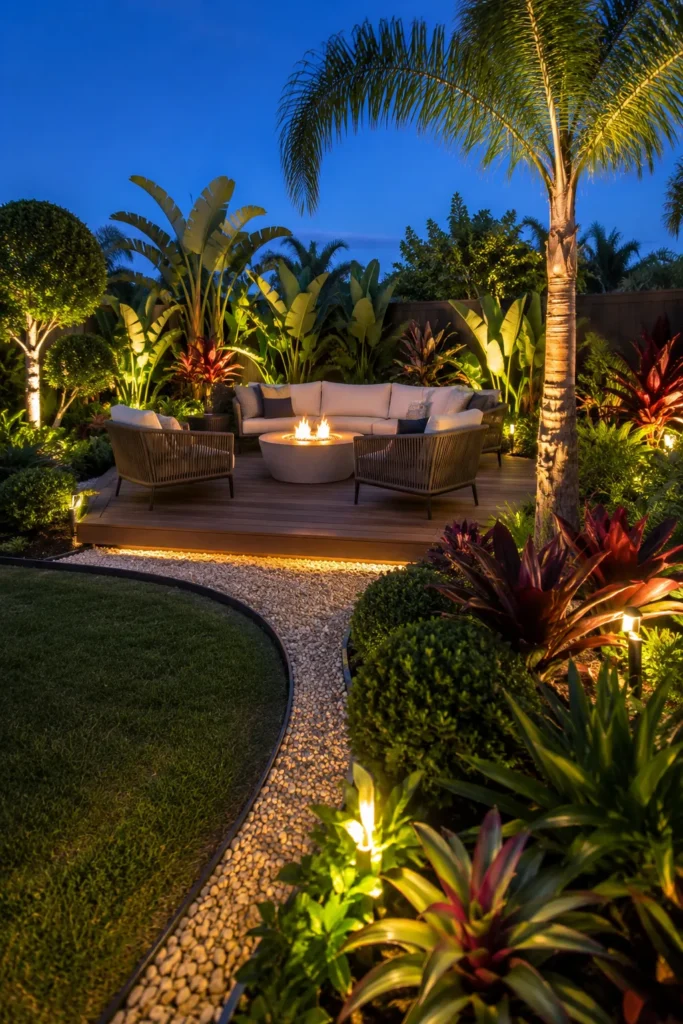
Solar has come a long way, so skip the electrician entirely. String lights over a seating zone create a ceiling out of thin air. Suddenly your patio has walls, a roof, and a mood, all for the price of a pizza night. Choose warm white bulbs, since blue-white light makes patios look like parking lots.
A few small upgrades punch far above their cost:
- Solar path lights spaced wide apart (crowded ones look like a runway)
- String lights on a timer, because nobody remembers switches
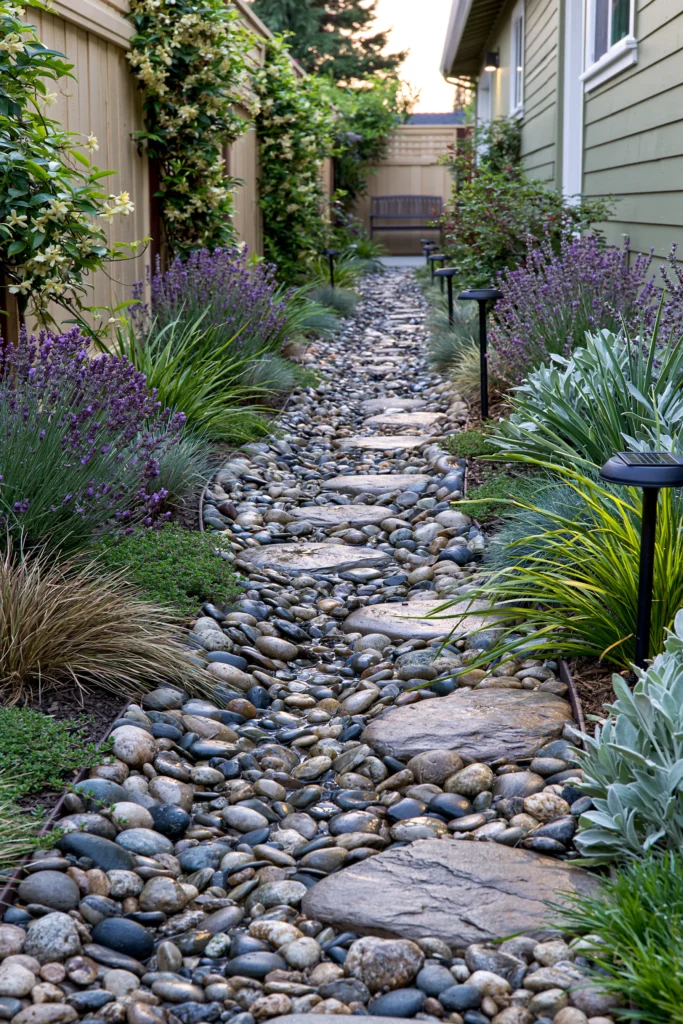
- A stepping stone path that tells feet and eyes where to travel
- One outdoor rug under the seating zone to anchor it like a room
- A shepherd’s hook with a hanging basket for instant vertical color
Paths matter more than people think, and here’s the reframe. A path isn’t for walking, not really. It’s for looking, since your eye travels it before your feet ever do. Even a short gravel strip pulls the whole backyard garden design together like a zipper.
Now the little luxuries, and I mean little. A thrifted side table for your drink. One citronella candle in a pretty jar. Maybe a $10 fountain pump dropped in a sealed pot, because moving water sounds rich. None of these break a budget, but together they whisper that someone lovely lives here. That someone is you, obviously. Layer these in slowly, one payday at a time, and enjoy each upgrade properly.

Backyard Garden Design Mistakes I Keep Seeing
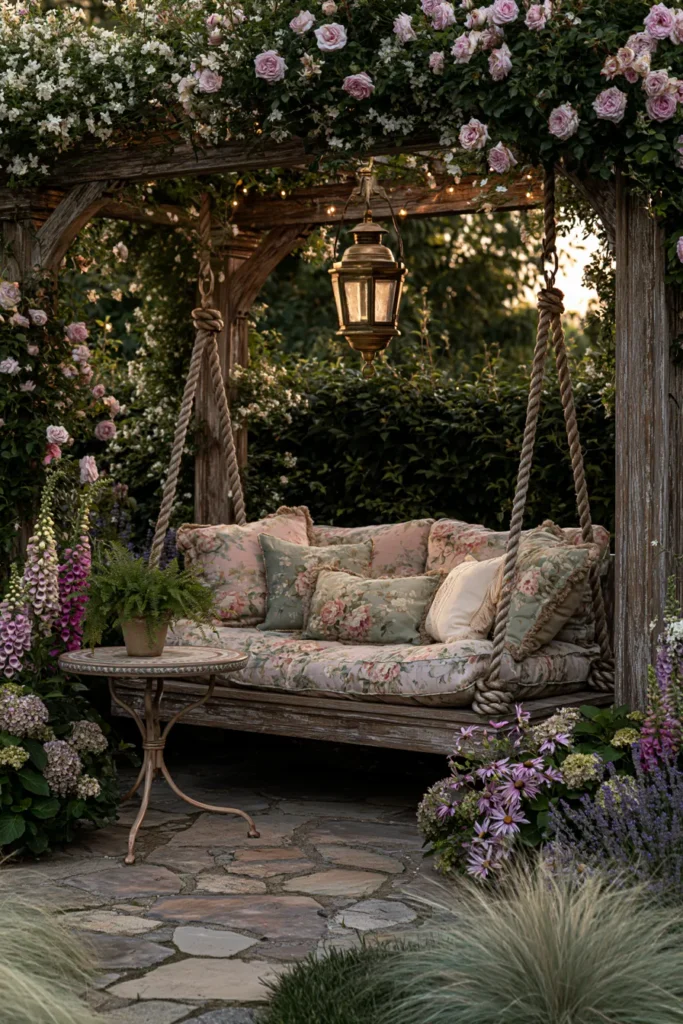
Let’s talk about the money leaks, because I’ve sprung most of them myself. The biggest one is shopping before planning. A cart full of pretty plants with no plan becomes a yard full of expensive confusion. Every backyard garden design mistake I’ve made traces back to a checkout line I visited too soon.
Mistake two is ignoring sunlight. People plant sun-lovers in shade and then buy replacements every spring, forever. Watch your yard for one full day before anything goes in the ground. Free information beats paid do-overs, and the sun doesn’t lie. Snap photos every few hours and let your phone do the remembering.
Buying mulch in bags is the third leak, and it’s sneaky. Bagged mulch costs several times more than a bulk delivery. Split a truckload with a neighbor and you’ll both save real money. Your car also stays clean, which mine has never forgiven me for.
Then there’s the impulse hardscape. Fire pits, pergolas, and fancy edging get purchased in a burst of weekend optimism. Six months later, they sit in the wrong spot, unused. Big features should be earned by months of living in the yard first. Let your habits vote before your wallet does. Trust me, the yard will tell you where the fire pit goes.
The last mistake is the quiet one: giving up in year one. Gardens look awkward in the beginning, like middle school photos. People see the gangly stage, assume they failed, and pave over their progress. Year two is when everything fills in and starts flirting with you. Anyone who quits early never meets the garden they already planted. Stay for the payoff, because it’s closer than it looks.

Quick Answers to Your Garden Questions
How do I start a backyard garden design with no money at all? Start with editing and arranging, not buying. Pull what’s struggling, group what’s healthy, and define one zone with materials you already own. Then join a local buy-nothing group and let free stuff find you. Momentum matters more than money in month one.
What’s the cheapest way to make a backyard look nice fast? Mow, edge, and mulch, in that order. Crisp edges do more for a yard than a hundred dollars of new plants. After that, cluster your existing pots by the door in one color family. It reads as styled within an hour.
How much should I budget for a simple garden makeover? Less than you think, and I mean that. Many bloggers I follow transform beds for under $100 using divisions, seeds, and secondhand finds. Spend most of it on soil and mulch, since healthy dirt makes cheap plants look expensive.
Is it cheaper to grow from seeds or buy plants? Seeds win by a landslide for annuals, herbs, and veggies. One $3 packet can replace a whole flat of nursery six-packs. For slow growers like shrubs, buy the smallest size instead. Patience is the discount code.
What if I rent my home? Keep everything in pots and movable containers, then design like you own the place. Rolling planters, string lights, and a rug travel with you. Landlords rarely object to a yard that looks better than they left it.

One Last Lap Around the Yard
I walked my own backyard tonight while the Orlando sky did its nightly pink-and-orange show. The yard isn’t finished, and I’ve stopped wanting it to be. Gardens are the one project where “done” would almost be a disappointment.
Here’s what I hope you take from all this. Budget backyard garden design isn’t the sad, scrappy version of the real thing. It’s the smart version, built on placement, patience, and repetition instead of receipts. The expensive yards are copying those same rules, just with a markup.
Start with one zone this weekend, and make it the one you’ll see every day. Move three pots into a cluster, curve one bed line, and pull the plant you’ve been pitying. Then stand back with your coffee and admire the shift. Small wins stack faster out there than anywhere else in the house. Even ten minutes of puttering counts, which is my favorite kind of math.
Save your inspiration somewhere you’ll revisit, too. My Pinterest boards are basically a garden diary, and they save me from nursery impulse buys. Pin first, plant later, and your budget stays smug. It also makes the waiting part of gardening way more fun.
Your yard already wants to be beautiful, by the way. It’s been waiting on a plan, not a paycheck. Hand it one, and watch what happens by fall.
The garden of your dreams isn’t for sale. Good news: it never was.