I get why climbing rose trellis ideas can make a normal yard suddenly seem suspiciously fancy. One minute, there’s a plain fence or sad blank wall. Then Pinterest strolls in wearing linen pants, whispering, “What if roses climbed here?” Rude, but compelling.
The tricky part is that rose trellises can look expensive fast. Arches, panels, obelisks, wires, posts, and rose names that sound like aristocrats all join the chat. As a mom, I notice outdoor projects that promise charm but threaten the grocery budget. No, thank you, garden duchess.
Still, I’ve found that smart choices matter more than fancy ones with climbing roses. A basic support can look beautiful when it fits the space and suits the rose. It also shouldn’t wobble like a folding chair at a soccer game.
This is where the fun starts. We’re talking DIY trellises, store-bought options, setup steps, budget shortcuts, rose varieties, planting timing, and zones that matter. Not in a stiff garden manual way, though. More like, “Let’s make the yard look romantic without needing a trust fund.”
Because a climbing rose doesn’t need a mansion wall to look dreamy. It needs the right place, a strong support, and one tiny secret most people miss at first. Once that part clicks, the whole project gets easier, cheaper, and much less intimidating. And yes, it can still look wildly pretty.
Some of the links on this page are affiliate links, which means I may earn a small commission if you purchase through them. It never costs you extra. You can always peek at my full disclosure if you’d like the details.
Climbing Rose Trellis Ideas That Look Expensive Without Acting Fancy
A climbing rose trellis can look expensive for one simple reason. It adds height, and height tricks the eye. Suddenly, a small yard has layers. A flat fence gets depth. Even a plain corner gets hired-a-gardener energy.
But here’s my favorite little garden truth. The trellis does not need to be expensive. It needs to be simple, sturdy, and placed well. That’s it. The rose brings the drama later, because apparently flowers understand theater.
I tend to notice that the prettiest climbing rose trellis ideas usually fall into a few easy looks. A wall trellis looks polished. Fence trellises lean cottagey. An arbor reads romantic. Obelisks look tidy and vertical. A wire grid looks modern and sneaky-cheap.
However, not every idea fits every spot. A narrow side yard might need a flat wall panel. The front walkway might love an arch. Your patio corner might look better with a tall obelisk than a wide panel. Space matters more than trends.
Also, bigger isn’t always better. A huge climber on a tiny metal trellis can turn into a leafy wrestling match. Nobody needs that level of outdoor nonsense. The best match gives the rose room now and room later.
For a budget-friendly site, I’d think in layers. First, use what already exists. A fence, porch post, shed wall, or bare garage side can do half the work. Then add the cheapest support that looks intentional.
That’s the sneaky part. A budget trellis looks expensive when it looks planned. Symmetry really helps. Repeated lines help. A simple paint color helps. Suddenly, thrift turns into design, and nobody needs to know the math. Tiny choices add up fast.
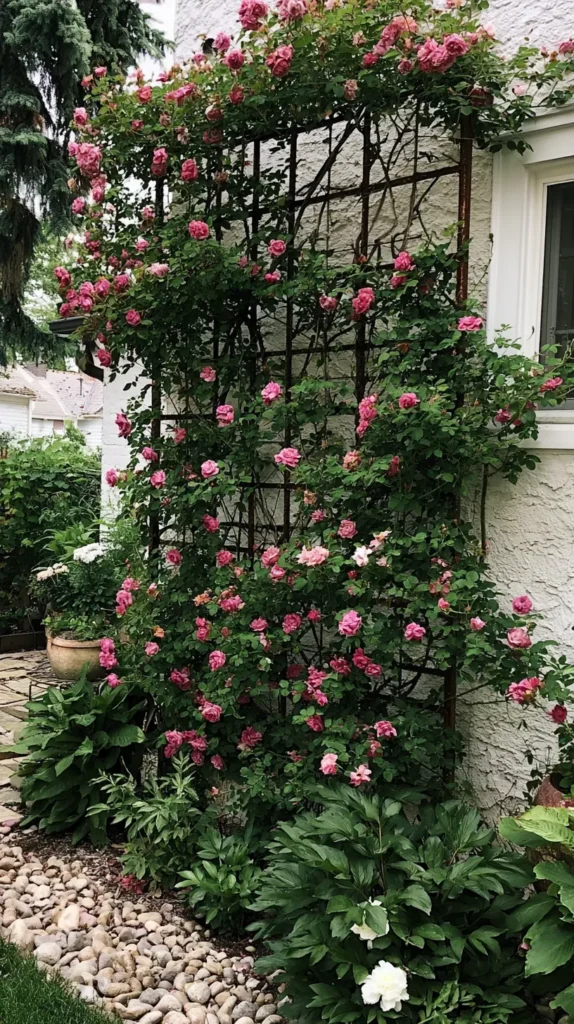
Start With The Spot Before Buying Anything
Before buying lumber, metal panels, or a romantic arch with main-character energy, I’d pick the exact spot. This saves money because the wrong trellis usually costs twice. First, you buy it. Then you replace it after it annoys you all season.
Roses also care about sun, drainage, and airflow. Most roses do best with at least six hours of sun and soil that drains well. The USDA hardiness map helps match plants to winter cold, using average annual extreme minimum temperatures. Plant labels still matter, though, because zones are only one part of the story.
Here’s the part people skip because it sounds boring. Measure the space before falling in love with anything.
- Check the width of the wall, fence, or bed.
- Note how many hours of direct sun the spot gets.
- Look for soggy soil after rain.
- Leave room behind the plant for airflow.
- Keep thorny canes away from tight walkways.
- Match the trellis height to the rose’s mature size.
- Make sure you can reach it for tying and pruning.
That last one sounds dull, but future you will care. Future you may have gloves, clippers, and mild regret.
I also wouldn’t plant right against the house. Leave breathing room between the trellis and the wall. This helps air move, makes watering easier, and keeps the rose from becoming part of the siding. Cute in theory. Weird in practice.
Once the spot makes sense, every other choice gets easier. The trellis style, rose variety, and budget all start behaving. Even better, you stop shopping with hope as the entire plan. Hope is delightful, but measurements are cheaper. This is where climbing rose trellis ideas start looking smart instead of spendy.
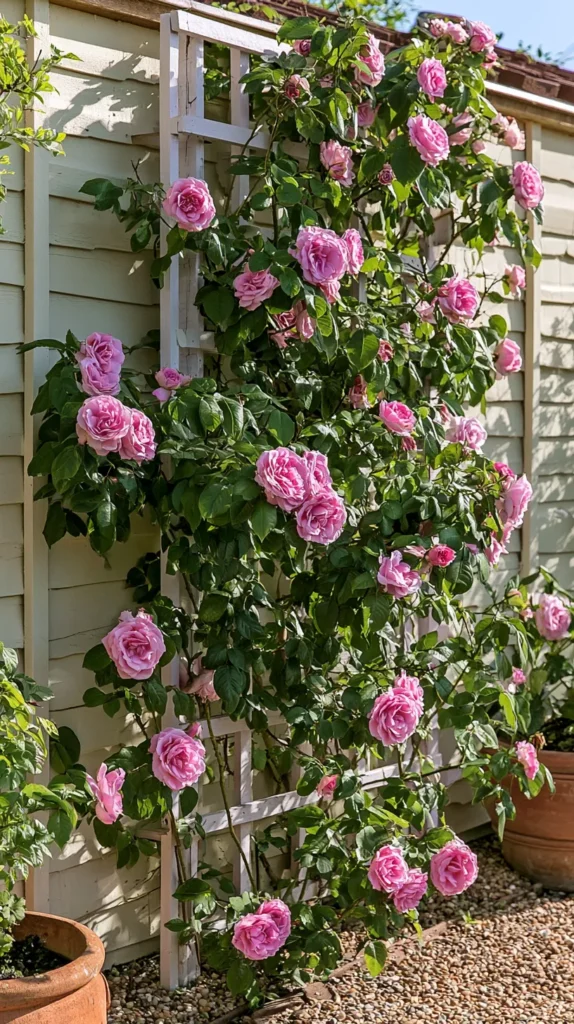
Climbing Rose Trellis Ideas For DIY Yard Drama
DIY climbing rose trellis ideas are where the budget magic gets good. Not perfect, because lumber prices sometimes act like they went to private school. Still, good.
A wood lattice panel is the easiest classic choice. It works against a fence, shed, or blank wall. Paint it the same color as the surface for a quiet look. Stain it darker for contrast. Either way, it can look custom without requiring custom money.
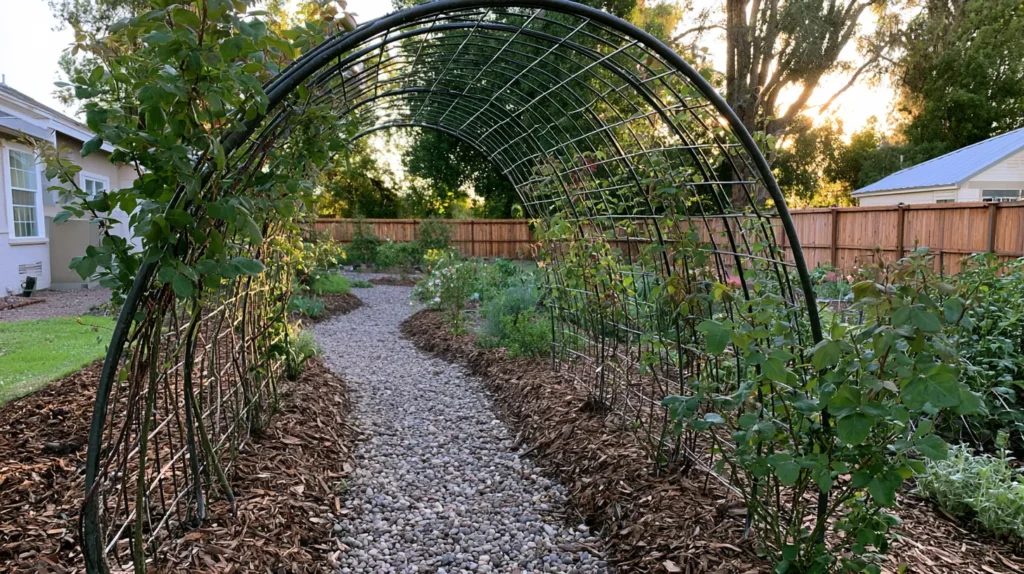
A cattle panel trellis is another strong option. It has a simple grid, holds canes well, and can bend into an arch. This look leans more farmhouse than formal, but roses soften it fast. That contrast works beautifully.
For a modern look, use eye screws and galvanized wire. This setup creates clean horizontal lines across a wall or fence. It costs less than many premade panels and gives climbing roses helpful training points.
Here’s the reframe, though. A trellis is not just decoration. It’s a training system. Climbing roses don’t cling like ivy. They need ties, angles, and a little guidance. Otherwise, they shoot upward and bloom mostly at the top, which seems rude after all that effort.
So, if the budget is tight, spend on structure before style. Strong posts beat fragile scrollwork. Proper anchors beat cute curves. A rose full of blooms gets heavy after rain, and gravity has zero manners.
Pretty matters, of course. But pretty with screws wins. That is not glamorous, but it is wonderfully true. The secret sauce is hidden hardware, tidy lines, and a rose that gets room to do its thing.
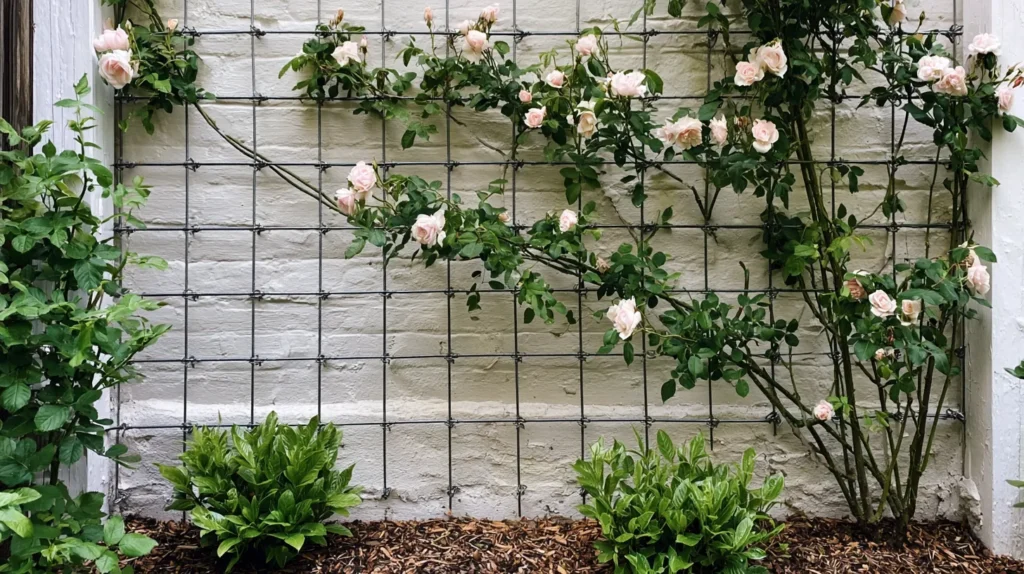
The Budget DIY Trellis Process From Bare Dirt To Pretty
A DIY trellis sounds harder than it needs to be. I think the trick is treating it like a weekend yard project, not a renovation show finale. Nobody needs dramatic music or a surprise reveal. Just sturdy support and decent planning.
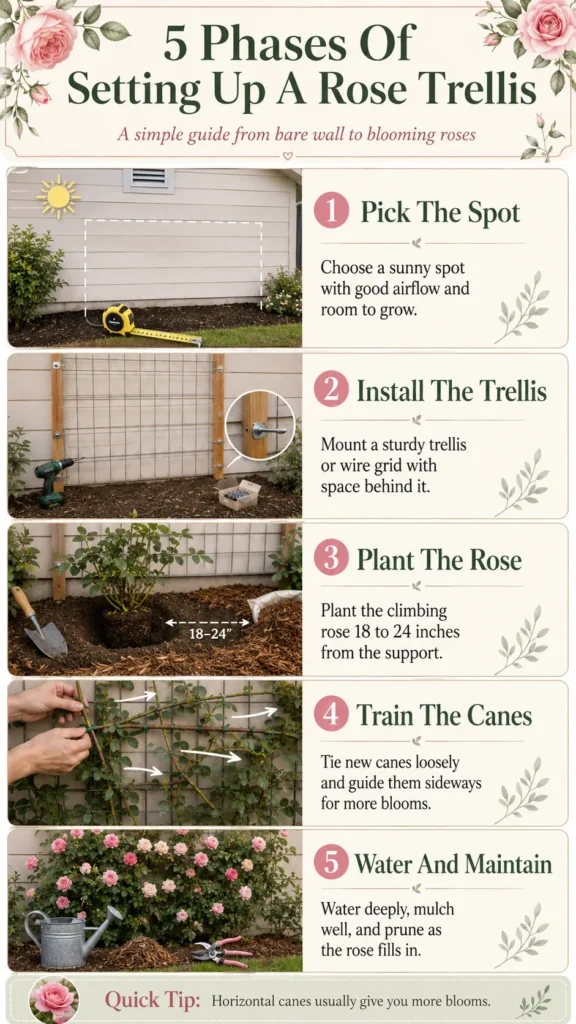
Start with a basic material that fits your space. Wood lattice, cedar strips, cattle panel, welded wire, or tension wire can all work. For a wall, I’d use spacers so the trellis sits a few inches away from the surface. In soil, I’d set posts deep enough to stay steady.
Here’s the simple process:
- Measure the rose bed and support area.
- Choose a trellis taller and wider than the young rose needs.
- Mark post holes or wall anchor spots.
- Install posts, brackets, or eye screws.
- Attach lattice, panel, wire, or rails securely.
- Place the rose 18 to 24 inches from the support.
- Water deeply after planting.
- Tie canes loosely with soft plant ties.
- Train main canes sideways or diagonally as they grow.
- Mulch the soil, but keep mulch off the crown.
That sideways training matters. Climbing roses bloom best when main canes grow horizontally or at gentle angles. Then side shoots can produce more blooms along the support. That is the tiny trick that makes the whole thing look fuller later.
I’d also avoid zip ties unless they’re very loose. Soft ties, garden twine, or stretchy plant tape are kinder. Tight ties can cut into growing canes, which resembles buying pretty shoes two sizes small.
Cheap can still be thoughtful. That’s the whole point. The budget win comes from buying fewer things, not weaker things. One sturdy trellis beats three flimsy regrets every single time.
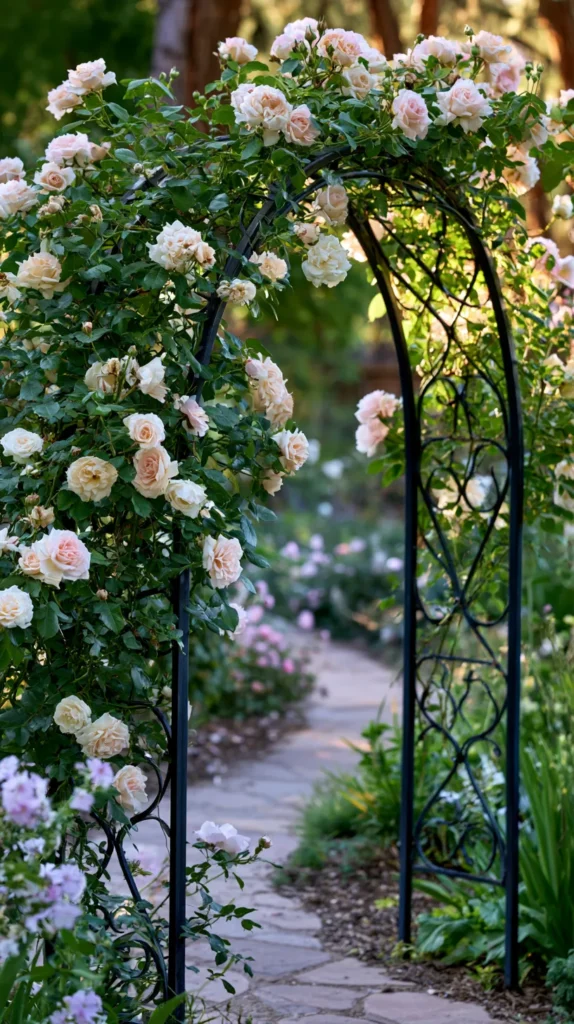
Climbing Rose Trellis Ideas You Can Buy And Set Up Fast
Sometimes buying the trellis makes more sense. I fully support this. DIY is lovely until someone spends three Saturdays building something crooked while muttering near a post hole. We’ve all seen that movie.
Store-bought climbing rose trellis ideas work best when you buy for strength first. Look for powder-coated metal, thick wood, sturdy welded panels, or heavy vinyl. Avoid flimsy decorative pieces unless the rose stays small. A climbing rose can outgrow dainty support faster than a kid outgrows sneakers.
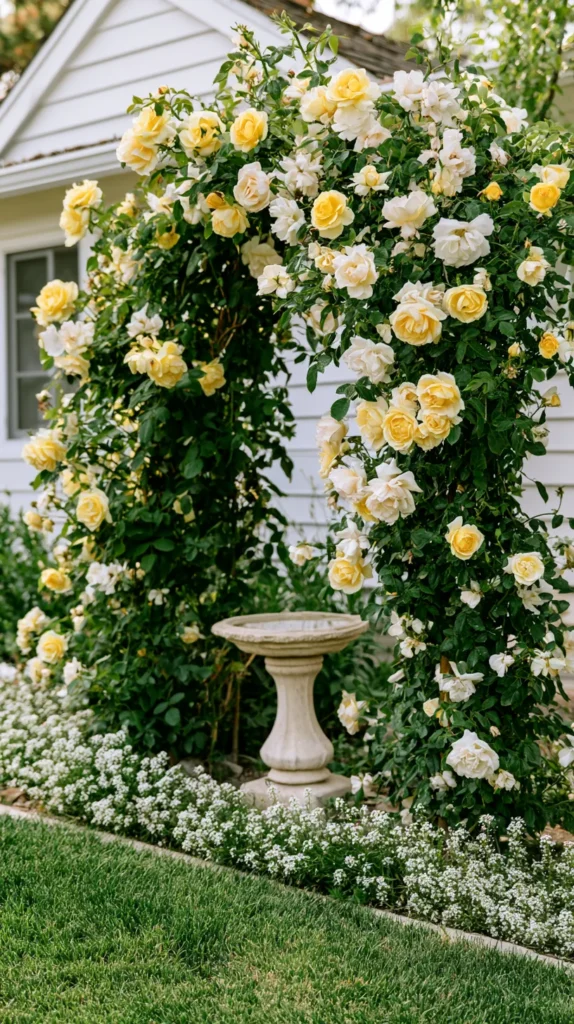
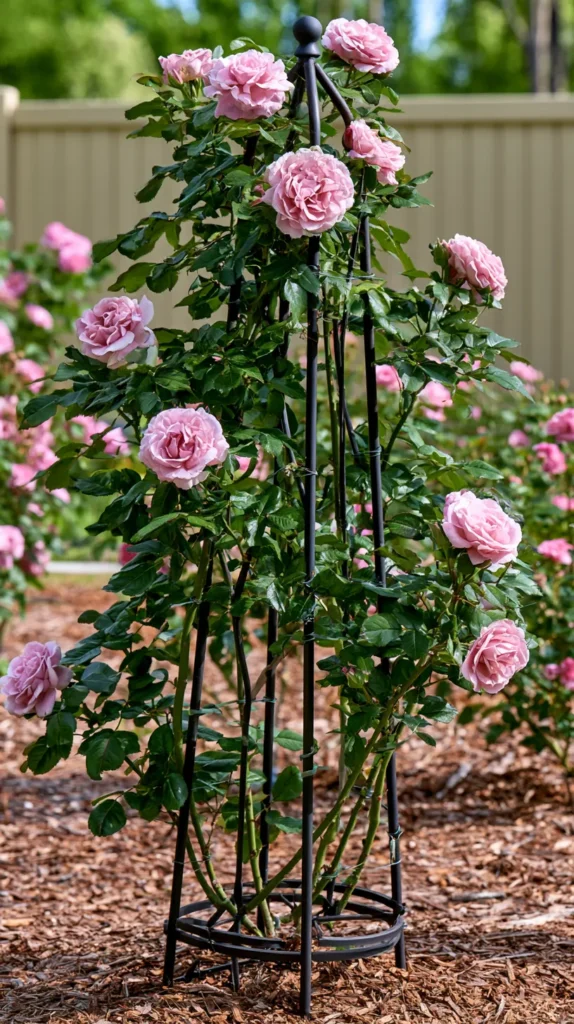
For easy setup, freestanding obelisks work well in beds. Arbors look beautiful over paths or gates. Flat metal panels suit fences and walls. Expandable trellises can help with small spaces, but they need strong anchors.
Before buying, check three details. First, compare trellis height with the rose’s mature height. Second, read reviews for wobbling, rusting, and weak joints. Third, choose a style you can still access with gloves and clippers.
Setup should be boring in the best way. Level the trellis. Anchor it firmly. Keep it slightly away from walls. Then plant the rose close enough to train, but not smashed against the support. That little gap makes watering and pruning easier.
Also, don’t let the store display bully you. A black metal arch covered in fake blooms can look magical under fluorescent lights. In real soil, the question is different. Can it handle wind, rain, and a rose with opinions?
If yes, wonderful. Otherwise, leave it there looking cute. The cheapest trellis is rarely cheap if it folds by August. Buy once, anchor once, and let the rose do the flirting. Good budget climbing rose trellis ideas should save real work, not create more.
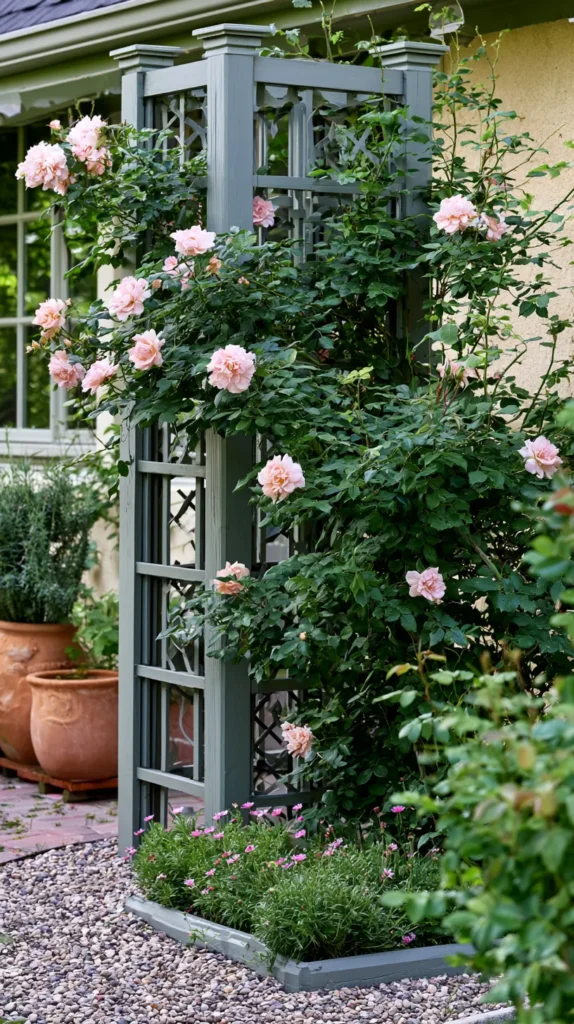
Pick The Right Rose So The Trellis Isn’t Doing All The Work
The trellis may set the stage, but the rose decides the show. This is where I’d get picky. Not snobby picky. Useful picky. A beautiful rose in the wrong zone or space becomes a very expensive lesson wearing thorns.
The USDA zone gives a cold-hardiness guide, but heat, humidity, disease pressure, and sunlight also matter. That’s why local nurseries can be gold. They know which roses behave in your area and which ones faint dramatically by July.
Good climbing roses to consider:
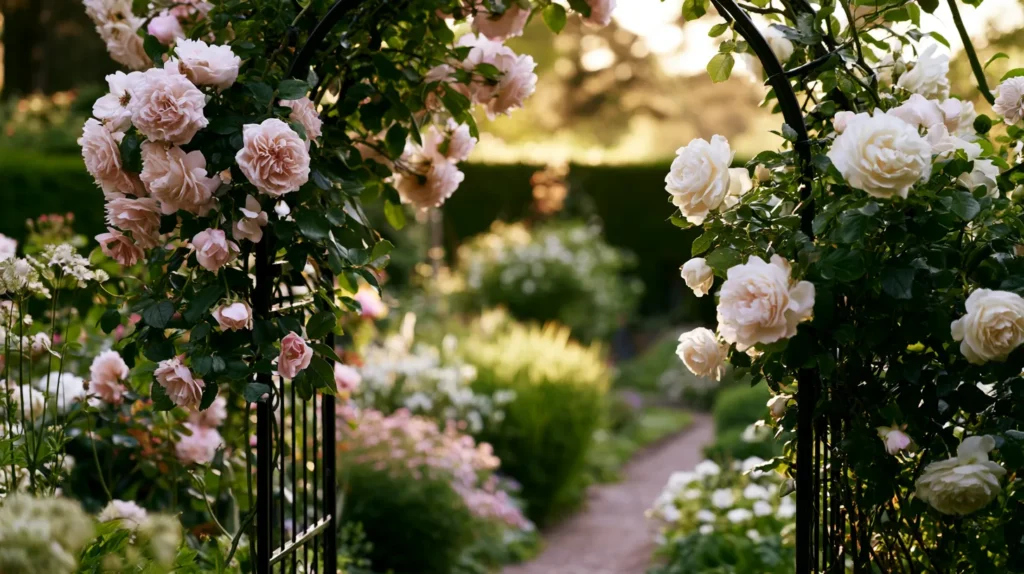
- New Dawn: Soft pink, fragrant, and useful for arbors, trellises, and fences. It often grows well in zones 5 to 9 and can reach about 18 to 20 feet.
- Don Juan: Deep red, classic, and romantic. It often grows well in zones 5 to 9 and can reach about 8 to 10 feet.
- Zephirine Drouhin: Pink, fragrant, and nearly thornless. It can handle partial shade better than many roses.
- Eden or Pierre de Ronsard: Creamy pink, full, and very romantic. It often grows well in zones 5 to 9 and can reach about 8 to 12 feet.
- The Generous Gardener: Pale pink, fragrant, and flexible as a shrub or climber. It can work across many zones, depending on local conditions.
- Climbing Iceberg: White, clean-looking, and classic. It works well when you want a softer look without bright color.
For small trellises, choose shorter climbers. Arches need flexible canes. Along fences, stronger growers can shine.
Basically, don’t buy the rose version of a Great Dane for a tiny apartment. Match the plant to the support first. Then choose the bloom color, fragrance, and drama level. That order saves money and sanity.
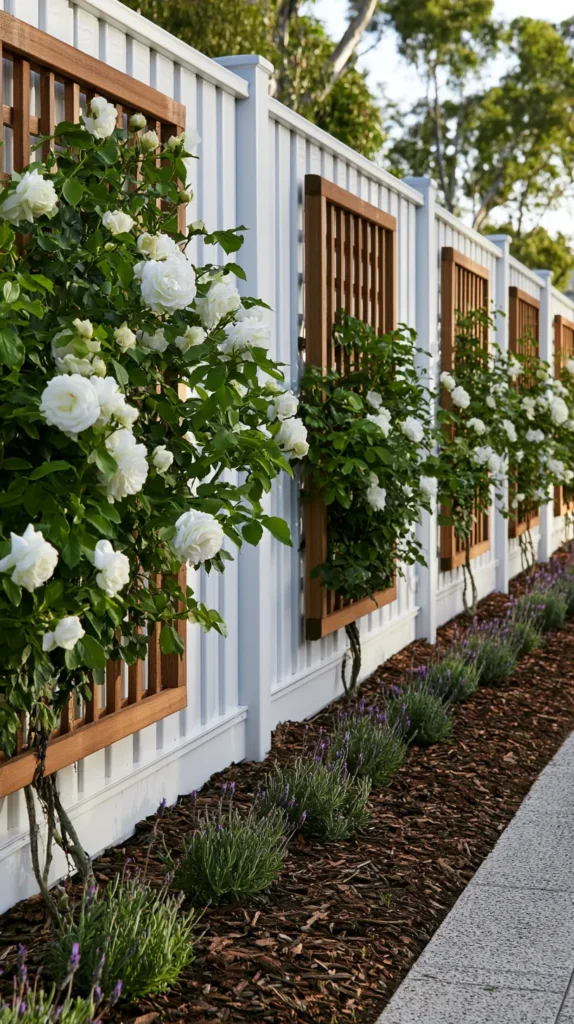
When To Plant, What Zones Matter, And Why Timing Saves Money
Timing can save money because stressed roses need more help. More water, more shade cloth, more worry, more “why are the leaves crispy?” drama. I prefer less drama from plants. Life already offers plenty.
In colder zones, spring planting usually gives roses time to root before winter. Mild areas can handle fall planting well because roots grow before summer heat arrives. However, bare-root roses and potted roses behave a little differently. Bare-root roses often arrive while dormant. Potted roses give more timing wiggle room, though they still hate neglect.
Zones matter because winter cold can kill a rose that cannot handle your area. The USDA map offers a good starting point, but microclimates can help or hurt. A protected wall may run warmer. Windy open corners may run colder. Low wet spots may cause trouble even in the “right” zone.
For warm climates, heat tolerance matters too. Here in Orlando, hot sun can turn a cute gardening plan into a crispy side quest. Morning sun with some afternoon relief can help certain roses in steamy areas.
Plant when the soil is workable and the weather is kind. That sounds vague, but it’s practical. Avoid planting before a hard freeze, during extreme heat, or when the soil stays soggy.
After planting, water deeply and consistently. Then mulch to hold moisture. Don’t fertilize heavily on day one. Let roots settle first, because new plants don’t need a buffet and a marching band.
Gentle starts usually make stronger roses. That may sound less exciting than instant blooms, but it saves cash later. A calm beginning means fewer replacements, fewer sad leaves, and fewer emergency garden-store trips. Budget-friendly climbing rose trellis ideas work best when timing helps the plant settle.
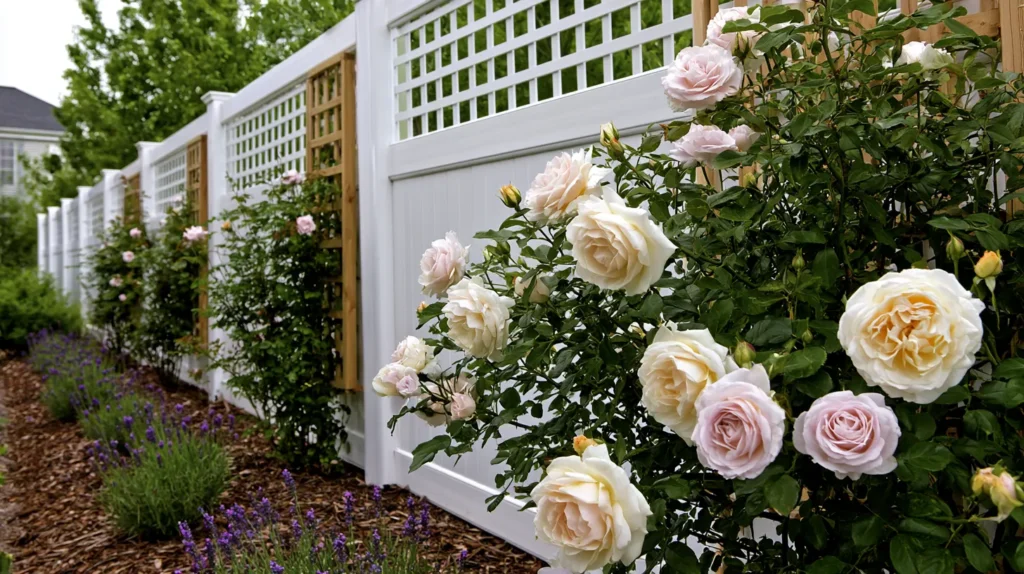
Climbing Rose Trellis Ideas FAQ For Real-Life Yards
What is the cheapest trellis for climbing roses? A wire trellis is often the cheapest sturdy option. Use eye screws, galvanized wire, and wall spacers. It looks clean, supports training, and doesn’t scream “I panicked at the garden center.”
Can I grow climbing roses on a fence? Yes, a fence can work well. Add wire, lattice, or rails so you can tie canes sideways. That support helps turn a plain fence into one of the easiest climbing rose trellis ideas.
Do climbing roses damage walls? Roses don’t cling to walls like ivy. However, thorny canes can rub surfaces. Keep the trellis slightly away from siding, brick, or stucco so air moves and maintenance stays easier.
How far from the trellis should I plant the rose? I’d plant most climbing roses about 18 to 24 inches from the support. This gives roots room and lets canes angle toward the trellis.
Do climbing roses need full sun? Most roses bloom best with plenty of sun. Still, some roses handle partial shade better than others. Zephirine Drouhin is often a good option for spots with light shade.
How do I train a climbing rose? Tie the main canes sideways or at gentle angles. Then let flowering side shoots grow from those main canes. This sounds fussy, but it’s the bloom trick.
Can I use an arch for climbing roses? Yes, but choose a strong arch. Flexible canes work best because they bend around curves without turning the whole project into thorny arm wrestling.
How long before a climbing rose covers a trellis? Many roses need a few seasons to look full. That wait can test a person. Still, a young rose with good training usually beats a rushed plant in the wrong spot.
The Pretty Payoff Without The Garden Center Meltdown
I’ve found that garden projects get better when I stop chasing the fanciest version. The sweet spot sits between doable and still really pretty. That’s where climbing roses shine.
A trellis can start as basic wood, metal, wire, or a store-bought arch. Then time does the flattering part. New canes stretch. Soft ties guide them. Blooms show up where bare space used to be. Suddenly, the yard has a little romance without demanding a second mortgage.
That’s why I like climbing rose trellis ideas for a budget-friendly yard. They let one plant create height, color, softness, and structure. Pinterest may make it look wildly fancy, but the real win is simpler. Pick the right spot. Choose a strong support. Plant a rose that suits your zone. Then train it with patience and a tiny bit of bossiness.
In Orlando, I always think about heat before anything else outside. Shade timing, airflow, and water matter because cute can turn crispy fast here.
Still, every yard has a blank spot with potential. Maybe it’s a fence panel, porch post, side gate, or weird corner nobody talks about. Add the right trellis, and that spot gets a whole new personality.
Not bad for some wire, a rose, and a little garden attitude. And really, isn’t that the best kind of budget project? It looks dreamy, works hard, and lets the yard pretend it has secrets.