There’s a very specific delusion that happens when you live somewhere hot. You still fall hard for fire pit landscaping anyway. Orlando does not do sweater weather.
My backyard sits under a sun that means business for at least eight months a year. Yet here I am, scrolling cozy fire pit photos like they’re personal invitations. Something about the flickering light and the little stone rings just gets me every time.
Maybe it’s the promise of those three actual cool weeks we get. Or maybe it’s the fantasy of s’mores without sweat dripping down your back. Either way, I’ve found something true about a good fire pit setup. It makes people want to sit down and stay a while.
That’s the real trick behind fire pit landscaping, and it’s not about the fire pit at all. It’s about everything around it. The seating, the surface, and the little path matter just as much. That path especially — nobody wants a twisted ankle in the dark. Get that part wrong, and you’ve basically built a very expensive lawn ornament.
Okay, I’m not here to sell you a fire pit. I’ve spent way too many nights digging through backyard photos and comparing layouts. Redesigning spaces that aren’t even mine is basically my hobby now.
So let’s talk about what makes a fire pit area work. And what quietly ruins it, plus why cheap isn’t always smart. There’s a detail coming up that changes basically everything about where you put the darn thing.
Some of the links on this page are affiliate links, which means I may earn a small commission if you purchase through them. It never costs you extra. You can always peek at my full disclosure if you’d like the details.
Fire Pit Landscaping Doesn’t Have To Wreck Your Budget
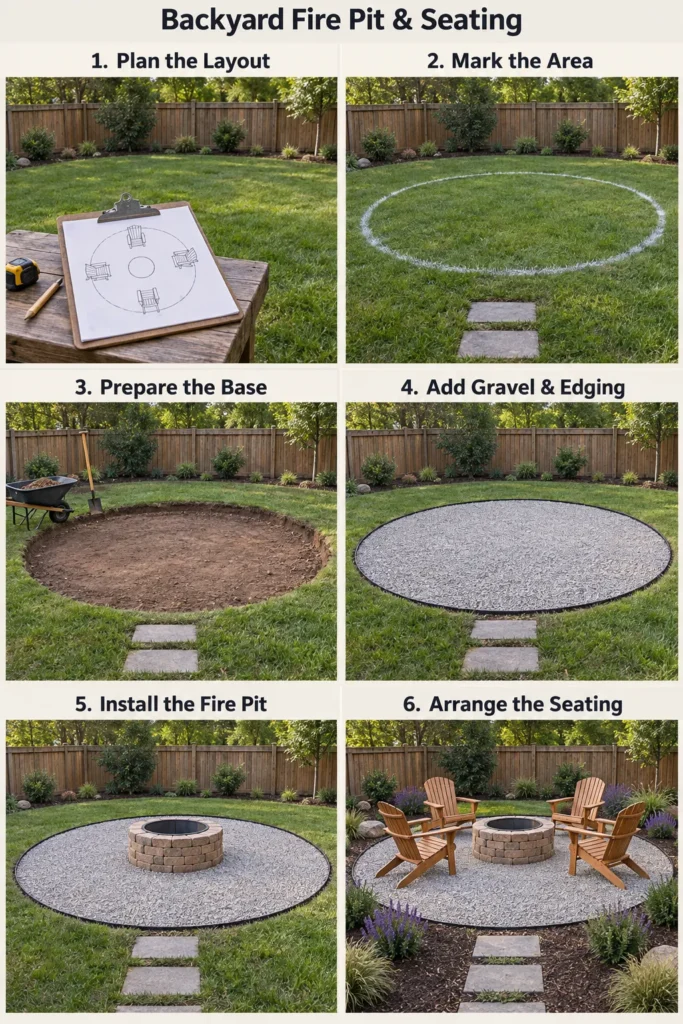
Let’s get one thing out of the way: fire pit landscaping sounds fancier than it needs to be. It’s really just the space around your fire pit, done on purpose instead of by accident. A lot of backyards have a fire pit sitting on bare dirt, looking sad and a little unfinished.
I tend to notice that the budget version and the expensive version use almost the same ingredients. Gravel, pavers, a border, some plants that don’t mind heat. The difference usually comes down to labor costs and how many delivery fees someone’s willing to pay.
Here’s the part that surprised me: smaller batches cost more per unit. Buying one bigger load saves money instead. If you’re doing a patio-style base, ordering gravel or paver sand all at once saves real money. Splitting it into three trips to the hardware store adds up fast, and not in a good way.
You also don’t need a huge circle of pavers to make the area look finished. A simple ring of stone, even a cheap one, instantly reads as intentional instead of accidental. That’s the whole secret behind budget landscaping: making things look decided, not leftover.
I’d also say skip the fancy fire pit kit before fixing the ground underneath it. A gorgeous fire pit sitting on soggy grass still looks like a mistake waiting to happen. Ground prep first, pretty accessories second — that order matters more than people think.
None of this requires a landscaper or a weekend course. It just requires slowing down enough to plan the layout before buying anything. Trust me, that one habit alone saves more money than any coupon code!
Small Backyard Ideas For Tight Spaces
Small backyards get a bad reputation when it comes to fire pits, and I don’t think that’s fair. A tiny patio can still hold real fire pit landscaping if you scale everything down on purpose. The trick is choosing pieces that do double duty instead of just filling space.
I’ve found that a smaller fire pit, paired with tight, cozy seating, reads as more inviting. It beats a huge one on an oversized patio every time. Bigger isn’t automatically better here. Sometimes a cramped circle of chairs makes the whole setup read like a hangout instead of a showroom.
A few things that make small spaces work harder:
- A low, wide fire bowl instead of a tall pit, so sightlines stay open
- Built-in bench seating along a fence line to skip bulky furniture
- Gravel instead of pavers, since it’s cheaper and easier to shape around odd corners
- Vertical planters near the edge, so greenery doesn’t eat up floor space
- A single statement light instead of scattered string lights everywhere
Corners matter more in small yards than people expect. Tucking the fire pit into an actual corner, rather than center stage, frees up walking room. That one shift changes how easy the whole space is to move through.
Renters dealing with tiny patios shouldn’t be left out either. A portable fire bowl, some cushions, and a cheap outdoor rug can fake the look without anything permanent. Nobody walking by can tell the difference between planned and improvised, and that’s kind of the point.
Small doesn’t mean boring. It just means every single piece needs to earn its spot in the layout.
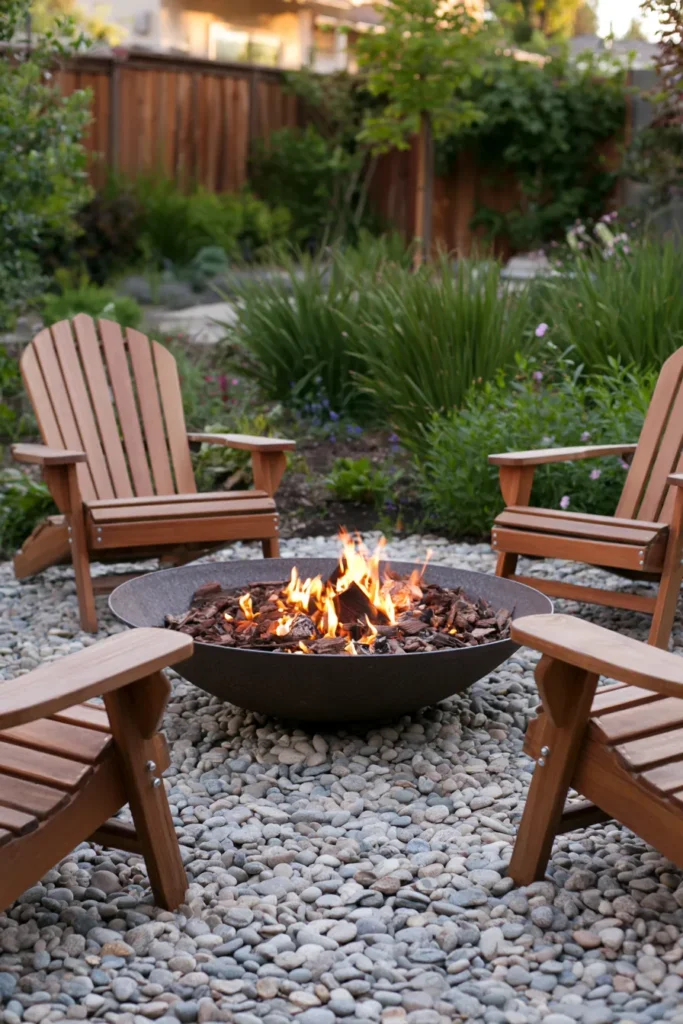
Fire Pit Patio Ideas That Look Fancy For Cheap
Patios are where fire pit landscaping really gets to show off, even on a small budget. The surface underneath does more visual work than most people realize. A rough patch of dirt says “unfinished,” while a defined patio surface says “we meant to do this.”
Concrete pavers get expensive fast, especially once delivery and cutting fees get added on. I tend to notice cheaper alternatives get overlooked simply because they sound less impressive on paper.
A few patio options that look pricier than they are:
- Pea gravel with a metal or plastic edging to keep it contained
- Stamped concrete rings, poured small instead of covering the whole yard
- Reclaimed brick, especially if a neighbor or demolition site has extras
- Interlocking rubber pavers, which handle heat better than people expect
- Simple sand-set flagstone, spaced with low groundcover between pieces
Texture matters just as much as material. Mixing one main surface with a border in a different material helps. It makes a small patio look designed instead of thrown together. That contrast does more heavy lifting than any single expensive item could.
Lighting changes a cheap patio instantly. A few solar path lights along the edge make gravel or pavers look intentional after dark. That’s true even if the budget stopped at flooring. Nobody’s checking price tags once the sun goes down!
I’d rather spend on the patio surface and skip the pricey furniture set entirely. Thrifted chairs with new cushions do the same job as a pricier matching patio set. The patio is what people remember; the chairs are just where they sit. Save the splurge for after the ground’s already earning compliments.
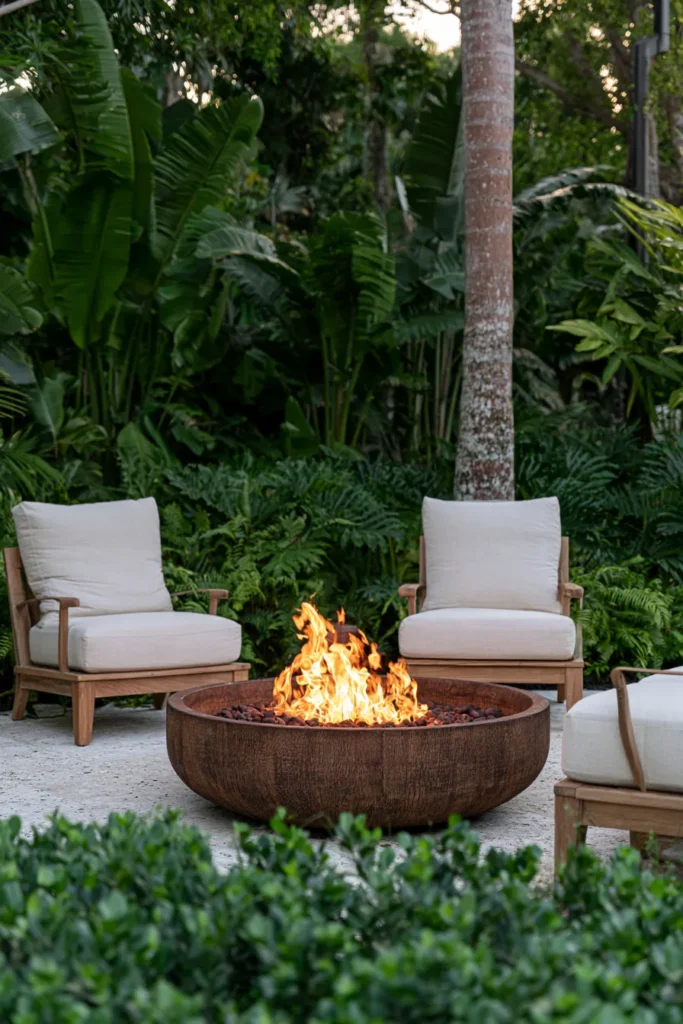
Designs I Can’t Stop Pinning
I’ll admit it: I spend an embarrassing amount of time saving backyard fire pit designs. I have zero plans to build most of them anytime soon. There’s something soothing about scrolling through other people’s finished projects. It’s basically window shopping, except the window is somebody’s actual backyard.
Sunken seating areas keep showing up in my saved folder. I’ve told myself I’ve seen enough more times than I can count. Digging a shallow pit for the whole seating area, not the fire itself, creates a cozy, tucked-in vibe. It also blocks wind way better than furniture sitting flat on the ground.
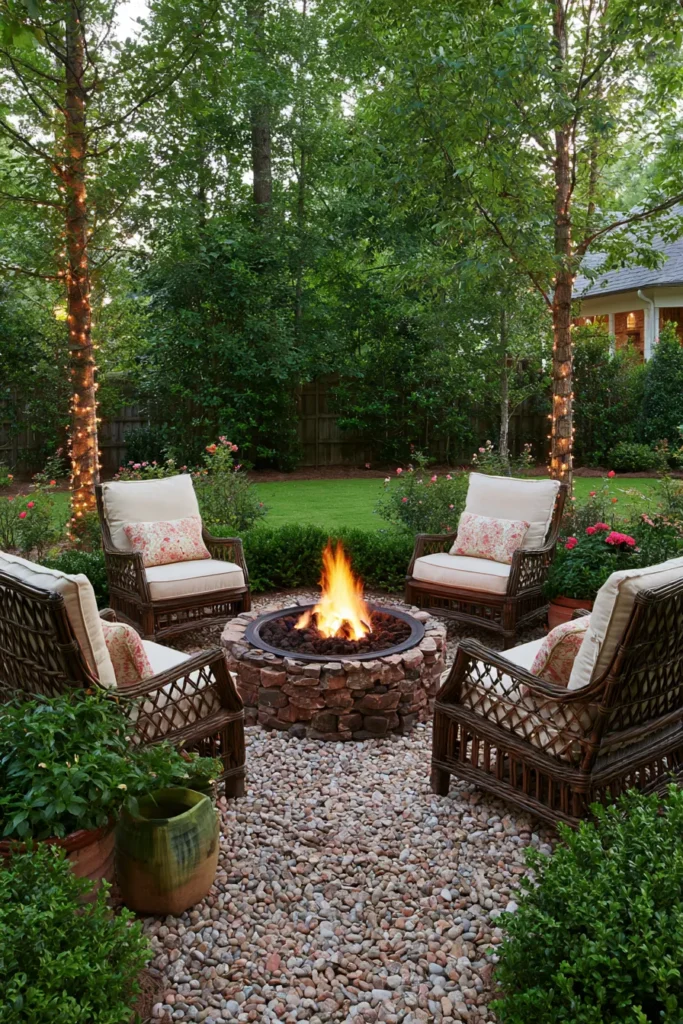
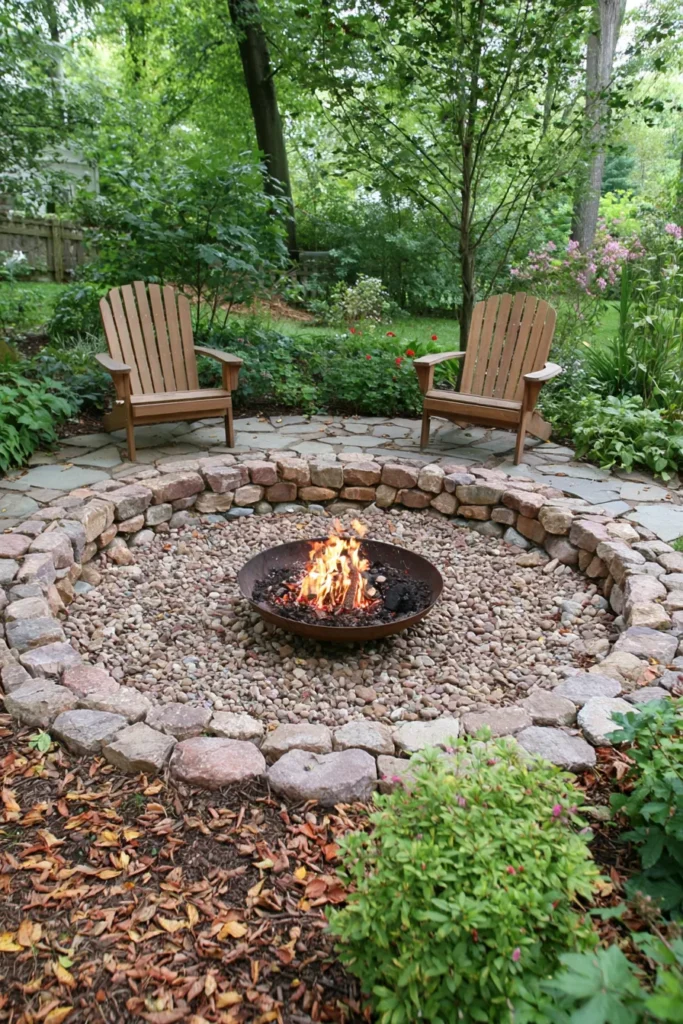
Circular gravel patios with a single tree nearby are another design I keep coming back to. Something about the shape reads calmer than a square patio, with no awkward corner left empty. Round shapes just naturally pull people toward the middle.
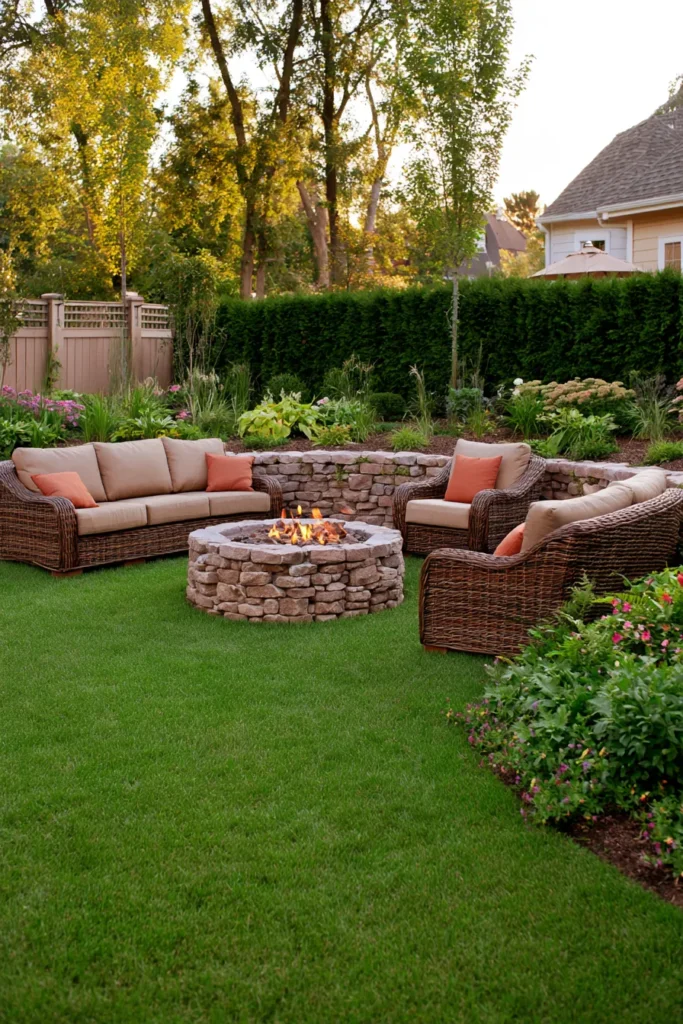
I also love designs that treat the fire pit like the anchor of a bigger outdoor room. It’s never just a standalone feature. A pergola nearby, a small side table, maybe a low wall for extra seating. Suddenly it’s a whole hangout spot instead of one item plopped in the grass.
Here’s a design opinion that might ruffle feathers. Perfectly matched furniture sets look less inviting than mismatched pieces pulled together over time. A little visual imperfection reads as lived-in, not sloppy. Real backyards look used, and used looks warmer than staged.
None of these designs require a full renovation to borrow from. Even one detail can shift the whole look of an existing setup. Think a curved edge or a single oversized planter. Small steals from big designs still count. One borrowed detail is often all an old backyard needs to look brand new.
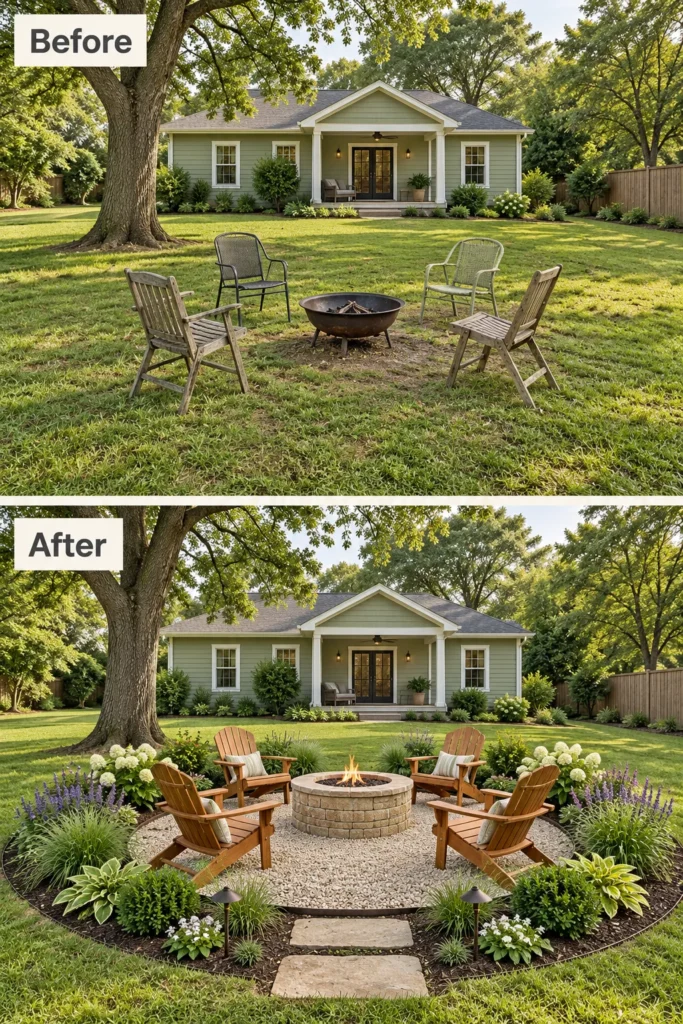
Fire Pit Landscaping Around Seating (So Nobody’s Knees Roast)
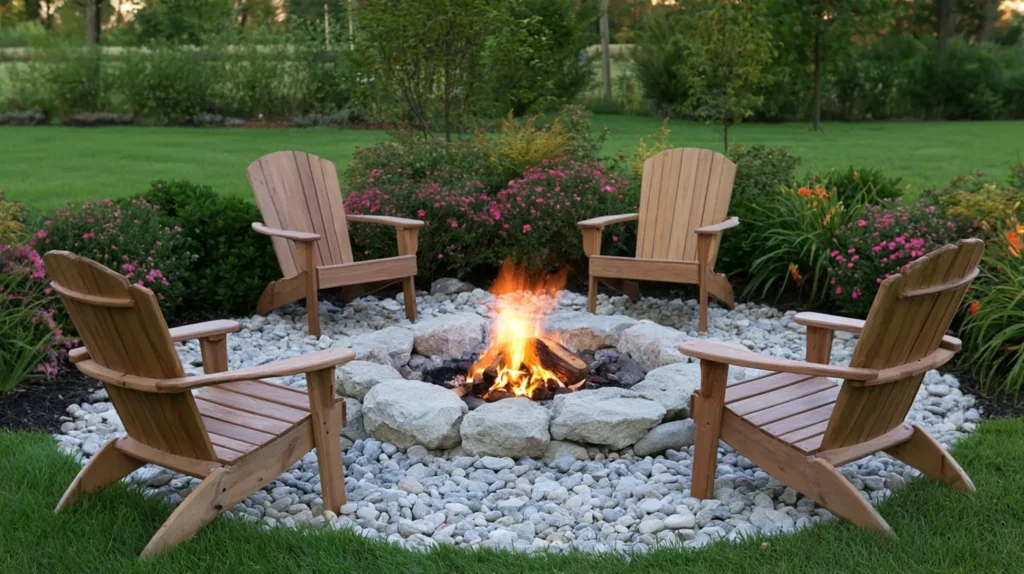
Seating placement is where a lot of fire pit landscaping quietly falls apart. Chairs too close mean roasted knees. Sit too far back, and nobody can hear each other over the crackling.
I’ve found that distance is the most overlooked measurement in this whole process. Most fire pits need at least three feet of clear space before the first chair even starts. That gap keeps heat comfortable instead of unbearable once the fire really gets going.
A quick list of seating details that make a real difference:
- Leave a few feet of open ground between the pit and any seating
- Angle chairs slightly inward instead of a perfect straight circle
- Mix low chairs with a couple of taller stools for visual variety
- Use materials that won’t melt or warp near heat, like metal or stone
- Add a small side table or two so drinks aren’t balanced on knees
Symmetry sounds nice in theory, but it makes real conversation harder. A slightly staggered arrangement lets people see each other’s faces instead of just profiles. That small tweak matters more than matching cushion colors ever will.
Ground surface under the seating deserves attention too, not just the seats themselves. Grass gets torn up fast under constant chair movement, especially with kids running around. Gravel, pavers, or even a simple mulch ring underneath the seating area holds up far longer.
Comfort wins over looks every single time out here. A gorgeous chair nobody wants to sit in because it’s close to the heat isn’t doing its job. Function first, then let the pretty details follow. Nobody remembers the fabric pattern once they’re too hot to enjoy it.

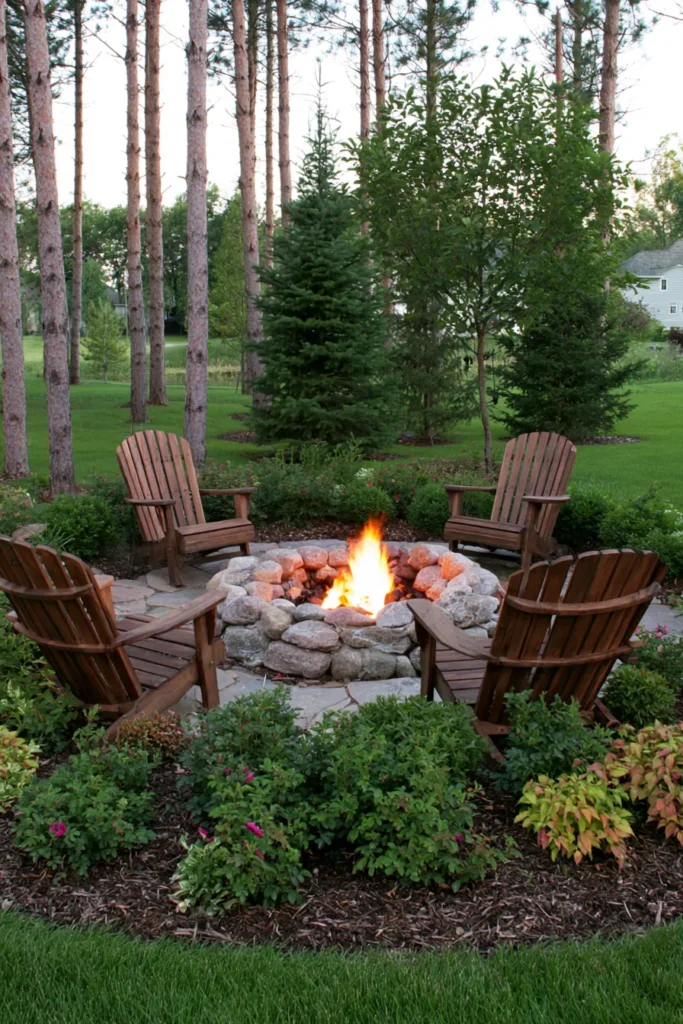
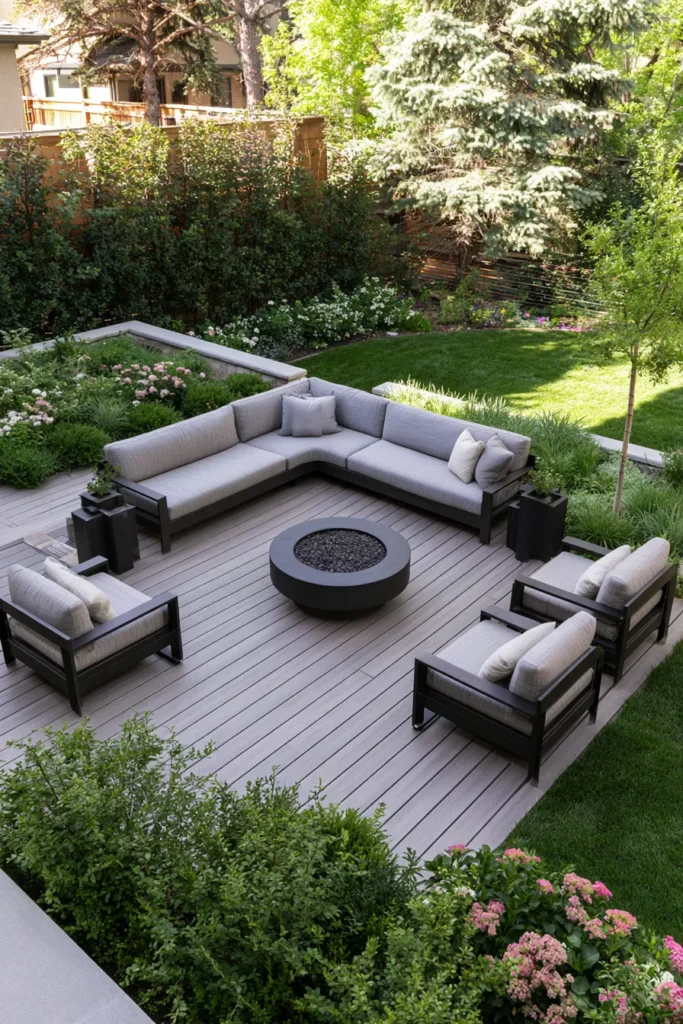
Outdoor Seating That Doesn’t Look Like A Waiting Room
Matching patio sets have a very specific look, and that look is “waiting room.” I say this with love, because I’ve definitely bought matching sets before. There’s nothing wrong with them, but outdoor fire pit seating doesn’t have to follow that same predictable formula.
Benches change the whole vibe of a seating area instantly. A long wooden bench on one side, paired with chairs on the other, breaks up that too-uniform look. It also fits more people without needing extra furniture pieces.
I tend to gravitate toward mixing materials instead of sticking to one type across every seat. Metal, wood, and even a couple of outdoor floor cushions can sit together without clashing. Variety reads as personality, not disorganization, as long as the colors stay in the same general family. A single shared color thread ties mismatched pieces together instantly.
Here’s a slightly controversial take: built-in seating, like a low stone or concrete ledge, often beats furniture entirely. It never needs replacing, storing, or covering during a storm. The upfront cost stings a little, but the long-term math works out in its favor.
Cushions do more than people give them credit for. Swapping cushion covers for the season is way cheaper than buying entirely new furniture every couple of years. That one trick alone can make tired seating look brand new again.
Kids change the seating math completely, and it’s worth planning around from the start. Low stools or stackable seats give them their own spot without crowding adult chairs. Nobody wants a kid perched precariously on the arm of a nice chair near an open flame. A cheap step stool works just as well as anything from a catalog.

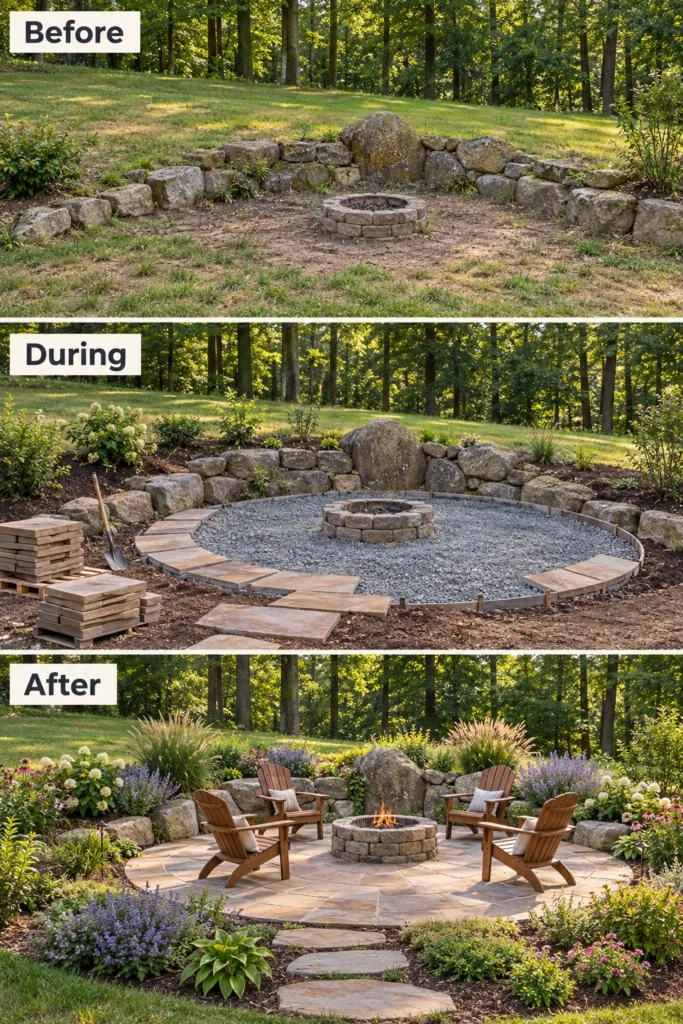
Fire Pit Landscaping Materials That Won’t Drain Your Wallet
Material choice makes or breaks the budget side of fire pit landscaping faster than anything else. It’s tempting to grab whatever looks best in a store display. That display price rarely matches what a full project costs once quantity gets involved.
I’ve noticed gravel gets underestimated constantly, probably because it seems too simple to be a real design choice. It’s one of the cheapest ground covers available, and it drains water better than most alternatives. Weeds also have a harder time pushing through a properly layered gravel bed. That alone makes it worth a second look before ruling it out.
A few budget-friendly materials worth considering:
- Pea gravel or decomposed granite for ground cover
- Reclaimed pavers or brick from salvage yards and demolition sales
- Cinder blocks, dressed up with paint or a stone veneer wrap
- Mulch rings around the outer edge instead of full hardscaping
- Metal fire rings instead of built-in masonry pits
Buying local, not ordering online, saves more than people expect with heavy materials like stone or gravel. Delivery fees on anything sold by the ton add up shockingly fast. A truck rental for one trip usually beats shipping costs by a wide margin.
I’d also encourage checking community groups and marketplace listings before buying anything new. Leftover pavers from someone else’s finished project show up more often than expected. Free materials, even mismatched ones, can be arranged in a pattern that hides the mismatch entirely.
Splurging on one material and saving on the rest looks more intentional than spreading the budget evenly. Pick the one surface people will touch or notice most, and put the extra money there. Everything else can stay simple without anyone noticing the difference.

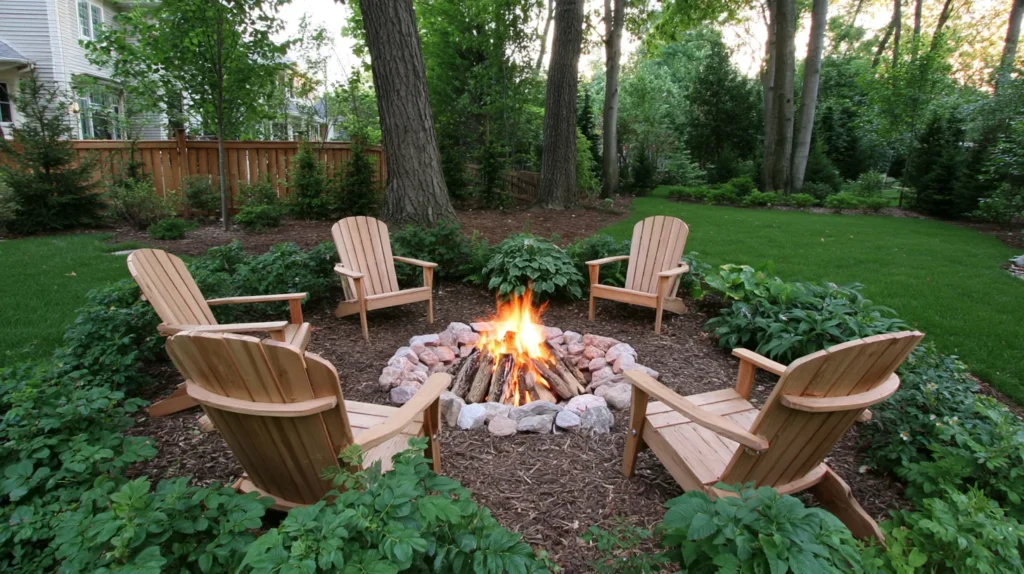
The Fire Pit Landscaping Mistakes I’d Skip Next Time
Every fire pit landscaping project seems to come with at least one lesson learned the hard way. I’ve read enough forums and comment sections to notice the same mistakes showing up over and over. Most of them are avoidable with about five extra minutes of planning.
Placing the fire pit too close to a fence or overhang tops that list constantly. Sparks and heat rise higher than people expect, especially on windy nights. That gap everyone skips measuring is exactly the gap that matters most.
Skipping a heat-safe base is another repeat offender. Setting a fire pit directly on grass or wood decking without protection causes damage. Nobody notices until it’s too late. A simple paver or gravel base solves this before it ever becomes a problem.
Here’s one that surprised me: overplanting right around the fire pit edge looks lush at first. Then it becomes a fire hazard later. Dry, overgrown plants too close to flame are never a good combination. Keeping a clear buffer zone matters more than filling every inch with greenery.
I also think people rush the seating layout way too fast. They treat it as an afterthought instead of part of the actual design. Chairs dropped in without measuring distance or sightlines rarely end up comfortable once everyone’s sitting there. Slowing down on this one step saves a lot of rearranging later.
The biggest mistake might just be rushing the whole project because fire pits seem deceptively simple. They’re simple in concept, but the details around them are where everything either works or falls apart. Give the space around the fire the same attention as the fire pit itself.

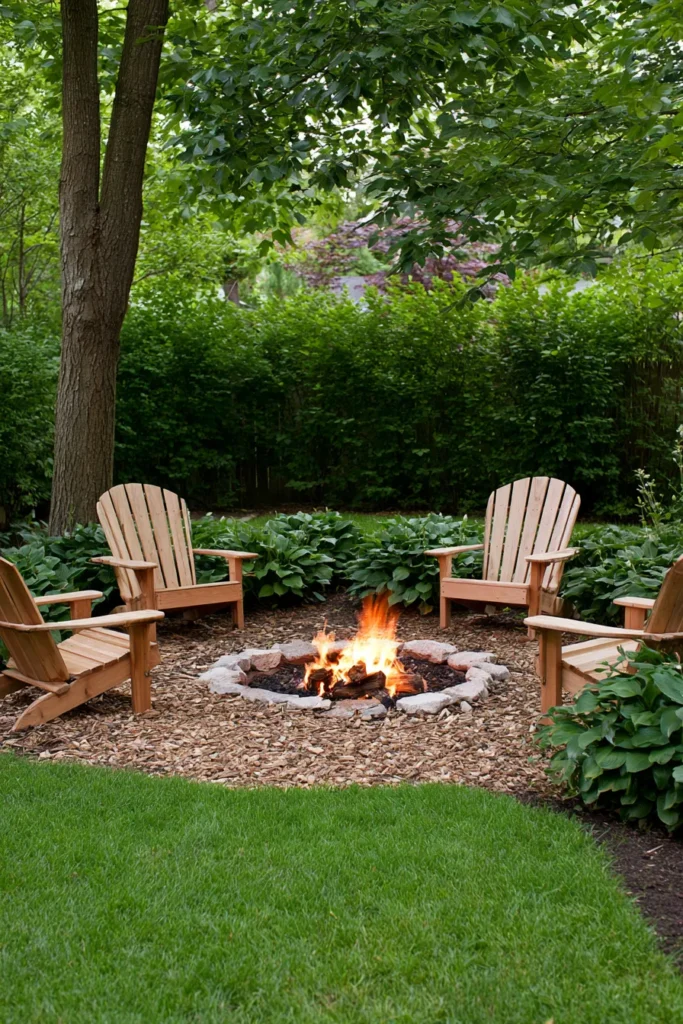
Fire Pit Landscaping FAQs
How far should a fire pit be from the house? Most guidelines suggest at least ten feet from any structure, fence, or overhang. I’d lean toward more room if your yard allows it, especially near covered patios.
What’s the cheapest material for fire pit landscaping? Gravel wins here almost every time. It’s inexpensive, drains well, and doesn’t require special tools or a full weekend to install.
Do I need a permit for a backyard fire pit? That depends entirely on where you live, so checking local rules matters more than guessing. Some areas require a permit, and some ban wood-burning pits entirely.
Can I put a fire pit on grass? Not without protection underneath, unless you enjoy staring at a scorched circle all summer! A paver, gravel, or stone base protects the grass and keeps the pit stable.
How big should the seating area be around a fire pit? Plan for at least three feet of clear space between the pit and the first row of chairs. That gap keeps things comfortable once the fire is really going.

The Fire Pit Glow-Up I Can’t Stop Thinking About
Somewhere between browsing backyard photos and writing all of this, I became someone with opinions. Strong opinions about fire pit landscaping, specifically. That escalated quickly, and I regret nothing! Living in Orlando, where fire pits seem rebellious against the heat, only makes the appeal weirder and stronger.
None of this requires a big budget or a landscaper on speed dial. A little planning around seating, ground surface, and safe spacing does more heavy lifting. It beats any expensive fire pit, every time. The fanciest pit in the world looks awkward sitting on bare dirt with nowhere comfortable to sit nearby.
I’ll probably keep pinning backyard designs on Pinterest long after this post goes live, for research purposes, obviously. Somewhere in that scrolling habit, a real project usually starts taking shape. Half of my best backyard ideas started as a saved pin I forgot about for months.
If your yard’s been missing that gathering-around-the-fire moment, this is your nudge to finally plan it properly. Start with the ground, add the seating, and let the fire pit itself be the easy part. Everything else you’ve read here is just the stuff nobody tells you before you start digging.
Go make your backyard the place everyone “accidentally” ends up at every single weekend!