Side yard landscaping sounds like one of those tiny projects that should behave itself. Cute thought, right? Then you look at that skinny strip beside the house, and it has opinions. It may be muddy, bare, shady, awkward, narrow, or weirdly visible from the street.
I tend to notice side yards because they’re sneaky. They sit there looking harmless, while quietly collecting hoses, trash cans, leaves, and regret. In Orlando, I also think about heat, rain, and plants that won’t quit by Tuesday.
Still, I love a space with underdog energy. A side yard can become a path, garden, storage zone, dog run, potting nook, or shady little pass-through. However, it needs a plan that respects real budgets and real weekends.
That’s where this gets fun. I’m not talking about hiring a landscape designer and installing stone shipped from another planet. Instead, I’m talking about gravel, mulch, pavers, edging, hardy plants, solar lights, trellises, and smart little choices.
Because the truth is rude but useful. A side yard doesn’t need to be big. It needs to look like someone meant for it to exist. That is the whole plot twist. And somehow, those tiny choices matter more than oversized spending.
So, before that skinny space keeps acting like a junk drawer with grass, let’s give it purpose. I like that math. The secret starts with one question most people skip.
Some of the links on this page are affiliate links, which means I may earn a small commission if you purchase through them. It never costs you extra. You can always peek at my full disclosure if you’d like the details.
Side Yard Landscaping Starts With One Annoying Question
Before buying plants, I like to decide what the side yard needs to do. That sounds obvious, yet this is where many yards go sideways. Literally, in this case.
A narrow space can’t be everything. It can’t be a garden, storage area, play path, dog zone, and secret courtyard all at once. Well, it can try, but then it gets cranky and cluttered.
So I’d start with the main job. Does the space need better drainage? Should it hide trash cans? Maybe it needs a simple path from the driveway to the backyard.
That one choice saves money fast. Otherwise, side yard landscaping becomes a shopping cart full of random cute things. Cute things are dangerous. They whisper from the garden aisle.
Here’s the reframe. A small side yard isn’t a decorating problem. It’s a traffic problem, water problem, privacy problem, or storage problem first. The pretty part comes after that.
For a budget-friendly plan, I’d sketch the shape on paper. Nothing fancy, because graph paper already thinks too highly of itself. Mark doors, gates, windows, spigots, vents, and muddy spots.
Then watch the space after rain. If water pools near the house, skip deep mulch there. Use gravel, stepping stones, or a shallow swale instead. Drainage beats drama every time.
Side yard landscaping works best when the boring stuff leads. That means slope, sunlight, width, and foot traffic. Once those behave, the pretty choices stop fighting the space. That doesn’t sound glamorous, but glamour can wait. Mud cannot.
And that’s when the yard starts looking intentional, not like it lost a bet. The best part comes later, when small choices start doing big work.
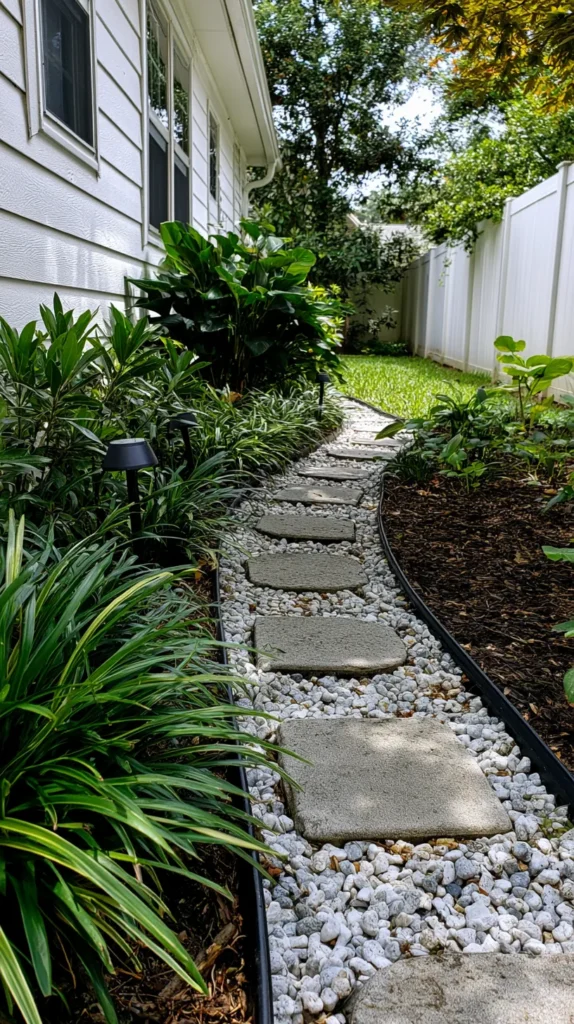
Cheap Materials That Make A Skinny Space Work
Ground cover can quickly make a side yard look better. Bare dirt looks unfinished, and weeds love an open invitation. However, expensive stone can chew through a budget before lunch.
I’ve found that simple materials work beautifully when they repeat. One random paver looks lonely. A path of matching pavers looks planned. That tiny shift matters.
For budget side yard landscaping, I’d choose materials that drain well and install easily. The goal is neat, useful, and sturdy. Not museum courtyard energy.
Good budget materials include:
- Pea gravel for drainage and soft crunch underfoot
- Crushed granite for a firmer, cleaner path
- Concrete stepping stones for cheap walkway structure
- Mulch for planting beds away from heavy water runoff
- Metal or plastic edging to keep gravel contained
- Landscape fabric under gravel, used carefully
- River rock near downspouts or splash zones
- Solar stake lights for low-cost evening charm
- Trellis panels for vines or narrow privacy
- Large planters when digging is a whole ordeal
Here’s the part people miss. Edging matters more than fancy gravel. Without edging, gravel wanders like it owns the place. Suddenly, it’s in the grass, driveway, and possibly your soul.
Also, don’t cover the whole side yard in the same material unless it makes sense. A walkway can use pavers and gravel. Planting pockets can use mulch. A utility zone can use larger rock.
That mix keeps the space useful without looking chopped up. However, repeat colors and shapes so everything still gets along. Budget-friendly does not mean random. Even plain materials look better when they stay put.
Cheap doesn’t have to look cheap. It just needs boundaries, repetition, and one solid decision made before the cart fills up.
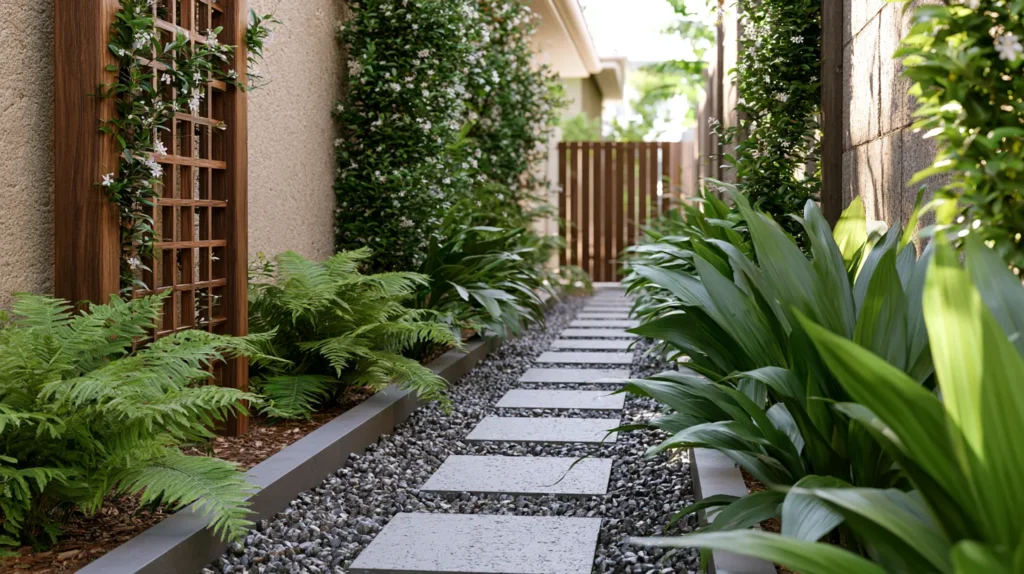
Side Yard Landscaping With Plants That Don’t Act Fancy
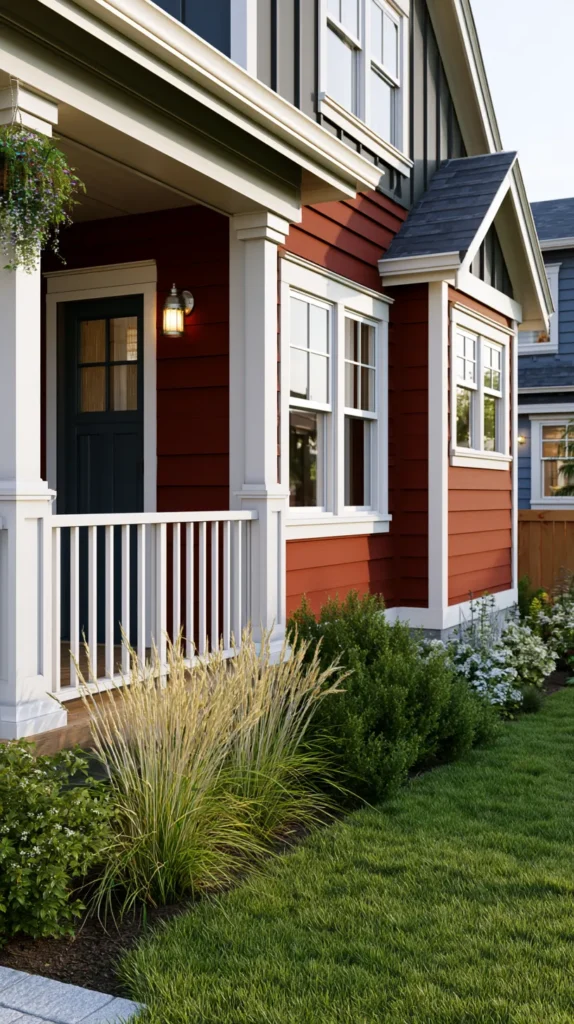
Plants can make a side yard look soft and finished, but they need manners. In tight spaces, I avoid anything that grabs ankles or blocks gates. Nobody needs a shrub ambush before coffee.
Side yard landscaping needs plants that match the light first. Shade plants in sun will sulk. Sun plants in shade will stretch like they’re auditioning for a window commercial. Neither look cute.
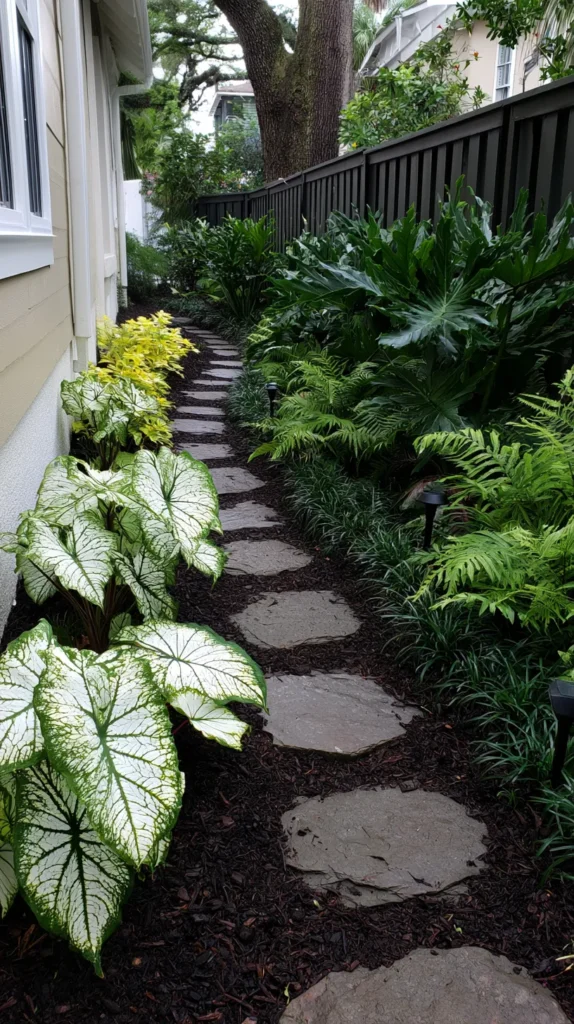
For shady side yards, I’d look at cast iron plant, mondo grass, liriope, holly fern, and caladiums. These can handle lower light and still add texture. In warmer zones, they can look lush without much fuss.
For sunnier spaces, try dwarf yaupon holly, society garlic, muhly grass, or blue daze. Lantana, sunshine ligustrum, and dwarf firebush can also work. However, check your zone and local nursery notes first. Some plants behave differently by region.
The budget trick is simple. Buy smaller plants and repeat them. Three matching plants usually look better than eight random clearance plants. I know clearance plants tempt everyone. They stand there looking needy.
Still, a side yard needs rhythm more than variety. Repeating one leafy plant along a path looks clean. Adding one taller focal plant near a gate gives the eye somewhere to land.
Containers also help when soil is terrible. Use two large pots instead of six tiny ones. Larger pots hold moisture better and look more polished. That matters in skinny spaces, where wilted plants look twice as sad.
Side yard landscaping gets easier when plants solve a problem. Use groundcover to reduce weeds. Add shrubs to soften a fence. Choose vines for height without stealing floor space.
That’s the sneaky win. The plants aren’t just decoration. They’re doing chores while looking cute.
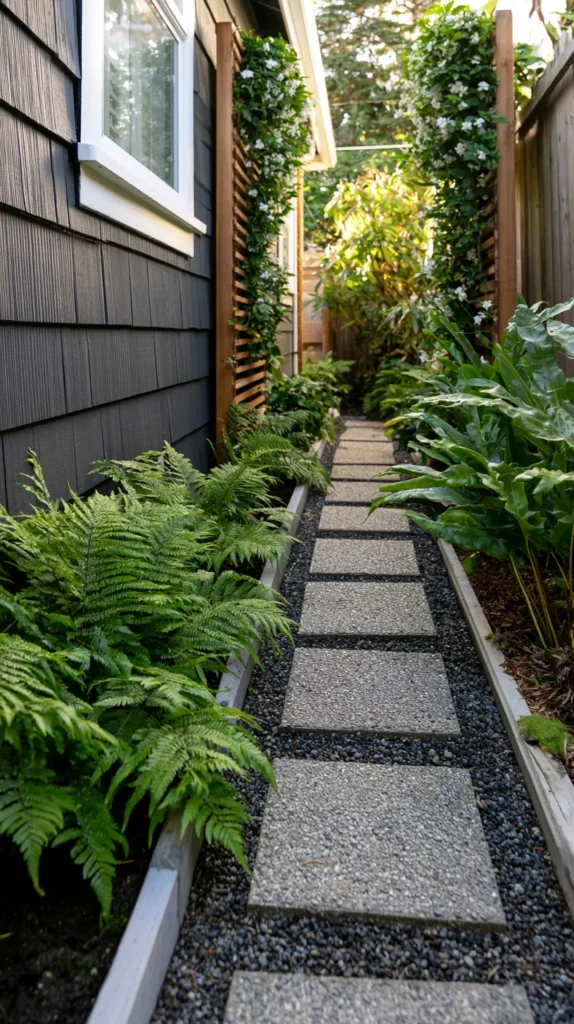
A Simple Step-By-Step Side Yard Plan
A side yard can turn expensive when every decision happens at the store. I’d rather make the big choices first, then shop like a woman with a mission. Dangerous, but in a productive way.
Start small if the space seems overwhelming. One clear path and one planting bed can change the whole mood. However, drainage needs to come before beauty.
Use this simple plan:
- Clear the area of weeds, broken pots, old edging, and mystery items
- Measure the width, length, gate swing, and walking path
- Watch where water collects after rain
- Pick one main purpose for the space
- Choose a ground material, like gravel, mulch, or pavers
- Add edging before spreading loose material
- Place stepping stones where feet naturally land
- Build planting beds along one side, not both, if space is tight
- Choose three to five plant types at most
- Add solar lights, hooks, or a trellis after the layout works
Here’s a practical order. First, fix drainage and soil level. Next, install edging and weed barrier where needed. Then add gravel, pavers, or mulch. After that, place plants and decor.
That order keeps you from stepping all over new plants. Ask me how many people learn that the annoying way. (No, don’t. We know.)
For budget side yard landscaping, I’d also stage the project. Do the path first. Add plants the next weekend. Install lights after payday. A finished yard can happen in layers.
This approach also prevents the “I bought twelve things and none fit” problem. We are not letting the side yard bully the debit card.
Small spaces reward restraint. That’s annoying, but helpful. Make fewer choices, repeat them, and let the shape do some work. Then the whole yard looks calmer.
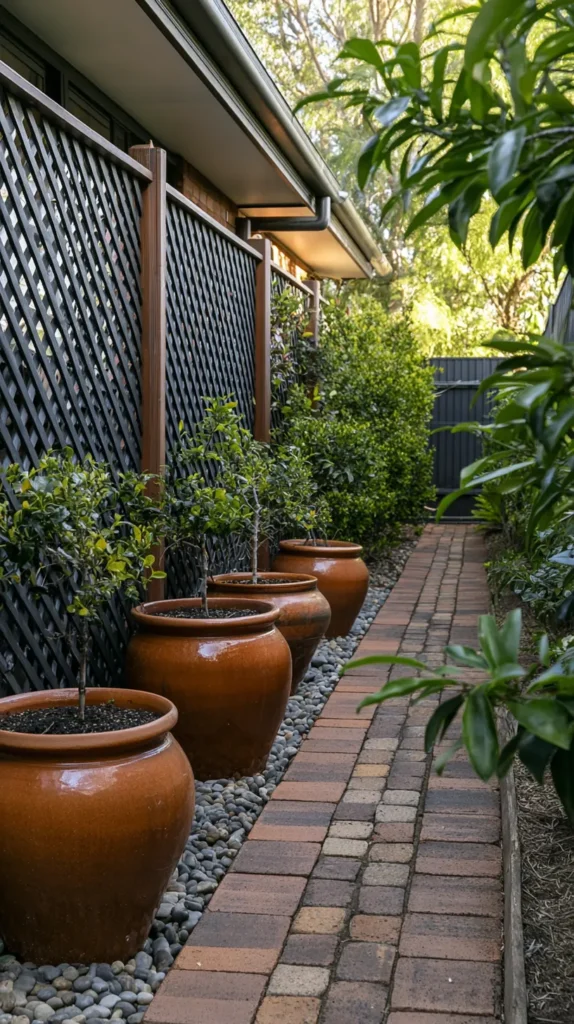
Side Yard Landscaping For Privacy Without A Giant Fence
Privacy in a side yard can get tricky because space is tight. A huge fence may solve one problem while creating another. Suddenly, the walkway feels like a hallway at a budget hotel.
Side yard landscaping can create privacy without making the space seem boxed in. The trick is using height in thin ways. That means vines, trellises, narrow shrubs, screens, and layered pots.
A common mistake is planting wide shrubs in a narrow strip. They look innocent at first. Then one day, they’re eating the walkway and brushing every grocery bag you carry.
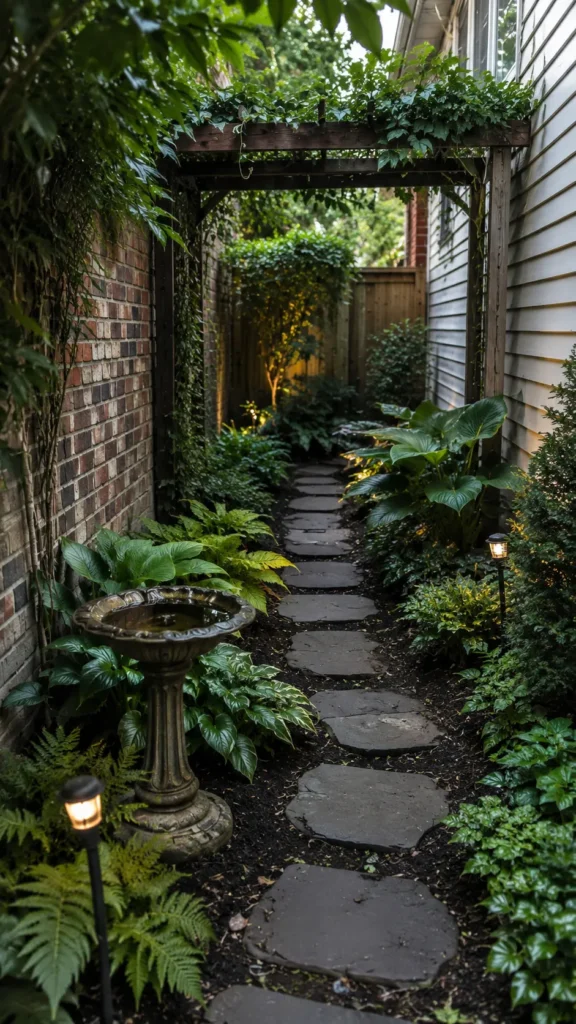
Instead, I’d think vertical. A simple wood trellis can support jasmine, clematis, or climbing roses, depending on your climate. In warm areas, star jasmine can add fragrance and coverage. However, keep vines trimmed near siding and vents.
For a cheaper screen, use a basic lattice panel attached to posts. Paint or stain it one color. Then add one repeating plant nearby. The whole thing looks more custom than it is.
Tall planters also help near gates or windows. Use upright plants, like podocarpus, dwarf clumping bamboo, or tall grasses. Check growth habits first, because bamboo can be a menace if chosen poorly.
Here’s the reframe. Privacy doesn’t always mean blocking everything. Sometimes it means interrupting the view. A trellis, planter, or narrow hedge can make the space calmer without closing it off.
Also, don’t forget sound and movement. Rustling grasses, a small fountain, or leafy vines can soften the area. That detail helps a side yard seem less like a service lane.
Side yard landscaping works best when privacy looks intentional, not defensive. Nobody needs the yard version of “don’t talk to me.”
Budget Path Ideas That Still Look Intentional
A path is the backbone of most side yards. Without one, the space can look like leftover land. With one, it suddenly has purpose. Very bossy, very useful.
For budget side yard landscaping, I’d choose the path based on foot traffic. One daily trash-can route needs firmer footing. A pretty garden pass-through can use looser materials.
Affordable path ideas include:
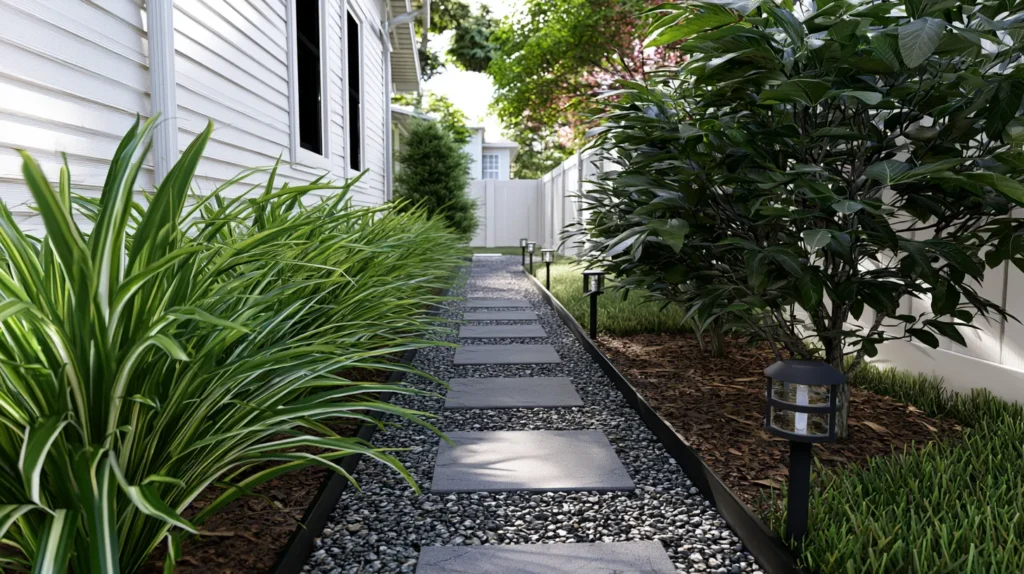
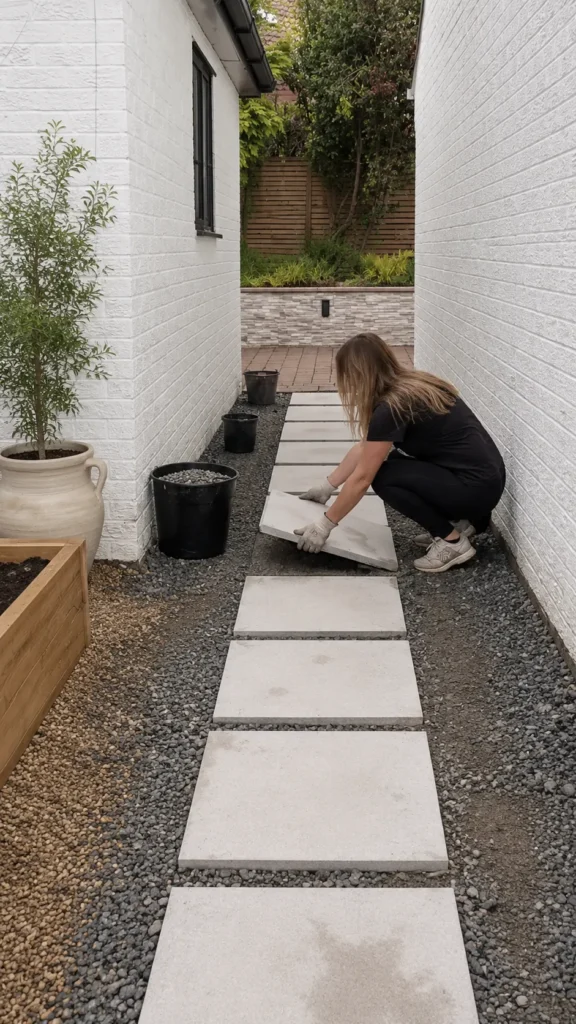
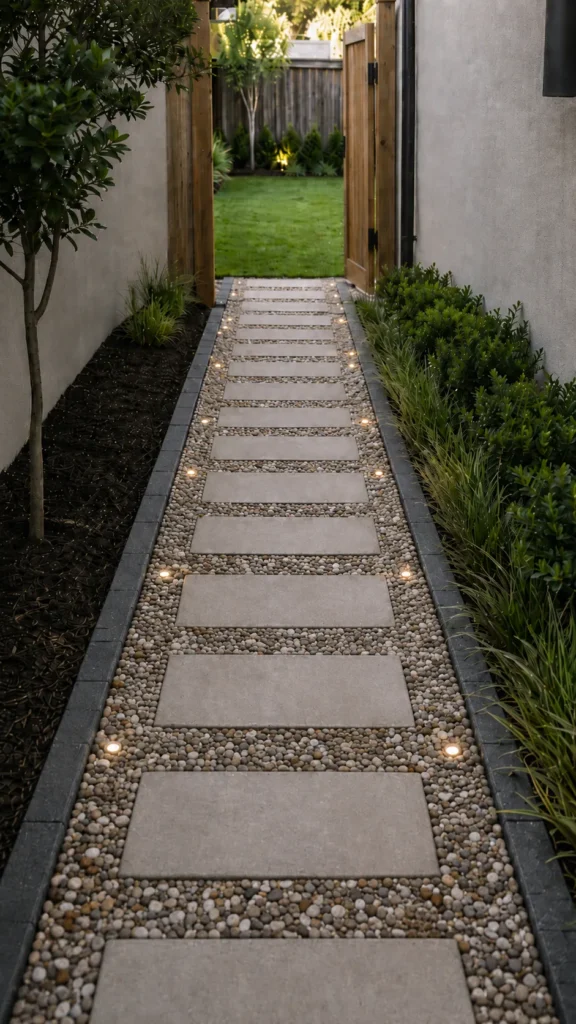
- Concrete stepping stones with pea gravel between them
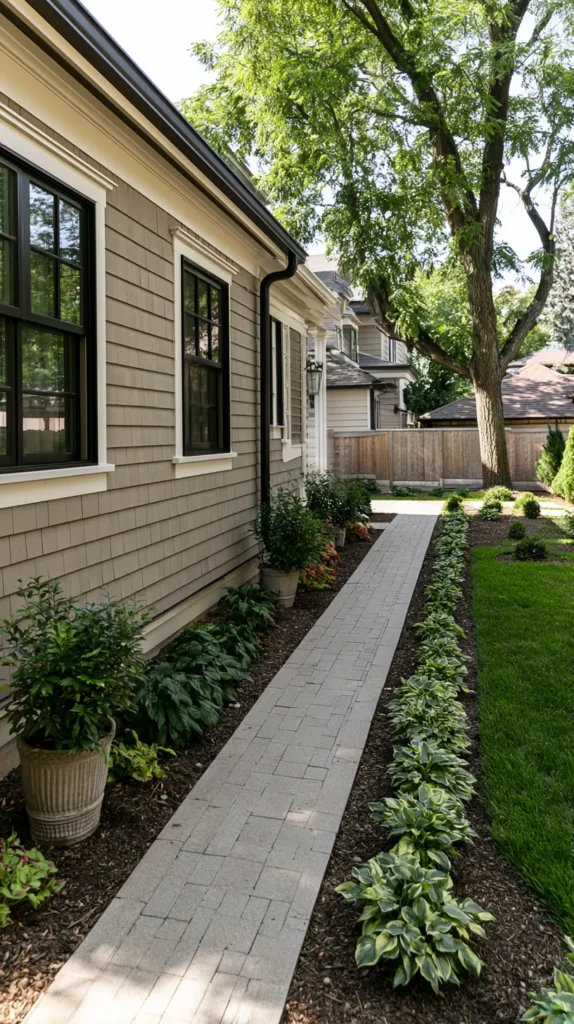
- Large square pavers set in mulch
- Crushed granite with steel or plastic edging
- Reclaimed brick set in sand
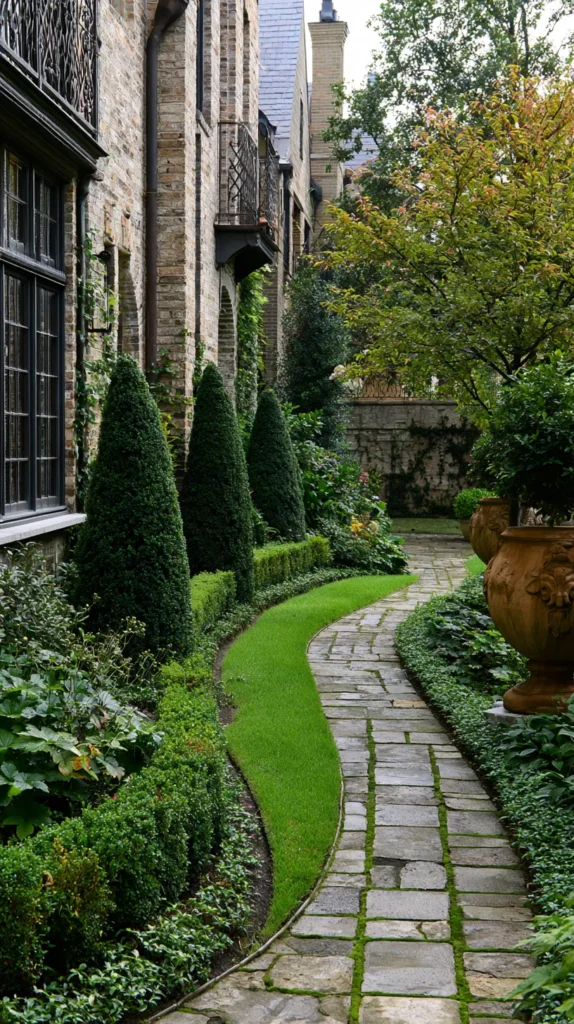
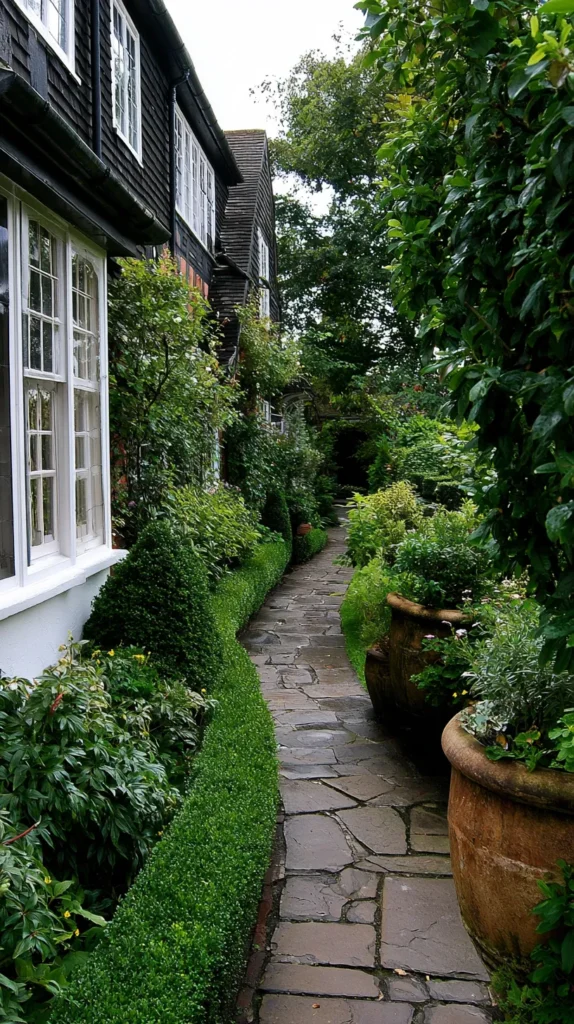
- Flagstone pieces spaced with groundcover
- Gravel with flat stones near gates
- Mulch paths for low-traffic garden zones
- Paver pads under trash cans or storage boxes
Now for the detail that makes everything look pricier. Keep the path wide enough. A skinny path can look stingy and seem annoying. If space allows, aim for about 30 to 36 inches.
However, tiny side yards may need a narrower route. In that case, keep plantings low and edges clean. The space will seem less pinched.
I’d also avoid too many curves in a narrow side yard. Curves need room. In tight strips, they can look like the path had second thoughts. A straight or gently offset path usually looks cleaner.
Use the same paver shape throughout the space. Then add interest with plants, lights, or edging. The path should not perform circus tricks.
One more thing. Put the best-looking material where people enter first. If the gate area looks polished, the rest gets instant credit. Basically, the entrance gets the necklace.
That’s budget design math. Spend attention where the eye lands first, then let simple materials carry the rest. Sneaky? Yes. Effective? Very.
Side Yard Landscaping FAQs For Real-Life Yards
Cheapest way to landscape a side yard? Start with cleanup, edging, and ground cover. Pea gravel, mulch, and concrete stepping stones can change the space quickly. However, the cheapest choice still needs drainage and weed control.
What plants work best for side yard landscaping? The best plants depend on sunlight and space. For shade, I’d consider liriope, mondo grass, cast iron plant, caladiums, and ferns. Sunny spaces may handle dwarf shrubs, ornamental grasses, lantana, and society garlic.
How do I make a narrow side yard look bigger? Keep the path simple and repeat plants. Also, use lighter gravel or pavers when the space seems dark. A clean edge can make a narrow yard look calmer.
Should I use mulch or gravel in a side yard? Mulch suits planting beds with good drainage. Gravel works better for walkways, utility areas, and wet spots. Near the house, I’d avoid piling mulch against siding or foundations.
How can I landscape around trash cans? Start with a level paver pad or gravel base. Then add a simple screen, narrow shrubs, or tall planters. Keep enough space to roll cans out without wrestling them.
Can side yard landscaping help with drainage? Yes, but serious drainage problems may need professional help. For mild issues, gravel, river rock, downspout extensions, and proper grading can help. Water should always move away from the house.
Here’s my favorite FAQ answer hiding in plain sight. The best side yard landscaping is usually the least dramatic plan. Keep it clean, repeat a few choices, and solve the biggest annoyance first. That single choice protects the whole budget.
Small Details That Make The Space Look Finished
This is where the side yard starts acting fancy on a budget. Not expensive fancy. More like “someone had a plan” fancy. That’s the sweet spot.
Small details can make basic materials look intentional. However, too many details can clutter a narrow space. Side yards need editing, which is rude but useful.
Try adding:
- Matching solar lights along one side of the path
- One hose holder instead of a tangled hose pile
- A wall-mounted shelf for small garden tools
- A slim bench only if the width allows it
- Hooks for hanging baskets or lanterns
- A painted gate that matches nearby trim
- One large planter near the entrance
- A gravel border under downspouts
- A trellis to lift plants upward
- Simple black, brown, or metal edging
The biggest upgrade may be hiding the ugly stuff. Trash cans, hoses, utility boxes, and random buckets can ruin a cute path. So I’d screen them first, then decorate.
Side yard landscaping also benefits from one clear color story. Black edging, warm gravel, terracotta pots, and green plants can look pulled together. Gray pavers, white rock, and silver planters can look crisp.
Still, avoid white rock if leaves constantly drop nearby. It can get messy fast. That’s one of those pretty choices with a maintenance bill attached.
Lighting deserves a tiny cheer. Solar lights are cheap, simple, and surprisingly helpful. Place them where feet land, not randomly through the plants.
Also, keep maintenance tools close but hidden. A slim deck box or wall hooks can save space. Nobody wants a gorgeous path guarded by a rake.
Here’s the tiny plot twist. Finishing touches should make the space easier to use. If they only add clutter, they’re not finishing touches. They’re tiny chores wearing cute outfits.
The Skinny Yard Can Be The Smartest Yard
I think side yards get ignored because they don’t make a dramatic first impression. They’re not the porch, patio, or big backyard moment. Instead, they’re the awkward hallway of outdoor spaces. Still, awkward spaces often have the most potential.
When I think about side yard landscaping, I think about usefulness first. Will the path stay dry? Can the trash cans roll smoothly? Could a few plants soften the fence? Would solar lights make evening walks easier?
Those questions are not glamorous. However, they lead to better choices than grabbing six random plants at the store. Pinterest can give plenty of pretty ideas, but the best ones still need real-life math.
Living in Orlando makes me extra picky about outdoor choices. Heat, rain, shade, and fast-growing plants all have opinions here. So I’d rather build a side yard that works with the space, not against it.
A budget-friendly side yard doesn’t need a huge makeover. It needs a clear job, sturdy materials, and a few pretty decisions. Add gravel where water collects. Use pavers where feet land. Repeat plants where the eye needs calm.
Then let the space become what it was supposed to be all along. That means no forgotten strip. No storage confession. Absolutely no place where hoses go to become modern art.
And yes, I love that kind of small victory. It’s practical, pretty, and a tiny bit smug. Purposeful side yards have every right to show off.
A small side yard can pull its weight beautifully, and frankly, it’s about time.