Flower bouquet photography sounds simple until the wedding day gets busy, sweaty, emotional, and slightly chaotic. Then that pretty bouquet gets tossed on a chair beside lip gloss, granola wrappers, and someone’s emergency flats. I tend to notice bouquets because they carry so much wedding personality without needing a giant budget.
A wedding bouquet can make a $99 dress look styled, polished, and very much on purpose. However, the photo matters more than the price tag. A grocery-store bouquet can look dreamy with the right light, angle, and grip. Meanwhile, an expensive bouquet can look tired if it gets flattened against a dark hallway wall.
Since I live in Orlando, I’m very aware of hot weather and wilting flowers. Wedding bouquets need photos before they start acting dramatic in the heat. That little timing detail can save a whole gallery.
This post is for the bride who wants pretty photos without spending like royalty. It’s also for the mom, aunt, friend, or DIY queen holding floral scissors at midnight. I’ve found that the best bouquet photos come from tiny choices, not huge budgets. A tilted wrist, clean background, or window-lit corner can do a lot.
So yes, we’re talking poses, angles, detail shots, no-bride shots, budget tricks, FAQs, and clever uses. Because the bouquet deserves more than one blurry ceremony picture. And the sneaky part? The best shot might not include a face at all.
Some of the links on this page are affiliate links, which means I may earn a small commission if you purchase through them. It never costs you extra. You can always peek at my full disclosure if you’d like the details.
Flower Bouquet Photography Starts Before The Ceremony
Flower bouquet photography works best before the day gets loud. I know, that sounds painfully practical. But wedding mornings move fast, and flowers lose their perk faster than anyone expects. So the bouquet needs its small moment before hairspray, hugs, and last-minute button drama take over.
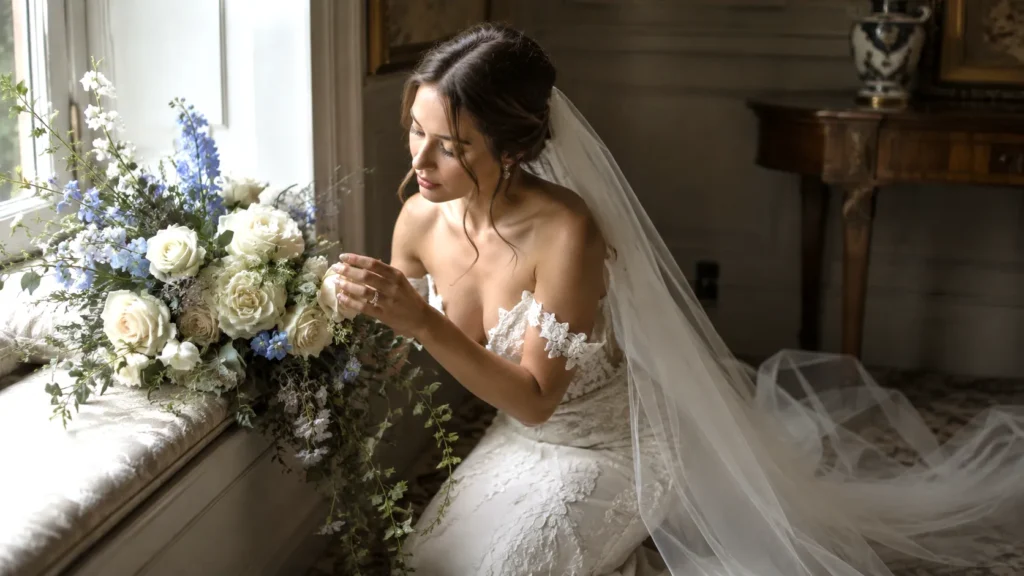
The best timing usually happens after the bouquet arrives and before the bride gets fully dressed. At that point, flowers still look fresh. Usually, the ribbon looks clean, and nobody has hugged the bouquet crooked yet. Natural window light helps most bouquets look softer and more expensive. However, direct sun can make petals look harsh and shiny.
A clean chair, white sheet, neutral wall, or simple floor can work beautifully. That matters for budget-friendly weddings because the setup costs nothing. You don’t need a floral arch, velvet sofa, or rented studio corner. Good light and fewer random objects matter more. That little breathing room keeps the photo calm for the camera right away, with almost no effort.
Here’s the tiny reframe: the bouquet photo isn’t only about flowers. It’s about proving the whole wedding style had a point. The colors, ribbon, dress, nails, rings, shoes, and invitations can all echo through one image.
I’ve found that flower bouquet photography looks richer when the bouquet gets space around it. Crowded photos make flowers look messy, even when they’re lovely. Instead, place the bouquet where the shape can breathe. Then let the camera find the texture.
One more sneaky tip matters. Turn the bouquet slowly before taking photos. Every side has a different personality, and one side always behaves better. Naturally, it’s never the first side. Weddings love a little plot twist.
Flower Bouquet Photography Poses With The Bride
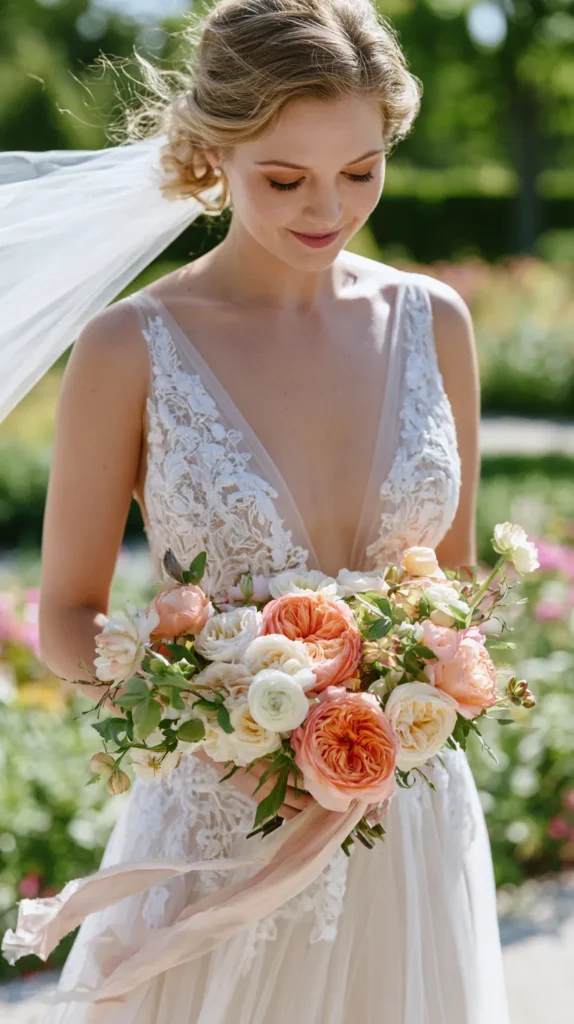
Flower bouquet photography with the bride can go sweet, elegant, or playful. It can also go full bridal magazine fantasy. However, stiff arms can ruin the whole thing. I’ve found that bouquet poses work best when the bride holds flowers with confidence. She shouldn’t look like she’s carrying groceries.
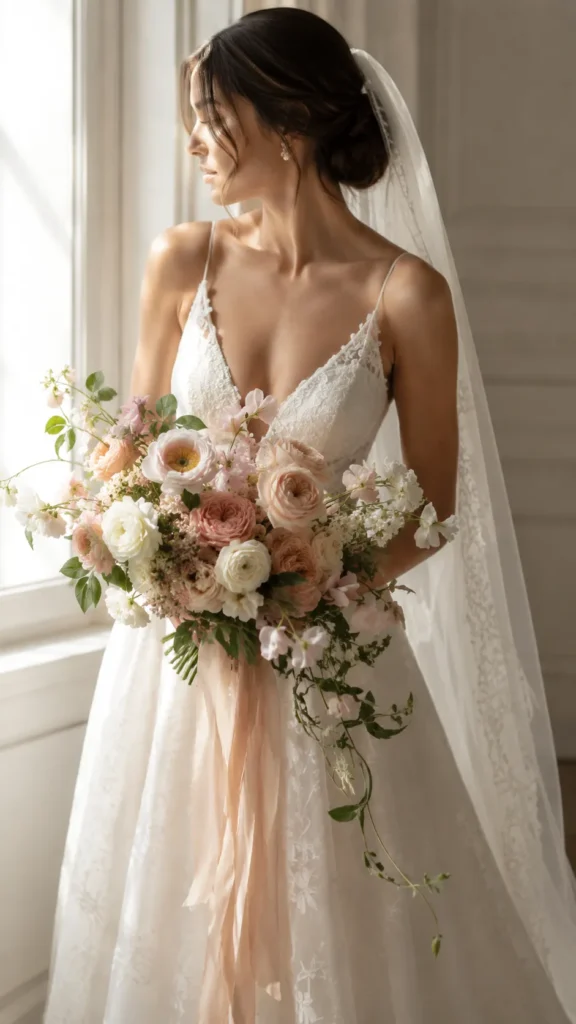
For the classic pose, hold the bouquet low, around the hip bones, with relaxed shoulders. That lower placement shows the dress, waist, and flowers without creating one floral wall. Small adjustment, big payoff.
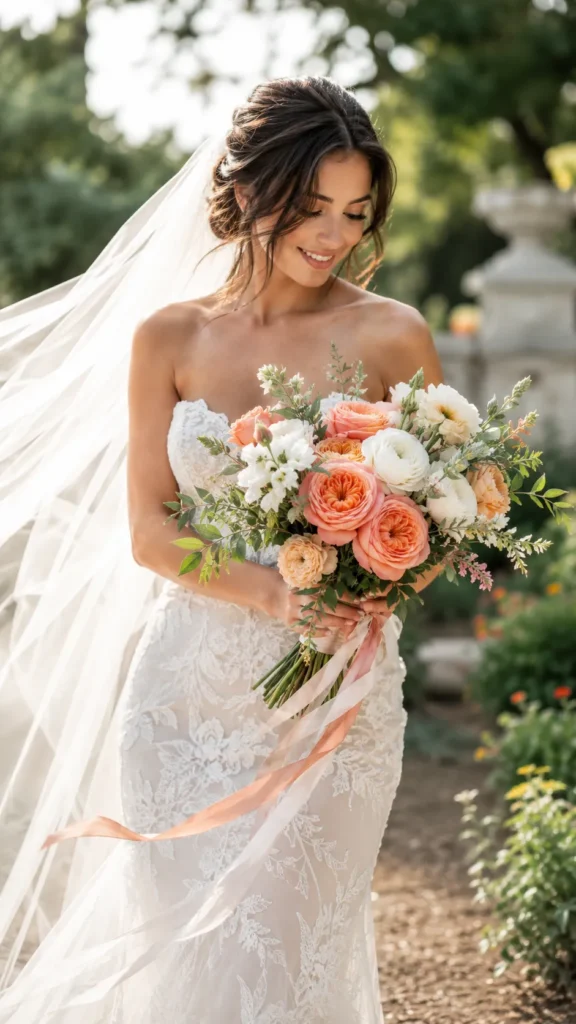
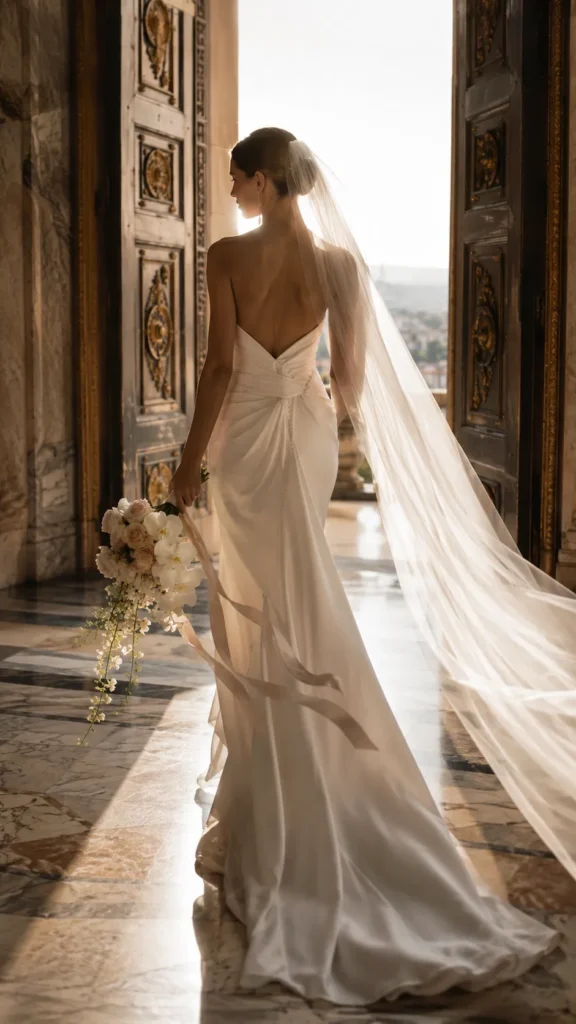
Still, the best wedding bouquet photos usually include movement. A walking bride creates softness and life. Even better, the bouquet swings slightly while the dress moves. That photo says wedding day without screaming, “Everyone stand still!”
Try these specific poses with the bride. Keep each one relaxed and slightly angled:
- Bride holding bouquet low while looking slightly away from the camera.
- Bride walking toward the camera with flowers relaxed at her side.
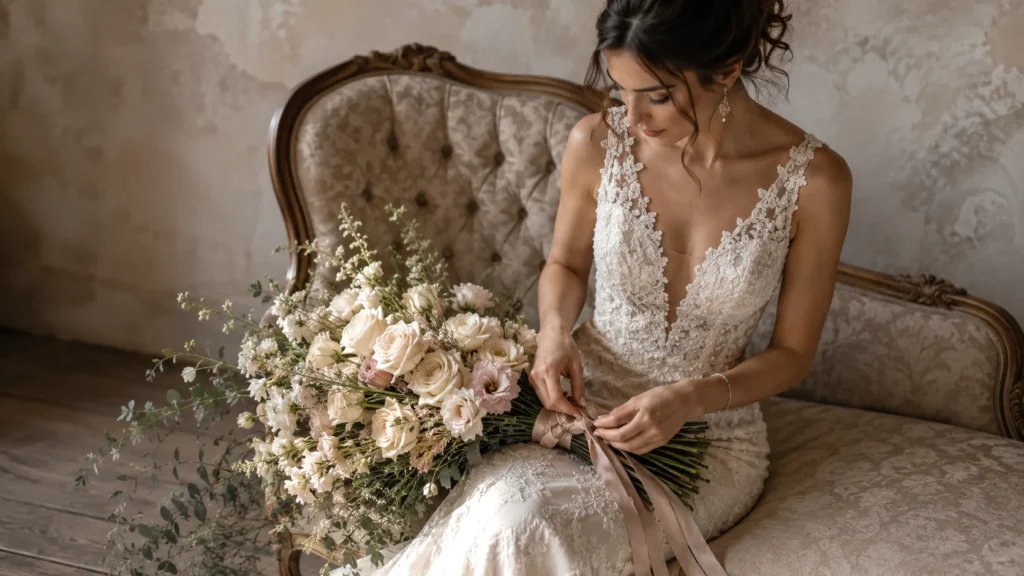
- Close-up of both hands wrapped around the bouquet ribbon.
- Bride smelling the bouquet without pressing flowers into her face.
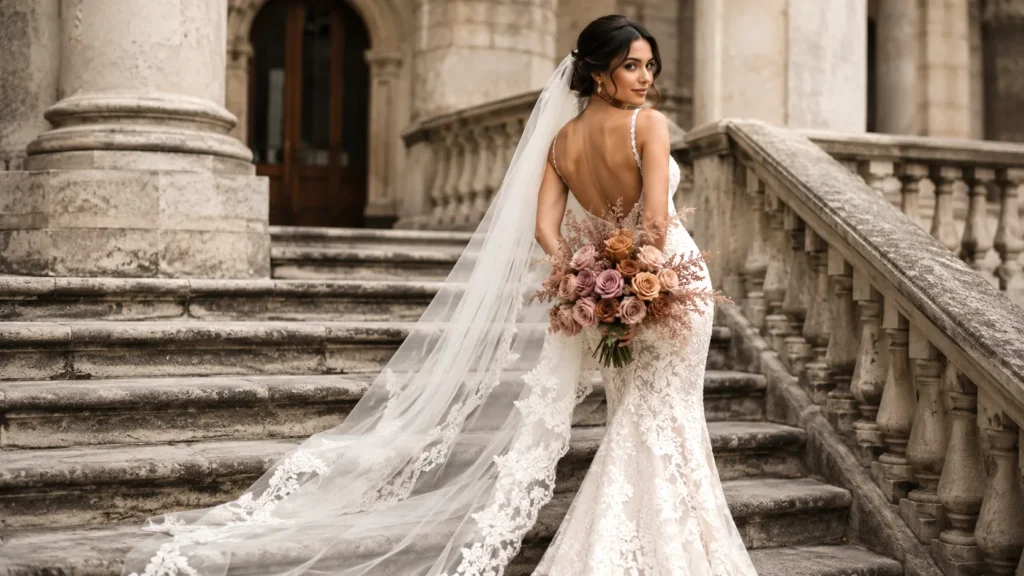
- Bouquet held over one shoulder for a playful dress-back photo.
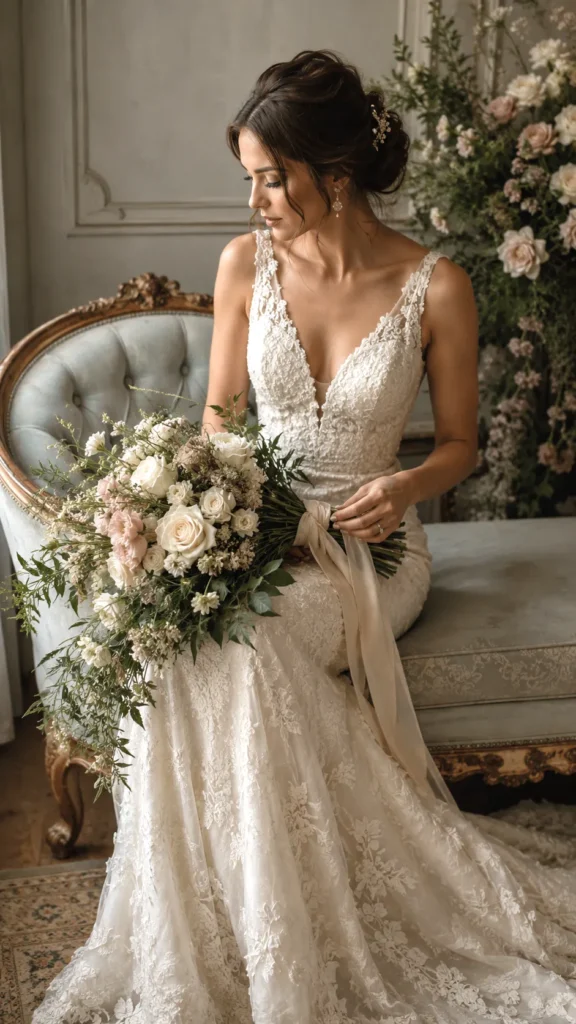
- Seated bride with bouquet resting across her lap.
- Parent hug while the bouquet shows between them.
- Bouquet beside the dress skirt for texture.
A surprising opinion? The smelling pose can look cheesy fast. So keep the face soft, the bouquet lower, and the moment brief. Nobody needs a full sniffing performance.
For budget-friendly flower bouquet photography, hands matter more than fancy flowers. Clean nails, relaxed fingers, and a pretty ribbon can polish the whole image. Also, turn the bouquet slightly sideways. Straight-on bouquets can look flat, while angles show fullness.
The bride doesn’t need fifty poses. She needs five strong ones that look natural. That’s where the photo album starts to look expensive.
Budget-Friendly Bouquet Photos That Still Look Luxe
Budget-friendly bouquet photos come from editing the scene, not draining the wallet. That sounds bossy, but I stand by it. Most people notice clutter before they notice flower cost. A bargain bouquet can look beautiful when the background stays calm.
I tend to notice this with grocery flowers, silk flowers, and simple seasonal stems. The bouquet itself may cost less, but the styling makes the photo look considered. Choose one clean surface and commit to it. A white bedspread, linen napkin, staircase, plain chair, or sunny windowsill can do more than rented decor.
However, the biggest budget mistake is photographing the bouquet under yellow indoor lights. That lighting can make white flowers look beige and pink flowers look oddly orange. Instead, move near a window or open doorway. Soft daylight makes petals look fresher and ribbons look cleaner.
A second trick costs nothing. Remove plastic wrap, delivery tags, pins, rubber bands, and stray leaves before photos. Those tiny things can whisper “rushed,” and nobody invited that energy. Small edits can look expensive without trying so hard.
Flower bouquet photography also looks more luxe when the frame includes texture. Try satin ribbon, pearl earrings, lace cuffs, invitation paper, or dress fabric. These items add depth without adding spending. Plus, they connect the bouquet to the wedding story.
Not every photo needs the full bouquet either. In fact, close-ups often look more expensive. Focus on one rose edge, a ribbon knot, or the bride’s fingers around stems. Suddenly, the photo looks styled instead of snapped.
Here’s the little truth nobody loves admitting. Expensive flowers don’t fix awkward composition. But strong light, clean space, and a thoughtful crop can make simple wedding bouquets look rich.
Flower Bouquet Photography Without The Bride
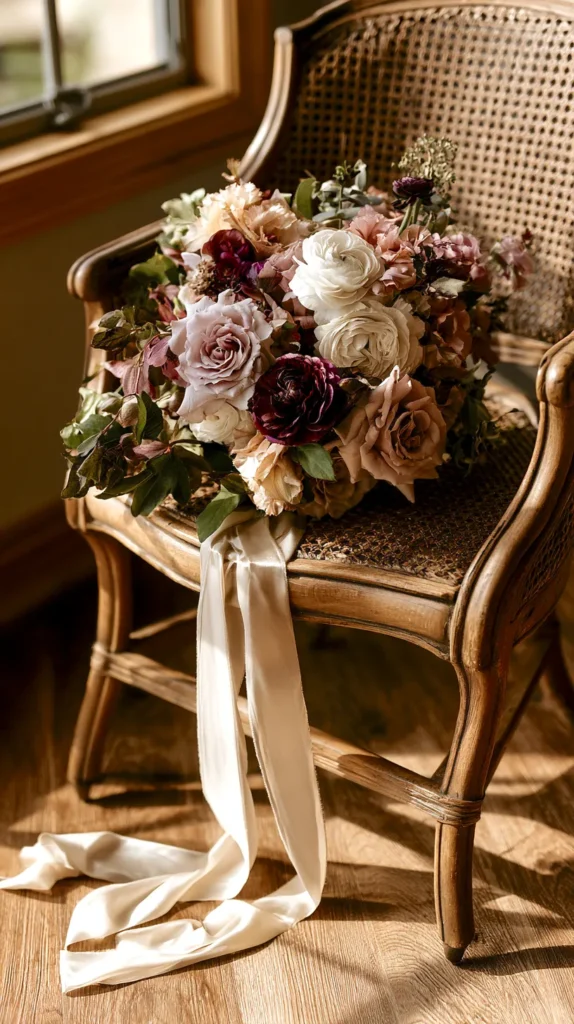
Flower bouquet photography without the bride is where things get quietly powerful. I love these shots because they give the wedding album breathing room. Not every image needs a smiling face, veil, or hand-position crisis. That alone deserves a tiny cheer.
No-bride bouquet photos also help budget weddings look more styled. They create pretty filler images for albums, Pinterest graphics, vendor galleries, and thank-you cards. Plus, they let the bouquet shine before it starts traveling through hugs, wind, and reception tables.
Try these specific wedding bouquet poses without the bride. Keep the frame clean and clearly wedding-related:
- Bouquet resting on the wedding dress skirt near the hem.
- Shoes, rings, and perfume placed beside the flowers.
- Flowers lying across printed vows or invitation cards.
- Bouquet standing in a vase near a bright window.
- Stems wrapped in ribbon with scissors nearby.
- Bouquet held by a bridesmaid from the neck down.
- Flowers resting on a ceremony chair before guests arrive.
- Bouquet placed on a cake table before dessert arrives.
- Flat lay with ribbon trailing beside the bouquet.
- Bouquet leaning against a textured wall or wooden door.
Here’s the contrast. A bouquet on a messy bed looks forgotten. Smooth fabric makes the same bouquet look styled. Same flowers, totally different message.
For flower bouquet photography, no-bride images should still show wedding context. Add one clue, like the dress, veil, invitation, ring box, or ceremony chairs. Otherwise, the photo may look like a random flower order. Pretty, yes. Wedding-specific, not quite.
I’ve found that vertical photos work especially well for no-bride bouquet shots. They leave space for Pinterest text overlays, blog images, or printed keepsakes. That matters when a budget-friendly site wants photos to work harder.
So don’t skip the bouquet alone. Sometimes the quiet photo carries the whole color story.
Tiny Details That Make Wedding Bouquets Look Expensive
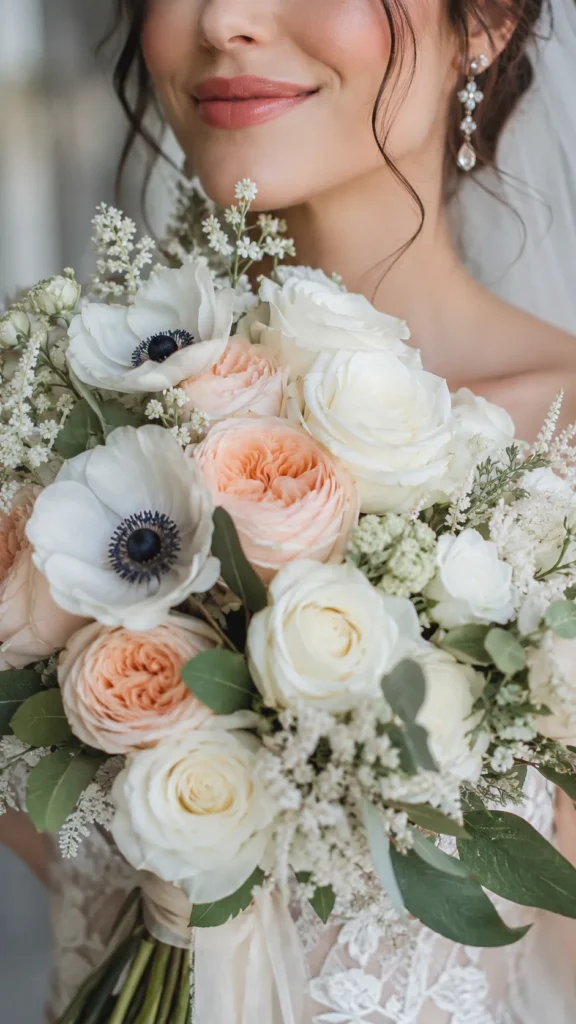
Tiny details can make wedding bouquets look expensive before anyone asks what they cost. That sounds slightly sneaky, which makes it more fun. The camera loves small signs of care. It doesn’t know your floral budget unless you tell it.
Ribbon comes first. A long satin ribbon can make a simple bouquet look romantic and finished. However, stiff ribbon can look bulky in photos. Let the ends hang loose or curl softly beside the stems. That little movement adds charm without adding much cost.
Next, check the flower shape from every angle. Some wedding bouquets look round from the front and wild from the side. That isn’t bad, but it changes the photo. Turn the fuller side toward the camera when you want drama. Use the softer side when you want a sweeter image.
Flower bouquet photography also improves when stems look neat. Trim uneven ends, wipe wet stems, and tuck loose leaves. If the wrap looks messy, add ribbon or fabric. Even a small scrap of lace can hide a rushed stem job.
Color matters too, but not in the obvious way. Matching everything can look flat. Instead, let one flower color repeat somewhere else. Maybe it matches lipstick, shoes, napkins, or invitation ink. That quiet echo makes the image look styled.
One assumption needs to leave the room. Bigger bouquets don’t always photograph better. Oversized flowers can hide the dress, hands, and waist. Smaller bouquets often show more shape and detail.
The camera rewards intention more than size. So before taking photos, edit one thing. Remove one distracting leaf, smooth one ribbon tail, or turn one bloom forward. Small moves can make the final image look wildly more polished.
Serving Suggestions For Wedding Bouquet Photos
Serving suggestions may sound funny for photos, but stay with me. Wedding bouquet pictures shouldn’t just sit in a folder forever. They can “serve” the wedding long after the cake gets eaten and the dance floor shoes come off.
I’ve found that flower bouquet photography works beautifully when planned with future use in mind. That means taking both horizontal and vertical shots. It also means leaving clean space around the bouquet for text, cropping, or printing. Future-you deserves options.
Use bouquet photos in these practical ways:
- Add a vertical shot to a Pinterest pin about the wedding style.
- Print a close-up for a gallery wall or memory box.
- Use a no-bride bouquet photo on thank-you cards.
- Share a detail shot in a wedding vendor review.
- Add bouquet images to a wedding website recap.
- Use a flat lay as the cover for a photo album.
- Send bouquet photos to the florist as a kind note.
- Turn a ribbon-and-ring shot into a framed keepsake.
Here’s the budget-friendly angle I love. One strong bouquet photo can replace extra decor images. Instead of staging ten expensive details, capture the bouquet well. Then reuse that image across cards, albums, posts, and keepsakes.
A good serving suggestion also includes scale. Take one close-up, one full bouquet shot, and one image with the bride. Those three photos tell a fuller story without making the gallery bloated.
Also, think about cropping before the photo happens. Leave space above the bouquet for Pinterest text. Keep hands near the bottom third for album covers. Place rings to one side for a balanced flat lay.
The photo doesn’t need to do everything. However, it should do more than exist. That’s the difference between a pretty picture and a useful one.
FAQs About Wedding Bouquet Photos
Wedding bouquet photos come with tiny questions that somehow pop up at the worst time. I get it. Flowers seem simple at first. Then someone asks where to hold them, when to shoot them, and whether fake flowers work. Suddenly, everyone starts blinking.
When should wedding bouquet photos be taken? Take them as soon as the bouquet arrives, if possible. The flowers look freshest before the ceremony, hugs, heat, and travel. However, save a few quick photos after the bride dresses too.
Can fake flowers look good in photos? Yes, fake flowers can photograph beautifully with soft light and careful angles. Avoid harsh flash because it can show plastic shine. Also, mix textures so the bouquet doesn’t look too flat.
How should the bride hold her bouquet? The bride should hold it low, around hip level. This shows the dress and keeps shoulders relaxed. Higher bouquet placement can hide the waist and look tense.
What background works best for flower bouquet photography? Simple backgrounds usually work best. Try a white wall, soft curtain, clean bedspread, wooden door, or bright window. Avoid clutter, busy carpets, and dark corners.
Do I need professional flowers for pretty photos? No, you don’t need expensive flowers. You need fresh stems, good light, and thoughtful styling. Budget wedding bouquets can look lovely when the photo setup stays clean.
Should bouquet photos include the bride’s face? Some should, but not all. Detail photos without the bride add beauty and calm. They also work well for albums, Pinterest images, and thank-you cards.
Here’s the assumption flip. A bouquet photo doesn’t need perfection. It needs clarity, light, and one clear reason to exist. That’s much easier to get.
Flower Bouquet Photography Mistakes That Sneak Into Pretty Pictures
Flower bouquet photography mistakes usually sneak in quietly. Nobody notices them while everyone moves fast and gets emotional. Later, the gallery arrives, and suddenly the bouquet looks crushed, crooked, or oddly yellow. Rude behavior from a photo, truly.
The most common mistake is holding the bouquet too high. It hides the bodice, shortens the torso, and makes arms look tense. Lower hands usually create a softer shape. They also let the bouquet frame the dress instead of covering it.
Another sneaky issue comes from backgrounds. Wedding bouquets need breathing room, especially when the flowers have many colors. A busy hotel carpet can fight every petal. So can patterned curtains, random bags, and open closet doors. The bouquet may look pretty, but the photo looks messy.
Lighting causes its own little drama. Flash can flatten flowers, while overhead lights can change colors. However, soft window light usually saves the day. Move the bouquet closer to the light, then turn it slowly. The best angle often appears after two small turns.
Flower bouquet photography also suffers when hands grip too tightly. Relaxed fingers look more elegant and natural. Tense hands make the bouquet look heavy, even when it isn’t. Ask the bride to loosen her fingers, drop her shoulders, and breathe normally.
One more mistake deserves attention. Don’t wait until after the outdoor ceremony for every bouquet photo. Heat, wind, hugs, and happy tears can change flowers fast. That small reset can rescue the whole frame. Even tiny fixes matter right here.
Pretty pictures don’t require a perfect wedding. They require noticing small things before they become big things. That’s the whole secret hiding in plain sight.
The Bouquet Photo Is The Tiny Wedding Detail That Keeps Talking
I’ve found that wedding details stay with us in odd little ways. Not always the biggest things, either. Sometimes it’s a ribbon edge, flower color, or quiet photo. One small image can catch the day before it gets loud.
A bouquet can carry the whole mood of a wedding. It can look soft, bold, romantic, playful, simple, or dramatic. Better yet, it can do that without asking the budget to pass out cold. I love that for every bride trying to make smart choices.
Living in Orlando has taught me one very wedding-adjacent truth. Flowers and heat need a plan, not wishful thinking. Take the pretty photos early, keep the setup simple, and let the bouquet have its moment. Then let the weather get dramatic somewhere else.
Pinterest loves a strong detail shot, but real life loves one too. A good bouquet photo can become a thank-you card, album cover, framed print, or sweet little memory. That makes it more useful than another blurry reception table picture.
For me, the best wedding photos don’t scream for attention. They quietly say, “Yes, someone cared about this.” That’s the energy I want from bouquet images. Never perfect. Not pricey. Just thoughtful, pretty, and worth keeping.
So give the bouquet clean light, relaxed hands, and one uncluttered corner. Then let it earn its spot in the wedding story. Small detail, big main-character energy. That’s the kind of wedding math I can get behind.